
There’s nothing quite like the moment you slice open a fresh pineapple and catch that sweet, tropical aroma wafting through your kitchen. Making fresh pineapple juice at home transforms a simple fruit into liquid gold that tastes nothing like the bottled stuff sitting on grocery store shelves.
Fresh pineapple juice is vibrant, naturally sweet, and packed with enzymes and vitamin C that make your body thank you. Whether you own a dedicated juicer or plan to invest in one, this recipe shows you exactly how to extract maximum juice and flavor from your pineapple while keeping the process clean and straightforward.
Why You’ll Love This Recipe
This juice recipe delivers pure pineapple goodness without any additives, preservatives, or mystery ingredients. You control every element, from ripeness to sweetness to how pulpy or smooth you prefer it.
- Takes just 10 minutes from whole fruit to glass of juice.
- Works with any juicer type: centrifugal, masticating, or cold-press.
- Naturally sweet without added sugar or artificial sweeteners.
- Perfect base for tropical smoothies, cocktails, or sipping straight.
- Teaches you how to select and prep pineapples like a pro.
My Experience Making This Recipe
I discovered the power of fresh pineapple juice during a particularly exhausting week when my usual energy-drink habit wasn’t cutting it. I grabbed a ripe pineapple on a whim, ran it through my centrifugal juicer, and felt genuinely energized within minutes, not from caffeine jitters but from actual nutrients.
The first time I made this, I was shocked at how much juice one pineapple yields. A medium fruit gave me about 16 ounces of pure liquid sunshine, which felt like a small miracle considering how long it takes to drink store-bought juice before it goes bad.
Now I make this weekly and use it as a base for tropical smoothies, mix it into sparkling water for a homemade pineapple soda, and occasionally spike it for weekend cocktails. The entire process is meditative and the results are impossible to replicate with anything premade.
Recipe Overview
- Recipe Name: Fresh Pineapple Juice
- Servings: 2 servings
- Prep Time: 10 minutes
- Cook Time: 5 minutes
- Total Time: 15 minutes
- Course: Beverage
- Cuisine: Tropical
- Calories per Serving: 145
Equipment You Will Need
- Juicer (centrifugal, masticating, or cold-press)
- Sharp chef’s knife
- Cutting board
- Large bowl or pitcher to catch juice
- Drinking glasses
- Optional: fine mesh strainer for extra smoothness
Ingredients for Fresh Pineapple Juice
- 1 medium fresh pineapple (about 3 to 4 pounds), ripe but still firm
- 1/2 cup filtered water (optional, to thin if too thick)
- Ice cubes (optional, for serving chilled)
Ingredient Notes and Substitutions
- Fresh pineapple is essential because it delivers bright flavor and active enzymes that bottled juice lacks. If fresh isn’t available, frozen pineapple chunks work as a backup, though the juice will taste slightly less vibrant.
- Filtered water dilutes the juice if it comes out too thick or concentrated. Tap water works if filtered isn’t on hand, though filtered gives a cleaner taste.
- Ice chills the juice without watering it down as the ice melts. You can skip it and refrigerate your juice instead, which actually preserves more nutrients.
How to Make Fresh Pineapple Juice
Step 1: Select and Inspect Your Pineapple
Look for a pineapple that feels heavy for its size, which signals juiciness inside. The skin should yield slightly when you press it gently, and the color should be golden yellow rather than green, indicating the fruit is ripe and sweet.
Step 2: Rinse the Pineapple Thoroughly
Hold the pineapple under cool running water and scrub the skin gently with your hands or a soft brush. This removes dirt and bacteria from the exterior before you cut into it, preventing contamination inside.
Step 3: Cut Off the Top Crown
Place the pineapple on a stable cutting board and slice off the leafy crown about half an inch below where the leaves meet the fruit. Use a sharp downward motion with your chef’s knife to make one clean cut.
Step 4: Remove the Bottom End
Flip the pineapple and slice off the bottom stub where it sat in the soil, cutting about half an inch deep. This removes the tougher base fibers that don’t juice well and can affect flavor.
Step 5: Cut Away the Skin
Stand the pineapple upright and use your knife to slice away the bumpy skin in vertical strips, working your way around the entire fruit. Cut deep enough to remove the tough outer layer but not so deep that you waste flesh, usually about a quarter inch.
Step 6: Remove the Eyes
Notice the diagonal pattern of “eyes” (the small dark spots) across the flesh after removing the skin. Use your knife to make diagonal cuts following these lines, removing a thin strip that contains all the remaining eyes, which have a bitter, fibrous texture.
Step 7: Cut the Pineapple Into Juicer-Friendly Pieces
Slice the peeled pineapple lengthwise into quarters, then cut those quarters into chunks about 2 inches wide. Smaller pieces feed more smoothly through your juicer and extract more juice than large hunks.
Step 8: Feed the Pineapple Into Your Juicer
Turn on your juicer and slowly feed the pineapple pieces through the chute, using the plunger gently if your juicer has one. Never force pieces through or use your hands to push them, as this damages the machine and wastes fruit.
Step 9: Strain If Desired
Pour the fresh juice through a fine mesh strainer into a clean pitcher or glass for extra smoothness and to remove any pulp. This step takes 30 seconds but creates a silkier texture if that’s your preference.
Step 10: Chill and Serve Immediately
Serve the juice right away over ice or refrigerate for up to 24 hours in an airtight container for best flavor and nutrient retention. Fresh juice separates naturally, so give it a quick stir before serving if you notice separation.
Pro Tip: Drink your fresh pineapple juice within 24 hours of making it because the delicate enzymes and vitamin C break down over time, and separation becomes more pronounced the longer it sits.
Tips for the Best Fresh Pineapple Juice
- Choose a pineapple with a strong sweet aroma at the base, which indicates peak ripeness and maximum sugar content for juice. A pineapple with little to no smell often tastes bland and watery.
- Use a masticating or cold-press juicer if you plan to make juice regularly, as they extract more liquid and retain more nutrients than centrifugal models. The extra cost pays for itself in better yields and longer shelf life.
- Don’t throw away the core and tough pieces, which still contain juice and can be blended into smoothies or frozen for later use. Waste nothing, and you’ll get more value from each fruit.
- Chill your glasses and pitcher beforehand to keep the juice cold longer without diluting it with extra ice. This simple step makes a noticeable difference in how refreshing the final drink tastes.
- Add a squeeze of fresh lime juice to brighten the flavor and add complexity without overpowering the pineapple’s natural sweetness. The citric acid also helps preserve the juice slightly longer.
- Buy pineapples when they’re on sale and freeze the juice in ice cube trays for future use in smoothies, cocktails, or to thaw later for sipping. Frozen pineapple juice cubes last two to three months.
Common Mistakes to Avoid
- Using an unripe pineapple produces watery, sour juice that lacks sweetness and the tropical flavor you’re after. Always wait for the fruit to ripen fully, which you can speed by placing it on a sunny windowsill for a day or two.
- Leaving the eyes intact creates a bitter, woody taste that ruins the entire batch. Take the time to carve them out diagonally, and your juice will be noticeably better.
- Juicing a pineapple and then storing it for three or more days destroys the fresh taste and reduces nutritional value significantly. Make juice close to when you plan to drink it for maximum benefit.
- Pushing pineapple through the juicer too fast overheats the machine and oxidizes the juice, turning it brown and degrading flavor. Feed pieces slowly and let the juicer work at its own pace.
- Forgetting to remove the tough central core results in stringy, fibrous juice with an unpleasant texture. Always cut away the core when prepping, even if your juicer says it can handle it.
Serving Suggestions
Fresh pineapple juice shines on its own as a refreshing morning drink, but it also plays beautifully with other flavors and ingredients. Use it as a base for tropical creations that make you feel like you’re on vacation.
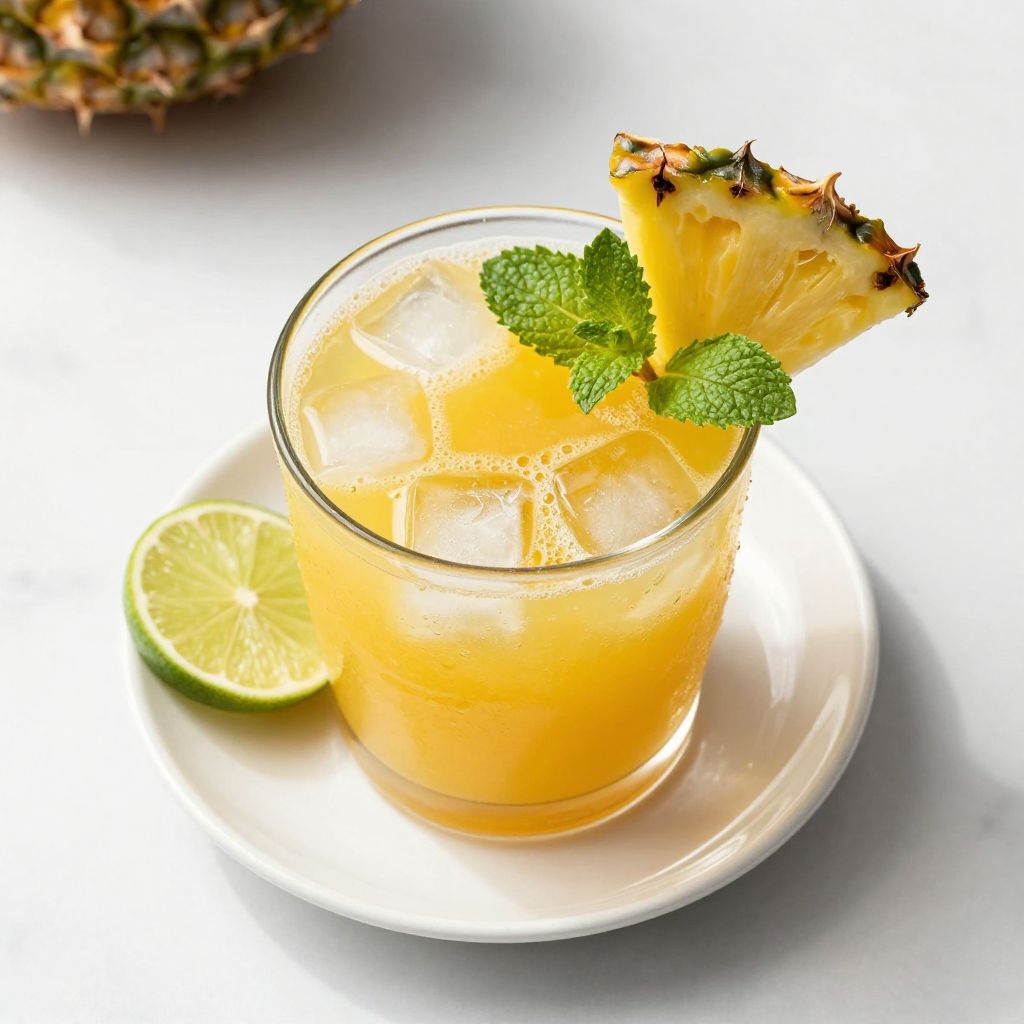
- Pour over crushed ice and top with sparkling water and a fresh mint sprig for a homemade pineapple soda.
- Blend with coconut milk, ice, and a splash of rum for a creamy tropical cocktail.
- Mix into smoothies with banana, mango, and yogurt for a vitamin-packed breakfast drink.
- Combine with ginger juice and a touch of honey for a warming wellness shot.
- Use as a marinade base for grilled chicken or shrimp, adding depth and natural sweetness to the meat.
Variations to Try
- Add fresh ginger root to the juicer for a spicy kick that adds warmth and aids digestion. This creates a wellness-focused juice that tastes less sweet and more complex.
- Blend the juice with fresh turmeric and black pepper for a golden milk style drink with anti-inflammatory properties. The warm spice transforms pineapple juice into something more medicinal and energizing.
- Combine with fresh mint leaves and lime juice for a mojito-inspired non-alcoholic version. This variation feels fancy and special without requiring any fancy ingredients or technique.
- Mix with coconut water instead of filtered water for extra electrolytes and a more tropical flavor profile. This works especially well if you’re making juice as a post-workout recovery drink.
- Add a pinch of cayenne pepper for a spicy twist that surprises and delights in the best way. The heat complements the sweetness and creates an interesting depth.
Dietary Adaptations
- Gluten-free: Fresh pineapple juice is naturally gluten-free, making it safe for anyone with celiac disease or gluten sensitivity with no modifications needed.
- Dairy-free: This recipe contains no dairy products, so it works perfectly for anyone avoiding milk or following a vegan diet.
- Vegan: The base recipe is vegan, though any additions should be checked if you’re combining it with other ingredients like milk alternatives.
- Low-carb/keto: Pineapple juice is higher in natural sugars, so it’s not ideal for strict keto diets. You can water it down significantly or use it sparingly as a flavoring agent.
Storage and Reheating
Refrigerator
Store fresh juice in an airtight glass container on the coldest shelf of your refrigerator, where it keeps for up to 24 hours. The juice will separate and oxidize over time, which affects both flavor and nutritional quality.
- Keep the lid sealed to prevent oxidation and absorption of refrigerator odors.
- Stir well before serving if you notice separation between juice and liquid.
- Discard any juice that develops an off smell or unusual color.
Freezer
Freeze fresh juice in ice cube trays for up to three months, then transfer cubes to freezer bags for easy storage. This method works great for adding to smoothies or thawing small portions.
- Leave a quarter inch of space in containers if freezing juice in larger batches, as liquid expands.
- Label containers with the date so you know how old the frozen juice is.
- Thaw in the refrigerator overnight rather than at room temperature to preserve flavor and nutrients.
Reheating
Fresh juice doesn’t require reheating, but you can gently warm it over low heat if you prefer a warm beverage. Never boil or use high heat, which destroys enzymes and vitamin C.
- Heat in a saucepan over medium-low heat just until warm to the touch, about 2 to 3 minutes.
- Serve immediately without letting it sit in heat for extended periods.
Nutrition Information
| Nutrient | Amount |
|---|---|
| Calories | 145 |
| Total Fat | 0.3g |
| Saturated Fat | 0.1g |
| Carbohydrates | 35g |
| Fiber | 0.5g |
| Sugar | 28g |
| Protein | 1.2g |
| Sodium | 2.5mg |
| Cholesterol | 0mg |
These values are approximate and based on a two-ounce serving of fresh pineapple juice with no added ingredients. Individual nutrition will vary slightly based on pineapple ripeness and juicer type used.
Frequently Asked Questions
Can I make pineapple juice without a juicer?
Yes, you can blend fresh pineapple chunks with a small amount of water in a high-powered blender, then strain through a fine mesh strainer or cheesecloth. The texture will be slightly different with more pulp, but the flavor remains excellent.
How do I know when a pineapple is ripe enough to juice?
A ripe pineapple feels heavy, smells sweet at the base, and yields slightly when pressed gently. The color should be mostly golden yellow with perhaps some green at the crown, which indicates the perfect balance of ripeness and acidity.
Can I store pineapple juice in the freezer?
Absolutely, and freezing is one of the best ways to preserve fresh juice for up to three months. Freeze in ice cube trays or freezer-safe containers, leaving a little room for expansion, then thaw in the refrigerator when ready to use.
What should I do with the pineapple pulp leftover from juicing?
Don’t throw it away. Blend the pulp into smoothies, bake it into muffins or cakes, add it to yogurt, or even freeze it for later smoothie bases. The pulp contains fiber and still has plenty of flavor and nutrients.
Will fresh pineapple juice help with digestion?
Pineapple contains bromelain, an enzyme that aids protein digestion and may reduce inflammation in the digestive tract. While research is ongoing, many people report feeling better digestively when consuming fresh pineapple juice regularly.
Can I mix pineapple juice with other fruits?
Definitely, and it pairs beautifully with nearly any tropical or citrus fruit. Try combining it with mango, orange, papaya, or passion fruit in your juicer for custom blends that suit your taste.
Final Thoughts
Making fresh pineapple juice at home is one of those small kitchen projects that delivers outsized rewards. You’ll taste the difference immediately and wonder why you ever settled for bottled versions.
Grab a ripe pineapple this week and give this recipe a try, whether you’re a juicing veteran or picking up your first juicer. Once you experience the brightness and vitality of freshly pressed juice, you’ll find yourself making it again and again.
If you love tropical beverages, explore more ways to bring that island flavor into your kitchen with a pineapple ginger shot recipe for wellness boosting, or create a refreshing pineapple coconut margarita when you want something special. These recipes build on the foundation of quality fresh pineapple and showcase the fruit’s incredible versatility.
Fresh Pineapple Juice
Ingredients
Equipment
Method
- Step 1: Select and inspect your pineapple: choose a heavy fruit with golden yellow skin and a sweet aroma.
- Step 2: Rinse the pineapple thoroughly under cool running water to remove dirt and bacteria.
- Step 3: Cut off the top crown and bottom end using a sharp chef’s knife, removing about half an inch from each end.
- Step 4: Stand the pineapple upright on the cutting board and slice away the skin in vertical strips, cutting about a quarter inch deep.
- Step 5: Remove the eyes by cutting along the diagonal pattern to discard the bitter, fibrous spots.
- Step 6: Cut the pineapple into juicer-friendly pieces: quarter the fruit lengthwise and then chop into 2-inch chunks.
- Step 7: Feed the pineapple pieces into your juicer slowly, using the plunger if provided; do not force or use your hands.
- Step 8: Pour the juice through a fine mesh strainer into a clean pitcher for extra smoothness, discarding pulp if desired.
- Step 9: Optional – stir in 1/2 cup of filtered water if the juice is too thick, then mix well.
- Step 10: Chill and serve immediately over ice, or refrigerate in an airtight container for up to 24 hours.