
There’s something truly magical about the fizz of homemade kombucha bubbling in your glass, especially when you realize you made it yourself. This Kombucha Recipe With Scoby is not only refreshing but also packed with probiotics, making it a delightful drink that boosts gut health.
Why You’ll Love This Recipe
This recipe brings the fun of fermentation right into your kitchen.
- Easy to customize with various flavors.
- Cost-effective compared to store-bought options.
- Health benefits from probiotics and antioxidants.
- Perfect for sharing with friends or enjoying solo.
My Experience Making This Recipe
The first time I brewed kombucha, I was surprised at how simple the process was. Watching the scoby do its thing was almost like having a pet that makes delicious beverages!
Each batch has its own personality, resulting in a unique flavor profile every time. It quickly became a staple in my home, and I love experimenting with different teas and flavorings.
Recipe Overview
- Recipe Name: Kombucha Recipe With Scoby
- Servings: 10 cups
- Prep Time: 15 minutes
- Cook Time: 7 to 14 days (fermentation)
- Total Time: 7 to 14 days
- Course: Beverage
- Cuisine: Fermented
- Calories per Serving: 30 calories
Equipment You Will Need
- 1-gallon glass jar
- Coffee filter or cheesecloth
- Rubber band or string
- Stirring spoon (non-metal)
- Measuring cups
- Funnel (optional)
- Bottles for storage
Ingredients for Kombucha Recipe With Scoby
- 1 cup granulated sugar
- 8 bags black or green tea
- 1 gallon water
- 2 cups starter tea (from previous kombucha or store-bought)
- 1 SCOBY (Symbiotic Culture Of Bacteria and Yeast)
Ingredient Notes and Substitutions
- Sugar: Acts as food for the SCOBY. You can use raw sugar or honey, but this may alter the flavor.
- Tea: Black tea gives a classic flavor, while green tea offers a lighter taste. Herbal teas can be used, but avoid those with oils.
- Water: Filtered water is best to avoid chlorine, which can harm the SCOBY.
- Starter tea: Provides acidity to kickstart fermentation. If unavailable, store-bought kombucha works as a substitute.
How to Make Kombucha Recipe With Scoby
Step 1: Prepare the Sweet Tea
Bring 1 gallon of water to a boil, then remove it from heat. Add the sugar and tea bags, stirring until the sugar dissolves.
Step 2: Cool the Tea
Let the sweet tea cool to room temperature. This prevents harming the SCOBY when added.
Step 3: Combine Ingredients
Once cooled, pour the tea into a clean glass jar. Add the starter tea and gently place the SCOBY on top.
Step 4: Cover the Jar
Cover the jar with a coffee filter or cheesecloth and secure with a rubber band. This allows airflow while keeping out contaminants.
Step 5: Ferment
Place the jar in a warm, dark place (around 70-85°F) for 7 to 14 days. Taste it after a week to check the flavor.
Step 6: Bottling
Once it reaches your desired taste, remove the SCOBY and set it aside for your next batch. Use a funnel to pour the kombucha into bottles.
Step 7: Second Fermentation (Optional)
If you want a fizzy drink, add fruit or flavorings to the bottles and seal tightly. Let them ferment for an additional 3 to 7 days.
Step 8: Refrigerate
After bottling, refrigerate the kombucha to stop the fermentation process. Enjoy your homemade brew chilled!
Pro Tip: Always save a cup of kombucha from your batch to use as starter tea for your next brew!
Tips for the Best Kombucha Recipe With Scoby
- Use high-quality tea for the best flavor and fermentation.
- Keep everything clean to avoid contamination.
- Experiment with flavorings like ginger or berries during the second fermentation.
- Check the fermentation regularly to avoid overly sour kombucha.
- Store your SCOBY in a bit of kombucha if you’re taking a break from brewing.
Common Mistakes to Avoid
- Using chlorinated water can kill your SCOBY.
- Fermenting in direct sunlight may overheat the kombucha.
- Forgetting to remove the SCOBY before bottling can lead to overly sour kombucha.
- Not giving enough time for fermentation can result in flat kombucha.
Serving Suggestions
Pair your kombucha with light snacks or meals to enhance the experience.
- Salads for a refreshing contrast.
- Cheese plates for a delightful balance.
- Spicy dishes to cool the palate.
- Fruit desserts for a sweet finish.
Variations to Try
- Add fresh ginger during the second fermentation for a spicy kick.
- Mix in berries for a fruity twist.
- Use herbal teas for unique flavors, like hibiscus or chamomile.
- Try adding citrus peels for a refreshing zing.
Dietary Adaptations
- Gluten-free: Kombucha is naturally gluten-free.
- Dairy-free: This recipe contains no dairy.
- Vegan: Suitable for a vegan diet since it contains no animal products.
- Low-carb/keto: While kombucha does contain sugar, the fermentation reduces the overall carb content.
Storage and Reheating
Refrigerator
Store your kombucha in the refrigerator in sealed bottles for up to a month.
- Keep away from sunlight to maintain flavor.
- Check for carbonation levels before consuming.
Freezer
It’s not recommended to freeze kombucha as it can affect the texture and flavor.
- Always drink or share your kombucha fresh.
Reheating
Kombucha should never be heated, as it will kill beneficial probiotics.
- Enjoy it cold or at room temperature for the best benefits.
Nutrition Information
| Nutrient | Amount |
|---|---|
| Calories | 30 |
| Total Fat | 0g |
| Saturated Fat | 0g |
| Carbohydrates | 8g |
| Fiber | 0g |
| Sugar | 6g |
| Protein | 0g |
| Sodium | 5mg |
| Cholesterol | 0mg |
This information is an estimate and will vary based on specific ingredients used.
Frequently Asked Questions
Can I use flavored tea for kombucha?
Yes, flavored teas can add interesting notes, but avoid those with oils.
How long can I store kombucha?
It can last in the fridge for up to a month, but it’s best enjoyed fresh.
Can I make kombucha without a SCOBY?
A SCOBY is essential for fermentation, but you can start with store-bought kombucha to grow one.
What should I do if my kombucha is too sweet?
Let it ferment longer until it reaches your desired taste.
How do I know if my kombucha has gone bad?
If it smells off or has unusual growths, it is best to discard it.
Final Thoughts
Making your own kombucha is a fun and rewarding experience that allows you to enjoy a healthy beverage anytime. I encourage you to give this recipe a try and explore the world of fermentation.
For more homemade beverage ideas, check out this hard kombucha recipe or try making ginger beer with a ginger bug.
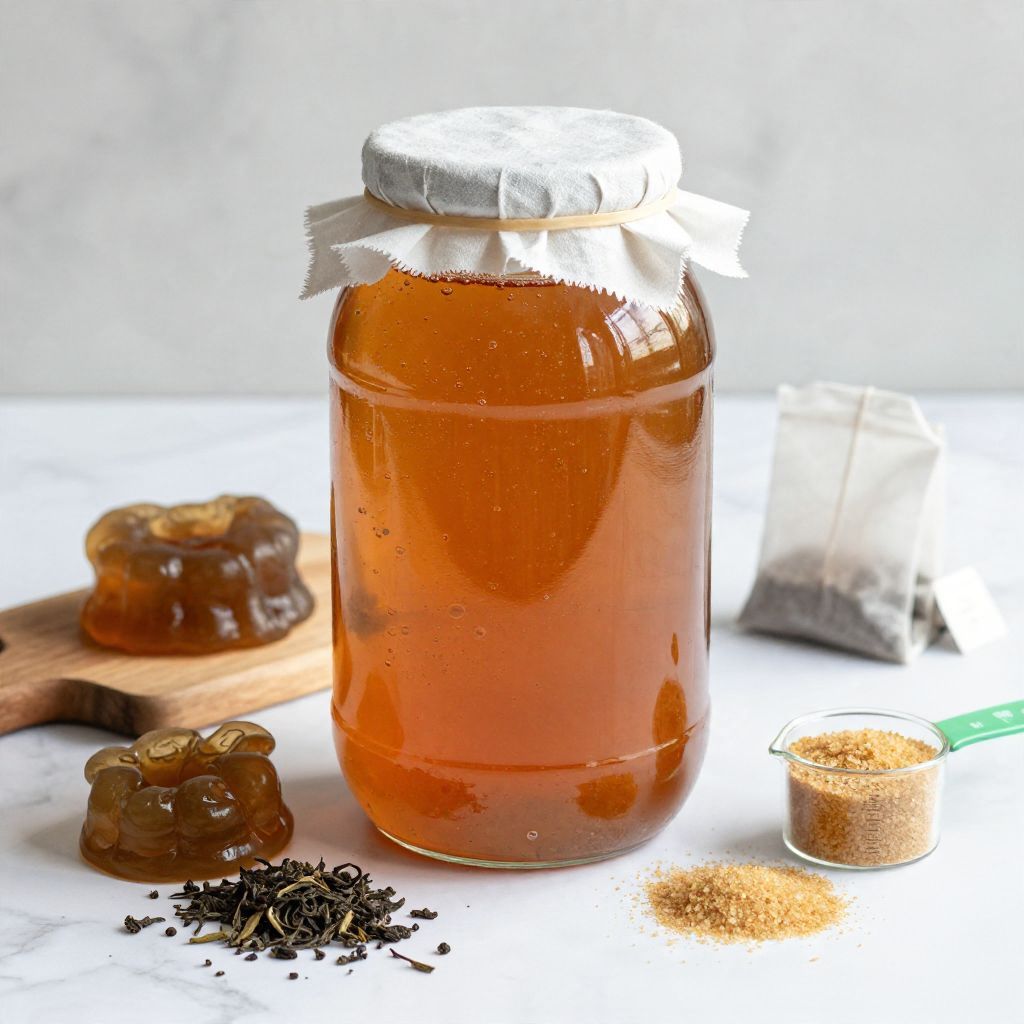
Kombucha Recipe With Scoby
Ingredients
Equipment
Method
- Bring 1 gallon of water to a boil, then remove it from heat. Add the sugar and tea bags, stirring until the sugar dissolves.
- Let the sweet tea cool to room temperature.
- Once cooled, pour the tea into a clean glass jar. Add the starter tea and gently place the SCOBY on top.
- Cover the jar with a coffee filter or cheesecloth and secure with a rubber band.
- Place the jar in a warm, dark place (around 70-85°F) for 7 to 14 days.
- Taste it after a week to check the flavor.
- Once it reaches your desired taste, remove the SCOBY and set it aside for your next batch.
- Use a funnel to pour the kombucha into bottles.
- If you want a fizzy drink, add fruit or flavorings to the bottles and seal tightly. Let them ferment for an additional 3 to 7 days.
- After bottling, refrigerate the kombucha to stop the fermentation process.