
Picture this: a refreshing glass of fizz, tart yet slightly sweet, bursting with flavors that dance on your palate. That’s the magic of Homemade Kombucha, a delightful drink that brings a little bit of the café experience right into your kitchen. This recipe is special because it’s not just a beverage, it’s a fun experiment that introduces you to the fermentation process. You’ll love how versatile it is — you can customize your flavor to suit your mood or the season. Let’s get started on brewing your very own kombucha!
Why You’ll Love This Recipe
This homemade drink is a treat for both your taste buds and your health. It’s packed with probiotics and can be tailored to your liking.
- Health benefits from probiotics and antioxidants.
- Endless flavor combinations to explore.
- Cost-effective compared to store-bought options.
- Fun to make and share with friends.
- Simple ingredients with a straightforward process.
My Experience Making This Recipe
The first time I made Homemade Kombucha, I was amazed at how simple it was. The bubbling sound of fermentation was oddly satisfying, like my own mini science project.
After a week of waiting, I tasted my creation and was blown away by the vibrant flavors and tangy notes. Friends loved it, and it quickly became a staple at my gatherings.
Recipe Overview
- Recipe Name: Homemade Kombucha
- Servings: 8 cups
- Prep Time: 15 minutes
- Cook Time: 7-14 days (fermentation)
- Total Time: 7-14 days
- Course: Beverage
- Cuisine: Fermented
- Calories per Serving: 30
Equipment You Will Need
- 1-gallon glass jar
- Tea kettle
- Measuring cups and spoons
- Wooden spoon
- Cheesecloth or coffee filter
- Rubber band or string
- Bottles for storing kombucha
Ingredients for Homemade Kombucha
- 4-6 cups water
- 1 cup granulated sugar
- 4-6 bags black tea or green tea
- 2 cups starter tea (from previous batch or store-bought kombucha)
- 1 SCOBY (Symbiotic Culture of Bacteria and Yeast)
Ingredient Notes and Substitutions
- Water: Clean, filtered water is best to ensure no contaminants affect the fermentation. Tap water can be used if it’s free of chlorine.
- Sugar: Sugar is essential for fermentation. You may substitute with brown sugar for a richer flavor, but avoid artificial sweeteners.
- Tea: Black tea provides the best flavor, while green tea offers a lighter taste. Herbal teas can be used but may alter the fermentation process.
- Starter tea: It kickstarts the fermentation. If you don’t have any, store-bought kombucha works well as a substitute.
- SCOBY: This is the heart of your kombucha. You can find one through friends, online, or at health food stores.
How to Make Homemade Kombucha
Step 1: Boil the Water
Start by boiling about 4 cups of water in a kettle. This ensures your tea is brewed properly, extracting all the flavors.
Step 2: Brew the Tea
Once boiling, remove the kettle from heat and add the tea bags. Let it steep for about 10-15 minutes for a rich flavor.
Step 3: Add Sugar
Stir in the sugar while the tea is still warm until fully dissolved. This is crucial since the sugar feeds the SCOBY during fermentation.
Step 4: Cool the Mixture
Pour in the remaining water to cool the mixture to room temperature. Hot tea can damage the SCOBY, so this step is vital.
Step 5: Add Starter Tea
Once cooled, add the starter tea to the mixture. This helps introduce beneficial bacteria and yeast for fermentation.
Step 6: Introduce the SCOBY
Gently place the SCOBY into the jar with the liquid. Make sure your hands are clean to avoid introducing unwanted bacteria.
Step 7: Cover and Ferment
Cover the jar with cheesecloth secured with a rubber band. This allows air in while keeping dust and bugs out. Place it in a warm, dark spot to ferment for 7-14 days.
Step 8: Taste Test and Bottle
After a week, taste your kombucha. If it’s to your liking, it’s time to bottle it. If not, let it ferment longer until you reach your desired flavor.
Pro Tip: Keep tasting your kombucha during fermentation to find the perfect balance of sweetness and tartness.
Tips for the Best Homemade Kombucha
- Use filtered water to avoid contaminants that can disrupt fermentation.
- Keep your brewing area clean to prevent unwanted bacteria.
- Taste regularly to find your ideal flavor profile.
- Experiment with different teas to discover unique flavors.
- Use fresh fruit or herbs during the second fermentation for added flavors.
Common Mistakes to Avoid
- Using chlorinated water can kill the SCOBY. Always use filtered water.
- Letting the kombucha ferment too long can result in overly vinegary flavors.
- Forgetting to taste can lead to a less enjoyable drink.
- Introducing contaminants by not washing hands or equipment properly can ruin your batch.
Serving Suggestions
Homemade kombucha can be enjoyed on its own or paired with meals. Here are some ideas:
- Serve chilled as a refreshing afternoon drink.
- Pair with spicy dishes to balance the heat.
- Mix with fresh fruit juices for a fun twist.
- Enjoy alongside light salads or seafood dishes.
Variations to Try
- Add ginger and lemon for a zesty flavor boost.
- Use hibiscus tea for a floral and vibrant drink.
- Infuse with berries during the second fermentation for a fruity twist.
- Try adding mint for a refreshing herbal note.
Dietary Adaptations
- Gluten-Free: Kombucha is naturally gluten-free, making it a safe option for those with gluten sensitivities.
- Dairy-Free: This recipe contains no dairy, perfect for lactose intolerant individuals.
- Vegan/Vegetarian: All ingredients are plant-based, suitable for vegan diets.
- Low-Carb/Keto: While kombucha does contain sugar, most is consumed during fermentation, making it lower in carbs.
Storage and Reheating
Refrigerator
Store your kombucha in the fridge once bottled. This slows down fermentation and helps maintain flavor.
- Keep in airtight bottles to preserve carbonation.
- Consume within 1-2 months for the best taste.
Freezer
Freezing kombucha is not recommended as it can ruin the texture and flavor. However, if you must, ensure it is in a tightly sealed container.
- Thaw in the refrigerator before consuming.
Reheating
Do not reheat kombucha, as heat will kill the beneficial bacteria and yeast. Enjoy it cold or at room temperature.
Nutrition Information
| Nutrient | Amount |
|---|---|
| Calories | 30 |
| Total Fat | 0g |
| Saturated Fat | 0g |
| Carbohydrates | 7g |
| Fiber | 0g |
| Sugar | 6g |
| Protein | 0g |
| Sodium | 0mg |
| Cholesterol | 0mg |
This information is an estimate and can vary based on the specific ingredients used.
Frequently Asked Questions
Can I use flavored tea for brewing kombucha?
Yes, flavored teas can add interesting notes, but stick to base teas like black or green for the best results.
How long does it take to make kombucha?
Fermentation can take anywhere from 7 to 14 days, depending on your taste preference.
Can I make kombucha without a SCOBY?
Unfortunately, you need a SCOBY to ferment the tea properly, but you can obtain one easily from friends or online.
What if my kombucha is too sweet?
If it’s too sweet, let it ferment longer until the desired tartness is achieved.
How should I store my SCOBY?
Store your SCOBY in a bit of kombucha in a covered jar in the fridge if not using right away.
Final Thoughts
Brewing Homemade Kombucha can be a delightful and rewarding experience. With a little patience and creativity, you can enjoy a delicious drink that’s both satisfying and good for your gut.
So gather your ingredients, roll up your sleeves, and let your taste buds explore the world of fermentation. For more fun beverages, check out this hard kombucha recipe or learn how to make a ginger bug for a fizzy twist!
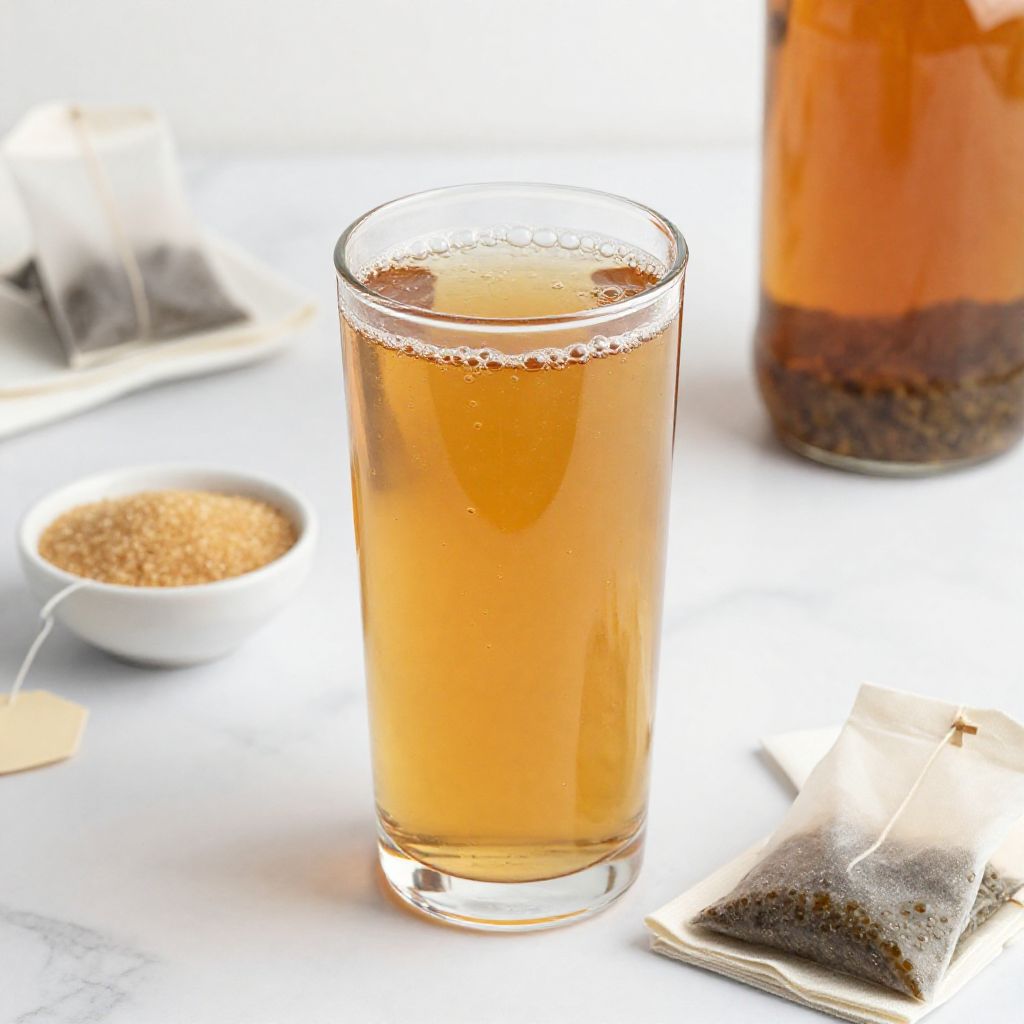
Homemade Kombucha
Ingredients
Equipment
Method
- Start by boiling about 4 cups of water in a kettle.
- Once boiling, remove the kettle from heat and add the tea bags. Let it steep for about 10-15 minutes.
- Stir in the sugar while the tea is still warm until fully dissolved.
- Pour in the remaining water to cool the mixture to room temperature.
- Once cooled, add the starter tea to the mixture.
- Gently place the SCOBY into the jar with the liquid.
- Cover the jar with cheesecloth secured with a rubber band.
- Place the jar in a warm, dark spot to ferment for 7-14 days.
- After a week, taste your kombucha and if it’s to your liking, it’s time to bottle it.