
Imagine opening a bottle of homemade blueberry wine on a cool autumn evening, the deep purple liquid catching the light as you pour a glass. Blueberry wine is one of the most rewarding fermented beverages you can make at home, offering a naturally sweet, fruity flavor that tastes far more impressive than the effort required.
This recipe transforms fresh blueberries into a smooth, balanced wine that improves with age and impresses anyone who tastes it. You’ll love the straightforward process, the vibrant color, and the fact that homemade blueberry wine costs a fraction of commercial fruit wines while tasting just as good, if not better.
Why You’ll Love This Recipe
Blueberry wine delivers rich fruity flavor with minimal fuss, and the process teaches you core winemaking skills you can apply to any fruit wine.
- Creates a naturally sweet, full-bodied wine that improves dramatically over 6 to 12 months
- Uses simple ingredients and equipment you likely already have at home
- Produces enough wine to share or enjoy throughout the year from one batch
- Offers endless customization with different yeast strains or aging methods
- Costs a fraction of store-bought fruit wines while tasting superior
My Experience Making This Recipe
I started making blueberry wine after discovering a gallon jug of fresh blueberries at the farmers market for half price near closing time. The smell of fermentation bubbling away on my kitchen counter became oddly comforting, and I found myself checking on it like a plant that might wilt without attention.
Six months later, I bottled that first batch, and the color was stunning: a deep garnet that looked almost jewel-like when held up to light. When I finally cracked open the first bottle, the flavor had transformed from simple fruit juice into something complex and pleasantly dry with subtle floral notes.
My friends who tried it assumed I’d bought it from a specialty shop, which made the whole process feel worth the wait. Now I make at least two batches per year and have jars aging in my closet that I forget about until I stumble upon them months later.
Recipe Overview
- Recipe Name: Blueberry Wine
- Servings: Approximately 5 bottles (750 ml each)
- Prep Time: 30 minutes
- Fermentation Time: 4 to 6 weeks primary, 2 to 12 months secondary
- Total Time: 6 to 12 months (mostly hands-off)
- Course: Beverage
- Cuisine: American
- Alcohol Content: Approximately 11 to 12 percent ABV
Equipment You Will Need
- One 1-gallon glass carboy or fermentation vessel
- Airlock and carboy cap
- Hydrometer (optional but recommended)
- Large food-grade bucket or pot for initial mixing
- Cheesecloth or straining bag
- Siphon tubing and racking cane
- Bottles and corks or caps for storage
- Thermometer
- Long spoon or stirring rod
- Funnel
Ingredients for Blueberry Wine
- Fresh blueberries: 5 pounds (about 8 cups)
- Granulated sugar: 2.5 pounds
- Water: 1 gallon (filtered or bottled)
- Acid blend or fresh lemon juice: 2 teaspoons (or juice of 2 lemons)
- Wine yeast: 1 packet (Lalvin EC-1118 or Safale S-04 work well)
- Yeast nutrient: 1 teaspoon
- Pectic enzyme: 0.5 teaspoon (optional but helpful)
- Potassium metabisulfite: 1/4 teaspoon (optional, for preservation)
Ingredient Notes and Substitutions
- Fresh blueberries: They provide the main flavor and color; frozen blueberries work equally well and are often cheaper. Both frozen and fresh release their juice during fermentation, though thawed frozen berries may need slightly less pectic enzyme.
- Granulated sugar: This feeds the yeast and becomes alcohol, creating the wine’s body and warmth. You can substitute honey for a drier, more complex wine, but use only 2 pounds since honey ferments more efficiently.
- Wine yeast: This specialized strain ferments cleanly and leaves a pleasant taste, unlike bread yeast which produces off-flavors. If unavailable, all-purpose champagne yeast works as a backup, though it ferments faster and drier.
- Acid blend: Acid balances sweetness and prevents spoilage, giving the wine a crisp finish. Fresh lemon juice provides the same function and adds a subtle citrus note you might enjoy.
- Pectic enzyme: This breaks down fruit pectin, which allows clearer wine and better juice extraction. Skip it if you prefer a slightly cloudier, more rustic-looking wine with full body.
How to Make Blueberry Wine
Step 1: Prepare Your Blueberries
Rinse your blueberries under cool water and remove any stems or debris you find. If using frozen berries, thaw them at room temperature for several hours to allow the cell walls to break down and release more juice.
Step 2: Sanitize Your Equipment
Cleanliness prevents unwanted bacteria from ruining your wine, so rinse your carboy, airlock, spoon, and bucket thoroughly with hot water. If you have access to a sanitizer like Star San or sulfites, use it on all equipment that touches your must or finished wine.
Step 3: Dissolve Sugar in Water
Heat your water to about 150 degrees Fahrenheit in a large pot, then stir in the sugar until completely dissolved. This sugar solution, called a “must,” becomes the base where yeast converts sugar into alcohol over the coming weeks.
Step 4: Combine Blueberries and Must
Pour the warm sugar solution into your large fermentation bucket and add the blueberries, crushing them gently with a spoon or your hands to release their juice. The warm liquid will help extract color and flavor from the berry skins while cooling to an ideal fermentation temperature.
Step 5: Add Acid, Enzyme, and Yeast Nutrient
Once the must has cooled to room temperature (about 70 degrees Fahrenheit), stir in your acid blend, pectic enzyme, and yeast nutrient. These additions lower the pH to prevent spoilage, improve clarity, and give the yeast everything it needs to thrive during fermentation.
Step 6: Pitch Your Yeast
Rehydrate your wine yeast according to the packet instructions, typically by stirring it into a small amount of warm water and letting it sit for 15 minutes. Pour the yeast slurry into your must and stir well to distribute it evenly, then cover loosely with a clean cloth so wild organisms cannot enter.
Step 7: Primary Fermentation
Let the mixture sit at room temperature for 24 to 48 hours, then transfer everything to your sanitized gallon carboy and fit it with an airlock. The airlock allows carbon dioxide to escape while preventing oxygen and bacteria from entering, and you should see active bubbling within the first few days.
Allow primary fermentation to continue for 4 to 6 weeks, during which the yeast consumes sugar and produces alcohol. The bubbling will slow significantly as fermentation completes, signaling that most of the sugar has been converted.
Step 8: Rack to Secondary Vessel
Once bubbling nearly stops (usually 4 to 6 weeks in), use a sanitized siphon to transfer the clear wine off the sediment layer into a clean carboy, leaving the berry solids and dead yeast behind. This process, called “racking,” removes the wine from contact with spent yeast cells that can impart off-flavors if left too long.
Fit the secondary carboy with a fresh airlock and allow the wine to age for at least 2 to 3 months at room temperature or cooler. Many winemakers rack again after 3 months to achieve crystal clarity, though this step is optional.
Step 9: Bottle Your Wine
After aging to your satisfaction, siphon the clear wine into sanitized bottles and cap or cork them immediately. Store bottles upright in a cool, dark place (a closet, basement, or wine cooler work well) and allow the wine to continue aging for at least 6 months before opening, though one year or longer yields noticeably better flavor.
Pro Tip: Keep the temperature stable between 55 and 70 degrees Fahrenheit during fermentation; wild swings interrupt yeast activity and may introduce spoilage organisms.
Tips for the Best Blueberry Wine
- Use fresh or recently harvested frozen blueberries rather than berries that have been frozen for over a year, as they lose flavor compounds over time. Fresh blueberries at farmers markets often cost less near the end of the day.
- Keep detailed notes on everything you do: the exact yeast strain, fermentation temperatures, and when you racked, so you can replicate or improve your next batch. Even small notes help you understand which decisions led to better flavor.
- Taste your wine several months after bottling, then again at 6 and 12 months to watch how flavor develops and peaks. You may discover your favorite drinking window, which is often around one year.
- Avoid opening the carboy repeatedly out of curiosity, as each exposure to oxygen can introduce off-flavors and spoilage risk. The airlock lets you observe fermentation without opening the vessel.
- Use a hydrometer to track fermentation progress if you want to know exactly when fermentation completes and how much alcohol your wine contains. This takes the guesswork out of knowing when to rack.
Common Mistakes to Avoid
- Pitching yeast into must that is too hot kills the yeast cells and wastes your ingredient, so always cool the mixture to room temperature first.
- Skipping sanitization allows unwanted bacteria to compete with yeast, producing vinegar or off-flavors instead of clean wine. A quick rinse is not enough; use heat or sanitizer.
- Adding too much sugar creates an imbalance that may stall fermentation partway through, leaving excess sweetness that tastes cloying. Stick to the recipe amounts unless you have experience adjusting for your taste.
- Bottling before fermentation fully completes traps carbon dioxide in the bottle, creating pressure that can pop corks or even break glass. Wait until bubbling has nearly stopped before bottling.
Serving Suggestions
Blueberry wine shines on its own as an aperitif or after-dinner drink, but it pairs beautifully with desserts and soft cheeses. Serve it slightly chilled at 55 to 60 degrees Fahrenheit to highlight its fresh fruit notes without dulling its structure.
- Pair with sharp cheddar or creamy goat cheese and dark chocolate for an elegant tasting board
- Serve alongside berry tarts, panna cotta, or light vanilla desserts that echo its fruit flavor
- Enjoy as an aperitif before dinner to warm the palate and build appetite
- Combine in cocktails with sparkling wine, brandy, or gin for creative wine-based drinks
- Gift bottles to friends as a thoughtful homemade present that shows real effort and care
Variations to Try
- Blueberry-Honey Wine: Replace half the granulated sugar with honey for a drier, more wine-like profile with subtle floral complexity. Honey ferments more completely, resulting in less residual sweetness.
- Blueberry-Blackberry Blend: Use 3 pounds blueberries and 2 pounds blackberries for deeper color and more tannic structure that feels sophisticated on the palate. The blackberry adds earthy notes that balance blueberry’s bright sweetness.
- Blueberry-Lemon Wine: Add the zest and juice of 4 fresh lemons during primary fermentation to brighten the wine and add crisp acidity. This version drinks fresher and younger, often ready by month 4.
- Oak-Aged Blueberry Wine: Add a sanitized oak spiral or small oak chips to the secondary carboy for 2 to 4 months to add vanilla and toasted notes. Oak aging makes the wine feel richer and more wine-like, though it requires careful monitoring to avoid over-oaking.
- Higher Alcohol Version: Increase sugar to 3 pounds for a wine that reaches 13 to 14 percent ABV with more body and aging potential. The extra alcohol also acts as a natural preservative, allowing longer cellaring.
Dietary Adaptations
- Gluten-Free: This recipe is naturally gluten-free, though some wine yeasts may be processed on shared equipment; verify your yeast packet if you require strict gluten-free certification.
- Lower Alcohol: Reduce sugar to 1.75 pounds and ferment to dryness for a wine around 8 percent ABV that tastes fresher and lighter. The lower alcohol may require earlier consumption, as it offers less natural preservation.
- Vegan: This recipe is vegan throughout; just skip any egg-white fining if you choose to clarify, and use plant-based wine bottles and corks if preferred.
- Low-Sugar: Using honey or a combination of sugar and honey produces a drier final product with less residual sweetness, though fermentation timing may change.
Storage and Reheating
Refrigerator
Blueberry wine keeps indefinitely in the refrigerator once bottled and sealed, though flavor often improves in a cool cellar or closet rather than at fridge temperature. Check bottles every 6 months for cork seepage or mold, and top up with a similar wine if evaporation occurs.
- Store upright in darkness to prevent light damage to color and flavor
- Keep temperature between 45 and 55 degrees if possible for longest aging potential
Freezer
Freezing wine is not recommended, as the expansion can break bottles and freezing alters flavor compounds. If you must freeze, remove wine to a freezer-safe container first.
Reheating
Wine does not need reheating; simply serve it chilled or at room temperature as you prefer. If using wine in cooking, warm it gently in a saucepan over low heat to preserve flavor, though alcohol will burn off above 160 degrees Fahrenheit.
Nutrition Information
| Nutrient | Amount |
|---|---|
| Calories | 120 |
| Total Fat | 0 g |
| Saturated Fat | 0 g |
| Carbohydrates | 8 g |
| Fiber | 0 g |
| Sugar | 6 g |
| Protein | 0 g |
| Sodium | 5 mg |
| Cholesterol | 0 mg |
Nutrition values are approximate and based on a five-ounce serving of finished wine with residual sugar of 8 grams. Actual values vary depending on fermentation completion and any additions made during aging.
Frequently Asked Questions
Can I use frozen blueberries for this recipe?
Absolutely, frozen blueberries work wonderfully and are often cheaper than fresh. Thaw them completely before use so their cell walls break down and release maximum juice and color.
How do I know when fermentation is complete?
Bubbling through the airlock will slow dramatically, typically stopping almost entirely after 4 to 6 weeks. A hydrometer reading that stays the same over several days confirms fermentation has finished and the wine is ready to rack.
What if my wine turns cloudy?
Cloudiness usually comes from yeast particles or fruit pectin that settle over time; additional racking often clears it. If cloudiness persists after several months, it may be benign chill haze and will clear slightly as the wine ages.
Can I drink the wine before one year of aging?
You can taste it after 3 months, but the flavor will be sharp and thin compared to a one-year-old wine. Most home winemakers find the flavor reaches an excellent balance at six months to one year of total aging.
What temperature should I ferment at?
Room temperature between 65 and 75 degrees Fahrenheit works best for most wine yeasts; cooler ferments slower while warmer ferments faster but may produce off-flavors. Try to keep temperature stable rather than fluctuating between extremes.
Can I make this recipe with a smaller batch?
Yes, scale everything proportionally down to half amounts to make 2.5 bottles, though monitoring becomes trickier in smaller volumes and sanitation is even more critical. A half-gallon fermentation vessel works well for half batches.
Should I add sulfites to my wine?
Sulfites prevent oxidation and spoilage, especially helpful if you do not have ideal storage conditions; they are optional for home winemakers with cool cellars. Add 1/4 teaspoon potassium metabisulfite at bottling time if you choose to use them.
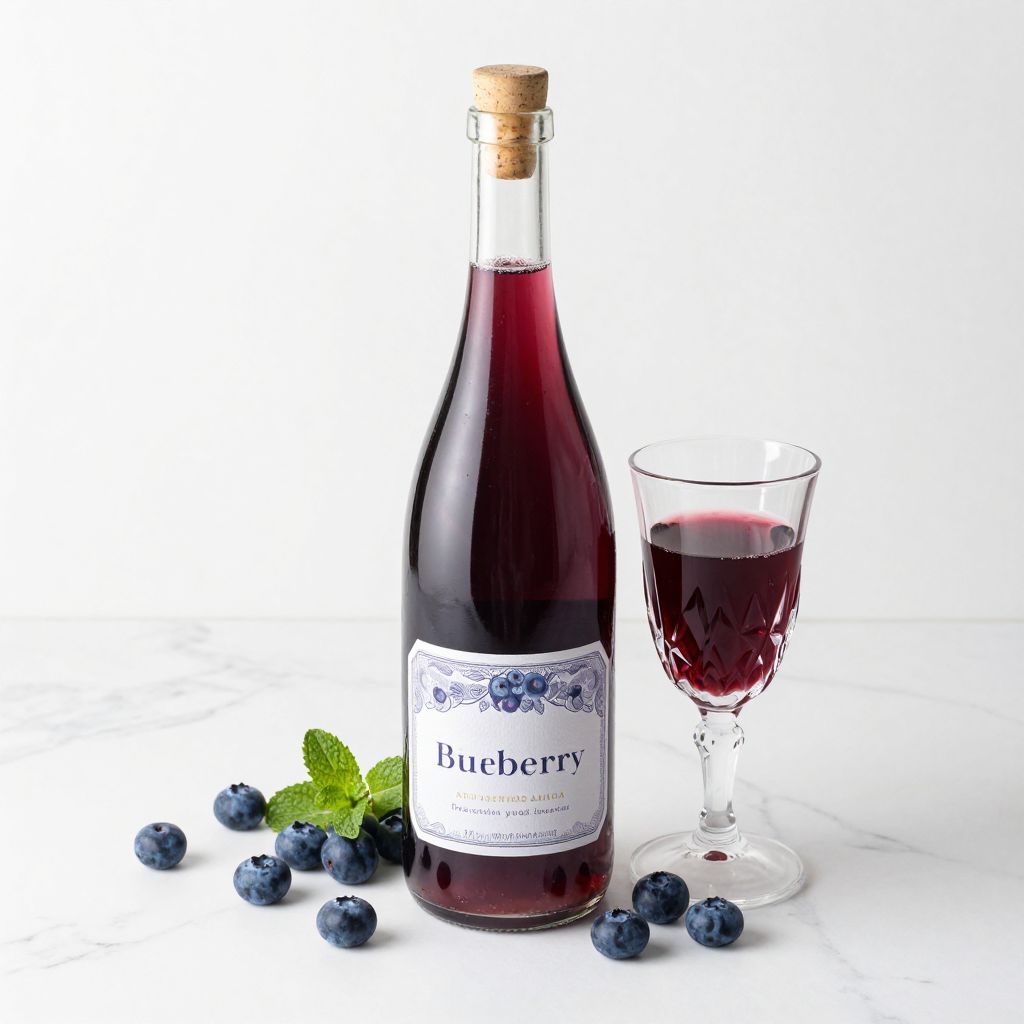
Blueberry Wine
Ingredients
Equipment
Method
- Rinse your blueberries under cool water and remove any stems or debris. If using frozen berries, thaw them at room temperature for several hours to allow the cell walls to break down and release more juice.
- Sanitize all equipment by rinsing your carboy, airlock, spoon, and bucket thoroughly with hot water. If you have access to a sanitizer like Star San or sulfites, use it on all equipment that touches your must or finished wine.
- Heat your water to about 150 degrees Fahrenheit in a large pot, then stir in the sugar until completely dissolved.
- Pour the warm sugar solution into your large fermentation bucket and add the blueberries, crushing them gently with a spoon or your hands to release their juice.
- Once the must has cooled to room temperature (about 70 degrees Fahrenheit), stir in your acid blend, pectic enzyme, and yeast nutrient.
- Rehydrate your wine yeast according to the packet instructions, typically by stirring it into a small amount of warm water and letting it sit for 15 minutes. Pour the yeast slurry into your must and stir well to distribute it evenly, then cover loosely with a clean cloth.
- Let the mixture sit at room temperature for 24 to 48 hours, then transfer everything to your sanitized gallon carboy and fit it with an airlock.
- Allow primary fermentation to continue for 4 to 6 weeks at room temperature. The bubbling will slow significantly as fermentation completes.
- Once bubbling nearly stops (usually 4 to 6 weeks in), use a sanitized siphon to transfer the clear wine off the sediment layer into a clean carboy, leaving the berry solids and dead yeast behind.
- Fit the secondary carboy with a fresh airlock and allow the wine to age for at least 2 to 3 months at room temperature or cooler.
- After aging to your satisfaction, siphon the clear wine into sanitized bottles and cap or cork them immediately. Store bottles upright in a cool, dark place and allow the wine to continue aging for at least 6 months before opening, though one year or longer yields noticeably better flavor.