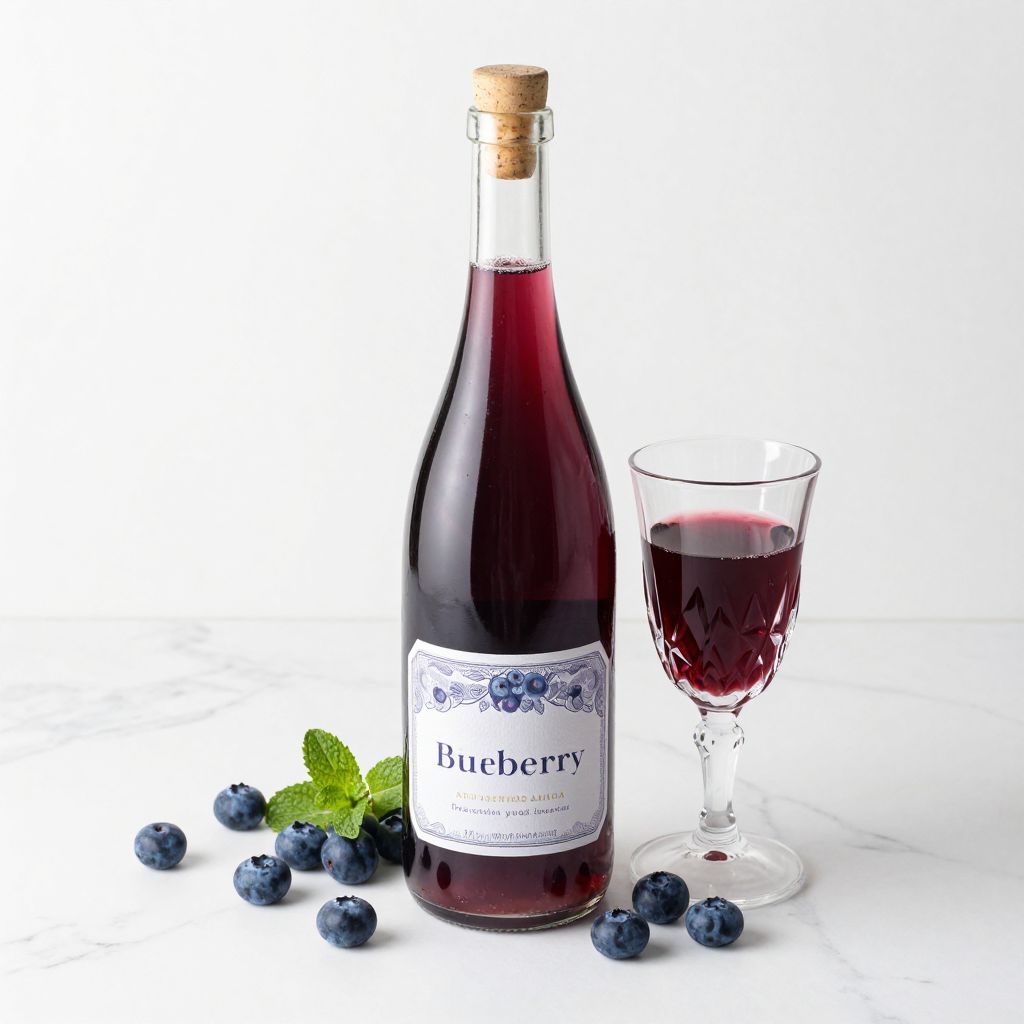
Ingredients
Equipment
Method
- Rinse your blueberries under cool water and remove any stems or debris. If using frozen berries, thaw them at room temperature for several hours to allow the cell walls to break down and release more juice.
- Sanitize all equipment by rinsing your carboy, airlock, spoon, and bucket thoroughly with hot water. If you have access to a sanitizer like Star San or sulfites, use it on all equipment that touches your must or finished wine.
- Heat your water to about 150 degrees Fahrenheit in a large pot, then stir in the sugar until completely dissolved.
- Pour the warm sugar solution into your large fermentation bucket and add the blueberries, crushing them gently with a spoon or your hands to release their juice.
- Once the must has cooled to room temperature (about 70 degrees Fahrenheit), stir in your acid blend, pectic enzyme, and yeast nutrient.
- Rehydrate your wine yeast according to the packet instructions, typically by stirring it into a small amount of warm water and letting it sit for 15 minutes. Pour the yeast slurry into your must and stir well to distribute it evenly, then cover loosely with a clean cloth.
- Let the mixture sit at room temperature for 24 to 48 hours, then transfer everything to your sanitized gallon carboy and fit it with an airlock.
- Allow primary fermentation to continue for 4 to 6 weeks at room temperature. The bubbling will slow significantly as fermentation completes.
- Once bubbling nearly stops (usually 4 to 6 weeks in), use a sanitized siphon to transfer the clear wine off the sediment layer into a clean carboy, leaving the berry solids and dead yeast behind.
- Fit the secondary carboy with a fresh airlock and allow the wine to age for at least 2 to 3 months at room temperature or cooler.
- After aging to your satisfaction, siphon the clear wine into sanitized bottles and cap or cork them immediately. Store bottles upright in a cool, dark place and allow the wine to continue aging for at least 6 months before opening, though one year or longer yields noticeably better flavor.
Notes
Keep the temperature stable between 55 and 70 degrees Fahrenheit during fermentation. Use fresh or recently harvested frozen blueberries for best flavor. Keep detailed notes on everything you do so you can replicate or improve your next batch. Taste your wine several months after bottling, then again at 6 and 12 months to watch how flavor develops. The wine reaches an excellent balance at six months to one year of total aging.