
Close your eyes and picture the fizzy sweetness of an ice-cold root beer float, crowned with vanilla ice cream that melts into ribbons of caramel and spice. Making homemade root beer from scratch transforms that nostalgic memory into reality, and the process is far simpler than you’d think.
This recipe delivers that classic soda-fountain flavor without artificial ingredients or store-bought limitations. You’ll craft a concentrate from real spices and botanicals, then carbonate it to perfection for a refreshing treat that tastes like it came straight from a vintage ice cream parlor.
Why You’ll Love This Recipe
Homemade root beer beats the bottled stuff because you control every flavor note and sweetness level. Your friends will be genuinely impressed when you serve them something crafted with care, not chemicals.
- Full control over sweetness, spice intensity, and carbonation level
- No artificial flavors or preservatives in the final product
- Creates an unforgettable centerpiece for parties and gatherings
- Teaches you real carbonation techniques you can apply to other beverages
- Costs less than premium bottled sodas once you have the spices on hand
My Experience Making This Recipe
I first made homemade root beer on a lazy summer afternoon, expecting complications and messy failures. Instead, I ended up with five bottles of the most complex, satisfying soda I’d ever tasted, and my kitchen smelled like a spice bazaar.
The concentrate steeping for 24 hours filled my home with vanilla, sassafras, and wintergreen notes that shifted throughout the day. When I cracked open the first bottle after carbonation, that crisp hiss and first sip delivered an almost electric flavor that no commercial brand had matched.
My family gathered around like it was Christmas morning, and three bottles vanished in one afternoon. The real payoff came from knowing exactly what went into every sip.
Recipe Overview
- Recipe Name: Best Homemade Root Beer
- Servings: Makes approximately 2 liters (8 servings)
- Prep Time: 20 minutes
- Steeping Time: 24 hours
- Cook Time: 10 minutes
- Total Time: 24 hours 30 minutes
- Course: Beverage
- Cuisine: American
- Calories per Serving: 150
Equipment You Will Need
- Large glass jar (at least 2 liters capacity)
- Fine mesh strainer or cheesecloth
- Small saucepan
- Whisk or wooden spoon
- Carbonation bottle with pressure release valve
- CO2 cartridges (or a soda maker like SodaStream)
- Measuring cups and spoons
- Funnel
- Labels for bottles
Ingredients for Homemade Root Beer
For the Spice Concentrate
-
- Sassafras bark: 1 tablespoon
- Wintergreen leaves: 1 teaspoon
- Anise seeds: 1 teaspoon
- Sarsaparilla root: 1/2 teaspoon
- Birch bark: 1/2 teaspoon
- Cinnamon stick: 1 whole, broken into pieces
- Nutmeg: 1/4 teaspoon, freshly grated
- Black peppercorns: 1/4 teaspoon
- Cloves: 3 whole
- Vanilla extract: 1 tablespoon
- Molasses: 1/4 cup
- Brown sugar: 3/4 cup
- White sugar: 1 cup
- Water: 2 cups
For Carbonation
- Filtered water: 1 liter, chilled
- CO2 cartridges or soda maker: as needed for your equipment
Ingredient Notes and Substitutions
- Sassafras bark: The cornerstone spice that gives root beer its woody, earthy base. If unavailable, increase wintergreen and anise slightly, though the flavor will shift toward a more licorice-forward profile.
- Wintergreen leaves: Provides the cool, minty bite that root beer lovers crave. Spearmint or peppermint can substitute, but they’ll dominate the flavor more aggressively.
- Molasses: Creates depth and slight bitterness that balances sweetness. Dark corn syrup offers similar viscosity but lacks the complex caramel notes.
- Vanilla extract: Rounds out the spice blend with warmth and sweetness. Pure vanilla is essential; imitation extracts taste thin and artificial in this application.
- Brown sugar: Adds subtle molasses notes beyond white sugar alone. You can use all white sugar, but the final product loses some complexity and depth.
How to Make Homemade Root Beer
Step 1: Gather and Toast Your Spices
Combine all dry spices in a small, dry skillet over medium heat for 2 to 3 minutes, stirring occasionally until fragrant. This toasting step releases essential oils locked in the spices, dramatically boosting the final flavor intensity without any extra ingredients.
Step 2: Combine Spices with Water in a Jar
Pour the toasted spices into a clean glass jar and add 2 cups of water. Stir well to distribute the spices evenly throughout the liquid, ensuring nothing settles immediately to the bottom.
Step 3: Steep for 24 Hours at Room Temperature
Cover the jar loosely and set it on your kitchen counter away from direct sunlight. The longer steeping time allows the water to extract maximum flavor from the botanicals, creating a rich, complex concentrate.
Step 4: Strain the Spice Solids
Line your fine mesh strainer with cheesecloth and pour the steeped mixture through it into a clean bowl. Press gently on the solids to extract every drop of liquid, then discard the used spices.
Step 5: Heat the Syrup Base
Pour the strained spice liquid back into your saucepan and add the brown sugar, white sugar, and molasses over medium heat. Stir constantly for about 3 to 4 minutes until all sugar dissolves completely and the mixture becomes homogeneous and glossy.
Step 6: Cool the Concentrate to Room Temperature
Remove the pan from heat and let the concentrate cool completely, about 30 minutes. Cooling prevents the vanilla extract from cooking off and losing its delicate flavor notes.
Step 7: Add Vanilla Extract
Once cooled to room temperature, stir in your vanilla extract thoroughly. Never add vanilla to hot liquid, as heat breaks down the complex vanilla compounds and leaves you with a one-dimensional flavor.
Step 8: Combine Concentrate with Chilled Water
Pour your cooled concentrate into a large measuring pitcher and add 1 liter of chilled filtered water, stirring well to combine. The ratio of concentrate to water creates the perfect balance of flavor without being cloying.
Step 9: Carbonate Your Root Beer
Pour the root beer mixture into your carbonation bottle and charge it with CO2 cartridges according to your equipment’s instructions. If using a soda maker, follow the manufacturer’s carbonation process, typically charging twice for optimal fizz.
Step 10: Chill and Serve
Refrigerate your finished root beer for at least 2 hours before opening. Cold temperatures enhance carbonation retention and bring out the crisp, refreshing qualities that make root beer so satisfying.
Pro Tip: Keep your carbonation bottles in the coldest part of your refrigerator for maximum fizz retention, and always release pressure slowly when opening to prevent overflow.
Tips for the Best Homemade Root Beer
- Use fresh, high-quality spices for maximum flavor impact. Spices older than six months lose potency and deliver muted results.
- Toast your spices in a dry skillet right before steeping to unlock aromatic compounds that make the difference between good and extraordinary root beer.
- Taste your concentrate before carbonating and adjust sweetness or spice intensity while you still can. You can always add more syrup if too spicy, or more concentrate if too sweet.
- Chill your water before mixing with the concentrate so your root beer reaches serving temperature faster and carbonates more evenly.
- Store concentrate in a sealed glass container in the refrigerator for up to three weeks, allowing you to make fresh batches of carbonated root beer on demand.
- Keep carbonation bottles upright in your fridge rather than sideways, as this prevents the seal from weakening and helps maintain fizz longer.
Common Mistakes to Avoid
- Skipping the spice toasting step: Raw spices deliver flat, muted flavors compared to toasted ones. The brief heat activation opens up aromatic oils that create the authentic root beer taste.
- Adding vanilla to hot liquid: Vanilla’s delicate compounds break down immediately at high temperatures, leaving your root beer tasting thin and uninspired rather than warm and complex.
- Overcarbonating the root beer: Too much CO2 creates harsh, sharp carbonation that overpowers the subtle spice notes. Stick to your equipment’s recommended dosage for balanced fizz.
- Using old or stale spices: Spices lose potency quickly and contribute dusty, dull flavors instead of bright, energetic tastes. Check your spice cabinet and replace anything older than six months.
- Rushing the steeping process: Cutting the 24 hours short results in underdeveloped flavor and a thin-tasting final product. Patience here directly translates to quality in your glass.
Serving Suggestions
Serve your homemade root beer ice-cold in frosted glasses, either straight over ice or with a generous scoop of vanilla ice cream for a classic root beer float. The complexity of homemade brew shines brightest when properly chilled and paired with rich desserts or alongside burgers and casual meals.
- Float with premium vanilla ice cream and drizzle with salted caramel sauce for an indulgent treat
- Mix half root beer and half cream for a creamy, less intense sipper
- Serve in vintage glass bottles at parties for impressive presentation and conversation starter
- Combine with bourbon or rum for adult root beer cocktails at evening gatherings
- Pair with homemade hotdogs and classic diner fare for authentic Americana dining
Variations to Try
- Spiced Root Beer: Add 1/2 teaspoon of cayenne pepper and 1/4 teaspoon of ground ginger to the concentrate for a warming kick that builds on the finish.
- Birch Beer Style: Reduce vanilla extract to 1/2 teaspoon and increase birch bark to 1 teaspoon, creating a more austere, forest-floor profile.
- Cream Soda Crossover: Double the vanilla extract and reduce all spices except cinnamon by half for a softer, sweeter result that bridges root beer and cream soda.
- Herbal Root Beer: Add 1/2 teaspoon of dried lavender and 1/4 teaspoon of dried rosemary to the spice blend for an unexpected floral, botanical edge.
- Smoky Root Beer: Include 1/4 teaspoon of smoked paprika and a small pinch of liquid smoke in the cooled concentrate for depth and savory complexity.
Dietary Adaptations
- Gluten-Free: This recipe is naturally gluten-free as written. Always verify that purchased spices were processed in gluten-free facilities if you have celiac sensitivity.
- Dairy-Free: The base recipe contains no dairy. Skip the ice cream float topping or use coconut, almond, or oat-based frozen alternatives instead.
- Vegan: This recipe is completely vegan. No animal products appear in the concentrate or carbonation process.
- Low-Sugar or Keto: Replace all sugar with erythritol or monk fruit sweetener at a 1:1 ratio, though this will slightly alter mouthfeel and reduce the syrupy body.
Storage and Reheating
Refrigerator
Store carbonated root beer in sealed bottles in the coldest part of your refrigerator where it maintains fizz for 2 to 3 weeks. Keep the concentrate in a sealed glass jar where it stays fresh for up to three weeks.
- Store bottles upright to maintain pressure integrity
- Keep away from temperature fluctuations that cause pressure changes
- Cover concentrate jars tightly to prevent oxidation
Freezer
Freeze the concentrate in ice cube trays for convenient portioning and longer storage up to three months. Never freeze carbonated root beer, as pressure buildup can rupture bottles.
- Transfer frozen concentrate cubes to freezer bags once solid
- Label bags with the date for easy tracking
- Thaw concentrate at room temperature before using
Reheating
There is no reheating required for this recipe. Always serve root beer chilled, either straight from the fridge or poured over fresh ice in a glass.
- For flat root beer that’s been open, you can recarbonate using your soda maker
- If concentrate has separated, stir well before mixing with water
Nutrition Information
| Nutrient | Amount |
|---|---|
| Calories | 150 |
| Total Fat | 0g |
| Saturated Fat | 0g |
| Carbohydrates | 39g |
| Fiber | 0g |
| Sugar | 37g |
| Protein | 0g |
| Sodium | 15mg |
| Cholesterol | 0mg |
Nutrition information is approximate and based on 8 servings of 8 ounces each. Actual values vary depending on specific ingredients and brands used. This homemade root beer contains real sugar and spices with no artificial additives or preservatives.
Frequently Asked Questions
Can I Make Root Beer Without a Carbonation System?
You can make a still root beer by chilling the concentrate and water mixture and serving it cold, but the signature fizz is what transforms it into true soda. Investing in a basic soda maker costs less than 50 dollars and opens up endless carbonation possibilities.
What if I Can’t Find Sassafras Bark?
Sassafras is the signature spice, but you can create an acceptable substitute by combining equal parts wintergreen, anise, and birch bark with extra cinnamon. The flavor will shift toward licorice and spice rather than the traditional earthy-woody profile, but it will still taste delicious.
How Long Does Homemade Root Beer Keep After Opening?
An opened bottle loses carbonation within 24 to 48 hours once uncapped. Store opened bottles in the fridge and consume them quickly, or reseal with a bottle cap to extend fizz retention slightly.
Why Does My Root Beer Taste Too Bitter or Medicinal?
Oversleeping the spices or using old spices that have turned rancid creates harsh, medicinal flavors. Start fresh with new spices and stick to the 24-hour steeping window for balanced, rounded taste.
Can I Double This Recipe for Large Parties?
Absolutely, double all ingredients and scale up your equipment accordingly. Make the concentrate in a larger pot and use oversized jars for steeping, then divide the concentrate for carbonating in smaller batches if needed.
What’s the Difference Between Root Beer and Sassafras Tea?
Root beer contains sugar and higher spice concentration for sweetness and complex flavor, while sassafras tea is typically just steeped bark with minimal sweetening. Root beer carbonation and concentrated spice profile create an entirely different beverage experience.
Final Thoughts
Making homemade root beer connects you to a vintage American tradition while delivering flavors that bottled sodas simply cannot match. You now hold the knowledge and skills to create something truly special, whether for yourself or to impress guests who will absolutely ask where you bought it.
The magic happens when you take that first sip of cold, fizzy homemade root beer and taste exactly what you put into it. Stop settling for commercial sweetness and give this recipe a try this weekend.
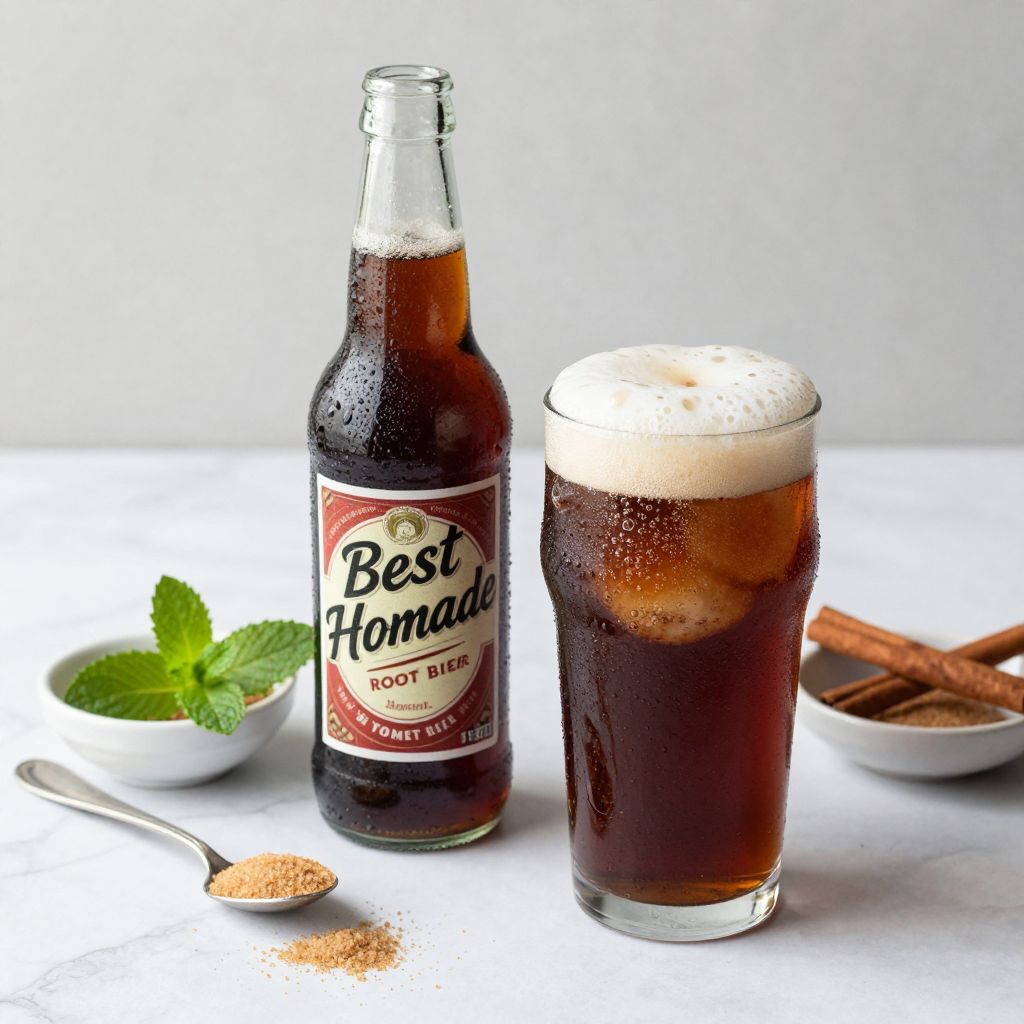
Best Homemade Root Beer
Ingredients
Equipment
Method
- Combine all dry spices (sassafras bark, wintergreen leaves, anise seeds, sarsaparilla root, birch bark, cinnamon stick, nutmeg, black peppercorns, and cloves) in a small, dry skillet over medium heat for 2 to 3 minutes, stirring occasionally until fragrant.
- Pour the toasted spices into a clean glass jar and add 2 cups of water. Stir well to distribute the spices evenly throughout the liquid.
- Cover the jar loosely and set it on your kitchen counter away from direct sunlight. Steep for 24 hours at room temperature.
- Line your fine mesh strainer with cheesecloth and pour the steeped mixture through it into a clean bowl. Press gently on the solids to extract every drop of liquid, then discard the used spices.
- Pour the strained spice liquid back into your saucepan and add the brown sugar, white sugar, and molasses over medium heat. Stir constantly for about 3 to 4 minutes until all sugar dissolves completely and the mixture becomes homogeneous and glossy.
- Remove the pan from heat and let the concentrate cool completely to room temperature, about 30 minutes.
- Once cooled to room temperature, stir in your vanilla extract thoroughly.
- Pour your cooled concentrate into a large measuring pitcher and add 1 liter of chilled filtered water, stirring well to combine.
- Pour the root beer mixture into your carbonation bottle and charge it with CO2 cartridges according to your equipment's instructions. If using a soda maker, follow the manufacturer's carbonation process, typically charging twice for optimal fizz.
- Refrigerate your finished root beer for at least 2 hours before opening and serving ice-cold.