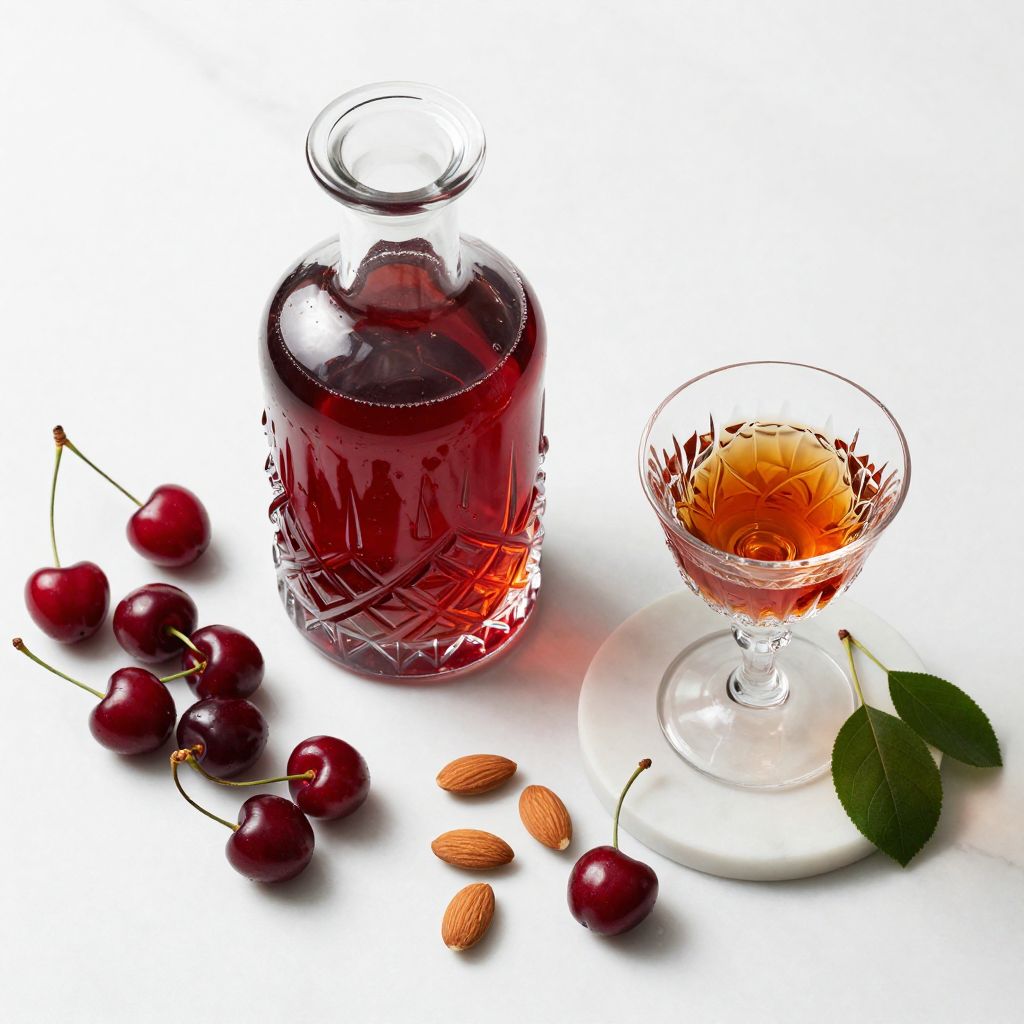
Ingredients
Equipment
Method
- Rinse your fresh cherries under cold water and pat them dry with a clean towel. Pit each cherry carefully, reserving a handful of pits if you want to skip the almonds later.
- Place the pitted cherries in your large glass jar and crush them gently with the back of a wooden spoon or a clean mallet. You want to break the fruit open and release its juice, but you don't need to turn them into paste.
- Toss the whole almonds into the jar with the crushed cherries. The almonds add an almond extract quality that deepens the flavor complexity and mimics the subtle nuttiness that cherry pits would provide naturally.
- Measure out your vodka and pour it directly over the cherry mixture in the jar. The vodka will immediately begin extracting color and flavor from the fruit, turning pale as it mingles with the cherry juice.
- Screw the lid on tightly and label your jar with the date you started the infusion. Tight sealing prevents evaporation and keeps airborne bacteria and dust out of your batch.
- Place the sealed jar in a cool, dark cabinet or closet where it won't experience direct sunlight or temperature swings. Avoid the kitchen counter, where warmth and light will fade color and degrade flavor.
- Every five to seven days for the first four weeks, gently shake the jar to agitate the cherry solids and distribute the infusion evenly. After four weeks, you can reduce shaking to once every two weeks.
- After eight weeks, open the jar and taste a small amount by soaking a cherry in a spoon with a bit of the liquid. If the cherry flavor tastes rich and deep, it's time to strain.
- Line a fine-mesh strainer with cheesecloth and carefully pour the liqueur through it into a clean bowl. Work slowly to avoid splashing, and don't squeeze the cheesecloth, as this can push fine sediment into your final product.
- Combine the sugar and filtered water in a small saucepan and heat over medium heat, stirring occasionally until the sugar dissolves completely. Remove from heat and let it cool to room temperature before adding it to your strained liqueur.
- Pour the strained cherry infusion into a clean glass bottle or jar, then slowly add the cooled simple syrup while stirring gently. The syrup sweetens the liqueur and adds body, but stir carefully to avoid aerating the liquid.
- Seal your bottles and label them with the date of completion. Let the finished liqueur rest for another two to four weeks in a cool, dark spot to allow flavors to marry and smooth out.
Notes
Reserve a few cherry pits before you pit your fruit; they contain natural amygdalin, which provides that subtle almond note and eliminates the need for whole almonds. Use the freshest, ripest cherries you can find for deeper flavor. Taste your infusion at the eight-week mark, but don't panic if it still tastes harsh; extended aging mellows rough edges significantly. Keep your jar away from direct sunlight at all times. Store sealed bottles in a cool pantry or cabinet; opened bottles keep for up to two years in a cool, dark spot.