
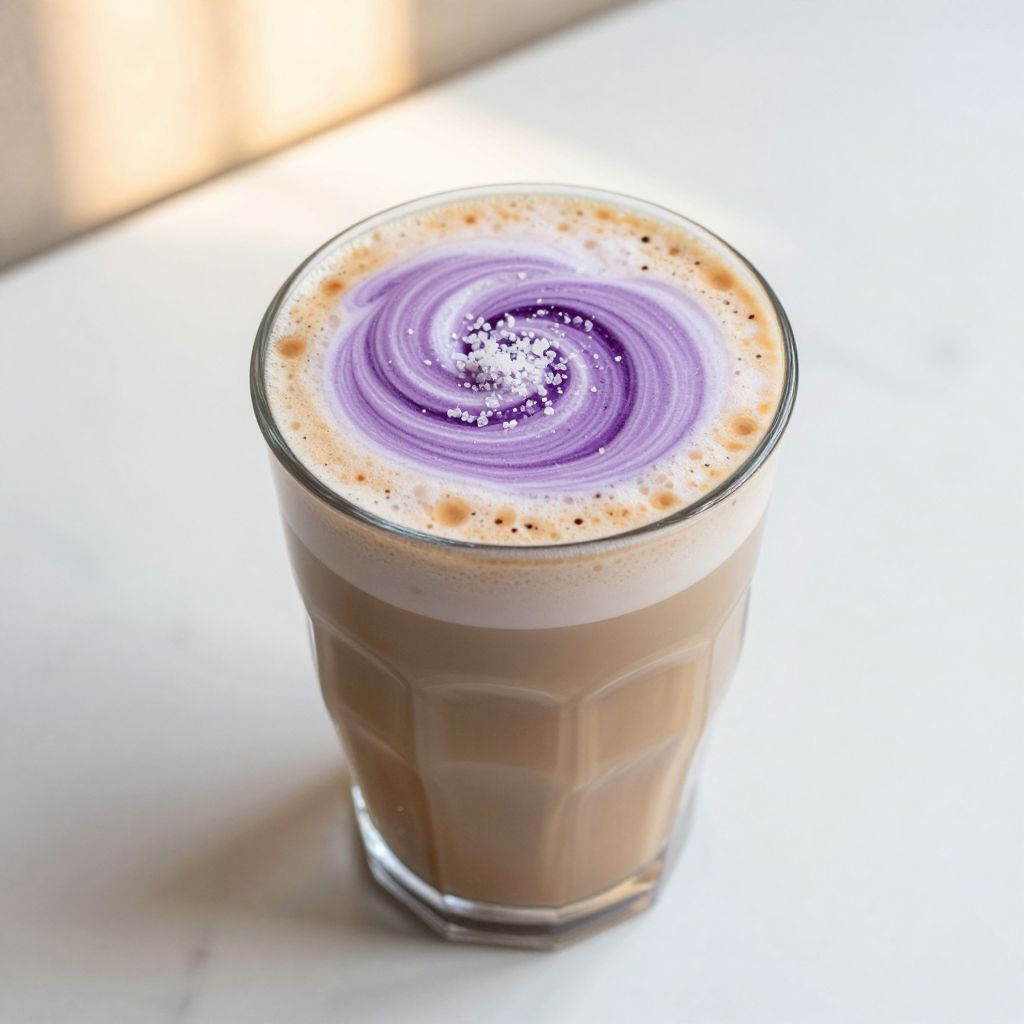
The first sip of a ube latte hits you with earthy sweetness and that unmistakable purple hue that makes you pause and smile. This Filipino-inspired drink has quietly become a cafe favorite, and for good reason: it’s visually stunning, naturally sweet, and genuinely delicious without tasting overly processed.
Unlike trendy drinks that fade fast, an ube latte delivers real flavor backed by simple ingredients you can find at most grocery stores. The purple yam root (ube) brings a subtle nuttiness and vanilla-like warmth that pairs beautifully with espresso and steamed milk. You’ll feel like you’re sipping something special, yet it takes less than five minutes to make at home.
Why You’ll Love This Recipe
This recipe combines visual appeal with genuine taste satisfaction. You get a cafe-quality drink that costs a fraction of what specialty coffee shops charge.
- Naturally sweet with no refined sugar needed if you use sweetened ube syrup or puree
- Ready in under 5 minutes from start to finish
- Works hot or cold, perfect year-round
- Requires just a few pantry staples and no special equipment beyond a standard espresso machine or French press
- Impressive enough to serve guests but simple enough for lazy mornings
My Experience Making This Recipe
I first discovered ube lattes at a local Filipino-owned cafe and was hooked immediately. The color alone made me curious, but the flavor won me over with its gentle earthiness and creamy sweetness.
My initial attempts at home were hit-or-miss until I learned the ratio matters more than the method. Too much ube syrup tastes cloying; too little and you lose that signature flavor and color that makes the drink special.
Once I nailed the balance, I started experimenting with different milk types and layering techniques. The drink has become my go-to weekend treat, and friends who try it always ask for the recipe. Making it consistently now feels effortless, and honestly, homemade versions taste fresher than most cafe versions I’ve tried.
Recipe Overview
- Recipe Name: Ube Latte
- Servings: 1
- Prep Time: 2 minutes
- Cook Time: 3 minutes
- Total Time: 5 minutes
- Course: Beverage
- Cuisine: Filipino-Inspired
- Calories per Serving: 180
Equipment You Will Need
- Espresso machine or French press for brewing coffee
- Milk frother (automatic or handheld)
- Small saucepan for heating milk on stovetop
- Measuring spoons and cups
- Tall coffee mug or latte glass
- Whisk or spoon for stirring
Ingredients for Ube Latte
- Espresso or strong brewed coffee: 1 to 1.5 ounces (about 2 tablespoons of espresso or 3 tablespoons of strong black coffee)
- Whole milk: 8 to 10 ounces, steamed
- Ube syrup or ube puree: 2 to 3 tablespoons
- Vanilla extract: 1/4 teaspoon (optional but recommended)
- Pinch of sea salt: to balance sweetness
- Water: 2 tablespoons (if using ube puree instead of syrup)
Ingredient Notes and Substitutions
- Ube syrup: The backbone of this drink, ube syrup blends the purple yam with sugar and vanilla for easy stirring into beverages. If you cannot find ube syrup, substitute with ube puree mixed with a tablespoon of simple syrup or honey, though the texture will be slightly thicker.
- Espresso: Espresso delivers the concentrated coffee flavor that cuts through the sweetness without diluting the drink. You can substitute with strong brewed coffee or cold brew concentrate, though the taste will be less intense and slightly more diluted.
- Whole milk: Whole milk creates the richest, creamiest texture that balances the earthy ube flavor perfectly. Oat milk or 2% milk work as substitutes, though whole milk delivers superior mouthfeel and slightly better flavor integration.
- Vanilla extract: Vanilla deepens the subtle vanilla notes already present in ube, creating a more cohesive flavor profile. Almond extract offers a different nuttiness that can work, but it changes the drink’s character noticeably.
- Sea salt: A pinch of salt rounds out flavors and prevents the drink from tasting one-dimensional and overly sweet. Table salt works identically, though sea salt feels less metallic on the palate.
How to Make Ube Latte
Step 1: Brew Your Espresso or Strong Coffee
Pull a shot of espresso into your mug or brew 3 tablespoons of strong black coffee. Strong coffee is non-negotiable because ube’s sweetness can quickly overpower weak coffee, leaving you with a sugary drink that barely tastes like coffee.
Step 2: Add the Ube Syrup to the Hot Coffee
Pour 2 to 3 tablespoons of ube syrup directly into your hot espresso or coffee. Stir well until the syrup fully dissolves and integrates with the coffee, which takes about 30 seconds of continuous stirring to ensure even distribution.
Step 3: Incorporate Vanilla Extract
Add 1/4 teaspoon of vanilla extract to the coffee and syrup mixture, then stir to combine. This step amplifies the subtle vanilla already in ube and adds another layer of warmth that makes the drink feel more complete.
Step 4: Add a Pinch of Salt
Drop a small pinch of sea salt into the mixture and stir briefly. Salt counteracts excessive sweetness and sharpens the coffee flavor, making the drink more sophisticated than it would be without this single ingredient.
Step 5: Heat Your Milk
Pour 8 to 10 ounces of whole milk into your milk frother or saucepan. If using a saucepan, heat the milk over medium heat until steam rises and small bubbles form around the edges, about 2 to 3 minutes, stirring occasionally to prevent scorching.
Step 6: Froth the Milk
If using an automatic frother, activate it and let it heat and froth the milk until it reaches about 150 to 155 degrees Fahrenheit with a light layer of microfoam on top. If using a handheld frother, submerge the whisk just below the surface of the hot milk and whisk vigorously for 20 to 30 seconds to create microfoam, then continue heating until the milk reaches the correct temperature.
Step 7: Pour the Steamed Milk Into the Ube Coffee
Slowly pour the steamed milk into your mug while holding back the foam with a spoon, pouring steadily to create an even mixture. Pour until your mug is about three-quarters full, which ensures proper coffee-to-milk ratio and prevents the drink from being too diluted.
Step 8: Top with Remaining Foam
Spoon the remaining microfoam onto the top of your latte, creating a thin layer that adds texture and visual appeal. The foam insulates the drink slightly and gives you that authentic latte experience that makes the drink feel more indulgent.
Pro Tip: Use ube syrup rather than ube puree if you want an effortless, fully dissolved drink, but ube puree delivers richer, more authentic flavor if you don’t mind stirring a bit more thoroughly.
Tips for the Best Ube Latte
- Stir the ube syrup into hot coffee while it’s still brewing or immediately after pouring to ensure maximum dissolution and flavor integration.
- Use whole milk if possible; it steams more smoothly and creates a creamier, more luxurious mouthfeel that justifies the extra calories.
- Don’t skip the vanilla extract even though it seems optional; it brightens the ube flavor and prevents the drink from tasting flat.
- Keep your espresso or coffee strong; weak coffee gets completely overpowered by the ube’s sweetness and tastes more like dessert than coffee.
- Pour the milk slowly and deliberately to create a smooth blend rather than dumping it all at once, which can cause uneven flavor distribution.
- Taste your drink before adding sweetener; ube syrup often provides enough sweetness already, and adding more sugar masks the subtle nuances.
Common Mistakes to Avoid
- Using weak or instant coffee causes the drink to taste cloying and one-dimensional without the coffee’s natural bitterness to balance the sweetness.
- Adding ube syrup to cold coffee first creates lumps and poor distribution; always add syrup to hot liquid so it dissolves completely.
- Over-frothing the milk creates too much foam and not enough steamed milk, resulting in an airy, unbalanced drink with less creamy texture.
- Skipping the salt might seem harmless, but it leaves the drink tasting flat and overly sweet without any complexity or dimension.
- Using flavored milk already containing vanilla or hazelnut can muddy the ube flavor and create a confused taste profile rather than a cohesive one.
Serving Suggestions
Serve your ube latte immediately while the foam is still intact and the milk is at optimal temperature. The drink pairs beautifully with Filipino pastries or light breakfast items that complement rather than compete with its unique flavor.
- Pair with butter croissants or flaky ensaymada for a textural contrast
- Serve alongside Filipino pandesal bread or simple toast with butter
- Enjoy with almond biscotti or madeleines for a lighter pairing
- Combine with cream cheese pastries or chocolate croissants for an indulgent breakfast
- Serve alone as an afternoon treat between meals when you want something special but not heavy
Variations to Try
- Iced Ube Latte: Brew your espresso and add ube syrup as instructed, then pour over ice and add cold milk instead of steamed milk, stirring well until combined for a refreshing summer version.
- Ube Latte with Coconut Milk: Substitute half or all of the whole milk with full-fat coconut milk for a tropical twist that complements ube’s earthiness and adds creamy richness.
- Ube Latte Macchiato: Layer espresso on top of steamed ube milk rather than mixing them, creating a visually striking drink with distinct coffee and ube flavors that blend as you drink.
- Spiced Ube Latte: Add 1/8 teaspoon each of cinnamon and nutmeg to the coffee before adding milk for warmth and spice that pairs unexpectedly well with ube’s vanilla notes.
- Ube White Chocolate Latte: Stir 1 tablespoon of white chocolate syrup into the espresso along with the ube syrup for a sweeter, dessert-like version that tastes like indulgent hot chocolate.
Dietary Adaptations
- Dairy-Free: Replace whole milk with oat milk or almond milk and use a plant-based milk frother to achieve similar microfoam, though the mouthfeel will be slightly less creamy and rich.
- Vegan: Use dairy-free milk as noted above and ensure your ube syrup contains no animal products; most commercial ube syrups are vegan, but check labels to be certain.
- Low-Sugar: Replace ube syrup with unsweetened ube puree and add a sugar substitute like monk fruit or stevia to taste, though the flavor will be less sweet and more earthy.
- Gluten-Free: This recipe is naturally gluten-free; just verify that your ube syrup and any paired pastries don’t contain gluten, as some commercial syrups may use thickening agents with gluten.
Storage and Reheating
Refrigerator
Store leftover ube syrup in an airtight container for up to 2 weeks. The syrup separates slightly over time, so shake well before using again.
- Keep ube syrup in the coldest part of your refrigerator away from strong-smelling foods
- Transfer syrup to a glass jar rather than plastic for longer storage without flavor absorption
Freezer
Ube syrup freezes well for up to 3 months in an airtight container, though it becomes slightly thicker when thawed. Don’t freeze prepared ube lattes, as the milk separates and texture deteriorates significantly.
- Freeze syrup in ice cube trays for portion-controlled servings
- Label containers with the date to track freshness
Reheating
If you need to reheat a prepared ube latte, gently warm it in a saucepan over low heat and stir constantly to prevent scorching, then refroth the milk if desired. Microwaving works but can create uneven heat distribution and kill the microfoam texture.
- Heat gently to prevent the milk from developing a burnt taste
- Add fresh frothed milk on top after reheating for better texture
Nutrition Information
| Nutrient | Amount |
|---|---|
| Calories | 180 |
| Total Fat | 5g |
| Saturated Fat | 3g |
| Carbohydrates | 28g |
| Fiber | 0g |
| Sugar | 26g |
| Protein | 8g |
| Sodium | 95mg |
| Cholesterol | 15mg |
Nutrition values vary based on specific ube syrup brand and milk type used. This calculation assumes standard commercial ube syrup and whole milk with one shot of espresso.
Frequently Asked Questions
Can I Make an Ube Latte Without an Espresso Machine?
Yes, use strong brewed coffee from a French press or pour-over instead of espresso. The drink will be slightly less concentrated but still delicious, though it may taste a bit more diluted than the espresso version.
Where Do I Buy Ube Syrup?
Most Asian grocery stores carry ube syrup in the Filipino or international section, and it’s widely available online through Amazon and specialty food retailers. Some conventional grocery stores now stock it in the coffee syrup aisle as Filipino flavors become more mainstream.
Can I Make This Drink Ahead of Time?
Prepare the ube and coffee mixture up to 4 hours ahead and store in the refrigerator, then add fresh steamed milk when ready to drink. Don’t make the complete latte ahead, as the milk separates and the foam dissipates quickly.
Why Does My Ube Latte Look Brownish Instead of Purple?
The coffee darkens the purple ube color to a more muted mauve or brown tone, which is completely normal and doesn’t affect taste. If you want a more vibrant purple drink, use less coffee or add extra ube syrup, though this changes the flavor balance.
Is Ube Latte Naturally Sweet, or Do I Need to Add Sugar?
Ube syrup contains significant sugar, so the latte is naturally sweet without additional sweetener. Most people find it perfectly sweetened as is, but you can add a teaspoon of honey or a sugar cube if you prefer extra sweetness.
Can I Use Coconut Milk for This Recipe?
Yes, full-fat coconut milk creates a delicious tropical version that pairs beautifully with ube’s earthy notes. Use it in equal measure to whole milk, though the drink will taste distinctly different and slightly more floral.
Final Thoughts
An ube latte transforms an ordinary coffee break into something memorable without requiring specialty skills or obscure ingredients. Once you nail the basic technique, you’ll find yourself making this drink regularly because it hits that perfect sweet spot between indulgent and approachable.
Give this recipe a try this week, and don’t hesitate to adjust the ube-to-coffee ratio based on your personal taste. You might discover that homemade ube lattes beat your favorite cafe version, and you’ll definitely appreciate the cost savings.
Explore more specialty coffee recipes at home, including a creamy classic coffee latte recipe for when you want something more traditional. You might also enjoy the subtle elegance of a hojicha latte recipe for a different take on specialty milk beverages that showcase unique Asian flavors.
Ube Latte
Ingredients
Equipment
Method
- Pull a shot of espresso (1 to 1.5 ounces) or brew 3 tablespoons of strong coffee into a mug.
- Pour 2 to 3 tablespoons of ube syrup into the hot coffee and stir continuously for about 30 seconds until fully dissolved.
- Add 1/4 teaspoon of vanilla extract to the coffee mixture and stir to combine.
- Add a pinch of sea salt and stir briefly to balance the sweetness.
- Heat 8 to 10 ounces of whole milk in a milk frother or small saucepan over medium heat until steam rises and small bubbles form, about 2 to 3 minutes, reaching 150 to 155°F.
- Froth the milk with an automatic frother or handheld frother just below the surface for 20 to 30 seconds to create a layer of microfoam.
- Slowly pour the steamed milk into the ube coffee mixture until the mug is three-quarters full, holding back foam with a spoon.
- Spoon the remaining microfoam on top to finish the latte.