
There’s something magical about the first sip of homemade Dandelion Wine; it’s like tasting sunshine in a glass. This delightful beverage evokes memories of lazy afternoons spent in the garden, with the sweet aroma of dandelions wafting through the air, making it a unique and rewarding experience to create.
Why You’ll Love This Recipe
This Dandelion Wine recipe is a charming way to celebrate a foraged ingredient. Its light, floral notes make it a refreshing treat.
- Rich in flavor with a hint of sweetness.
- Perfect for warm-weather gatherings.
- Uses simple, natural ingredients.
- Offers a fun and rewarding DIY project.
- A great conversation starter with friends.
My Experience Making This Recipe
I remember the first time I tried making Dandelion Wine; I was pleasantly surprised by how aromatic and flavorful it turned out. The whole process felt like a nostalgic trip to childhood, as I gathered dandelions and watched them transform into something special.
Every step was filled with anticipation as the sweet, floral scent filled my kitchen. When I finally poured my first glass, I could hardly wait to share it with friends, who were equally intrigued by this unique creation.
Recipe Overview
- Recipe Name: Dandelion Wine
- Servings: Approximately 6-8 servings
- Prep Time: 30 minutes
- Cook Time: 1 hour
- Total Time: 1 week (plus fermentation)
- Course: Beverage
- Cuisine: American
- Calories per Serving: 100
Equipment You Will Need
- Large pot
- Glass fermentation jar with airlock
- Strainer or cheesecloth
- Bottles for storage
- Funnel
Ingredients for Dandelion Wine
- Dandelion petals: 2 cups, freshly picked
- Water: 1 gallon
- Sugar: 3 cups
- Fresh lemon juice: 1 cup
- Yeast: 1 packet of wine yeast
Ingredient Notes and Substitutions
- Dandelion petals: They add a unique floral flavor. You can substitute with other edible flowers, but the taste will vary.
- Water: Essential for brewing. Use filtered water for the best taste.
- Sugar: This is crucial for fermentation. Honey or agave syrup can be used but will change the flavor profile.
- Fresh lemon juice: Adds acidity and brightness. Bottled lemon juice can work in a pinch.
- Yeast: Wine yeast ensures clean fermentation. Bread yeast can be substituted but may alter the flavor.
How to Make Dandelion Wine
Step 1: Gather Dandelions
Collect 2 cups of fresh dandelion petals, ensuring they are free from pesticides. Picking them in the morning is best when the petals are open and full of flavor.
Step 2: Prepare the Water
In a large pot, bring 1 gallon of water to a boil. Boiling helps extract the flavor from the dandelion petals and ensures the water is safe.
Step 3: Steep the Petals
Add the dandelion petals to the boiling water and remove the pot from heat. Let the mixture steep for about 24 hours to develop a rich flavor.
Step 4: Strain the Mixture
After steeping, use a strainer or cheesecloth to separate the petals from the liquid. This gives you a clear base for your wine.
Step 5: Add Ingredients
Return the strained liquid to the pot and add 3 cups of sugar and 1 cup of fresh lemon juice. Stir until the sugar dissolves completely for a balanced sweetness.
Step 6: Cool and Add Yeast
Let the mixture cool to room temperature, then sprinkle in the packet of wine yeast. This step is critical as the yeast will ferment the sugars into alcohol.
Step 7: Ferment the Wine
Transfer the mixture into a glass fermentation jar and seal it with an airlock. Allow it to ferment in a dark, cool place for about a week, checking regularly.
Step 8: Bottle the Wine
Once fermentation is complete, use a funnel to transfer the wine into clean bottles. Seal them tightly and store in a cool, dark place for at least a month to enhance the flavors.
Pro Tip: Be patient; the longer you let it age, the better the flavors will meld together.
Tips for the Best Dandelion Wine
- Use only the yellow petals; avoid green parts for a cleaner taste.
- Harvest dandelions from areas free of chemicals and pollution.
- Keep your equipment sterilized to avoid unwanted bacteria.
- Experiment with different citrus, like orange or lime, for a twist.
- Adjust the sugar to your taste; sweeter wines can be delightful.
Common Mistakes to Avoid
- Using pesticide-treated flowers can spoil the wine; always choose organic.
- Not straining the petals thoroughly can result in bitterness.
- Skipping the cooling step before adding yeast may kill the yeast.
- Fermenting in direct sunlight can lead to off flavors in your wine.
Serving Suggestions
This Dandelion Wine is delightful served chilled, making it perfect for warm days. It pairs wonderfully with light appetizers and garden salads.
- Cheese platters with mild cheeses.
- Fresh fruit salads.
- Grilled chicken or fish.
- Simple green salads with vinaigrette.
Variations to Try
- Add herbs like mint or basil for a refreshing twist.
- Incorporate spices such as ginger for a warm note.
- Use different fruits like peaches or berries to create unique flavors.
- Experiment with barrel aging for deeper character.
Dietary Adaptations
- Gluten-free: This recipe is naturally gluten-free.
- Dairy-free: No dairy ingredients are used.
- Vegan/Vegetarian: Completely plant-based; suitable for all diets.
- Low-carb/Keto: Reduce sugar for a lower-carb option, but it will affect fermentation.
Storage and Reheating
Refrigerator
Store opened bottles in the fridge for up to three months, ensuring they are sealed tightly.
- Use a cork or screw cap to reduce oxidation.
- Keep upright to avoid sediment disturbance.
Freezer
While not ideal, Dandelion Wine can be frozen in ice cube trays.
- Transfer to an airtight container after freezing.
- Use within six months for best flavor.
Reheating
Avoid reheating wine, as it can alter the flavor.
- Serve chilled or at room temperature for the best taste.
Nutrition Information
| Nutrient | Amount |
|---|---|
| Calories | 100 |
| Total Fat | 0g |
| Saturated Fat | 0g |
| Carbohydrates | 25g |
| Fiber | 0g |
| Sugar | 24g |
| Protein | 0g |
| Sodium | 5mg |
| Cholesterol | 0mg |
This is an estimate and can vary based on specific ingredients used.
Frequently Asked Questions
Can I use dried dandelions instead of fresh?
Yes, but the flavor will be less vibrant. Fresh petals are recommended for the best results.
How long can I store the wine?
Once bottled, Dandelion Wine can be stored for up to a year if kept properly sealed.
Can I make this wine without sugar?
While sugar is essential for fermentation, you can experiment with alternative sweeteners, but it may affect the fermentation process.
What should I do if my wine is too bitter?
Bitterness often comes from green parts of the dandelion. Be sure to use only the yellow petals next time.
Is homemade wine safe to drink?
Yes, as long as you follow proper sanitation and fermentation practices, it is safe and often healthier than commercial options.
Final Thoughts
Making Dandelion Wine is a delightful way to engage with nature and enjoy a unique homemade beverage. I encourage you to gather those petals and give this recipe a try; you might just find a new favorite drink.
If you’re interested in expanding your homemade beverage repertoire, explore more about how to make wine with this homemade wine recipe or try crafting a fruity twist with this strawberry mead recipe!
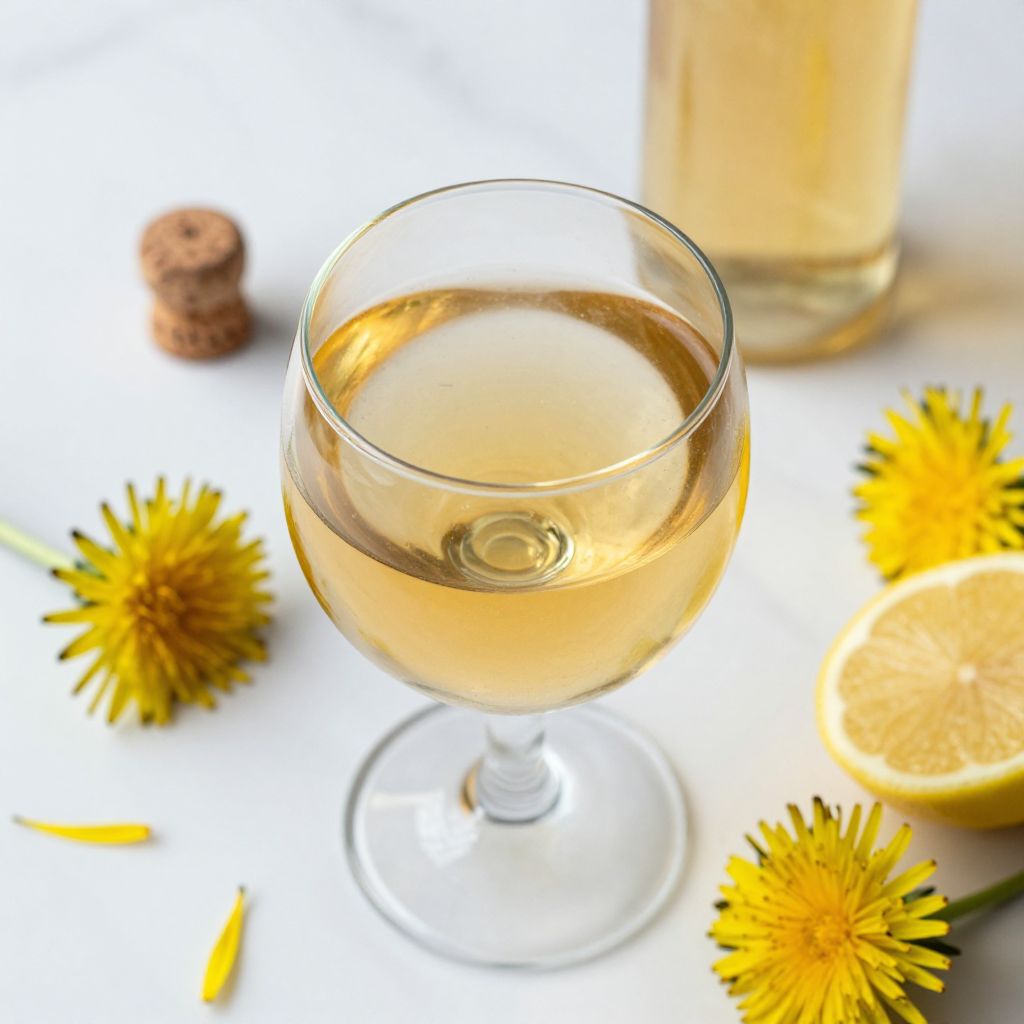
Dandelion Wine
Ingredients
Equipment
Method
- Gather 2 cups of fresh dandelion petals.
- In a large pot, bring 1 gallon of water to a boil.
- Add the dandelion petals to the boiling water and remove the pot from heat. Let the mixture steep for 24 hours.
- Strain the mixture using a strainer or cheesecloth.
- Return the strained liquid to the pot and add 3 cups of sugar and 1 cup of fresh lemon juice. Stir until the sugar dissolves.
- Let the mixture cool to room temperature, then sprinkle in the packet of wine yeast.
- Transfer the mixture into a glass fermentation jar and seal it with an airlock. Allow it to ferment for about a week.
- Once fermentation is complete, use a funnel to transfer the wine into clean bottles. Seal them tightly and store in a cool, dark place for at least a month.