
There’s something about that first sip of a pickle martini that feels like a delicious contradiction: the smoothness of vodka and vermouth meeting the briny, tangy punch of pickle juice and the crisp snap of a pickled olive or onion.
This isn’t a drink for the timid, but for anyone who loves bold flavors and doesn’t mind blurring the lines between savory and cocktail culture.
The pickle martini has moved far beyond a novelty shot into the realm of serious mixology, and for good reason: it’s refreshing, incredibly easy to make, and tastes nothing like the stuffy martinis of decades past.
Whether you’re a pickle enthusiast, a spicy food lover, or just someone tired of sweet cocktails, this recipe delivers big flavor in a small glass.
Why You’ll Love This Recipe
This drink is bold, easy, and absolutely crave-worthy, even if you wouldn’t expect a martini to feature pickle juice as a star ingredient.
- Packed with savory, briny flavor that complements spirits perfectly
- Takes just five minutes to mix and serve
- Impresses guests without requiring fancy techniques or rare ingredients
- Works as an appetizer drink or a full cocktail
- Naturally low in sugar compared to most classic cocktails
My Experience Making This Recipe
The first time I made a pickle martini, I was skeptical about pickle juice in a cocktail. By the second sip, I was a complete convert.
I served it at a casual dinner party expecting maybe mixed reactions, but three of my guests asked for the recipe before they finished their first drink. The briny finish somehow makes the vodka taste cleaner and sharper, and the brine creates this perfect savory backbone that regular vermouth just doesn’t offer.
What really surprised me was how food-friendly this drink is: I paired it with charcuterie, with spicy appetizers, even with leftover pizza, and it worked beautifully every single time. The pickle juice acts like a seasoning rather than a novelty, grounding the drink in serious flavor territory.
Recipe Overview
- Recipe Name: Pickle Martini
- Servings: 1
- Prep Time: 2 minutes
- Cook Time: 0 minutes
- Total Time: 2 minutes
- Course: Cocktail
- Cuisine: American
- Calories per Serving: 180
Equipment You Will Need
- Cocktail mixing glass or shaker
- Bar spoon or long-handled spoon for stirring
- Jigger for measuring spirits and juice
- Strainer (Hawthorne or julep style)
- Martini glass or coupe glass
- Knife and cutting board (for garnish prep, if needed)
Ingredients for Pickle Martini
- Vodka: 2 ounces (use a neutral, smooth vodka rather than bottom-shelf)
- Dry vermouth: 0.5 ounce (this adds complexity and dry notes)
- Pickle juice: 0.5 ounce (freshly opened from a quality jar works best)
- Ice: 1 cup (for chilling and stirring)
- Pickled onion or olive: 1 or 2 (for garnish and flavor)
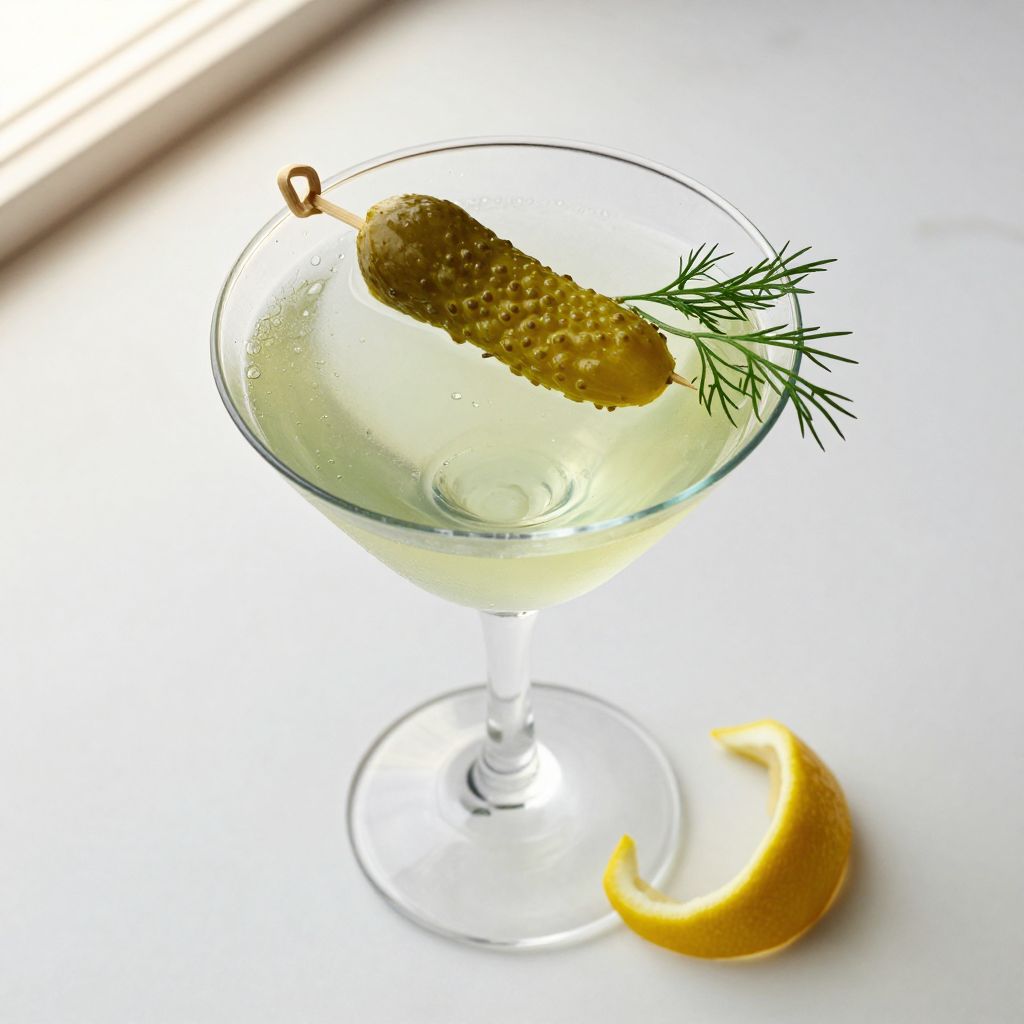
- Optional: fresh dill sprig or lemon twist: for additional aromatics
Ingredient Notes and Substitutions
- Vodka: Vodka serves as the neutral spirit base that lets the brine shine without competing flavors. If you prefer gin, use it instead for a more herbaceous and botanical twist on the drink.
- Dry vermouth: This adds depth and prevents the drink from tasting one-dimensional. Substitute sweet vermouth if you want a richer, slightly rounded flavor, though you’ll lose some of the crisp edge.
- Pickle juice: The brine is the soul of this cocktail and carries all the dill, garlic, and spice notes. Use juice from a natural, dill-forward pickle brand; jarred dill pickle juice loses character and can taste harsh.
- Pickled garnish: Pickled onions, olives, or even a spicy pickle chip add texture and visual interest. Use what you like; the garnish isn’t just decoration, it flavors the final sips.
- Optional aromatics: Fresh dill or a lemon twist lifts the drink without overshadowing the brine. Skip them if you want the pickle to be the undisputed star.
How to Make Pickle Martini
Step 1: Chill Your Glassware
Fill your martini glass with ice and cold water, then set it aside while you prepare the drink. A cold glass keeps your finished cocktail at the perfect temperature and prevents it from warming up after your first sip.
Step 2: Measure Your Spirits
Pour 2 ounces of vodka and 0.5 ounce of dry vermouth into your mixing glass. Using a jigger ensures you don’t overpower the pickle juice with too much alcohol or throw off the balance.
Step 3: Add Pickle Juice
Pour 0.5 ounce of pickle juice directly into the mixing glass with the vodka and vermouth. This ratio gives you a distinct briny flavor without tasting like you’re drinking straight brine.
Step 4: Fill With Ice
Add about 1 cup of ice to the mixing glass, making sure you have enough to fill it about three-quarters full. Cold ice chills the drink and slightly dilutes it, which softens the alcohol edge and brings flavors into balance.
Step 5: Stir Thoroughly
Stir the mixture with a bar spoon for 10 to 15 seconds, counting the strokes and keeping a steady, smooth rhythm. Stirring rather than shaking creates a silky texture and keeps the drink clear; shaking over-aerates it and makes it cloudy.
Step 6: Empty Your Glass
Dump the ice water from your chilled martini glass and set it aside, keeping it cold. A warm glass will heat your drink, so this step matters more than you might think.
Step 7: Strain Into the Glass
Hold your strainer over the mixing glass and slowly pour the cocktail into the martini glass, catching the ice with the strainer so only liquid flows through. Pouring slowly gives you control and prevents any ice shards from tumbling into your drink.
Step 8: Garnish and Serve
Spear a pickled onion or olive on a cocktail pick and rest it across the rim of the glass, or drop it directly into the drink. Serve immediately while the drink is still cold, and enjoy the briny, sophisticated flavor on your first sip.
Pro Tip: Use pickle juice straight from the refrigerator, never room temperature, and make sure your mixing glass has been chilled with ice for at least 30 seconds before you start pouring to lock in maximum coldness and flavor clarity.
Tips for the Best Pickle Martini
- Choose quality vodka and vermouth; cheap spirits become harsh and thin when mixed with brine, while good spirits blend seamlessly into something greater than the sum of their parts.
- Always stir, never shake, unless you prefer a cloudy, aerated texture that diffuses the crisp edges you worked to build.
- Keep your garnish cold by storing pickled vegetables in the refrigerator right up until serving moment.
- Taste your pickle juice before using it; if it tastes overly vinegary or harsh, try a different brand because the quality matters enormously in a drink this simple.
- Make the drink right before serving rather than letting it sit, which allows ice to melt and dilute the carefully balanced flavors.
- Consider the spice level of your pickle juice; if it’s very hot, use slightly less and balance with more vermouth for smoothness.
Common Mistakes to Avoid
- Using stale or open pickle juice loses the crisp flavor and aromatics that make this drink special; always use juice from a freshly opened jar.
- Shaking instead of stirring aerates the drink and makes it cloudy, which ruins the elegant presentation and slightly changes the mouthfeel.
- Pouring room-temperature pickle juice waters down the drink and prevents proper chilling, leaving you with a lukewarm cocktail that tastes flat.
- Overfilling the mixing glass with ice prevents proper stirring circulation and leads to inadequate chilling and dilution.
- Forgetting to chill your glass beforehand means your finished drink warms up almost immediately after pouring, losing its crisp edge within seconds.
Serving Suggestions
This cocktail is perfect as an appetizer drink before dinner or served alongside savory snacks and charcuterie. Its briny, bold profile pairs beautifully with salty and umami-forward foods rather than sweet desserts.
- Serve with a charcuterie board featuring cured meats, aged cheese, and more pickled vegetables
- Pair with spicy appetizers, hot wings, or anything with heat to let the cool brine soothe and refresh
- Enjoy alongside smoked salmon canapés or any seafood-forward starter
- Combine with salty snacks like nuts, olives, or cured fish for a cohesive flavor experience
- Serve before a grilled or barbecued dinner where the brightness cuts through rich, smoky flavors
Variations to Try
- Spicy Pickle Martini: Use hot pepper-infused pickle juice or add a dash of hot sauce to the base for a drink with serious kick and heat that builds on the finish.
- Gin-Based Version: Swap vodka for an equal amount of dry gin to add botanical notes and herbaceous complexity that play beautifully with the brine.
- Extra Savory: Add a pinch of celery salt to the rim of the glass before pouring for an umami boost that echoes the saltiness already in the drink.
- Dirty Style: Include a small splash of blue cheese-stuffed olive brine instead of plain pickle juice for a luxuriously funky, layered flavor.
- Herb-Forward Version: Muddle fresh dill, a small piece of cucumber, and one peppercorn in the mixing glass before adding spirits for an herbal, garden-fresh take.
Dietary Adaptations
- Gluten-Free: Most vodka and vermouth are naturally gluten-free, but verify labels because some brands use grain-based spirits that carry traces of gluten; the trade-off is limited spirit options.
- Dairy-Free: This recipe is entirely dairy-free by default, with no cream, milk, or cheese components involved in the base cocktail.
- Vegan: The drink is vegan as written, but verify that your vermouth brand doesn’t use animal products in processing, which some traditional vermouths do.
- Low-Carb and Keto: This cocktail is naturally low-carb with virtually zero sugar, making it an excellent choice for anyone following keto or low-carb eating patterns.
Storage and Reheating
Refrigerator
You cannot store a prepared pickle martini because the ice melts and the drink becomes diluted and warm within minutes. However, you can prepare all components ahead and assemble the drink fresh when ready.
- Store vodka and vermouth in the refrigerator for up to several months
- Keep opened pickle juice refrigerated and use within 2 to 3 weeks for best flavor
- Prepare the mixing glass and ingredients ahead, then combine just before serving
Freezer
Spirits can be stored in the freezer, but this is unnecessary for vodka or vermouth since they’re shelf-stable. Freezing won’t improve flavor or quality.
- Avoid freezing opened pickle juice, which can separate or lose flavor intensity
- Keep unopened bottles in a cool, dark cabinet instead for optimal storage
Reheating
This is a cold cocktail served immediately after mixing, so reheating does not apply. Always make and serve fresh for the best experience.
Nutrition Information
| Nutrient | Amount |
|---|---|
| Calories | 180 |
| Total Fat | 0g |
| Saturated Fat | 0g |
| Carbohydrates | 2g |
| Fiber | 0g |
| Sugar | 0g |
| Protein | 0g |
| Sodium | 390mg |
| Cholesterol | 0mg |
Nutritional values are approximate and based on standard ingredients without garnishes. Actual values vary depending on the specific brands and proportions used in preparation.
Frequently Asked Questions
Can I Make This Drink Without Vermouth?
You can, but the drink loses depth and becomes overly alcohol-forward and one-dimensional. Vermouth adds dry, herbaceous notes that balance the brine and make the drink taste sophisticated rather than harsh.
What Type of Pickle Juice Works Best?
Use juice from a quality dill pickle brand, preferably one with garlic and natural spices visible in the jar. Avoid sweet pickle juice or juice from candied dill pickles, which will make the drink cloying and unbalanced.
Can I Make This Ahead for a Party?
Mixing ahead doesn’t work because ice melts and dilutes the drink, but you can pre-measure all spirits and juice into individual bottles or a pitcher. Mix fresh cocktails to order right before serving for the best results.
Should I Shake or Stir This Cocktail?
Always stir for a silky, clear texture that highlights the briny flavors without aeration. Shaking clouds the drink and creates a foamy texture that diffuses the crisp edge you worked to build.
What Garnish Options Do I Have?
Use pickled onions, pitted olives, pickled peppers, or even a crispy dill pickle chip on a cocktail pick. The garnish flavors the final sips and adds visual appeal, so choose something you’d actually want to eat.
Is This Drink Similar to a Dirty Martini?
The pickle martini is conceptually similar to a dirty martini in that both use briny, savory ingredients to flavor vodka or gin. However, pickle juice offers a different flavor profile than olive brine: more dill-forward and tangy rather than rich and umami-heavy.
Final Thoughts
The pickle martini proves that cocktails don’t need to be sweet or fruity to be absolutely delicious. This drink challenges everything you might think about what belongs in a martini, and it wins you over with every single sip.
If you’re tired of the same old cocktails or you love bold, savory flavors, make one tonight and discover why this unlikely combination has become a favorite among serious bartenders and home enthusiasts alike.
Looking to expand your cocktail repertoire further? Explore more creative drinks like the pickle back shot recipe for a fun, approachable sipper, or elevate your skills with a refined cucumber martini recipe for something refreshingly botanical and elegant.
Pickle Martini
Ingredients
Equipment
Method
- Fill your martini glass with ice and cold water to chill, then set aside while preparing the drink.
- Pour 2 ounces vodka and 0.5 ounce dry vermouth into a mixing glass using a jigger to measure accurately.
- Add 0.5 ounce pickle juice to the mixing glass with the vodka and vermouth.
- Add 1 cup of ice to the mixing glass, filling it about three-quarters full.
- Stir the mixture with a bar spoon for 10 to 15 seconds until chilled and slightly diluted.
- Discard the ice water from the chilled martini glass.
- Strain the cocktail into the chilled martini glass using a Hawthorne or julep strainer.
- Garnish with a pickled onion or olive on a cocktail pick, optionally adding a fresh dill sprig or lemon twist, and serve immediately.