
Picture yourself at Olive Garden on a warm evening, that first sip of fruity, refreshing sangria hitting just right as you settle into your favorite booth. This Olive Garden sangria recipe captures that restaurant magic in your own kitchen, delivering a crowd-pleasing pitcher of wine-soaked fruit that tastes like a mini vacation.
What makes this version special is how it balances sweetness with the dry wine base, creating something sophisticated enough for dinner parties yet casual enough for weeknight relaxation. You’ll love how quickly it comes together and how it genuinely tastes like the version you pay premium prices for at the restaurant.
Why You’ll Love This Recipe
This sangria delivers restaurant-quality flavor without the restaurant price tag or the wait. It’s a show-stopping pitcher drink that feels fancy but requires almost zero fancy technique.
- Tastes exactly like the Olive Garden version you know and love
- Makes a full pitcher, perfect for entertaining or sipping throughout the week
- Comes together in 10 minutes with zero cooking required
- Improves with time as flavors meld, even better the next day
- Works for any occasion, from casual weeknights to formal dinner parties
My Experience Making This Recipe
I first recreated this sangria after one too many trips to Olive Garden left me wondering why I was paying for something so simple to make at home. My first attempt nailed the flavor on the first try, which honestly surprised me.
The real magic happened the next day when the fruit had fully infused and every sip tasted even better. My friends have specifically requested this sangria over other versions, and now I make it constantly during warmer months.
What struck me most was how adaptable it is, allowing you to adjust sweetness levels or swap fruits based on what looks good at the market. The combination of red wine with brandy creates that signature depth that makes it taste so much more refined than simple fruit juice mixed with wine.
Recipe Overview
- Recipe Name: Olive Garden Sangria
- Servings: 8-10 glasses
- Prep Time: 10 minutes
- Cook Time: 0 minutes
- Total Time: 10 minutes plus 2+ hours chilling
- Course: Beverage
- Cuisine: Spanish-inspired American
- Calories per Serving: 180 calories
Equipment You Will Need
- Large glass pitcher (at least 3-quart capacity)
- Sharp knife for cutting fruit
- Cutting board
- Measuring cups and spoons
- Long spoon or bar spoon for stirring
- Wine glasses or pitcher for serving
- Vegetable peeler (optional, for citrus twists)
Ingredients for Olive Garden Sangria
- Red wine: 1 bottle (750 ml, a dry red like Cabernet or Merlot)
- Brandy: 1/4 cup
- Orange juice: 1/2 cup fresh or high-quality bottled
- Apple juice: 1/4 cup
- Simple syrup: 1/4 cup (or 2-3 tablespoons sugar)
- Orange: 1 large, sliced into thin rounds
- Lemon: 1 medium, sliced into thin rounds
- Apple: 1 Granny Smith or Honeycrisp, cored and thinly sliced
- Strawberries: 1 cup fresh, halved
- Pineapple: 1 cup fresh chunks (optional but recommended)
- Sparkling water or club soda: 1/2 to 1 cup (added just before serving for fizz)
- Ice for serving
Ingredient Notes and Substitutions
- Red wine: A dry red wine forms the backbone of sangria, providing tannins and depth. Substitute with Pinot Noir or Grenache if Cabernet feels too heavy, though the flavor will be slightly lighter.
- Brandy: Brandy adds warmth and complexity that juice alone cannot provide. You can use cognac for a smoother version, but skip it entirely if you prefer a lighter, less boozy result.
- Orange juice: Fresh orange juice adds natural sweetness and citrus brightness. Bottled works fine if you’re short on time, but fresh always tastes fresher in the final pitcher.
- Simple syrup: This balances the wine’s dryness without adding granulated texture. Use honey syrup or agave nectar if you prefer those flavor profiles, though the drink will taste slightly different.
- Fresh fruit: Sliced oranges, lemons, apples, and strawberries infuse the sangria with natural sugars and flavor. Use whatever fresh fruit looks good that day, swapping out options as seasons change.
- Sparkling water: A splash of fizz at serving time keeps sangria light and refreshing. Regular water works if you skip the fizz, though you lose that restaurant-style sparkle.
How to Make Olive Garden Sangria
Step 1: Prepare Your Fruit
Wash all your fresh fruit thoroughly under cool running water, then pat dry with a clean towel. Slice oranges and lemons into thin, even rounds (about 1/8 inch thick), core and slice your apple thinly, halve the strawberries, and cut pineapple into bite-sized chunks.
Step 2: Make Simple Syrup (If Using Granulated Sugar)
If you don’t have simple syrup on hand, combine 2-3 tablespoons of sugar with 2 tablespoons of hot water in a small bowl and stir until completely dissolved. Let it cool for one minute before adding to your pitcher; this ensures the sugar fully dissolves rather than crystallizing later.
Step 3: Pour the Wine into Your Pitcher
Open your bottle of red wine and carefully pour all 750 ml into your large glass pitcher. This wine will be the foundation of your sangria, so don’t skip the good stuff, though you don’t need the most expensive bottle on the shelf.
Step 4: Add Brandy and Juices
Pour 1/4 cup of brandy directly into the pitcher with the wine, then add 1/2 cup orange juice and 1/4 cup apple juice. These additions amplify the fruity sweetness while the brandy adds that signature warmth that makes this recipe taste restaurant-quality.
Step 5: Stir in Simple Syrup
Add your simple syrup (or dissolved sugar) to the pitcher and stir well with a long spoon or bar spoon, making sure to incorporate everything evenly. Taste the mixture now; if it feels too dry, add another tablespoon of syrup, but remember the fruit will continue releasing natural sugars as it sits.
Step 6: Add the Sliced Fruit
Gently add your prepared orange slices, lemon slices, apple slices, strawberry halves, and pineapple chunks to the pitcher in whatever order feels natural. The fruit will sink and float, creating a beautiful visual presentation while infusing the sangria with subtle flavors.
Step 7: Stir Everything Together
Use your long spoon to gently stir the entire pitcher, making sure the fruit pieces are distributed throughout and all ingredients are well combined. This is also your chance to do a final taste check and adjust sweetness if needed.
Step 8: Chill for At Least 2 Hours
Cover your pitcher loosely with plastic wrap or simply leave it uncovered in the refrigerator for at least 2 hours before serving. This chilling time allows the wine to absorb the subtle fruit flavors and creates a properly cold, refreshing drink; overnight chilling makes it taste even better.
Step 9: Add Sparkling Water and Serve
Just before serving, stir the sangria gently, then pour 1/2 to 1 cup of sparkling water or club soda into the pitcher depending on how bubbly you like it. Pour over ice into individual glasses, making sure each person gets some of the beautiful fruit pieces.
Pro Tip: Make this sangria the night before your event so flavors have maximum time to meld, then simply add sparkling water and serve the next day.
Tips for the Best Olive Garden Sangria
- Use a dry red wine, not a sweet red wine, since you’re adding plenty of sweetness through juice and syrup. A wine that tastes good on its own will taste great in sangria.
- Don’t skip the brandy; it creates that depth and warmth that separates restaurant sangria from homemade versions that taste too much like fruit juice.
- Keep your pitcher in the coldest part of your refrigerator, ideally storing it on a shelf rather than the door where temperature fluctuates.
- Prep your fruit as close to mixing as possible to prevent apples from browning, though a squeeze of lemon juice on apple slices delays oxidation if you prep ahead.
- Taste and adjust sweetness before adding to the pitcher; it’s much easier than trying to fix an already-mixed batch.
- Add sparkling water only right before serving since carbonation dissipates quickly once added, keeping that fresh fizz alive for your guests.
Common Mistakes to Avoid
- Using sweet red wine instead of dry wine: This creates an overly sugary drink that tastes like juice rather than sophisticated sangria, overwhelming any subtle fruit flavors.
- Skipping the brandy to save money: This cuts the flavor profile significantly, and your sangria will taste thin and one-dimensional without that warmth and complexity.
- Using low-quality or old juice: Pre-made juices that taste off-flavored or artificial will translate directly into your final drink, so buy fresh and good-quality.
- Adding sparkling water hours before serving: The carbonation flattens out by the time you’re ready to drink, leaving you with flat sangria rather than that refreshing fizz.
- Cutting fruit too far in advance: Apples brown, citrus dries out, and berries lose their firmness if cut more than a few hours ahead.
Serving Suggestions
Serve this sangria ice-cold in wine glasses or fun glassware with a generous handful of ice and a piece of fruit in each glass. It pairs beautifully with food, making it the perfect choice for dinners, brunches, or casual afternoon gatherings.
- Pair with Spanish tapas, bruschetta, or cheese boards for an authentic experience
- Serve alongside grilled chicken or seafood for a bright, refreshing contrast
- Combine with lighter Italian pasta dishes or fresh salads
- Enjoy with desserts like flan, churros, or vanilla cake for a complete meal experience
- Sip alone as an aperitif while entertaining friends on your patio or deck
Variations to Try
- White Wine Sangria: Swap red wine for a crisp white like Pinot Grigio or Sauvignon Blanc, use white grape juice instead of apple juice, and add peaches and blueberries for a lighter summer version that tastes completely different but equally refreshing.
- Berry Sangria: Skip the apple and add an extra cup of fresh raspberries, blackberries, and blueberries for a deeper berry flavor that appeals to berry lovers.
- Tropical Sangria: Replace apple juice with mango juice, swap strawberries for mango chunks, and add pineapple for a tropical twist that feels vacation-ready.
- Sparkling Sangria: Add sparkling wine or champagne instead of brandy for a lighter, more celebratory version perfect for special occasions.
- Orange Brandy Version: Increase brandy to 1/2 cup and add a splash of triple sec liqueur for a citrus-forward sangria that tastes more like an upscale cocktail.
Dietary Adaptations
- Gluten-Free: This recipe is naturally gluten-free since it contains only wine, brandy, juice, and fresh fruit, though always verify your wine brand’s production methods if you have severe sensitivities.
- Dairy-Free: Sangria contains no dairy products by nature, so this recipe works perfectly for dairy-free diets without any modifications.
- Vegan: Most wines and brandy are vegan-friendly, but some use animal products in processing; check your specific brands if veganism is important to you, and skip any non-vegan garnishes.
- Low-Carb or Keto: Use a very dry wine with minimal residual sugar, skip the simple syrup entirely, and focus on low-carb fruits like strawberries and citrus while avoiding apple and pineapple for a keto-friendly version.
- Lower Alcohol: Use half the brandy or skip it entirely, then substitute with extra sparkling water or a splash of alcohol-free vanilla extract for added depth without the booze.
Storage and Reheating
Refrigerator
Store your sangria in a covered pitcher on the coldest shelf of your refrigerator for up to 4 days. The fruit will continue infusing and flavors will deepen, making day-two sangria taste even better than day-one.
- Keep the pitcher covered loosely to prevent odor absorption from other foods
- Stir before serving each time to redistribute flavors evenly
- Add fresh sparkling water only right before serving each portion
Freezer
While sangria doesn’t freeze solid due to its alcohol content, you can store it in the freezer for up to 2 months if you need longer-term storage. The texture will be slightly slushy rather than liquid, which some people enjoy but others find less appealing.
- Use freezer-safe containers with headspace since liquid expands as it freezes
- Thaw in the refrigerator overnight before serving
- The fruit may become mushy after freezing and thawing
Reheating
Sangria is served cold and should never be heated, though you might want to remove it from the refrigerator 15 minutes before serving to let it reach optimal drinking temperature. Simply pour over fresh ice and enjoy.
- Never microwave sangria as heat will cook off the alcohol and damage the wine’s delicate flavors
- Add fresh ice to each glass right before serving for optimal chill
Nutrition Information
| Nutrient | Amount |
|---|---|
| Calories | 180 |
| Total Fat | 0g |
| Saturated Fat | 0g |
| Carbohydrates | 18g |
| Fiber | 1g |
| Sugar | 16g |
| Protein | 0g |
| Sodium | 10mg |
| Cholesterol | 0mg |
These nutrition values are estimates based on USDA data and may vary depending on specific brands and portion sizes. Alcohol calories are included in the total, and values assume one 6-ounce serving with sparkling water added.
Frequently Asked Questions
Can I make this sangria ahead of time?
Absolutely, and I’d recommend it since flavors meld beautifully overnight. Make it up to 4 days in advance, then add sparkling water right before serving for that perfect fizz.
What’s the best red wine to use?
A dry Cabernet Sauvignon, Merlot, or Grenache works best, avoiding sweet reds like Lambrusco or Moscato. Choose a wine you’d enjoy drinking on its own, not something cheap and unpleasant.
Can I use frozen fruit instead of fresh?
Fresh fruit works best since it maintains texture and infuses more cleanly, but frozen fruit works if that’s what you have. Thaw it first and drain excess liquid, or the sangria will become too watery.
How long can I store sangria in the refrigerator?
Your sangria stays fresh for up to 4 days when properly covered and stored on the coldest shelf. After day 4, the fruit breaks down and flavors start to turn slightly off.
Is this recipe suitable for large parties?
Yes, this recipe doubles or triples easily for crowds, and you can prep everything in advance then simply assemble an hour before guests arrive. Make extra since it tends to disappear quickly.
What if the sangria tastes too sweet?
Add a squeeze of fresh lemon juice or a splash of red wine to balance sweetness. If you’re making it fresh, reduce the simple syrup or add extra wine before chilling.
Final Thoughts
This Olive Garden sangria recipe proves that restaurant favorites don’t have to stay at the restaurant, and honestly, your homemade version will taste better since you control every ingredient. You’ll find yourself making this constantly once you realize how simple it truly is.
Whether you’re hosting a dinner party, enjoying a quiet weekend afternoon, or bringing this to share with friends, you’ve got a pitcher of sangria that tastes like you spent hours perfecting it. Go ahead and make a batch tonight; your future self will thank you when you have cold, beautiful sangria waiting in the fridge.
If you loved creating this sangria, explore more refreshing drink recipes on our site. Try our strawberry sangria recipe for a berry-forward variation or cool off with our fruit slush recipe on hot summer days.
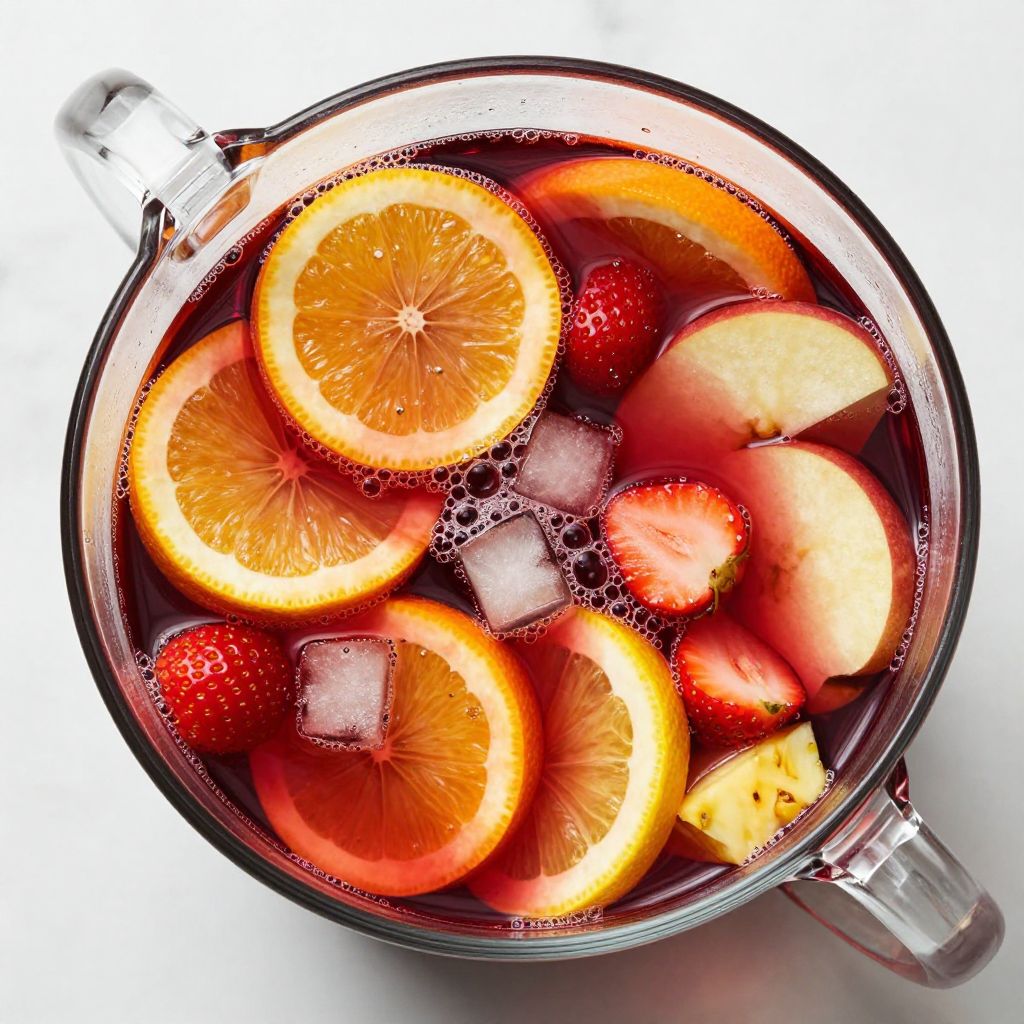
Olive Garden Sangria
Ingredients
Equipment
Method
- Wash all fruit under cool running water, pat dry, then slice oranges and lemons into thin rounds, core and slice apple, halve strawberries, and cut pineapple into chunks.
- If using granulated sugar, dissolve 2-3 tablespoons sugar in 2 tablespoons hot water until clear, then let cool for 1 minute.
- Pour 750 ml dry red wine into a large pitcher.
- Add 1/4 cup brandy, 1/2 cup orange juice, and 1/4 cup apple juice to the wine and stir to combine.
- Stir in 1/4 cup simple syrup or cooled sugar solution, tasting and adjusting sweetness as needed.
- Add all sliced fruits to the pitcher and gently stir to distribute evenly.
- Cover and refrigerate for at least 2 hours or up to 4 days for deeper infusion.
- Just before serving, add 1/2 to 1 cup sparkling water and stir gently to preserve bubbles.
- Serve over ice in glasses, ensuring each serving includes fruit pieces.