
There’s something almost magical about blending fresh mango with creamy protein powder and watching a thick, golden smoothie come together in seconds.
The mango protein smoothie has become my go-to breakfast when I need nutrition without the fuss, and it tastes so good that it hardly feels like health food. This smoothie delivers a perfect balance of tropical sweetness, smooth creaminess, and muscle-building protein in one glass. It’s quick to make, endlessly customizable, and packed with enough staying power to fuel your morning or post-workout recovery.
Why You’ll Love This Recipe
This smoothie checks every box for busy people who refuse to sacrifice flavor or nutrition. It takes five minutes tops and tastes like dessert.
- Tropical mango flavor that tastes indulgent but is actually good for you
- High in protein to keep you full and support muscle recovery
- Naturally sweet so you skip the added sugar and syrups
- Works as breakfast, a snack, or a post-workout drink
- Freezes beautifully for meal prep on Sunday nights
My Experience Making This Recipe
I started making these smoothies when a friend challenged me to eat more protein without resorting to dry chicken breast for every meal. The first batch came together in my basic blender, and within two weeks, I was making one almost daily.
The texture is what sold me immediately: thick enough to feel substantial but smooth enough to drink without chunks or grittiness. My partner took one sip and asked if I’d bought it from a smoothie bar, which tells you everything about how good it tastes.
Now I keep frozen mango chunks stocked in my freezer so I can throw this together any morning without planning ahead. My gym buddy asked for the recipe after I brought one to our 6 a.m. workout, and that’s when I knew I had a winner.
Recipe Overview
- Recipe Name: Mango Protein Smoothie
- Servings: 1
- Prep Time: 5 minutes
- Cook Time: 0 minutes
- Total Time: 5 minutes
- Course: Breakfast, Snack, Post-Workout
- Cuisine: International Fusion
- Calories per Serving: 285
Equipment You Will Need
- High-speed blender or standard blender
- Measuring cups and spoons
- A tall glass for serving
- A spoon for stirring if needed
- Cutting board and knife for fresh mango (if using fresh)
Ingredients for Mango Protein Smoothie
- 1 cup frozen mango chunks
- 1 scoop vanilla protein powder (about 25-30 grams)
- 1/2 cup Greek yogurt (plain or vanilla)
- 3/4 cup unsweetened almond milk
- 1/2 frozen banana
- 1 tablespoon raw honey or maple syrup (optional)
- 1/2 teaspoon vanilla extract
- 3 ice cubes (if using fresh mango instead of frozen)
Ingredient Notes and Substitutions
- Frozen Mango: Frozen mango keeps its nutrition and works better than fresh in smoothies because it creates a thick, frosty texture. If you only have fresh mango, add the ice cubes and reduce the liquid slightly to compensate.
- Protein Powder: Vanilla protein pairs best with mango, but chocolate or unflavored also work. Swap in collagen peptides if you prefer a neutral taste or plant-based protein if you avoid whey.
- Greek Yogurt: Greek yogurt adds creaminess and extra protein, but you can use regular yogurt, cottage cheese, or silken tofu. Each gives a slightly different texture, so choose based on what you stock at home.
- Almond Milk: Any unsweetened milk works here: oat, coconut, cashew, or dairy milk all taste great. Oat milk adds extra creaminess, while coconut milk brings tropical flavor.
- Frozen Banana: The banana adds natural sweetness and body to the smoothie. Skip it if you’re avoiding bananas, but add an extra half cup of mango or a tablespoon of nut butter to keep the smoothie thick.
How to Make Mango Protein Smoothie
Step 1: Gather Your Ingredients
Pull out your frozen mango, protein powder, yogurt, milk, and banana so everything is within arm’s reach. Assembling ingredients first prevents you from leaving the blender running while you dig through the freezer.
Step 2: Add Liquid to the Blender First
Pour the almond milk into your blender pitcher as your base. Starting with liquid helps the blender move the thicker ingredients around and prevents the powder from clumping up in dry pockets.
Step 3: Add the Protein Powder
Scoop one serving of vanilla protein powder into the blender and let it sit in the liquid for a few seconds. This short soak begins breaking down the powder so it blends smoothly without gritty bits.
Step 4: Layer in the Greek Yogurt
Add your Greek yogurt next, using a spoon to scoop it into the blender in a few pieces if it’s thick. Yogurt breaks down quickly during blending and adds the creamy mouthfeel that makes this smoothie taste indulgent.
Step 5: Add the Frozen Mango Chunks
Dump in your frozen mango chunks, which do the heavy lifting in flavor and give the smoothie its signature tropical taste. Frozen fruit also keeps the smoothie cold and thick without watering it down like regular ice would.
Step 6: Add the Frozen Banana
Slice your banana (fresh or frozen works), break off half of it, and toss it into the blender. Banana acts as a binding agent and sweetener, making the entire smoothie creamier with a subtle sweetness that balances the mango.
Step 7: Add Optional Sweetener and Vanilla
If your mango isn’t as sweet as you’d like or you simply prefer a sweeter smoothie, add honey or maple syrup now. Pour in the vanilla extract for extra depth that complements both the mango and the protein powder.
Step 8: Blend on High Speed
Start your blender on low speed for about five seconds to break up the frozen pieces, then switch to high speed. Blend for 45 to 60 seconds until everything is completely smooth with no visible chunks or powder specks.
Step 9: Check Consistency and Adjust
Pour the smoothie into a glass and check the thickness. If it’s too thick and hard to drink, add a splash more milk and blend for another 10 seconds; if it’s too thin, add more frozen mango or a handful of ice.
Step 10: Serve Immediately
Drink your smoothie right away while it’s cold and frothy on top. Smoothies separate and get watery if they sit for more than a few minutes, so timing is everything for the best texture.
Pro Tip: Freeze your smoothie in ice pop molds for a protein-packed frozen treat that lasts longer than a drinkable smoothie and tastes like mango gelato.
Tips for the Best Mango Protein Smoothie
- Use frozen fruit instead of fresh mango whenever possible because frozen chunks are frozen at peak ripeness and create a naturally thick, creamy texture without extra ice watering things down.
- Don’t skip the yogurt even if you want to cut calories because those few tablespoons transform a thin, icy drink into something that tastes like a milkshake and keeps you full.
- Measure your protein powder on a kitchen scale if you have one because scooping from the bag compacts the powder and you might add 35 grams instead of 25, making the smoothie taste chalky.
- Blend on high speed for the full 45 to 60 seconds because underblending leaves protein powder granules that give a gritty texture that ruins an otherwise perfect smoothie.
- Keep frozen bananas peeled and sliced in a bag so you can grab half without thawing the whole fruit or hacking chunks off a solid block.
- Add a handful of spinach if you want extra nutrients without changing the taste because the mango completely masks leafy greens and you get a nutrition boost for free.
Common Mistakes to Avoid
- Using hot or room-temperature mango instead of frozen makes the smoothie warm and thin within minutes, so it tastes more like mango juice than a proper smoothie.
- Adding too much liquid right away turns your smoothie into a drinkable fruit punch instead of a thick, satisfying beverage. Start with 3/4 cup milk and add more only if needed.
- Blending on low speed or for too short a time leaves protein powder undissolved, creating a chalky, unpleasant texture that you can’t drink smoothly.
- Skipping the yogurt or nut butter to cut calories backfires because the smoothie becomes thin and unsatisfying, so you eat something else 30 minutes later.
- Letting the smoothie sit for more than a few minutes causes separation and oxidation, which makes it taste flat and look unappetizing even if you blend it again.
Serving Suggestions
This smoothie stands alone as a complete breakfast or snack, but pairing it with whole-grain toast or Greek yogurt parfait makes it even more filling. You can also serve it in a bowl with granola and coconut flakes for a smoothie bowl experience.
- Whole-grain toast with almond butter for sustained energy and healthy fats
- A hard-boiled egg for extra protein and satiety
- Granola and shredded coconut as a topping if you freeze it slightly thicker
- A small handful of berries on the side for color and extra antioxidants
- Chia seed pudding cups for a complementary texture and sustained energy release
Variations to Try
- Tropical Pineapple Twist: Replace half the mango with frozen pineapple chunks for a brighter, more tropical flavor that pairs beautifully with coconut milk instead of almond milk.
- Creamy Coconut Version: Swap the Greek yogurt for full-fat coconut yogurt or canned coconut cream for a richer, more indulgent smoothie that tastes like mango lassi.
- Green Protein Boost: Blend in a handful of fresh spinach or kale along with the mango for extra vitamins and minerals without adding any noticeable veggie taste.
- Overnight Smoothie Prep: Combine mango chunks, yogurt, milk, and protein powder in a mason jar the night before, refrigerate, and blend with ice in the morning for grab-and-go convenience.
- Spiced Cardamom Version: Add a pinch of cardamom or a quarter teaspoon of turmeric for a warm, spiced complexity that makes the smoothie feel less like breakfast and more like a special treat.
Dietary Adaptations
- Gluten-Free: This smoothie is naturally gluten-free, but check your protein powder label to confirm it’s certified gluten-free if celiac disease is a concern.
- Dairy-Free: Use plant-based protein powder and dairy-free yogurt or silken tofu instead of Greek yogurt, though you’ll lose a bit of creaminess unless you add a tablespoon of coconut cream.
- Vegan: Swap protein powder for a vegan variety, replace yogurt with coconut cream or cashew cream, and use plant-based milk, though the smoothie will taste slightly less creamy.
- Low-Carb or Keto: Use a low-carb protein powder sweetened with stevia, replace mango with berries, cut the banana entirely, and use full-fat coconut milk to keep carbs under 15 grams per serving.
Storage and Reheating
Refrigerator
Store a prepared smoothie in a sealed glass container in the refrigerator for up to 24 hours, though separation and oxidation occur within a few hours. You can blend the separated smoothie again briefly to restore texture, but it won’t taste as fresh as a freshly blended version.
- Use airtight glass containers to prevent oxidation and flavor absorption into plastic
- Separate components (freeze mango and banana, keep yogurt and protein powder in the pantry) so you can blend fresh each morning
- Add lemon juice to the smoothie if storing overnight because acid slows oxidation and keeps flavors brighter
Freezer
Freeze a prepared smoothie in ice pop molds or small freezer containers for up to three months. This transforms the smoothie into a frozen treat that lasts all afternoon and tastes like gelato.
- Leave a half inch of space in containers because smoothies expand slightly when frozen
- Thaw in the refrigerator for two hours or blend with a splash of milk from frozen for a thicker smoothie texture
- Freeze in portions so you can grab one whenever you need a quick meal
Reheating
Never heat a protein smoothie because high temperatures damage the protein structure and denature amino acids, reducing nutritional value. Thaw frozen smoothies in the refrigerator or blend from frozen with a splash of additional milk instead.
- Add milk to frozen smoothies in small splashes to prevent them from becoming too thin
- Blend for a full minute once thawed to restore smooth texture and remove any icy crystals
Nutrition Information
| Nutrient | Amount |
|---|---|
| Calories | 285 |
| Total Fat | 3g |
| Saturated Fat | 1g |
| Carbohydrates | 42g |
| Fiber | 3g |
| Sugar | 32g |
| Protein | 26g |
| Sodium | 105mg |
| Cholesterol | 10mg |
These values are estimates based on standard ingredients and servings, so actual nutrition varies depending on specific brands and portion sizes. The high protein content comes from the protein powder and yogurt, making this smoothie ideal for muscle recovery or sustained morning energy.
Frequently Asked Questions
Can I make this smoothie without protein powder?
Yes, but you’ll lose significant protein and satiety without it. Add an extra half cup of Greek yogurt or a quarter cup of nut butter to keep the smoothie thick and filling.
How do I make this smoothie thicker if it’s too thin?
Add more frozen mango chunks, a quarter of a frozen banana, or a tablespoon of nut butter. You can also reduce the liquid by a quarter cup and reblend.
Can I prep these smoothies in advance for the week?
You can freeze individual portions in containers or ice pop molds for up to three months. Blend them fresh or thaw in the refrigerator for two hours before drinking.
What’s the difference between this smoothie and a mango lassi?
A mango lassi uses yogurt as the main ingredient and includes spices like cardamom, while this smoothie centers on protein powder for a fitness-focused meal. You can make a lassi-style version by replacing the protein powder with more yogurt and adding cardamom.
Why does my smoothie taste chalky or gritty?
Your protein powder isn’t blending fully because the blender speed was too low or blending time too short. Always blend on high speed for at least 45 seconds and soak the powder in liquid before blending if possible.
Can I use fresh mango instead of frozen?
Fresh mango works but produces a thinner, warmer smoothie because it contains more water. Add three ice cubes and reduce the milk to three-quarter cup to compensate for the extra liquid.
Final Thoughts
The mango protein smoothie has become my non-negotiable breakfast because it tastes too good to feel like healthy eating, yet it delivers real nutrition and keeps me satisfied for hours. If you’re tired of bland protein shakes or boring breakfast options, this recipe proves that nutrition and indulgence don’t have to be enemies.
Make one this week and taste the difference a quality recipe makes. You’ll understand why this smoothie keeps making regular appearances in my blender and why friends keep asking for the recipe.
Ready to expand your smoothie repertoire? Check out our mango banana smoothie recipe for a creamier variation and explore our mango smoothie recipe without yogurt if you prefer a lighter option.
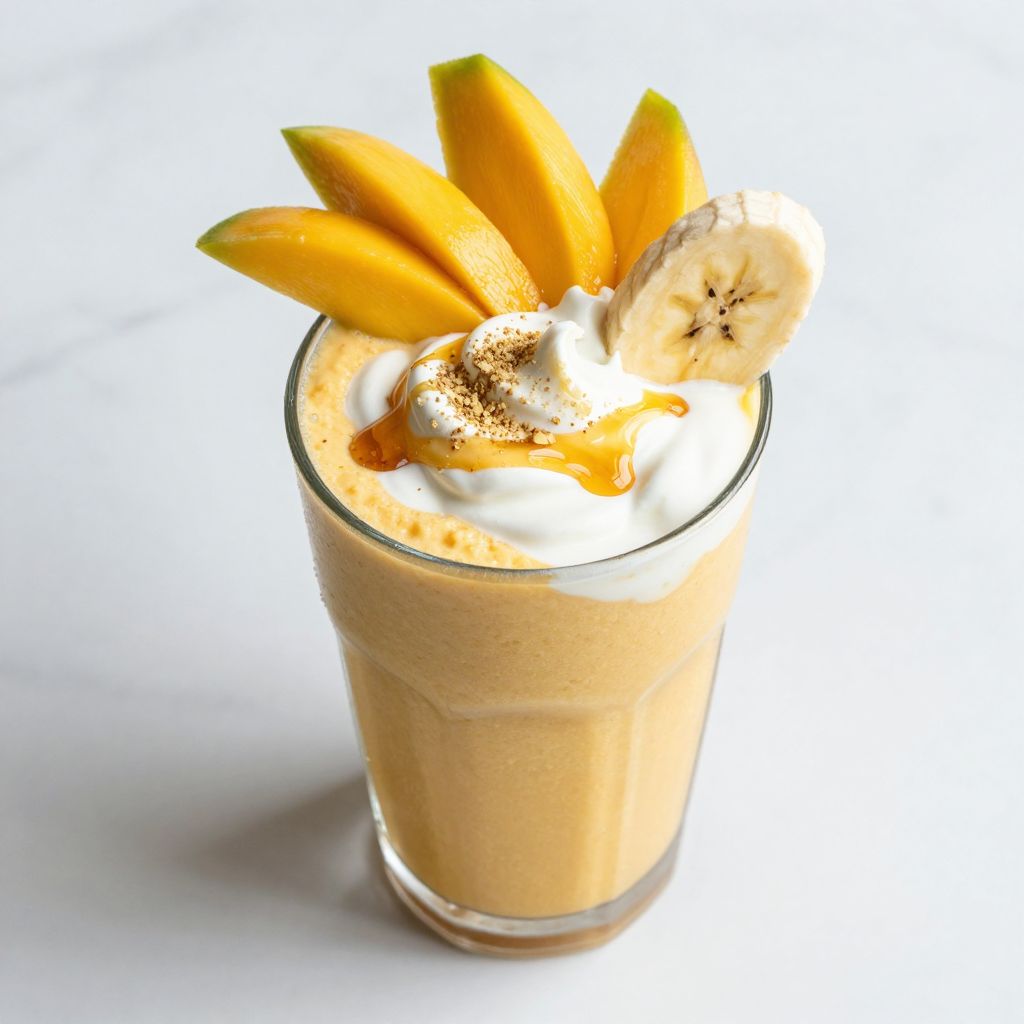
Mango Protein Smoothie
Ingredients
Equipment
Method
- Gather all ingredients and place them within reach to streamline the blending process.
- Pour 3/4 cup unsweetened almond milk into the blender pitcher to create a smooth base.
- Add 1 scoop of vanilla protein powder to the liquid and let it soak for a few seconds to prevent clumping.
- Scoop in 1/2 cup Greek yogurt using a spoon and distribute it evenly in the blender.
- Add 1 cup of frozen mango chunks to provide tropical flavor and a thick, frosty texture.
- Toss in 1/2 frozen banana to naturally sweeten and thicken the smoothie.
- Include optional 1 tablespoon raw honey or maple syrup and 1/2 teaspoon vanilla extract if extra sweetness is desired.
- Blend on low speed for 5 seconds to break up large pieces, then increase to high speed and blend for 45 to 60 seconds until completely smooth.
- Check the consistency by pouring into a glass; add a splash more almond milk and blend for 10 seconds if too thick, or a few ice cubes if too thin.
- Serve immediately while cold and frothy for the best texture, or freeze in molds for a protein-packed treat.