
There’s something magical about cracking open a cold maibock on a warm spring afternoon, watching the golden liquid catch the sunlight as it pours into your glass. Maibock is a German lager that bridges the gap between a light pilsner and a fuller-bodied bock beer, delivering crisp refreshment with surprising depth and a subtle malt sweetness that makes you want another sip.
Brewing your own maibock at home might seem intimidating, but it’s one of the most rewarding beers to make because the results taste professional-grade. The clean, smooth character comes from precise temperature control and quality ingredients rather than exotic techniques, making it perfect for brewers who appreciate the fundamentals done right.
Why You’ll Love This Recipe
Maibock delivers everything you want from a spring beer: bright, crisp, and genuinely delicious without being complicated to brew.
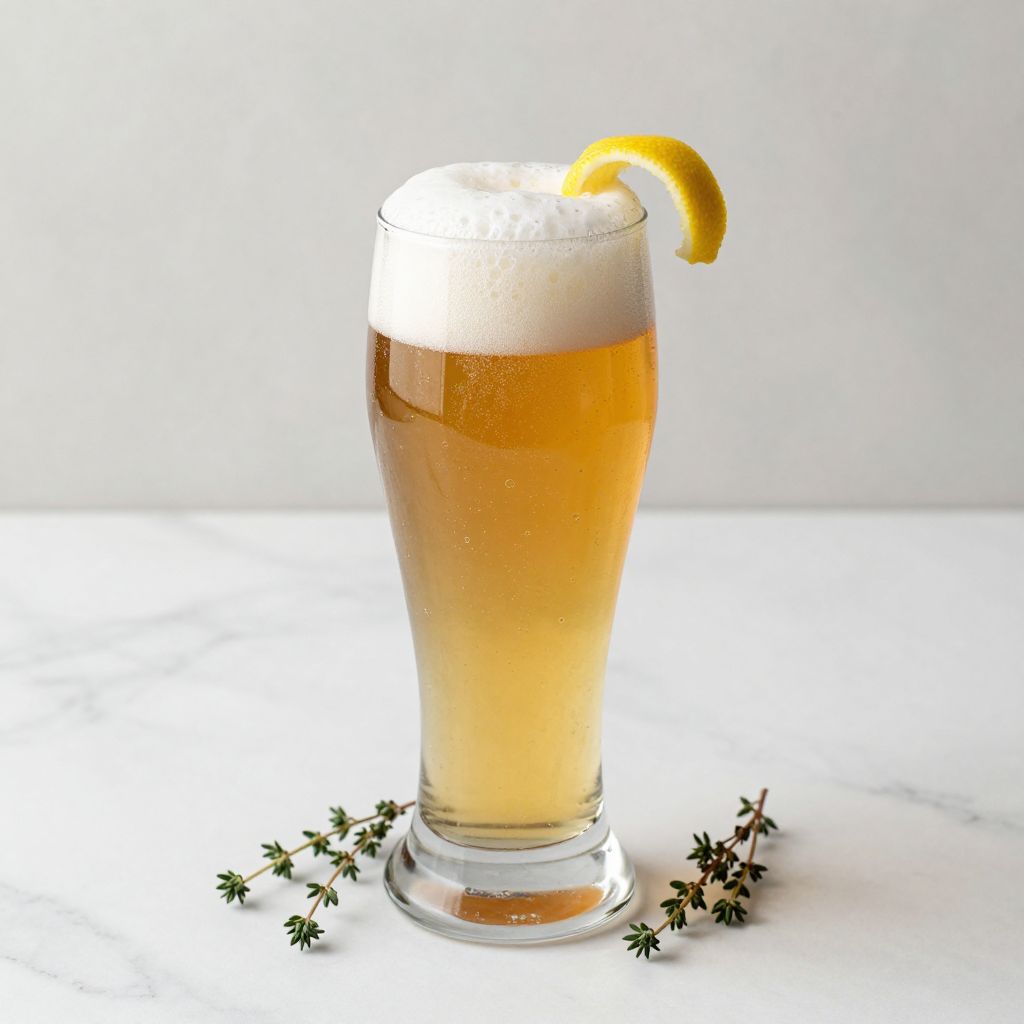
- Golden color and crystal-clear clarity that looks stunning in a glass
- Smooth, clean flavor with just enough malt character to feel substantial
- Lower alcohol than traditional bocks, making it refreshing rather than heavy
- Perfect for sharing at gatherings or enjoying solo on a nice day
- Teaches you solid lager-brewing fundamentals that apply to many other styles
My Experience Making This Recipe
The first time I brewed maibock, I was nervous about hitting the exact mash temperatures and worried my equipment wasn’t fancy enough. Within two weeks of fermentation, I tasted something that genuinely impressed me: clean, crisp, with this subtle honey-like sweetness that made everything click.
My brewing friends requested it immediately after that first batch finished carbonating. The beer sat at room temperature in a tasting glass while we talked for hours, and it never went flat or lost its appeal, which tells you something about the balance.
Since then, I’ve brewed it four times with minor tweaks, and every batch has been solid. The confidence you gain from nailing a maibock carries over to other lagers, which is why I recommend it as a gateway beer for anyone serious about home brewing.
Recipe Overview
- Recipe Name: Maibock Lager
- Batch Size: 5 gallons
- Brew Time: 3.5 hours
- Fermentation Time: 4 to 6 weeks
- Total Time (to drinking): 5 to 7 weeks
- Original Gravity: 1.072
- Final Gravity: 1.014
- ABV: 7.6%
- IBU: 28
- Style: German Pale Lager
- Calories per 12 oz serving: 180
Equipment You Will Need
- 10-gallon brewing kettle
- Mash tun or cooler with false bottom
- Hot liquor tank or second large pot
- Thermometer accurate to 0.5 degrees
- Stirring paddle or large spoon
- Wort chiller (immersion or counterflow)
- 5-gallon fermentation bucket or carboy with airlock
- Hydrometer
- Refractometer (optional but helpful)
- Auto-siphon and tubing for racking
- Bottling wand and capper
- Bottle brush and sanitizer
- pH strips or meter
Ingredients for Maibock Lager
- Pale Malt (2-row): 7.5 pounds
- Munich Malt: 1 pound
- Melanoidin Malt: 0.5 pounds
- Hallertau Hops (bittering, 60 minutes): 0.75 ounces at 4.5% alpha acid
- Hallertau Hops (aroma, 10 minutes): 0.5 ounces at 4.5% alpha acid
- Wyeast 2308 Munich Lager Yeast: 1 vial or 1 packet (starter recommended for 1.072 gravity)
- Water: 13 gallons total (7 gallons for mash, 6 gallons for sparge)
- Calcium Sulfate (Gypsum): 1 teaspoon
- Corn Sugar (for priming): 0.75 cups for 5 gallons at bottling
Ingredient Notes and Substitutions
- Pale Malt (2-row): The foundation of the beer, providing fermentable sugars and a clean grain flavor. Substitute: Pilsner malt for a slightly crisper, more delicate base, though you’ll lose a bit of body.
- Munich Malt: Adds rich malt depth and complexity that makes this beer special rather than just another lager. Substitute: Vienna malt works well, though it’s slightly less intense; use the same amount.
- Melanoidin Malt: Contributes to the golden color and subtle honey-like sweetness. Substitute: A small amount of Special B or Aromatic malt; reduce to 0.25 pounds since these are more potent.
- Hallertau Hops: Classic noble hops with a clean, floral bite that defines German lagers. Substitute: Tettnang or Mittelfrueh for a similar noble character, maintaining the same ounces and alpha acid adjustments.
- Wyeast 2308 Munich Lager Yeast: This strain produces clean, malty beers with a slight fruity character. Substitute: White Labs WLP860 or SafAle S-189; follow their temperature guidelines as they may differ slightly.
How to Make Maibock Lager
Step 1: Prepare Your Yeast Starter
Make a yeast starter two days before brewing day by combining 1 pound of dry malt extract with 2 quarts of water, boiling for 10 minutes, then cooling and pitching your vial or packet of Wyeast 2308. A starter at 1.072 original gravity requires an active, healthy culture, and this step ensures your yeast is robust and ready to ferment.
Keep the starter on a stir plate at room temperature for 24 to 48 hours, watching it become cloudy and active. This investment of two days pays back in faster fermentation and cleaner flavor.
Step 2: Strike Water and Mill Your Grains
Heat 7 gallons of water to 168 degrees Fahrenheit in your hot liquor tank, adding 1 teaspoon of calcium sulfate to match the water chemistry of the Hallertau region. Mill your grains (2-row, Munich, and Melanoidin) coarsely just before mashing; coarse grinds let liquid flow freely through the grain bed without compacting.
Verify your water temperature with your thermometer, aiming for exactly 168 degrees. This precision prevents overshooting your target mash temperature and ensures consistent extraction.
Step 3: Perform the Infusion Mash
Pour your milled grains into your mash tun while simultaneously running 168-degree strike water into the tun, stirring gently to break up any dough balls. You’re aiming for a mash temperature of 152 degrees Fahrenheit; if you hit 150 to 154 degrees, you’re in excellent shape.
This temperature range favors a balanced mix of fermentable and unfermentable sugars, producing a beer with good body and clean attenuation. Let the mash rest for 60 minutes, stirring every 15 minutes to keep the grain bed even and prevent channeling.
Step 4: Perform the Mash-Out and Begin Sparging
Raise the mash temperature to 170 degrees by slowly running 170-degree water through the mash tun in a circular motion over 10 minutes. Hold at 170 degrees for 10 minutes; this temperature stops enzyme activity and firms up the grain bed for cleaner lautering.
Begin collecting wort by opening the valve at the bottom of your mash tun, running the first gallon back into the mash tun to clarify the runoff. This recirculation pulls fine particles from the grain bed and prevents a stuck sparge.
Step 5: Sparge and Collect Wort
Slowly run 170-degree water over the top of the grain bed while collecting clear wort from the bottom, adding water to keep the level consistent. You want to collect roughly 6.5 gallons of wort, which accounts for water absorbed by the grain and loss during boiling.
Rushing the sparge introduces unwanted tannins and astringency; aim for a sparge time of 30 to 45 minutes. If you slow down and watch the grain bed, you’ll see golden wort flowing steadily, which tells you the sparge is working right.
Step 6: Bring Wort to Boil and Add Bittering Hops
Transfer your collected wort to your brew kettle and bring it to a rolling boil, watching for the break or hot break, where proteins coagulate and the wort starts to clarify. Once at a solid boil, add 0.75 ounces of Hallertau hops at 4.5% alpha acid, noting the time you add them; you’ll boil for exactly 60 minutes from this point.
Bittering hops need a full 60-minute boil to isomerize their alpha acids into bitterness. A shorter boil leaves the beer feeling unbalanced, while a longer one bakes in harsh, grassy flavors.
Step 7: Add Aroma Hops and Complete the Boil
At 50 minutes into your boil (10 minutes before the end), add 0.5 ounces of Hallertau hops for aroma. These late hops stay fresh because the short boil time preserves their delicate floral and herbal qualities.
Continue boiling until your 60-minute timer goes off, then immediately turn off the heat and begin cooling. The quicker you cool the wort, the less it sits in a warm zone where unwanted bacteria can grow.
Step 8: Cool the Wort and Transfer to Fermenter
Place your wort chiller into the kettle and run cold water through it for 10 to 15 minutes, stirring gently to bring hot wort in contact with the cooling surfaces. You’re aiming for 65 to 68 degrees Fahrenheit before transferring to your fermenter; this temperature range is ideal for lager yeast.
Once cooled, siphon the wort into your sanitized fermentation bucket or carboy, leaving behind trub (the settled grain particles and hop debris) at the bottom of the kettle. Transfer only clear wort; pouring trub into your fermenter adds off-flavors and clouds the final beer.
Step 9: Pitch Your Yeast and Begin Fermentation
Take a gravity reading with your hydrometer or refractometer, confirming you’re at 1.072 original gravity. If you’re within 0.002 points, your efficiency is solid and your beer is on track.
Pour your active yeast starter into the cooled wort, seal your fermenter with an airlock, and place it in a temperature-controlled chamber set to 50 degrees Fahrenheit. Lagers need cool temperatures to develop clean flavors; ferment warmer than 55 degrees and you’ll taste fruity esters that don’t belong in a proper maibock.
Step 10: Monitor Fermentation and Cold Condition
Watch for a layer of white foam (krausen) to appear within 24 to 48 hours, indicating healthy fermentation. This foam rises and falls over 5 to 7 days, peaking around day three or four.
After active fermentation slows (around day 10 to 14), raise the temperature to 50 to 52 degrees for a diacetyl rest, a 3 to 5 day period where the yeast cleans up buttery compounds. Then drop the temperature back to 35 to 40 degrees and let the beer sit for 2 to 3 weeks; this cold conditioning allows proteins and tannins to settle, clarifying the beer and smoothing the flavor.
Pro Tip: Invest in a fermentation temperature controller; lager yeast is finicky about temperature swings, and even a 5-degree fluctuation ruins months of work.
Tips for the Best Maibock Lager
- Start your yeast starter at least two days before brew day and keep it on a stir plate if you have one. A healthy, hungry culture ferments faster and cleaner than a sluggish one.
- Mill your grains fresh on brew day rather than days ahead; freshly milled grain absorbs water better and extracts more efficiently.
- Invest in a reliable thermometer and check your mash temperature multiple times during the infusion; even a 3-degree miss changes the final gravity and body.
- Use water chemistry data for your local area or target Hallertau-style mineral content (moderate sulfate, low chloride). Water chemistry directly shapes how the beer tastes.
- Cool your wort as quickly as possible after the boil ends; every minute it spends above 80 degrees allows oxidation and off-flavor development.
- Maintain steady fermentation temperature within 1 to 2 degrees of your setpoint; wild swings stress the yeast and produce esters and phenolics.
Common Mistakes to Avoid
- Pitching yeast into warm wort (above 70 degrees) shocks the culture and can cause stuck fermentation or off-flavors. Always cool to 65 to 68 degrees before pitching.
- Skipping the yeast starter for high-gravity beers (above 1.065) leaves you with underpitched yeast that ferments slowly and produces fruity esters. A proper starter is not optional for maibock.
- Overshooting mash temperature above 156 degrees extracts too many unfermentable sugars, leaving the beer cloying and sweet rather than balanced.
- Fermenting warmer than 55 degrees produces fruitiness and esters that mask the clean malt character. Maibock demands cool fermentation.
- Skipping the cold conditioning period and rushing to bottle means you’re bottling hazy beer with floating proteins and tannins, resulting in a cloudy final product.
Serving Suggestions
Maibock shines when served crystal-clear in a tall glass at 48 to 52 degrees Fahrenheit, allowing the malt sweetness and subtle hop character to shine without cold numbing your palate. The crisp finish begs for food pairing, making it perfect for a range of spring and early summer occasions.
- Grilled chicken or pork with light herb seasonings, where the beer’s malt sweetness complements smoke and spice
- Fresh seafood like grilled white fish or shrimp, where the clean, crisp finish cuts through richness
- German-style sausages, pretzels, and mustard for an authentic pairing that nods to the beer’s origins
- Salads with vinaigrette dressings, where the beer’s subtle sweetness balances acid and bitter greens
- Spring vegetable dishes like asparagus or peas, enhancing both the beer and the food with brightness
Variations to Try
- Imperial Maibock: Increase 2-row malt to 9 pounds, maintaining other grains. This raises ABV to 8.5% and adds fuller body while keeping the clean lager character.
- Smoked Maibock: Replace 0.5 pounds of Munich malt with smoked malt. The smoke is subtle enough to enhance without overpowering, adding a touch of complexity.
- Honey Maibock: Add 1 pound of honey in the last 10 minutes of the boil, boosting ABV slightly and adding a clean, dry sweetness that rounds out the malt profile.
- Spiced Maibock: Add 0.5 teaspoons of noble spices like coriander seed or a touch of cinnamon in the last 5 minutes of the boil. Keep spice additions subtle; they should complement rather than dominate.
- All-grain to Extract: Substitute the grain bill with 6.5 pounds of pale malt extract and 0.5 pounds Munich malt extract, steeping 1 pound of Munich grain at 150 degrees for 30 minutes. This method cuts brew day to 90 minutes while producing similar results.
Dietary Adaptations
- Gluten-Free: Use gluten-free malt blends like those from Grouse Malts or Riverbend in place of barley malts, maintaining the same weight. Gluten-free beers ferment slightly faster and may be slightly thinner, so consider adding a small amount of carapils malt for body.
- Lower Carbohydrate: Mash at 160 to 162 degrees to maximize unfermentable sugars and dry out the final beer. The trade-off is losing some body and malt character, but ABV stays similar and carbs drop slightly.
- Vegan: Maibock is already vegan as long as you avoid honey additions and use only plant-based ingredients. Confirm your yeast strain contains no animal-derived nutrients in its processing.
- Low-Sulfite or Minimal Processing: Skip adding gypsum if you’re sensitive to sulfates; your water chemistry shifts slightly but the beer remains excellent. Local water usually contains adequate minerals for a decent beer.
Storage and Reheating
Refrigerator
Store bottles upright in the coldest part of your fridge at 35 to 40 degrees Fahrenheit for up to six months. The cool temperature slows staling reactions and preserves the delicate hop aroma.
- Keep bottles away from direct light to prevent skunky flavors
- A dedicated beer fridge maintains temperature better than a kitchen fridge’s fluctuating door area
- Bottles stored upright prevent the cap from contacting the beer, which can
Maibock Lager
Ingredients
Equipment
Method
- Make a yeast starter two days before brewing day by combining 1 pound of dry malt extract with 2 quarts of water, boiling for 10 minutes, then cooling and pitching your vial or packet of Wyeast 2308. Keep the starter on a stir plate at room temperature for 24 to 48 hours.
- Heat 7 gallons of water to 168 degrees Fahrenheit in your hot liquor tank, adding 1 teaspoon of calcium sulfate. Mill your grains (2-row, Munich, and Melanoidin) coarsely just before mashing.
- Pour your milled grains into your mash tun while simultaneously running 168-degree strike water into the tun, stirring gently to break up any dough balls. Aim for a mash temperature of 152 degrees Fahrenheit. Let the mash rest for 60 minutes, stirring every 15 minutes.
- Raise the mash temperature to 170 degrees by slowly running 170-degree water through the mash tun in a circular motion over 10 minutes. Hold at 170 degrees for 10 minutes.
- Begin collecting wort by opening the valve at the bottom of your mash tun, running the first gallon back into the mash tun to clarify the runoff.
- Slowly run 170-degree water over the top of the grain bed while collecting clear wort from the bottom. Collect roughly 6.5 gallons of wort over 30 to 45 minutes.
- Transfer your collected wort to your brew kettle and bring it to a rolling boil. Once at a solid boil, add 0.75 ounces of Hallertau hops at 4.5% alpha acid. Boil for exactly 60 minutes from this point.
- At 50 minutes into your boil (10 minutes before the end), add 0.5 ounces of Hallertau hops for aroma.
- After 60 minutes, turn off the heat. Place your wort chiller into the kettle and run cold water through it for 10 to 15 minutes, stirring gently. Cool to 65 to 68 degrees Fahrenheit.
- Siphon the wort into your sanitized fermentation bucket or carboy, leaving behind trub at the bottom of the kettle. Take a gravity reading with your hydrometer, confirming you're at 1.072 original gravity.
- Pour your active yeast starter into the cooled wort, seal your fermenter with an airlock, and place it in a temperature-controlled chamber set to 50 degrees Fahrenheit.
- Watch for krausen to appear within 24 to 48 hours. After active fermentation slows (around day 10 to 14), raise the temperature to 50 to 52 degrees for a diacetyl rest for 3 to 5 days.
- Drop the temperature back to 35 to 40 degrees and let the beer sit for 2 to 3 weeks for cold conditioning.
- Bottle with 0.75 cups corn sugar for priming. Store upright at 35 to 40 degrees Fahrenheit. Serve at 48 to 52 degrees Fahrenheit in a tall glass.