
Picture yourself gathered around a bubbling pot of melted cheese, fork in hand, ready to dip bread cubes into pure comfort—except this time, there’s no wine required. Fondue without wine strips the recipe down to its essential magic: quality cheese, simple aromatics, and the interactive joy of a shared meal.
This version works beautifully for family dinners, parties with non-drinkers, or anyone who prefers to skip the alcohol and let the cheese shine. You’ll still get that silky, luxurious texture and rich flavor profile that makes fondue legendary, but without the fuss of sourcing the right wine or worrying about the alcohol cooking off evenly.
Best of all, it comes together in minutes and impresses every single time. Let’s make some magic happen.
Why You’ll Love This Recipe
Fondue is the ultimate crowd-pleaser that feels fancy but requires almost no skill to execute.
- No wine needed, so it works for families, non-drinkers, and simple pantry cooking.
- Ready in under 15 minutes from start to first dip.
- Naturally gluten-free if you choose the right dippers and use cornstarch wisely.
- Scales effortlessly for two people or a dinner party of twelve.
- Creates an interactive, communal eating experience that builds connection.
My Experience Making This Recipe
I first made wine-free fondue when a close friend mentioned she couldn’t have alcohol due to medication. I was nervous about losing that tangy depth that wine typically brings, but I realized I was overthinking it.
The secret was switching to sharp, aged cheeses and using a combination of broths, mustard, and fresh lemon juice to build complexity. The result was richer and more forgiving than I expected—the cheese melted like silk, and my friend’s face when she tasted it made the whole experiment worth it.
Since then, this has become my go-to fondue base. It’s become a Friday night tradition in my house, and I’ve made it for countless gatherings where someone couldn’t drink alcohol for any reason.
Recipe Overview
- Recipe Name: Fondue Without Wine
- Servings: 4 to 6 people
- Prep Time: 10 minutes
- Cook Time: 5 minutes
- Total Time: 15 minutes
- Course: Appetizer or Main Course
- Cuisine: Swiss/French-Inspired
- Calories per Serving: 280 calories (per 1 cup serving)
Equipment You Will Need
- Fondue pot or heavy-bottomed saucepan
- Fondue burner or stovetop
- Wooden spoon or whisk for stirring
- Fondue forks or long-handled dipping forks
- Cutting board and sharp knife for prep
- Measuring cups and spoons
- Grater (if shredding cheese yourself)
- Small bowls for dippers
Ingredients for Fondue Without Wine
- Gruyere cheese, shredded: 8 ounces
- Emmental cheese, shredded: 8 ounces
- Appenzeller cheese, shredded: 4 ounces (optional but recommended)
- Whole milk: 1 cup
- Vegetable broth or low-sodium chicken broth: 1/2 cup
- Cornstarch: 2 tablespoons
- Dijon mustard: 1 tablespoon
- Fresh lemon juice: 1 tablespoon
- Garlic clove, minced: 1 clove
- Ground nutmeg: 1/4 teaspoon
- White pepper: 1/4 teaspoon
- Salt: to taste
- Bread cubes, crusty and firm: 2 cups
- Apple slices, for dipping: 2 apples
- Cherry tomatoes, halved: 2 cups
- Blanched broccoli florets: 2 cups
Ingredient Notes and Substitutions
- Gruyere: This nutty, creamy cheese is the foundation of authentic fondue and melts beautifully. Substitute with aged cheddar or Comte if Gruyere isn’t available, though the flavor will shift slightly earthier.
- Emmental: Its mild, slightly sweet profile balances Gruyere’s intensity and prevents the fondue from tasting sharp or one-dimensional. Substitute with Jarlsberg or additional Gruyere if needed, but expect less complexity.
- Cornstarch: This prevents the cheese from separating and keeps the mixture silky rather than grainy or oily. Potato starch works equally well as a one-to-one swap.
- Vegetable or chicken broth: The liquid base prevents the fondue from seizing while the acid and salt help emulsify the cheese. Low-sodium versions work best; high-sodium broths can overpower the cheese flavor.
- Dijon mustard: It adds tangy depth that wine typically provides and bridges flavors. Whole grain mustard creates a slightly grainier texture but works fine; avoid yellow mustard, which tastes too sweet and vinegary.
- Lemon juice: Fresh citrus brightens the palette and keeps the fondue from feeling heavy. Lime juice or white vinegar (use half the amount) can substitute if lemon isn’t on hand.
How to Make Fondue Without Wine
Step 1: Prepare Your Dippers
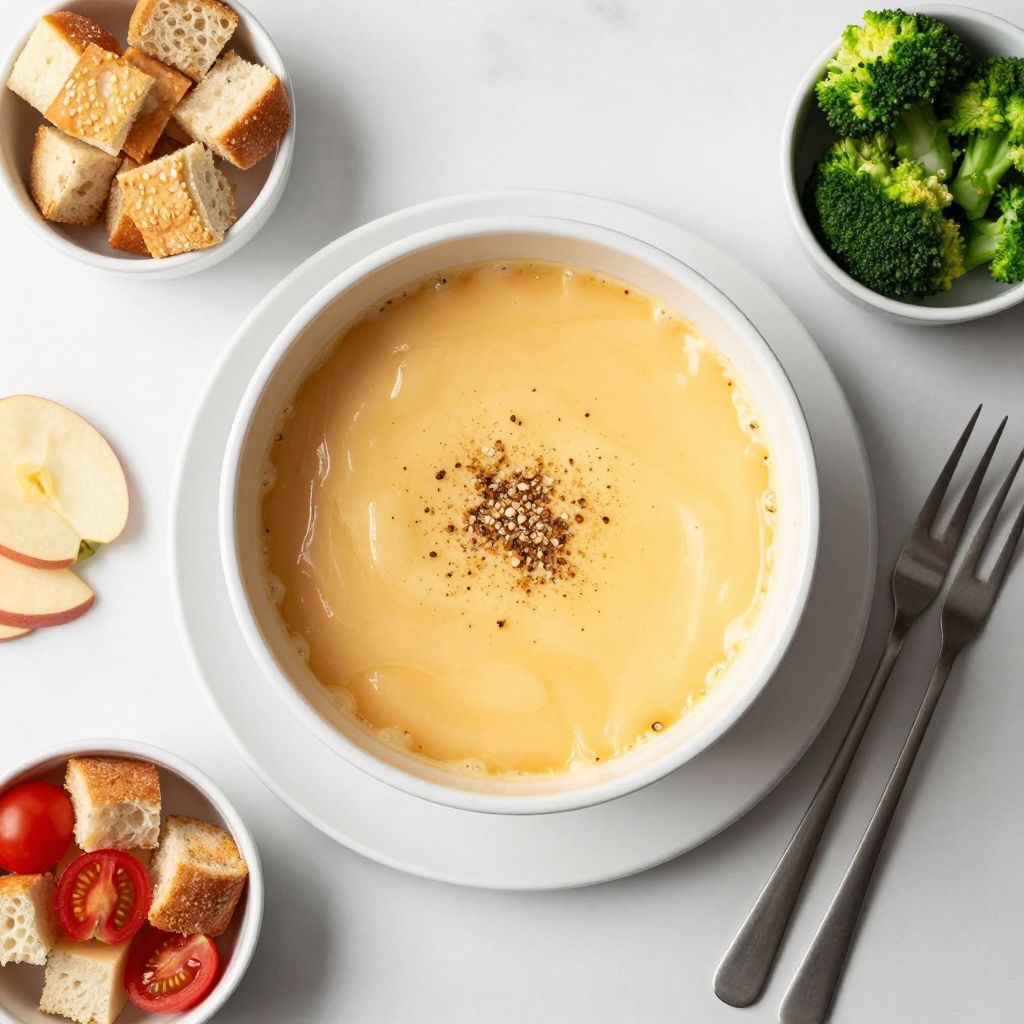
Cut your bread into 1-inch cubes, keeping them firm and chunky so they don’t fall apart in the fondue pot. Prepare your fruit and vegetable dippers by cutting them into bite-sized pieces and arranging them in small bowls around your fondue station.
Step 2: Shred Your Cheese
Use freshly shredded cheese if possible, as pre-shredded varieties often contain anti-caking agents that make melting uneven. Toss the shredded cheeses together in a large bowl to combine them evenly.
Step 3: Mix Cornstarch with the Cheese
In your cheese bowl, sprinkle the cornstarch over the shredded mixture and toss thoroughly until every shred is lightly coated. This step prevents the cheese from becoming lumpy or separating into oil and solids when it hits the heat.
Step 4: Heat Your Liquid Base
Pour the milk and broth into your fondue pot or heavy-bottomed saucepan and bring it to a gentle simmer over medium heat. Do not boil aggressively; a gentle steam means the liquid is hot enough without cooking too fast and causing the cheese to seize.
Step 5: Add the Aromatics
Stir in your minced garlic and let it warm for about 30 seconds to release its oils and flavor into the liquid. This brief cooking mellows the garlic’s harshness while keeping its brightness intact.
Step 6: Incorporate the Cheese Gradually
Lower the heat to medium-low and begin adding the cornstarch-coated cheese in small handfuls, stirring constantly in a figure-eight pattern with a wooden spoon. The constant stirring prevents lumps and ensures even melting; rushing this step is the fastest way to end up with grainy, broken fondue.
Step 7: Season and Finish
Once all the cheese is melted and smooth, stir in the Dijon mustard, lemon juice, nutmeg, and white pepper. Taste the mixture and add salt sparingly, keeping in mind that cheese is already salty and the stock contributes additional sodium.
Step 8: Transfer to Your Fondue Pot
If you’ve been cooking on the stovetop, carefully pour the fondue into your fondue pot and light the burner underneath it. The fondue should stay at a gentle, consistent simmer; too hot and the bottom will burn, too cool and it will thicken and separate.
Pro Tip: A splash of hot milk stirred in at the end brings back the perfect dipping consistency if your fondue thickens while sitting.
Tips for the Best Fondue Without Wine
- Cut all your dippers before you start cooking so you can relax and enjoy the fondue without scrambling when it’s ready.
- Use a thermometer if you have one; the ideal temperature sits around 140 to 160 degrees Fahrenheit, hot enough to melt but cool enough to stay silky.
- Stir your fondue in a figure-eight or circular pattern to keep the bottom from sticking and the cheese from settling unevenly.
- If the fondue breaks or becomes grainy, whisk in a tablespoon of hot milk and keep stirring until it smooths out again.
- Keep the heat low once you transfer to the fondue pot; a slow, steady bubble is far better than a rolling boil that scorches the bottom.
- Have extra bread cubes nearby since people always eat more than they think they will, and bread soaks up the fondue beautifully.
Common Mistakes to Avoid
- Skipping the cornstarch: Without it, the cheese melts unevenly and separates into greasy, grainy clumps that feel unpleasant on the palate.
- Adding cheese to cold liquid: Cheese added to room-temperature or cool liquid seizes immediately and becomes rubbery; always ensure your liquid is simmering first.
- Rushing the melting process: High heat causes the proteins and fats to separate; slow and steady melting ensures a smooth, luxurious texture.
- Using pre-sliced cheese: Sliced cheese contains starch and additives that prevent melting; shredded cheese melts far more evenly and smoothly.
- Overcrowding dippers on forks: Too much bread or vegetables at once pulls the mixture off the heat and cools it down; encourage small, single-bite portions.
Serving Suggestions
Fondue is endlessly flexible with dippers, so feel free to experiment with what you have on hand. The key is balancing textures: crusty bread, tender vegetables, and sweet fruit all play different roles in the experience.
- Crusty sourdough or French bread cubes for the classic experience.
- Blanched broccoli, cauliflower, and snap peas for a fresh, crisp contrast.
- Thin apple slices, pear slices, or grapes for subtle sweetness that balances the rich cheese.
- Roasted potatoes or boiled baby potatoes for a heartier, starch-forward option.
- Cured meats like prosciutto or salami rolled into small bites for a protein boost and savory depth.
Variations to Try
- Herb-Infused Fondue: Add 1 tablespoon of fresh thyme, rosemary, or chives to the liquid base before heating for earthy, garden-fresh notes that deepen the cheese flavor.
- Smoked Fondue: Replace half the Gruyere with smoked cheddar or smoked Gouda for a warm, campfire-like depth that works beautifully with potatoes and bread.
- Spiced Fondue: Increase the nutmeg to 1/2 teaspoon and add a pinch of cayenne pepper for a subtle heat that wakes up your palate.
- Lighter Fondue: Swap half the whole milk for unsweetened almond milk or oat milk to reduce calories and richness while maintaining silky texture.
- Extra Sharp Fondue: Use all Gruyere and Appenzeller with no Emmental for a more intensely savory, nutty experience that appeals to cheese purists.
Dietary Adaptations
- Gluten-Free: Use gluten-free bread cubes or choose vegetable and fruit dippers exclusively; the fondue itself is naturally gluten-free as written.
- Dairy-Free: Replace cheese with a high-quality dairy-free cheese blend, though texture and meltability may differ from traditional fondue.
- Vegetarian: The recipe is already vegetarian; ensure your broth is vegetable-based and your dippers avoid any meat products.
- Low-Carb or Keto: Skip bread cubes entirely and serve with cauliflower florets, zucchini slices, bell peppers, and cured meats as your primary dippers.
Storage and Reheating
Refrigerator
Fondue stores beautifully in an airtight container for up to 3 days. The cheese may thicken significantly as it cools, which is exactly what you want for easy storage.
- Allow the fondue to cool completely before covering and refrigerating.
- Store dippers separately to maintain their freshness and texture.
Freezer
Frozen fondue keeps for up to 3 months, though the texture shifts slightly and becomes grainier upon thawing. It’s not ideal, but it works in a pinch.
- Freeze in an airtight container, leaving 1 inch of space at the top for expansion.
- Thaw overnight in the refrigerator before reheating.
Reheating
Gently reheat the fondue in a saucepan over low heat, stirring constantly and adding a splash of warm milk if it’s too thick. Return it to your fondue pot once it reaches a smooth, dippable consistency.
- Microwave in 30-second intervals, stirring between each pulse, if you’re in a hurry.
- Never reheat at high heat; low and slow prevents the cheese from breaking or scorching.
Nutrition Information
| Nutrient | Amount |
|---|---|
| Calories | 280 |
| Total Fat | 18g |
| Saturated Fat | 11g |
| Carbohydrates | 12g |
| Fiber | 0g |
| Sugar | 1g |
| Protein | 16g |
| Sodium | 480mg |
| Cholesterol | 45mg |
Nutrition values are estimates based on standard ingredients and may vary depending on your specific cheese brands and dippers chosen.
Frequently Asked Questions
Can I Make Fondue Ahead of Time?
Yes, you can prepare the fondue up to 8 hours ahead and store it in the refrigerator, then gently reheat it over low heat with a splash of warm milk to restore the creamy texture. Your dippers should be prepped ahead too, but keep them stored separately so they stay fresh.
Why Does My Fondue Look Grainy or Broken?
Graininess happens when the cheese’s proteins and fats separate, usually from high heat, cold liquid, or too-quick cooking. Fix it by whisking in a tablespoon of hot milk and stirring constantly over low heat until smooth again.
What’s the Best Way to Dip Without Losing Food to the Pot?
Pierce your dipper firmly on the fork tine and dip at a slight angle so the fondue coats it without sliding off. Twirl the fork gently as you lift it out to help the cheese cling to your food.
Can I Use Any Type of Cheese for Fondue?
Not all cheeses work equally well; you need cheese with good melting properties and flavor depth. Stick to aged Alpine cheeses like Gruyere, Emmental, and Appenzeller; soft cheeses like brie or mozzarella won’t create that luxurious, silky texture fondue requires.
How Do I Know When My Fondue is the Right Temperature?
The fondue should bubble gently and slowly around the edges, never boiling aggressively. If it’s too cool, it thickens; if it’s too hot, the bottom burns and the texture breaks, so aim for that steady, gentle simmer throughout your meal.
What Happens If I Don’t Have All Three Cheeses?
Use what you have, but prioritize Gruyere as your base since it defines fondue’s flavor profile. If you only have one cheese, increase that quantity and the fondue will still work, though it may taste more one-dimensional.
Final Thoughts
Fondue without wine proves that you don’t need alcohol to create something deeply satisfying and memorable. The cheese itself is rich enough, flavorful enough, and luxurious enough to stand on its own when you use quality ingredients and a little care with your technique.
Make this for your next gathering, your quiet night in, or that friend who can’t drink but deserves to feel celebrated. You’ll be surprised at how simple it is to create something so impressive and delicious.
Fondue Without Wine
Ingredients
Equipment
Method
- Cut bread into 1-inch cubes and prepare fruit and vegetable dippers; set aside.
- Shred Gruyere, Emmental, and Appenzeller cheeses and toss together.
- Sprinkle cornstarch over the shredded cheese and toss until evenly coated.
- In a fondue pot or heavy-bottomed saucepan, combine milk and broth and heat over medium heat until gentle simmer (steam rising), about 3 minutes.
- Stir in minced garlic and cook for 30 seconds to release flavor.
- Reduce heat to medium-low and add cornstarch-coated cheese handfuls at a time, stirring constantly in a figure-eight pattern until smooth, about 3–4 minutes.
- Stir in Dijon mustard, lemon juice, nutmeg, and white pepper; season with salt to taste.
- Transfer fondue to heated fondue pot and maintain at a gentle simmer (140–160°F); add a splash of hot milk if thickened.