
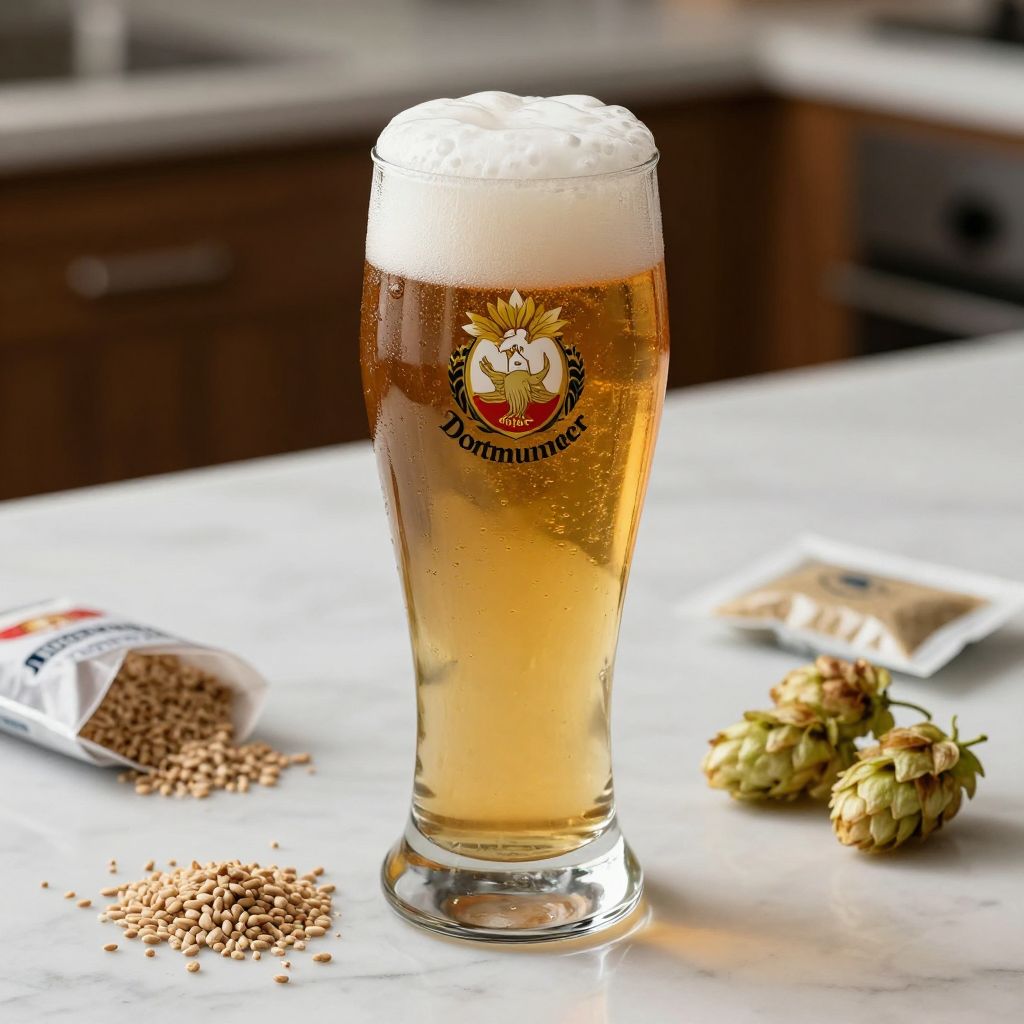
Imagine sitting in a cozy pub in Dortmund, sipping on a perfectly brewed Dortmunder beer, with its golden color and a slightly hoppy aroma wafting through the air. This recipe captures that experience, bringing a taste of Germany right to your home, with a well-balanced flavor that’s crisp and refreshing. The Dortmunder is a lager that shines with its smooth maltiness and subtle hop character, making it perfect for any occasion — whether you are celebrating or just winding down. Let’s dive into the ingredients and learn how to brew your own batch!
Why You’ll Love This Recipe
This Dortmunder recipe is a must-try for beer lovers and home brewers alike.
- Rich malt flavor balanced with gentle hops.
- Easy brewing process for beginners and pros.
- Perfect for pairing with hearty German dishes.
- Customizable with various hop varieties.
- A great way to impress friends and family!
My Experience Making This Recipe
When I first tried brewing a Dortmunder, I was pleasantly surprised by how straightforward it was. The aroma of the malt during mashing filled my kitchen, and it felt like I was right in the heart of Germany.
The first sip of my homemade Dortmunder took me back to those pub visits, and I couldn’t help but smile at my brewing success. Each glass brought warmth and joy, making it a favorite among my friends.
Recipe Overview
- Recipe Name: Dortmunder
- Servings: Approximately 48 pints
- Prep Time: 30 minutes
- Cook Time: 1 hour
- Total Time: 6 weeks (including fermentation)
- Course: Beverage
- Cuisine: German
- Calories per Serving: 150
Equipment You Will Need
- Large brew kettle (at least 5 gallons)
- Fermentation vessel with airlock
- Sanitizer
- Thermometer
- Hydrometer
- Bottling bucket and bottles
- Siphon
Ingredients for Dortmunder
- 10 lbs Pale Malt (2-row) – for a rich malt backbone
- 1 lb Munich Malt – adds depth and sweetness
- 0.5 lb Carapils Malt – enhances body and head retention
- 1 oz Hallertau Hops (bittering) – for smooth bitterness
- 0.5 oz Saaz Hops (aroma) – for a floral aroma
- 1 packet Lager yeast – essential for fermentation
- 5 oz Corn sugar – for priming before bottling
Ingredient Notes and Substitutions
- Pale Malt: This is the base malt providing the foundation. You can substitute with Pilsner malt for a lighter flavor.
- Munich Malt: It contributes maltiness. If unavailable, try using Vienna malt for a similar effect.
- Carapils Malt: It adds body; if you need a substitute, use a small amount of Crystal malt.
- Hallertau Hops: A classic choice for bitterness. You can use Tettnang hops for a different flavor profile.
- Saaz Hops: For floral notes, consider using Spalt hops as an alternative.
How to Make Dortmunder
Step 1: Prepare Your Equipment
Start by thoroughly sanitizing all your equipment to prevent contamination. This step is crucial for brewing success.
Step 2: Heat the Water
Heat about 3-4 gallons of water to 165°F (74°C). This temperature is ideal for mashing the grains.
Step 3: Mash the Grains
Add the crushed grains to the water, stirring well. Maintain the temperature around 152°F (67°C) for about 60 minutes to convert the starches into sugars.
Step 4: Sparge the Grains
After mashing, rinse the grains with hot water to extract more sugars. This process is called sparging and will yield a higher sugar concentration.
Step 5: Boil the Wort
Bring the collected wort to a boil and add the bittering hops. Boil for about 60 minutes, stirring occasionally to prevent scorching.
Step 6: Add Aroma Hops
In the last 10 minutes of the boil, add the aroma hops for flavor enhancement. This step creates that signature floral aroma.
Step 7: Cool the Wort
Cool the wort quickly to around 65°F (18°C) using a wort chiller or an ice bath. Cooling fast helps prevent unwanted bacteria from developing.
Step 8: Ferment
Transfer the cooled wort to your fermentation vessel and pitch the yeast. Seal it with an airlock and let it ferment for about two weeks at a consistent temperature.
Pro Tip: Make sure to keep the fermentation temperature stable to ensure a clean fermentation.
Tips for the Best Dortmunder
- Use fresh ingredients for the best flavor; stale hops can ruin your brew.
- Maintain cleanliness throughout the process to avoid off-flavors.
- Monitor fermentation closely; too high of a temperature can produce undesirable esters.
- Consider bottle conditioning for a few weeks for carbonation and flavor enhancement.
- Taste test at different stages to learn how flavors evolve over time.
Common Mistakes to Avoid
- Not sanitizing equipment: This can lead to contamination and spoilage.
- Skipping the cooling step: If the wort isn’t cooled quickly, bacteria may thrive.
- Fermenting at high temperatures: This may produce off-flavors.
- Rushing the bottling process: Patience is key for carbonation and flavor development.
Serving Suggestions
This Dortmunder pairs beautifully with hearty meals or a simple cheese platter. Here are some perfect pairings:
- Bratwurst or sausages
- Schnitzel
- Soft pretzels with mustard
- German potato salad
- Cheddar cheese or sharp cheeses
Variations to Try
- Add different hop varieties for unique flavors; consider Cascade or Chinook for citrus notes.
- Experiment with specialty malts for varied sweetness and color.
- Try dry hopping for additional aroma and flavor complexity.
- Infuse with fruits like lemon or orange zest for a refreshing twist.
Dietary Adaptations
- Gluten-Free: Use gluten-free grains like sorghum or rice.
- Dairy-Free: This recipe is naturally dairy-free.
- Vegan/Vegetarian: Suitable for all diets; no animal products used.
- Low-Carb/Keto: Reducing sugars may affect flavor; not ideal for strict low-carb diets.
Storage and Reheating
Refrigerator
Store your bottled Dortmunder in a cool, dark place. This helps maintain flavor and carbonation.
- Best consumed within 6 months for optimal freshness.
- Keep upright to avoid sediment disturbance in the bottle.
Freezer
Freezing beer is generally not recommended, as it can alter the flavor and texture. If necessary, do so cautiously.
- Thaw in the refrigerator before consuming.
- Do not leave in the freezer for extended periods.
Reheating
Reheating beer is not applicable, as it is best enjoyed chilled. Simply serve cold for the best flavor experience.
Nutrition Information
| Nutrient | Amount |
|---|---|
| Calories | 150 |
| Total Fat | 0g |
| Saturated Fat | 0g |
| Carbohydrates | 12g |
| Fiber | 0g |
| Sugar | 0g |
| Protein | 1g |
| Sodium | 5mg |
| Cholesterol | 0mg |
This nutritional information is an estimate and can vary based on specific ingredients used.
Frequently Asked Questions
Can I use different grains for the Dortmunder?
Yes, you can experiment with various malts, but the base should remain similar to achieve the classic flavor.
How long can I store my Dortmunder?
It is best consumed within 6 months, but proper storage can yield good quality for up to a year.
Can I make this a non-alcoholic beer?
To create a non-alcoholic version, use a method to remove the alcohol after fermentation, but it will alter the flavor.
What if my beer doesn’t carbonate?
This could be due to insufficient priming sugar or a stuck fermentation; ensure both are monitored closely.
Can I make it a little sweeter?
You can add more malt or a small amount of sugar during fermentation for a sweeter taste.
Final Thoughts
Brewing your own Dortmunder is a rewarding experience that can transport you straight to Germany with each sip. The journey from grain to glass is filled with moments of joy and anticipation, so gather your friends and enjoy the fruits of your labor.
For more great recipes, check out this Black and Tan Beer Recipe or explore the rich flavors in this Doppelbock Recipe. Happy brewing!
Dortmunder
Ingredients
Equipment
Method
- Thoroughly sanitize all your equipment.
- Heat about 3-4 gallons of water to 165°F (74°C).
- Add the crushed grains to the water and maintain the temperature around 152°F (67°C) for about 60 minutes.
- Rinse the grains with hot water, a process called sparging.
- Bring the collected wort to a boil and add the bittering hops, boiling for 60 minutes.
- In the last 10 minutes of the boil, add the aroma hops.
- Cool the wort quickly to around 65°F (18°C).
- Transfer the cooled wort to your fermentation vessel and pitch the yeast. Seal it with an airlock.
- Let it ferment for about two weeks at a consistent temperature.