
Picture yourself in a cozy pub in Belgium, savoring a rich, malty ale with a hint of sweetness. The Belgian Abbey Ale is a tribute to that experience, offering complex flavors and a delightful aroma right from your own home. This recipe is worth making, as it captures the essence of traditional brewing while being surprisingly approachable for homebrewers. With its fruity esters and subtle spice notes, it’s perfect for sipping on a chilly evening or sharing with friends during a gathering. Let’s get started with the ingredients you’ll need.
Why You’ll Love This Recipe
This recipe is a fantastic choice for both novice and experienced brewers alike.
- Rich, complex flavors that develop beautifully over time.
- Easy to follow, making it perfect for beginners.
- Perfect for sharing at gatherings or enjoying solo.
- Can be customized with your favorite hops or flavors.
My Experience Making This Recipe
When I first tried brewing this ale, I was a bit nervous about the fermentation process. However, watching the bubbles rise in the airlock was oddly satisfying, like a science experiment gone deliciously right.
The first sip of my finished brew was a moment I won’t forget; the combination of sweetness and spice danced on my palate, and my friends were impressed. It felt rewarding to share something homemade that brought everyone together.
Recipe Overview
- Recipe Name: Belgian Abbey Ale
- Servings: 5 gallons
- Prep Time: 30 minutes
- Cook Time: 1 hour
- Total Time: 2 weeks (including fermentation)
- Course: Beverage
- Cuisine: Belgian
- Calories per Serving: Approximately 200
Equipment You Will Need
- Brewing kettle (at least 5 gallons)
- Fermentation vessel with airlock
- Hydrometer
- Bottling bucket
- Bottles and caps
- Stirring spoon
- Thermometer
- Sanitizer
Ingredients for Belgian Abbey Ale
- 9 lbs Belgian Pilsner malt
- 1 lb Belgian Munich malt
- 1 lb Belgian Caramel malt (60L)
- 1 oz Styrian Goldings hops (bittering)
- 0.5 oz Saaz hops (flavor)
- 0.5 oz Styrian Goldings hops (aroma)
- 1 packet Belgian yeast (e.g., Wyeast 3787 or Safale T-58)
- 1 cup priming sugar (for bottling)
Ingredient Notes and Substitutions
- Belgian Pilsner malt: This malt provides a light base and subtle sweetness. You can substitute with pale malt if needed, but flavors may differ.
- Belgian Munich malt: Adds depth and richness. If unavailable, try using a light caramel malt for a similar effect.
- Belgian Caramel malt: Contributes sweetness and color. A light crystal malt can be used as a substitute.
- Styrian Goldings hops: These hops offer a mild, earthy bitterness. Any floral or spicy hop can work in a pinch, but flavors will change.
- Belgian yeast: Produces classic fruity esters. Any Belgian-style yeast can be used for this recipe.
How to Make Belgian Abbey Ale
Step 1: Prepare Your Equipment
Start by sanitizing all your brewing equipment. Cleanliness is crucial in brewing to avoid contamination.
Step 2: Heat the Water
Pour 3 gallons of water into your brewing kettle and heat it to about 160°F. This temperature helps extract sugars from the grains effectively.
Step 3: Mash the Grains
Add the crushed grains to the kettle and maintain the temperature around 150-155°F for 60 minutes. This step converts the starches into fermentable sugars.
Step 4: Sparge the Grains
After mashing, sparge the grains with hot water to collect the wort. This maximizes sugar extraction, ensuring a sweeter beer.
Step 5: Boil the Wort
Bring the wort to a boil and add the bittering hops. Boil for 60 minutes, stirring occasionally to prevent scorching.
Step 6: Add Flavor and Aroma Hops
At the last 15 minutes of the boil, add the flavor hops. Then, just a few minutes before the boil ends, add the aroma hops for an enticing scent.
Step 7: Cool the Wort
Once the boiling is complete, cool the wort quickly using a wort chiller or an ice bath. Rapid cooling prevents unwanted bacteria from developing.
Step 8: Ferment the Beer
Transfer the cooled wort into your fermentation vessel and pitch the yeast. Seal it with an airlock and let it ferment in a dark, cool place for about two weeks.
Pro Tip: Be patient during fermentation; rushing this process can lead to off-flavors.
Tips for the Best Belgian Abbey Ale
- Always use fresh ingredients for the best flavors.
- Control fermentation temperature to avoid unwanted esters.
- Consider a secondary fermentation for clarity and depth.
- Let the ale condition for at least a month for better taste.
- Experiment with different hops for personalized flavors.
Common Mistakes to Avoid
- Not sanitizing equipment can lead to spoilage.
- Skipping the cooling step can introduce bacteria.
- Fermenting at too high a temperature can produce undesirable flavors.
- Rushing the bottling process can cause over-carbonation.
Serving Suggestions
This ale shines when paired with hearty dishes or enjoyed solo. Here are some great pairings:
- Beef stew for a comforting meal.
- Cheese platters with aged Gouda or Brie.
- Chocolate desserts to enhance the maltiness.
- Spicy dishes to balance the sweetness.
Variations to Try
- Add fruit like cherries or raspberries for a fruity twist.
- Incorporate spices like coriander or orange peel for added complexity.
- Use different malts for varied flavor profiles.
- Experiment with different hops for unique aromas.
Dietary Adaptations
- Gluten-free: Use gluten-free grains like sorghum or millet.
- Dairy-free: This recipe is naturally dairy-free.
- Vegan/Vegetarian: All ingredients are plant-based.
- Low-carb/keto: Not suitable due to high sugar content.
Storage and Reheating
Refrigerator
Store your finished ale in a cool, dark place. This extends its shelf life and helps maintain flavor.
- Keep bottles upright to prevent sediment disturbance.
- Consume within six months for optimal freshness.
Freezer
It’s not recommended to freeze beer, as this can alter the texture and flavor. Stick to refrigeration.
Reheating
Reheating is unnecessary; simply enjoy your ale chilled as intended.
Nutrition Information
| Nutrient | Amount |
|---|---|
| Calories | 200 |
| Total Fat | 0g |
| Saturated Fat | 0g |
| Carbohydrates | 15g |
| Fiber | 0g |
| Sugar | 1g |
| Protein | 2g |
| Sodium | 5mg |
| Cholesterol | 0mg |
This nutrition information is approximate and can vary based on specific ingredients used.
Frequently Asked Questions
Can I use different grains for this recipe?
Yes, feel free to experiment with different malts for unique flavors.
How long can I store this ale?
For the best quality, consume within six months.
What if my beer tastes sour?
This could be a sign of contamination. Ensure all equipment is sanitized before brewing.
Can I make this ale in smaller batches?
Absolutely! Just scale down the ingredients accordingly.
Is it possible to add flavors during fermentation?
Yes, you can add fruit or spices during fermentation for extra flavor.
Final Thoughts
Brewing your own Belgian Abbey Ale can be a rewarding experience that combines creativity and science. I encourage you to try this recipe and enjoy the fruits of your labor.
For more delicious recipes, check out this Doppelbock recipe or explore the rich flavors in a Stout recipe!
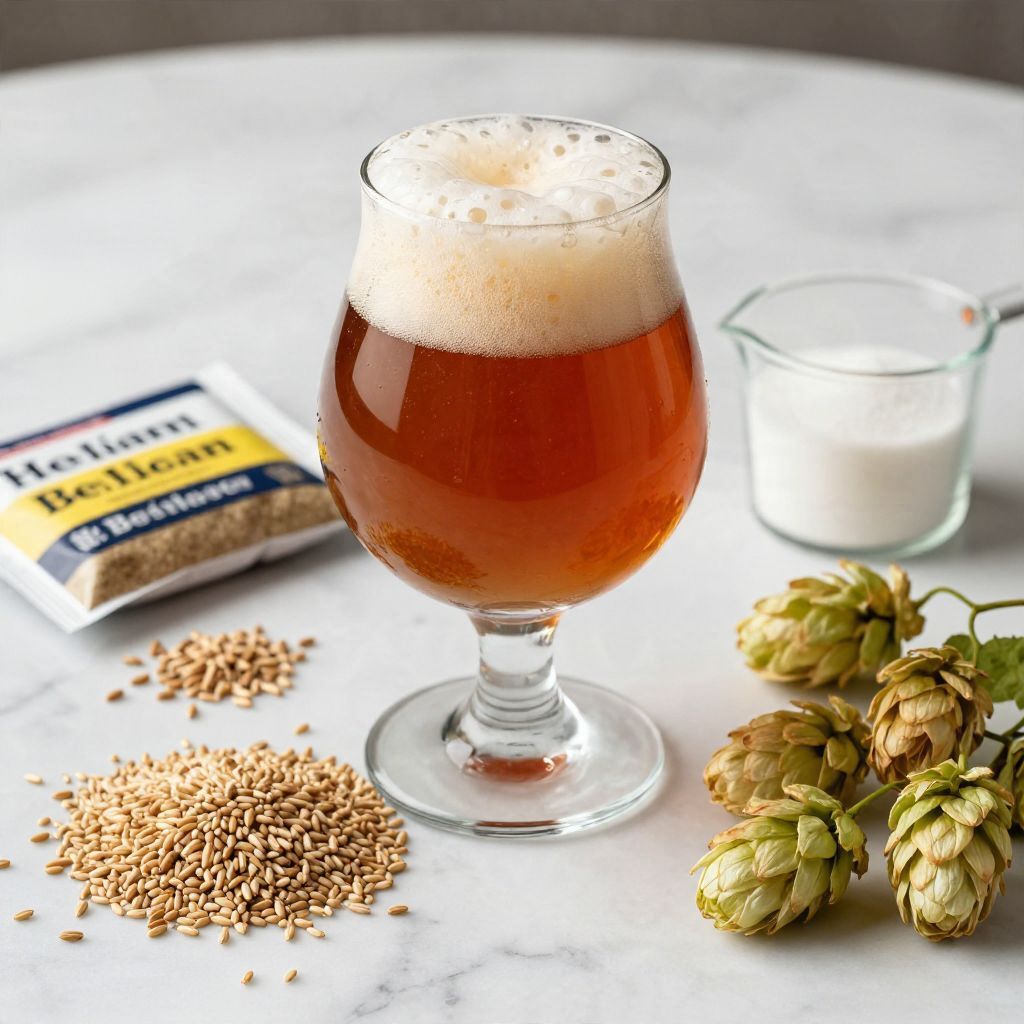
Belgian Abbey Ale
Ingredients
Equipment
Method
- Sanitize all your brewing equipment.
- Pour 3 gallons of water into your brewing kettle and heat to about 160°F.
- Add the crushed grains to the kettle and maintain the temperature around 150-155°F for 60 minutes.
- Sparge the grains with hot water to collect the wort.
- Bring the wort to a boil and add the bittering hops. Boil for 60 minutes, stirring occasionally.
- At the last 15 minutes of the boil, add the flavor hops.
- Add the aroma hops just a few minutes before the boil ends.
- Cool the wort quickly using a wort chiller or an ice bath.
- Transfer the cooled wort into your fermentation vessel and pitch the yeast. Seal it with an airlock.
- Let it ferment in a dark, cool place for about two weeks.