
There’s something undeniably magical about the moment you crack open a cold, crisp beer that you’ve brewed yourself in your own kitchen. BDO beer, a light lager with a clean finish and subtle malty sweetness, sits at the intersection of approachable and rewarding, making it the perfect gateway into home brewing.
This recipe earns a spot in your rotation because it delivers restaurant-quality flavor without demanding a chemistry degree or expensive equipment. The beauty of BDO lies in its simplicity: just a handful of quality ingredients and straightforward technique produce a beer that tastes polished, balanced, and genuinely delicious.
Whether you’re a curious beginner or someone who’s experimented with brewing before, this recipe walks you through every stage with confidence. You’ll learn why each step matters, what to watch for, and how to troubleshoot if something feels off.
Why You’ll Love This Recipe
BDO beer delivers clean, refreshing flavor that pairs well with nearly any meal or occasion. The process teaches you real brewing skills without overwhelming complexity.
- Smooth, crisp finish with subtle malt backbone and minimal bitterness
- Forgiving recipe that tolerates small variations and still produces excellent results
- Ready to drink in under four weeks from start to finish
- Uses readily available ingredients and standard home brewing equipment
- Scales easily from a one-gallon test batch to five gallons of ready-to-share beer
My Experience Making This Recipe
I brewed BDO on a chilly autumn afternoon, and the aroma that filled my kitchen during the boil reminded me why I fell in love with brewing in the first place. Watching the wort cool and the yeast pitch into the fermentor felt like planting a seed that would grow into something genuinely satisfying.
Two weeks later, I bottled my first batch and invited friends over for a tasting. The reactions ranged from skeptical to amazed, with most people shocked that something this polished came from my stovetop rather than a brewery.
What struck me most was how forgiving the recipe proved to be; minor temperature swings and timing adjustments didn’t derail the final product. That reliability, combined with the clean, balanced flavor, made BDO my go-to recipe whenever I wanted to brew something I knew would impress.
Recipe Overview
- Recipe Name: BDO Beer
- Servings: 48 servings (12 oz per bottle, one five-gallon batch)
- Prep Time: 30 minutes
- Cook Time: 90 minutes
- Fermentation Time: 14 to 21 days
- Total Time: 3 to 4 weeks
- Course: Beverage
- Cuisine: Light Lager
- Alcohol Content: 4.2% ABV
- Calories per Serving: 142 calories
Equipment You Will Need
- Large stainless steel brewing pot (at least 15 quarts)
- Brewing thermometer
- Long-handled stainless steel spoon for stirring
- Fermenter with airlock (5-gallon glass carboy or plastic bucket)
- Hydrometer for measuring gravity
- Auto-siphon and tubing for transferring wort
- Bottle capper and bottle caps
- 12 oz beer bottles (48 total)
- Sanitizer (no-rinse variety recommended)
- Wort chiller or ice bath setup
- Measuring cups and kitchen scale
- Cheese cloth or hop bag for loose hops
Ingredients for BDO Beer
- 2-row pale malt: 6.5 pounds
- Carapils malt: 0.5 pounds
- German Pilsner hops: 1 ounce (bittering, 60 minutes)
- Hallertau hops: 0.75 ounce (flavor, 15 minutes)
- Tettnang hops: 0.5 ounce (aroma, 1 minute)
- Lager yeast (WLP830 German Lager or equivalent): one vial
- Filtered water: 5.5 gallons
- Gypsum (if using soft water): 1 teaspoon
- Priming sugar (dextrose): 0.75 cup
- Irish moss (optional clarity aid): 1 teaspoon
Ingredient Notes and Substitutions
- 2-row pale malt: This is the backbone of BDO, providing the clean, slightly sweet malt flavor without heavy notes. Substitute with pale ale malt if needed, but expect slightly more body and a touch more character in the final beer.
- Carapils malt: A specialty grain that enhances head retention and mouthfeel without adding color or significant flavor. If unavailable, omit it and increase 2-row to 7 pounds; the beer will be slightly thinner but still solid.
- German Pilsner hops: Delivers the crisp, herbal bitterness that defines the recipe’s clean profile. Substitute with Magnum or Perle hops if necessary; the bitterness will remain balanced but the herbal character may shift.
- Hallertau hops: Adds a soft, floral spice that rounds out the middle of the beer. Czech Saaz works as a substitute for a slightly more noble, refined bitterness.
- Tettnang hops: Contributes a gentle, minty aroma that finishes the beer pleasantly. Noble hops like Mittelfruh or Magnum can replace it if needed.
- Lager yeast: Cold fermentation yeast that produces clean, crisp flavors with minimal fruity esters. A clean ale yeast like WLP001 or US-05 will work if true lager conditions aren’t available, though the result will taste slightly different.
- Filtered water: Removes chlorine and chloramines that can clash with hop character. Tap water works if it’s not heavily treated; let it sit overnight to allow chlorine to evaporate.
How to Make BDO Beer
Step 1: Sanitize All Equipment
Before you touch any ingredient, sanitize every piece of equipment that will contact your beer: the fermenter, airlock, siphon, tubing, spoon, and thermometer. A no-rinse sanitizer mixed with water takes five minutes and eliminates invisible organisms that could spoil your batch.
Step 2: Prepare Your Water and Adjust Chemistry
Pour 5.5 gallons of filtered water into your brewing pot and bring it to 140 degrees Fahrenheit. If you’re using soft tap water, stir in one teaspoon of gypsum to add minerals that strengthen hop bitterness and balance malt sweetness.
Step 3: Crush Your Grains and Start the Mash
Crush the 2-row pale malt and Carapils malt using a grain mill or by asking your homebrew shop to crush them for you. Slowly add the crushed grain to your 140-degree water while stirring, aiming for a final temperature of 152 degrees Fahrenheit; this temperature range activates enzymes that convert starches into fermentable sugars.
Let the grains steep in the hot water for 60 minutes without disturbing them, maintaining 152 degrees as closely as possible by adjusting heat or wrapping the pot with towels.
Step 4: Sparge and Collect Your Wort
After 60 minutes, slowly raise the temperature to 170 degrees Fahrenheit over 10 minutes. Carefully run off the liquid (called wort) through a mesh screen into another pot, then rinse the grains with hot water at 170 degrees to extract remaining sugars.
You should collect approximately 5.5 gallons of clear to slightly cloudy wort. This step is called lautering, and it separates the sugar-rich liquid from the spent grain solids.
Step 5: Boil the Wort and Add Bittering Hops
Transfer your collected wort to the brewing pot and bring it to a rolling boil. Once it reaches a full boil, add one ounce of German Pilsner hops in a hop bag or cheese cloth.
These bittering hops will boil for 60 minutes, extracting their bitterness compounds and balancing the malt sweetness. The boil also sterilizes the wort and causes proteins to precipitate, which clarifies the final beer.
Step 6: Add Flavor and Aroma Hops
At 45 minutes into the boil (with 15 minutes remaining), remove the spent bittering hops and add 0.75 ounce of Hallertau hops and one teaspoon of Irish moss if using it. These additions happen with time left on the clock, so the flavors don’t boil away completely but integrate into the beer.
With just one minute remaining on the boil, turn off heat and add the 0.5 ounce of Tettnang hops for final aroma. This late addition preserves the delicate, volatile compounds that give the beer its fresh, floral finish.
Step 7: Cool the Wort Rapidly
After boiling, the wort needs to cool to around 65 degrees Fahrenheit before you pitch yeast; warm wort can kill yeast cells or produce off-flavors. Use a wort chiller (copper coil with running cold water) if you have one, or place the entire pot in an ice bath with cold water and ice packs surrounding it.
Stir the wort gently as it cools to release heat evenly and help break material settle to the bottom. This usually takes 20 to 30 minutes depending on your cooling method.
Step 8: Transfer to Fermenter and Pitch Yeast
Once the wort reaches 65 degrees, carefully siphon it into your sanitized fermenter, leaving the settled grain material and trub (hot break solids) behind in the pot. Top off the fermenter with extra cooled water if needed to reach your five-gallon mark.
Take a gravity reading with your hydrometer by drawing a sample into a test tube; typical starting gravity for BDO is 1.048 to 1.052. Remove the sample and allow the wort to settle for five minutes, then pitch your yeast vial into the fermenter.
Step 9: Install Airlock and Ferment
Seal the fermenter with a sanitized airlock filled halfway with water or a one-way airlock valve, then place the fermenter in a cool, dark space where temperature stays between 50 and 65 degrees Fahrenheit. Lager yeast works best in this cooler range, producing clean, crisp flavors with minimal fruity notes.
Within 24 hours, you should see the airlock bubbling as yeast begins converting sugars into alcohol and carbon dioxide. Fermentation typically continues for 10 to 14 days, with activity slowing as the yeast consumes available sugars.
Step 10: Check Gravity and Plan for Bottling
After two weeks, take another gravity reading with your hydrometer by gently drawing a sample from the fermenter’s spigot. When the gravity stabilizes (two readings taken 48 hours apart show the same number), fermentation is complete and the beer is ready to bottle.
Typical final gravity for BDO is 1.010 to 1.012, yielding approximately 4.2% alcohol by volume. If gravity hasn’t dropped enough after three weeks, allow another week before checking again.
Step 11: Prepare Priming Sugar and Bottle Your Beer
Dissolve 0.75 cup of dextrose (priming sugar) in two cups of water by boiling it for five minutes, then cool it to room temperature. This sugar will carbonate your beer in the bottle without over-carbonating it.
Siphon the beer from the fermenter into a bottling bucket or directly into bottles, mixing the priming sugar solution gently into the first portion so it distributes evenly. Avoid splashing and oxygen exposure during bottling.
Step 12: Cap, Store, and Condition
Fill sanitized 12-ounce bottles to within half an inch of the top, cap each one with a capper and new caps, then store them upright at room temperature (65 to 75 degrees) for two weeks. During this conditioning period, the yeast consumes the priming sugar and creates carbonation.
After two weeks, move bottles to cold storage and allow them to chill for at least 48 hours before drinking. The beer will continue to improve for several weeks and can be stored cold for several months.
Pro Tip: Keep the fermenter in the coolest spot available during fermentation; temperature consistency matters more than absolute cold, and even a 10-degree swing can stress the yeast and produce unwanted flavors.
Tips for the Best BDO Beer
- Use fresh, quality hops and yeast; old or poorly stored ingredients produce stale or off-flavors that no technique can fix. Order from a reputable supplier and check harvest dates whenever possible.
- Keep detailed notes during every brew: water temperature, boil time, yeast pitch date, gravity readings, and any deviations from the recipe. These notes help you replicate success or identify what went wrong if a batch disappoints.
- Maintain consistent fermentation temperature by placing the fermenter in a cooler, basement, or wine fridge if your kitchen fluctuates. A stable 55 to 60 degrees produces the cleanest, crispest lager character.
- Don’t skip the wort chiller investment; it pays for itself by improving beer quality and reducing oxidation risk during cooling. Even a simple immersion chiller makes a dramatic difference compared to ice bath cooling.
- Oxygenate the wort before pitching yeast by vigorously stirring it or pouring it back and forth between containers; yeast needs oxygen during the first 12 hours to build healthy cell walls and ferment efficiently.
- Taste throughout the fermentation and conditioning process; understanding how BDO changes from day one to day 30 deepens your appreciation and helps you spot problems early if a batch starts smelling off.
Common Mistakes to Avoid
- Pitching yeast into wort that’s still warm: Temperatures above 80 degrees kill lager yeast or cause it to produce fruity, unwanted esters. Always cool to 65 degrees or below before adding yeast.
- Neglecting sanitation at any stage: Even one unsanitized piece of equipment can introduce bacteria or wild yeast that sours the entire batch. Treat sanitization as non-negotiable, not optional.
- Fermenting at temperatures that are too warm for lager yeast: Keeping the fermenter at room temperature (70+ degrees) produces a beer that tastes more like a warm ale, with fruity notes that don’t belong in BDO.
- Opening the fermenter to check on the beer before fermentation is complete: Each time you open the airlock, you risk oxidizing the beer and introducing oxygen that can produce stale, cardboard-like flavors later.
- Using tap water without filtering or treating it: Chlorine and chloramines in tap water can react with hops and yeast byproducts, producing medicinal or plastic-like flavors that ruin the clean character BDO depends on.
Serving Suggestions
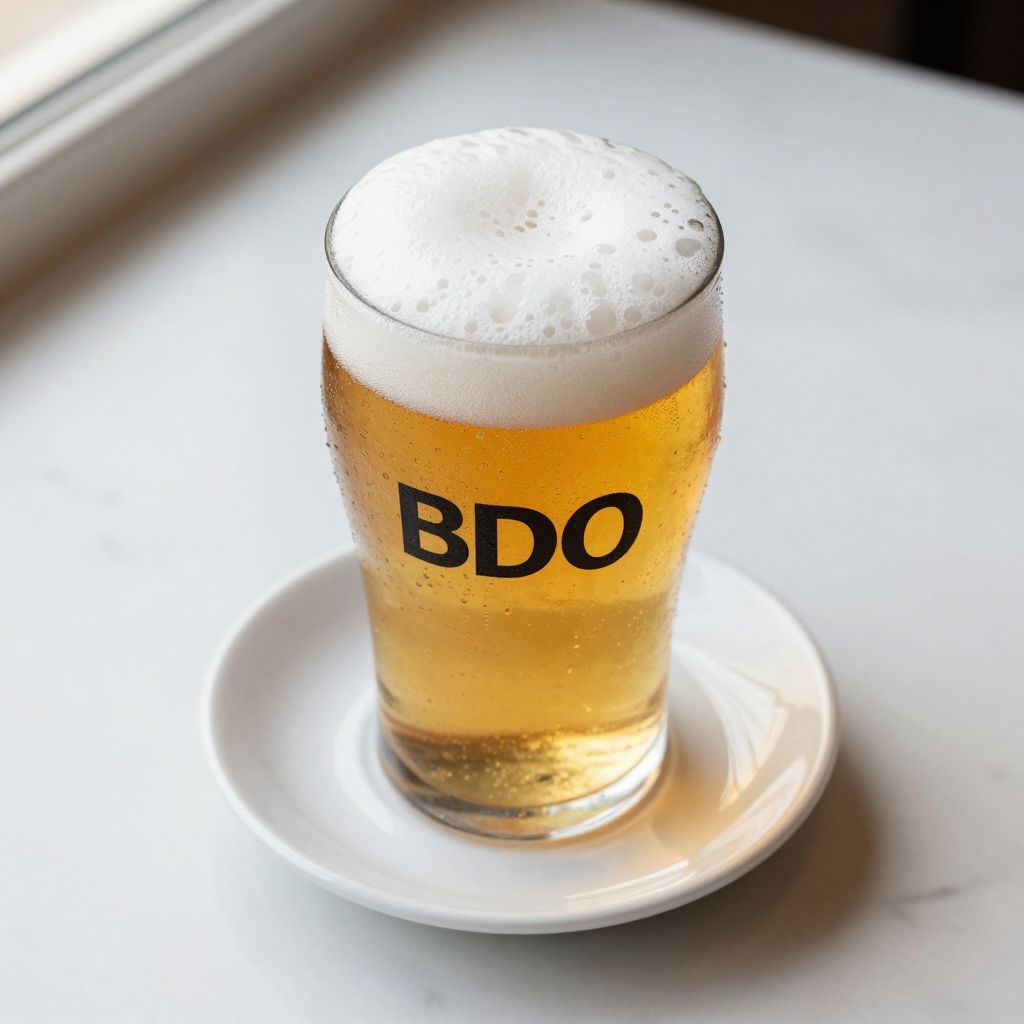
BDO beer shines when served ice-cold in a pilsner glass or standard lager glass, where the clarity and golden color come into full view. The crisp finish pairs beautifully with a wide range of foods and occasions, from casual backyard gatherings to dinner parties.
- Grilled chicken with lemon and herbs, where the beer’s clean finish cuts through richness without overpowering delicate flavors
- Fish tacos or seafood, where the subtle malt sweetness complements briny, fresh ingredients
- Soft cheeses and charcuterie boards, where BDO’s balanced profile works alongside salty and savory cured meats
- Light pasta dishes or risotto, pairing cleanly without competing for attention
- Casual social occasions like game day or a backyard gathering, where a refreshing, approachable beer suits the relaxed mood
Variations to Try
- BDO Amber Lager: Replace half the 2-row with Munich malt and add 0.25 pound of Crystal 10L for a warmer color and subtle caramel sweetness that rounds out the profile without adding weight.
- Dry-Hopped BDO: After fermentation is complete but before bottling, add 0.5 ounce of fresh Hallertau or Tettnang hops directly to the fermenter for three to five days to amplify floral, herbal aromatics.
- BDO Vienna-Style: Use 1 pound of Vienna malt alongside the 2-row base to introduce a richer, breadier malt character that deepens the beer’s complexity while maintaining its clean finish.
- Low-Alcohol BDO: Reduce the base grain bill to 5.5 pounds and use a short, 45-minute boil instead of 90 minutes to produce a lighter beer around 3.5% ABV that’s perfect for longer sessions or warm weather.
- BDO with German Character: Switch to all German-origin hops (Perle for bittering, Spalt for flavor) and German lager yeast for an authentic Bavarian interpretation that emphasizes noble hop spice and crisp minerality.
Dietary Adaptations
- Gluten-Free: Replace barley malts with sorghum or rice-based brewing extracts designed for gluten-free beer; the result will be slightly lighter in body but still drinkable, though traditional malt character diminishes.
- Lower Carbohydrate: Use a glucoamylase enzyme (available at homebrew shops) to break down remaining unfermentable sugars into fermentable ones, reducing final carb content by roughly 30% without sacrificing flavor.
- Vegan: BDO is already vegan if you avoid Irish moss (use pectinase enzyme instead for clarity) and ensure your priming sugar isn’t processed with bone char; standard homebrew ingredients are vegan-friendly.
- Allergen-Conscious: Always disclose ingredients to guests; BDO contains barley (gluten) and sulfites from yeast fermentation, which some people react to or must avoid for health reasons.
Storage and Reheating
Refrigerator
Store bottled BDO in the coldest part of your refrigerator at 35 to 50 degrees Fahrenheit. Cold storage slows oxidation and keeps the beer tasting fresh.
- Properly stored bottles keep their flavor for three to six months
- Stand bottles upright to minimize oxygen exposure and prevent cap corrosion
- Keep away from direct light, which can cause “skunky” flavors from hop reactions
Freezer
Do not freeze beer in bottles; expanding ice can rupture glass and create a dangerous mess. Freezing also damages flavor profiles and carbonation once thawed.
- Never store beer in the freezer for extended periods
- Brief chilling (under two hours) is fine if you need to serve quickly
Reheating
Beer is never reheated; it should always be served ice-cold straight from the refrigerator. Warming beer releases volatile aromatics and produces flat, stale flavors.
- Serve directly from the fridge at 35 to 40 degrees for optimal flavor and carbonation
- Pour into a chilled glass to maintain temperature during drinking
- Consume within an hour of opening for best carbonation and taste
Nutrition Information
| Nutrient | Amount |
|---|---|
| Calories | 142 |
| Total Fat | 0 g |
| Saturated Fat | 0 g |
| Carbohydrates | 9 g |
| Fiber | 0 g |
| Sugar | 0 g |
| Protein | 1 g |
| Sodium | 18 mg |
| Cholesterol | 0 mg |
These values are approximate and based on standard homebrew calculation methods. Actual nutrition varies slightly depending on water chemistry, fermentation efficiency, and ingredient sourcing. One serving equals 12 fluid ounces of finished BDO beer at 4.2% ABV.
Frequently Asked Questions
Can I make BDO without a wort chiller?
Yes, an ice bath works, though it takes longer and risks minor oxidation during extended cooling. Use an immersion chiller or recirculating chiller for future batches to cut cooling time in half and improve final beer quality.
What if my fermentation temperature climbs above 65 degrees?
Brief temperature spikes (a few hours) won’t ruin the batch, but prolonged warmth stresses the yeast and produces fruity esters that don’t belong in a clean lager. Move the fermenter to a cooler spot immediately and invest in temperature control if you plan to brew regularly.
How long can I store finished BDO beer?
Properly bottled and stored in the cold and dark, BDO keeps for three to six months without significant flavor loss. After six months, oxidation and minor flavor fade become noticeable.
Why is my beer cloudy instead of clear?
Some haze is normal in homebrews and clears over time with cold conditioning. Prolonged cloudiness after four weeks suggests chill haze (proteins and tannins that precipitate in cold), which is harmless but cosmetically undesirable; try adding Irish moss or whirlfloc tablets in future batches.
Can I use ale yeast instead of lager yeast?
Yes, a clean ale yeast like US-05 or WLP001 produces a beer that tastes similar but slightly fruitier and less crisp than the true lager version. Ferment at 65 to 68 degrees instead of 50 to 60 for best results with ale yeast.
What’s the difference between BDO and other light lagers I’ve tried?
BDO emphasizes balance and cleanness over hop boldness or malt complexity; it’s designed as a session beer you can enjoy multiple bottles of without fatigue. Many commercial light lagers sacrifice flavor for lower calorie counts, while BDO maintains rich malt character despite its modest ABV.
Do I need special equipment or can I use kitchen tools?
A dedicated brewing kettle, thermometer, and fermenter make the process easier and safer, but creative brewers have succeeded using large stockpots and glass carboys from other hobbies. Invest in basic brewing equipment before your third batch for consistently better results.
How much beer do I actually get from this recipe?
You’ll bottle approximately 48 servings of 12-ounce beer from a five-gallon batch, assuming typical losses during transfer and bottling. Some brewers get 46 bottles, others 50, depending on transfer efficiency and how carefully they avoid trub.
Final Thoughts
Brewing BDO beer at home teaches you real skills while delivering a genuinely excellent finished product that tastes polished and professional. The recipe rewards attention to detail without punishing small mistakes, making it ideal for learning proper technique in a low-stress environment.
Your first batch might not be perfect, and that’s part of the fun; each brew teaches you something new about temperature, timing, or ingredient interaction. Share your beer with friends, gather their honest feedback, and enjoy watching their surprise and appreciation when they realize you created something this good in your own space.
Ready to start brewing? Pick up your ingredients, set aside an afternoon, and turn this recipe into reality. Your future self will thank you when you’re sipping ice-cold, crisp BDO beer that you made with your own hands.
Explore More Brewing Recipes
Once you’ve mastered BDO beer, expand your brewing repertoire with other creative and delicious recipes. Discover how to craft unique flavors and styles that go beyond the basics.
Try brewing a boozy butterbeer recipe for a fun, dessert-inspired beverage that guests will love, or master the classic layers of a black and tan beer recipe to impress at your next gathering.
BDO Beer
Ingredients
Equipment
Method
- Step 1: Sanitize all equipment, including fermenter, airlock, siphon, tubing, spoon, and thermometer, using a no-rinse sanitizer for at least 5 minutes.
- Step 2: Pour 5.5 gallons of filtered water into the brewing pot and heat to 140°F, stirring in 1 teaspoon of gypsum if using soft water.
- Step 3: Crush 6.5 pounds of 2-row pale malt and 0.5 pounds of Carapils malt, then slowly add to water while stirring, aiming for a mash temperature of 152°F.
- Step 4: Maintain mash at 152°F for 60 minutes, adjusting heat as needed and keeping the grains submerged.
- Step 5: Raise mash temperature to 170°F over 10 minutes, then sparge grains with 170°F water and collect about 5.5 gallons of wort.
- Step 6: Bring wort to a rolling boil, add 1 ounce of German Pilsner hops in a bag, and boil for 60 minutes.
- Step 7: With 15 minutes remaining in the boil, add 0.75 ounce of Hallertau hops and 1 teaspoon of Irish moss, then boil for the final 15 minutes.
- Step 8: At 1 minute before the end of the boil, turn off heat and add 0.5 ounce of Tettnang hops for aroma.
- Step 9: Cool wort rapidly to 65°F using a wort chiller or an ice bath over 20–30 minutes, stirring gently to promote even cooling.
- Step 10: Siphon cooled wort into the sanitized fermenter, top up to 5 gallons if needed, and take a gravity reading (1.048–1.052).
- Step 11: Pitch one vial of lager yeast into the fermenter, seal with an airlock, and ferment at 50–65°F for 14–21 days until gravity stabilizes at 1.010–1.012.
- Step 12: Boil 0.75 cup of priming sugar in 2 cups of water for 5 minutes, cool, then gently mix into the beer, bottle into 48 bottles, cap, and condition at room temperature for 2 weeks.