
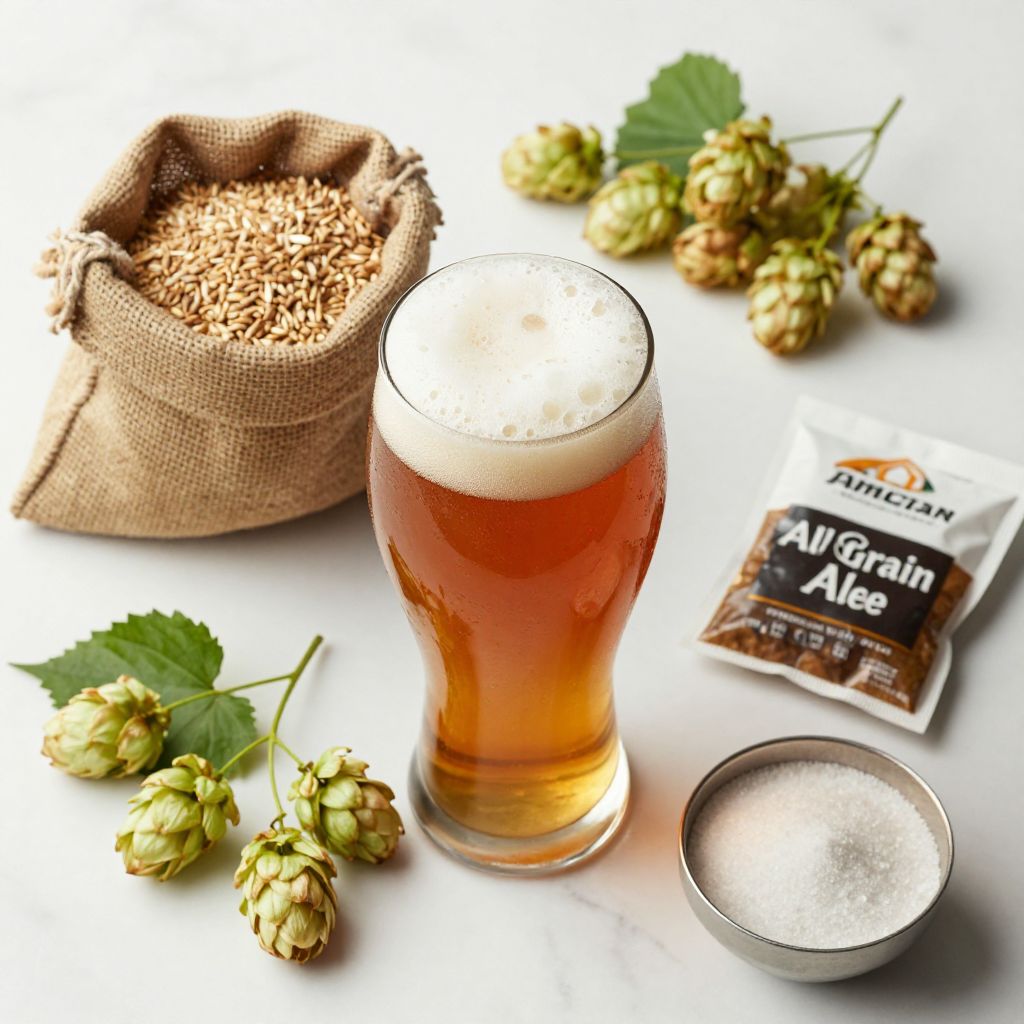
Picture this: a cozy evening with a rich, amber brew in hand, the aroma of toasted malt wafting through the air. Brewing your own All Grain Amber Ale is not just a recipe; it’s an experience that brings together the art of crafting and the joy of savoring a delicious beer. This brew boasts a balance of caramel sweetness and a hint of hoppy bitterness, making it a crowd-pleaser for any gathering. Let’s dive into the ingredients and steps you need to create this delightful drink.
Why You’ll Love This Recipe
This recipe is a favorite among homebrewers for many reasons.
- Rich, malty flavor with a balanced finish.
- Customizable to suit your taste preferences.
- Perfect for both beginners and experienced brewers.
- Excellent for pairing with a variety of foods.
My Experience Making This Recipe
When I first tried brewing All Grain Amber Ale, I was pleasantly surprised by how straightforward the process was. The moment I poured the finished product, the golden hue reflected the effort I poured into every step.
Sharing it with friends was the best part. Watching their faces light up as they took their first sip was rewarding and made the whole brewing adventure worthwhile.
Recipe Overview
- Recipe Name: All Grain Amber Ale
- Servings: 5 gallons
- Prep Time: 30 minutes
- Cook Time: 60 minutes
- Total Time: 2-3 weeks (including fermentation)
- Course: Beverage
- Cuisine: American
- Calories per Serving: 180
Equipment You Will Need
- Brewing kettle (at least 5 gallons)
- Fermentation vessel with airlock
- Grain bag or mash tun
- Thermometer
- Hydrometer
- Bottling equipment (bottles, caps, capper)
- Sanitizing solution
Ingredients for All Grain Amber Ale
- 10 lbs Pale Malt (2-row)
- 1 lb Crystal Malt (40L)
- 0.5 lb Caramel Malt (10L)
- 1 oz Cascade hops (bittering)
- 0.5 oz Cascade hops (flavor)
- 1 oz Cascade hops (aroma)
- 1 packet American Ale yeast (e.g., Safale US-05)
- Priming sugar for bottling (about 3/4 cup)
Ingredient Notes and Substitutions
- Pale Malt: This is the base malt that provides fermentable sugars. You can substitute with other base malts, but it may change the flavor profile.
- Crystal Malt: Adds sweetness and color. Use a different crystal malt for a varied color and flavor.
- Cascade Hops: Offers a citrusy aroma. Try using Amarillo hops for a different hop character.
- American Ale Yeast: This yeast creates a clean finish. A different ale yeast can add unique flavors.
How to Make All Grain Amber Ale
Step 1: Prepare Your Equipment
Start by sanitizing all your equipment. Cleanliness is key in brewing to avoid contamination that can ruin your beer.
Step 2: Heat Your Water
Heat about 3 gallons of water to around 165°F (74°C). This temperature is ideal for mashing the grains and extracting sugars.
Step 3: Mash the Grains
Add your grains to the hot water and stir well. Maintain a temperature of about 152°F (67°C) for 60 minutes to properly convert the starches to sugars.
Step 4: Sparge the Grains
After mashing, rinse the grains with hot water to extract as much sugar as possible. This process, known as sparging, helps achieve a higher efficiency.
Step 5: Boil the Wort
Bring the collected wort to a boil and add the bittering hops. Boil for 60 minutes while maintaining a steady boil to achieve proper hop extraction.
Step 6: Add Flavor and Aroma Hops
With 15 minutes left in the boil, add the flavor hops, and a few minutes before finishing, add the aroma hops. This will enhance the aroma and flavor profile of your beer.
Step 7: Cool the Wort
After boiling, rapidly cool the wort using a wort chiller or an ice bath. Cooling quickly helps prevent unwanted bacteria from developing.
Step 8: Ferment the Beer
Transfer the cooled wort to the fermentation vessel and pitch the yeast. Seal the vessel with an airlock and let it ferment for about 1-2 weeks.
Pro Tip: Always keep your brewing area clean and sanitized to prevent any off-flavors in your beer.
Tips for the Best All Grain Amber Ale
- Use fresh ingredients for the best flavor; old hops or yeast can lead to dull beer.
- Pay attention to your mash temperature; too high or too low can affect the sweetness and body.
- Experiment with different hop varieties to find your favorite flavor profile.
- Keep your fermentation temperature consistent; fluctuations can stress the yeast and affect the final taste.
- Be patient during fermentation; rushing can lead to unwanted flavors.
Common Mistakes to Avoid
- Not sanitizing equipment: This can lead to contamination and spoil your beer.
- Incorrect mash temperature: This affects sugar extraction and body of the beer.
- Skipping the cooling step: This can introduce bacteria and lead to off-flavors.
- Not monitoring fermentation: Ignoring signs can lead to bottle bombs or flat beer.
Serving Suggestions
Enjoying your amber ale is as important as brewing it. Serve it chilled and let the flavors shine.
- Pair with grilled meats for a delightful contrast.
- Enjoy with a cheese platter, especially aged cheeses.
- Complement with spicy foods that can match the beer’s malty sweetness.
- Try with chocolate desserts for an indulgent experience.
Variations to Try
- Add different hop varieties for a unique flavor twist.
- Incorporate spices like coriander for a seasonal touch.
- Try using roasted malts for a deeper color and flavor.
- Add fruit during fermentation for a refreshing fruit twist.
Dietary Adaptations
- Gluten-free: Substitute with gluten-free grains like sorghum or rice.
- Dairy-free: This recipe is naturally dairy-free.
- Vegan/Vegetarian: This recipe is suitable for both diets.
- Low-carb/Keto: Use fewer malted grains and add adjuncts like corn or rice.
Storage and Reheating
Refrigerator
Store your amber ale in a cool, dark place or the fridge after bottling.
- Keep bottles upright to prevent sediment disturbance.
- Consume within 3-6 months for best flavor.
Freezer
Freezing beer is not recommended as it can alter the flavor and texture.
- If you must freeze, do so for very short periods.
Reheating
Beer should not be reheated. Enjoy it chilled or at room temperature.
Nutrition Information
| Nutrient | Amount |
|---|---|
| Calories | 180 |
| Total Fat | 0g |
| Saturated Fat | 0g |
| Carbohydrates | 15g |
| Fiber | 0g |
| Sugar | 0g |
| Protein | 2g |
| Sodium | 5mg |
| Cholesterol | 0mg |
This nutrition information is approximate and can vary based on specific ingredients used.
Frequently Asked Questions
Can I substitute the base malt?
Yes, you can use other base malts, but it may alter the flavor and color of your ale.
How long does the fermentation process take?
Fermentation typically takes 1-2 weeks but can vary depending on temperature and yeast activity.
Can I make this recipe ahead of time?
Yes, you can brew ahead and store the beer for up to 3-6 months if kept refrigerated.
What if my beer is too bitter?
If your amber ale turns out too bitter, experiment with less bittering hops next time or reduce the boil time.
Is it possible to add fruit to this recipe?
Absolutely! Adding fruit during fermentation can create delightful flavor variations.
Final Thoughts
Brewing your own All Grain Amber Ale is a rewarding experience that yields delicious results. As you perfect your technique, don’t hesitate to experiment with flavors and ingredients.
So gather your supplies and start brewing today. For more exciting recipes, check out this Hazy IPA recipe or indulge in a rich Stout recipe. Enjoy the process and cheers to your home brewing adventure!
All Grain Amber Ale
Ingredients
Equipment
Method
- Start by sanitizing all your equipment.
- Heat about 3 gallons of water to around 165°F (74°C).
- Add your grains to the hot water and stir well. Maintain a temperature of about 152°F (67°C) for 60 minutes.
- After mashing, rinse the grains with hot water to extract as much sugar as possible.
- Bring the collected wort to a boil and add the bittering hops. Boil for 60 minutes.
- With 15 minutes left in the boil, add the flavor hops, and a few minutes before finishing, add the aroma hops.
- After boiling, rapidly cool the wort using a wort chiller or an ice bath.
- Transfer the cooled wort to the fermentation vessel and pitch the yeast. Seal the vessel with an airlock and let it ferment for about 1-2 weeks.