
The aroma of cardamom and saffron rising from a glass of hot tea is how mornings feel in Persian households across the world. Persian tea, or chai, is far more than a beverage; it’s a ritual that brings people together, a moment of pause before the day rushes in.
This recipe teaches you how to brew authentic Persian tea with fragrant spices, the way it’s been made for centuries. The beauty of this tea lies in its simplicity and the quality of its components: strong black tea layered with warm spices and a touch of saffron that transforms an everyday drink into something memorable.
You’ll love how forgiving this recipe is, how it fills your kitchen with an inviting warmth, and how a single cup can become a reason to sit down and breathe. Whether you’re a tea enthusiast or new to Persian flavors, this recipe will become part of your regular rotation.
Why You’ll Love This Recipe
Persian tea strikes that rare balance between being deeply comforting and genuinely exciting to drink. It’s foolproof to make, requires ingredients you can find easily, and delivers restaurant-quality results at home.
- Bold, complex spice flavor from cardamom, cloves, and cinnamon without being overpowering
- A touch of saffron adds subtle earthiness and a gorgeous golden hue
- Takes only 15 minutes from start to finish
- Perfect for entertaining or quiet mornings alone
- Naturally caffeine-rich and pairs beautifully with Persian sweets or bread
My Experience Making This Recipe
The first time I made Persian tea properly, I was sitting in a Tehran kitchen with my friend’s grandmother, who watched my every move like a hawk. She nodded when I cracked the cardamom pods just enough to release the seeds but kept the pod intact, and she smiled when I waited for that first wisp of saffron aroma to rise.
What struck me most was how she treated the tea not as something to rush through but as an event. We brewed it together, poured it into small glasses, and sat for an hour talking over cups of that spiced warmth.
Now, whenever I brew Persian tea, that memory comes back. The spices crack under my fingers, the saffron threads turn the water gold, and suddenly I’m not just making tea; I’m making time to slow down.
Recipe Overview
- Recipe Name: Persian Tea (Chai)
- Servings: 4
- Prep Time: 5 minutes
- Cook Time: 10 minutes
- Total Time: 15 minutes
- Course: Beverage
- Cuisine: Persian
- Calories Per Serving: 5
Equipment You Will Need
- Kettle or pot for boiling water
- Teapot (preferably ceramic or glass)
- Strainer or fine-mesh sieve
- Small mortar and pestle for cracking spices
- Measuring spoons
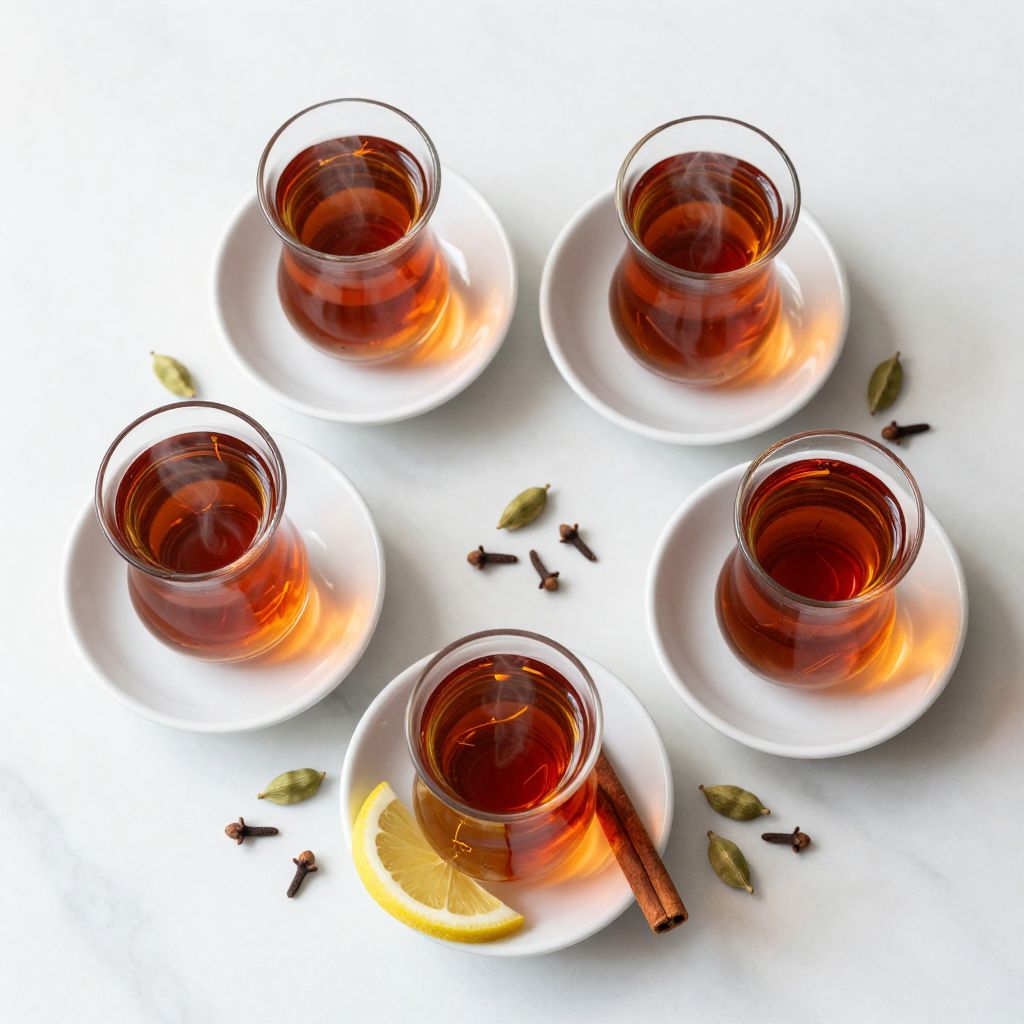
- Four small tea glasses or cups
- Spoon for stirring
Ingredients for Persian Tea
- Water: 4 cups
- Black tea leaves: 2 tablespoons (loose leaf or 4 tea bags)
- Cardamom pods: 4 to 5, lightly cracked
- Cloves: 3 to 4 whole
- Cinnamon stick: 1 small piece, about 1 inch
- Saffron threads: 8 to 10 threads, lightly toasted
- Sugar or honey: 1 to 2 teaspoons per cup (optional, to taste)
- Fresh lemon or lime: sliced (optional, for serving)
Ingredient Notes and Substitutions
- Black tea leaves: Loose leaf tea gives a more authentic and flavorful result than tea bags. If you only have bags, use them, but the flavor will be slightly lighter.
- Cardamom pods: These are essential for Persian tea’s signature warmth. Green cardamom is preferred, but black cardamom works if that’s what you have.
- Cloves: They add a subtle heat and depth. Don’t skip them, but reduce to 2 or 3 if you prefer a milder spice profile.
- Cinnamon: Use a piece of Ceylon cinnamon stick rather than ground cinnamon, which can cloud the tea and taste chalky.
- Saffron threads: This is the signature touch. If you don’t have saffron, the tea will still be good but won’t have that authentic Persian character; turmeric is not a real substitute.
- Sugar or honey: Iranians typically sweeten their tea with rock sugar, but regular sugar or honey work fine and dissolve easily in hot liquid.
How to Make Persian Tea
Step 1: Toast the Saffron Threads
Place the saffron threads in a small, dry skillet over low heat for about 30 seconds, stirring gently with your finger or a spoon. Toasting brings out the saffron’s earthy, complex flavors and deepens its color.
Step 2: Crack the Cardamom Pods
Using a mortar and pestle, lightly crack the cardamom pods so the seeds inside are exposed but the pod remains mostly intact. This releases the aromatic oils without letting the seeds scatter into your tea where they’d be gritty.
Step 3: Boil the Water
Fill a kettle with 4 cups of fresh, cold water and bring it to a rolling boil. Using fresh water ensures your tea tastes crisp and clean; reheated water tastes flat.
Step 4: Add Whole Spices to Boiling Water
Once the water reaches a boil, add the cracked cardamom pods, cloves, and cinnamon stick directly to the pot. Let them simmer for 2 to 3 minutes so the spices release their essential oils into the water.
Step 5: Add the Black Tea Leaves
Add the loose black tea leaves (or tea bags) to the spiced water and stir gently. Black tea brewed this way becomes stronger and more flavorful than if you steeped it alone in a cup.
Step 6: Brew for Three to Four Minutes
Let the tea and spices steep for 3 to 4 minutes, depending on how strong you like your tea. If you like it darker and bolder, go closer to 4 minutes; if you prefer it lighter, pull it back to 3.
Step 7: Prepare the Saffron Infusion
While the tea brews, place your toasted saffron threads in a small heat-safe bowl and pour 2 to 3 tablespoons of hot water over them. Let the saffron steep and release its golden color and earthy aroma; this liquid will flavor all four cups.
Step 8: Strain and Pour
Using a fine-mesh strainer, strain the brewed tea into a teapot or directly into your serving glasses, leaving the spices and tea leaves behind. Pour the saffron-infused water into the teapot or divide it evenly among the four glasses, stirring gently to distribute that gorgeous golden color throughout.
Step 9: Sweeten and Serve
Add sugar or honey to each glass if desired, stirring well. Serve immediately in small Persian tea glasses, and place a slice of fresh lemon or lime on the saucer if you like a bright citrus note to cut through the spices.
Pro Tip: Never let Persian tea sit in the pot for more than 10 minutes after brewing, or it will become bitter and lose its delicate spice balance.
Tips for the Best Persian Tea
- Use whole spices rather than ground spices, which muddy the tea’s clarity and add unwanted texture. Whole spices stay in the pot and strain out cleanly.
- Crack cardamom pods by pressing them gently with the flat side of a knife; you want to break them open, not pulverize them into powder.
- Brew in a ceramic or glass teapot, not metal, which can impart a metallic taste to the delicate spice flavors.
- Toast the saffron just before use so it doesn’t lose its potency; saffron’s flavor fades over time once toasted.
- Taste as you go and adjust spices next time based on your preference; some people love more clove, others prefer extra cardamom.
- Serve in small glasses rather than large mugs; Persian tea is meant to be sipped slowly and savored, not gulped.
Common Mistakes to Avoid
- Over-steeping the tea past 4 minutes turns it bitter and astringent, masking the subtlety of the spices. Set a timer to keep yourself honest.
- Using ground spices instead of whole ones makes the tea cloudy and gritty, and the flavors become muddled and overpowering.
- Skipping the saffron to save money defeats the purpose of making authentic Persian tea. A small amount goes a long way, and it’s what makes this recipe special.
- Boiling the spices for too long before adding the tea can make them release harsh, woody flavors instead of warm, balanced ones.
- Serving the tea hours after brewing loses the freshness and aromatic quality that make it worth the effort in the first place.
Serving Suggestions
Persian tea pairs beautifully with Persian pastries, crispy bread, or even simple butter cookies. The warm spices complement both sweet and savory breakfast foods, and the caffeine gives you a gentle lift without the jolt of coffee.
- Serve alongside saffron-flavored Persian pastries or sponge cake for a coordinated flavor experience
- Pair with warm barbari or sangak bread and fresh herbs for a traditional Persian breakfast
- Offer with small butter cookies or date-filled cookies during afternoon gatherings
- Serve with fresh walnuts, almonds, and dried fruit for a simple, elegant tea service
- Accompany with feta cheese and cucumber for a traditional Persian tea break
Variations to Try
- Rosewater Persian Tea: Add 1 teaspoon of rosewater to each cup after pouring. This creates a floral, almost perfume-like quality that some Persians prefer, though it’s a divisive choice.
- Mint and Cardamom Tea: Add a small bunch of fresh mint leaves to the pot alongside the cardamom. The cooling mint balances the warm spices and makes the tea more refreshing.
- Ginger-Spiked Persian Tea: Add 3 to 4 thin slices of fresh ginger to the spice mixture for a sharper, more energizing heat that cuts through richness.
- Orange-Infused Version: Steep a few strips of dried orange peel with the spices for subtle citrus undertones that brighten the flavor without being sour.
- Black Cardamom Tea: Use black cardamom instead of green for a deeper, smokier spice profile that some find more sophisticated and complex.
Dietary Adaptations
- Gluten-Free: This recipe is naturally gluten-free as written; all ingredients are whole spices, tea leaves, and saffron with no gluten-containing additives.
- Dairy-Free: Persian tea contains no dairy, making it suitable for anyone avoiding milk or lactose; you may add plant-based milk if desired, though traditionalists drink it black.
- Vegan: This recipe is vegan by nature since it contains only plant-based ingredients; use honey or agave instead of sugar if preferred.
- Low-Calorie: Drink the tea unsweetened or with just a touch of honey; the spices add flavor complexity, so you won’t miss the sugar.
- Caffeine-Free: Replace the black tea with a caffeine-free herbal base like rooibos, though this changes the flavor significantly and is not traditional.
Storage and Reheating
Refrigerator
Store cooled Persian tea in an airtight glass container for up to 3 days. The spice flavors remain stable, though the saffron color may fade slightly over time.
- Pour into individual glasses for easy grab-and-go servings
- Keep the spices separate if you plan to reheat, as they can continue to infuse and become overpowering
Freezer
Persian tea doesn’t freeze well because the delicate spice flavors break down, and the saffron’s color and potency diminish. It’s best enjoyed fresh, but you can freeze individual spice blends for future use.
- Freeze whole cardamom pods, cloves, and cinnamon pieces in a small container for convenience
- Toast and freeze saffron threads in a sealed jar away from light
Reheating
Gently reheat refrigerated Persian tea in a pot over low heat, stirring occasionally, until it reaches your desired temperature. Never boil it again, as high heat damages the delicate spice profile.
- Microwave individual servings in 30-second intervals, stirring between each, for quick reheating
- Add a fresh splash of hot water if the reheated tea tastes concentrated or overly strong
Nutrition Information
| Nutrient | Amount |
|---|---|
| Calories | 5 |
| Total Fat | 0g |
| Saturated Fat | 0g |
| Carbohydrates | 1g |
| Fiber | 0g |
| Sugar | 0g |
| Protein | 0g |
| Sodium | 2mg |
| Cholesterol | 0mg |
These values are for unsweetened tea. If you add sugar or honey, your calories will increase accordingly; one teaspoon of sugar adds approximately 16 calories per serving.
Frequently Asked Questions
Can I use tea bags instead of loose leaf tea?
Yes, you can use 4 tea bags in place of 2 tablespoons of loose leaf tea, though loose leaf produces a fuller, more authentic flavor. Tea bags often contain dust and broken leaves that create a thinner, less aromatic cup.
Where do I buy saffron and how much does it cost?
Saffron is available at specialty spice shops, Middle Eastern markets, Indian grocers, and online retailers like World Spice Merchants or Kalustyan’s. Expect to pay 8 to 15 dollars for a small container, but a little goes a very long way.
Can I make this recipe in advance?
You can prepare the spice blend ahead of time by toasting and storing the cardamom, cloves, and cinnamon together in a sealed jar. However, brew the tea fresh each time for maximum flavor and aroma.
My tea tastes bitter. What went wrong?
Bitterness usually means you over-steeped the tea or boiled the spices too long before adding the tea. Reduce your brewing time to 3 minutes next time and boil the spices for no more than 2 to 3 minutes before adding the tea.
Is there a difference between Persian tea and Indian chai?
Persian tea is made with black tea, whole spices, and sometimes saffron, brewed quickly and served in small glasses unsweetened or lightly sweetened. Indian chai typically includes milk, sweetener, and ginger, and often boils longer to create a creamier drink; they’re cousins, not twins.
Can I add milk to Persian tea?
While traditionally served black, you can add a splash of warm milk if you prefer creamier tea. Be aware that milk will mute the delicate spice flavors and the saffron’s visual impact.
Final Thoughts
Making Persian tea is an act of slowing down in a world that pushes you to rush. The 15 minutes it takes becomes a small meditation, a chance to breathe in cardamom and saffron and remember that good things don’t require complicated ingredients or fancy techniques.
Brew a pot this weekend, sit down without your phone, and taste what centuries of Persian hospitality tastes like. Once you master this recipe, it becomes less of a project and more of a ritual you return to again and again.
Explore More Tea Recipes
If you’ve enjoyed learning to make Persian tea, you might want to explore other warming tea beverages that bring comfort and tradition to your kitchen.
Check out our peppermint tea recipe for a refreshing, digestive-friendly alternative. For something with deeper berry flavors and immune-boosting properties, our elderberry tea recipe is a wonderful companion to your tea collection.
Persian Tea (Chai)
Ingredients
Equipment
Method
- Toast the saffron threads in a dry skillet over low heat for about 30 seconds.
- Crack the cardamom pods using a mortar and pestle until slightly opened.
- Bring 4 cups of water to a rolling boil in a kettle or pot.
- Add the cracked cardamom pods, cloves, and cinnamon stick to the boiling water and simmer for 2 to 3 minutes.
- Add the black tea leaves or tea bags and stir gently.
- Steep the tea and spices for 3 to 4 minutes, depending on desired strength.
- Place the toasted saffron threads in a heat-safe bowl, pour 2 to 3 tablespoons of hot water over them, and steep for a few minutes.
- Strain the brewed tea into a teapot or serving glasses, discarding the solids.
- Divide the saffron-infused water among the glasses and stir gently to combine.
- Sweeten with sugar or honey to taste and serve with lemon or lime slices.