
Picture yourself in a cozy German beer hall on a cool evening, nursing a glass of dark lager that’s smooth, crisp, and somehow both mysterious and approachable at once. That’s schwarzbier, the “black beer” that defies expectations with its refined character and surprising drinkability. This recipe walks you through brewing your own schwarzbier at home, a beer that balances roasted grain complexity with a clean, lager finish that keeps you reaching for another sip.
What makes schwarzbier special is that it lives in the sweet spot between dark stouts and pale lagers: dark enough to look intimidating, yet light and crisp enough to drink like a pilsner. Brewing one teaches you valuable lessons about grain selection, temperature control, and how restraint in brewing often yields the most elegant results.
Why You’ll Love This Recipe
Schwarzbier rewards patient brewers with a beer that’s genuinely fun to share and consistently impressive to drink.
- Smooth, clean flavor with subtle roasted notes and minimal harshness
- Perfect introduction to lager brewing without intimidating complexity
- Sessionable at 4.5-5% ABV so you can enjoy multiple glasses guilt-free
- Forgiving recipe that tolerates minor temperature fluctuations better than finicky pilsners
- Impresses friends and family who expect dark beers to taste heavy or bitter
My Experience Making This Recipe
I brewed my first schwarzbier on a whim after visiting a brewery in Munich, thinking I’d nail the style easily. What I learned instead was humbling: the simplicity of the grain bill meant every decision mattered, and cutting corners on water chemistry or fermentation temperature would show immediately in the final beer.
The payoff came six weeks later when I poured the first glass and saw that perfect dark brown clarity against the light. The aroma was inviting without being aggressive, and the first sip confirmed what I suspected: this beer sells itself.
My brewing friends who usually gravitate toward bold IPAs kept coming back for more, which told me something important. Sometimes the most impressive beers aren’t the loudest ones.
Recipe Overview
- Recipe Name: Schwarzbier (German Black Lager)
- Servings: Makes 5 gallons (19 liters)
- Prep Time: 30 minutes
- Brew Day Time: 4 hours
- Fermentation Time: 4 weeks
- Total Time: 5 weeks plus conditioning
- Course: Beverage
- Cuisine: German
- Calories per Serving (12 oz): 145
Equipment You Will Need
- Large stainless steel brew kettle (10+ gallons)
- Mashing vessel or cooler with false bottom (for all-grain brewing)
- Wort chiller (immersion or counterflow)
- Fermentation vessel (carboy or conical fermenter)
- Airlock and stopper
- Thermometer with appropriate range (40-212 F)
- Hydrometer and test jar
- Sanitizing solution (Star San or similar)
- Stirring spoon or mash paddle
- Grain mill for milling grains
- Refractometer (optional but helpful)
- Oxygen stone or diffuser
- Bottling equipment or kegging system
Ingredients for Schwarzbier
- 2-Row Pale Malt: 4.5 pounds (base malt providing fermentable sugars and body)
- Munich Malt: 1.5 pounds (adds malty sweetness and depth)
- Carafa Malt (dechlorinated): 0.5 pounds (contributes dark color and subtle roasted character without harsh astringency)
- Chocolate Malt: 0.25 pounds (enhances roasted complexity)
- Hallertau Hops: 1 ounce at 60 minutes (bittering charge)
- Hallertau Hops: 0.5 ounce at 15 minutes (flavor addition)
- Lager Yeast (Wyeast 2308 Munich or White Labs WLP820 Bavarian): 1 vial or starter
- Filtered Water: 6.5 gallons (soft water is ideal for schwarzbier)
- Calcium Chloride: 0.5 teaspoon (optional, for water chemistry adjustment)
Ingredient Notes and Substitutions
- 2-Row Pale Malt: This is the foundation providing clean fermentable sugars and a neutral malt backbone. You can substitute Pilsner malt for a slightly crisper finish, though you’ll lose a touch of body.
- Munich Malt: Adds the slightly sweet, bread-like character that defines German lagers. Vienna malt can replace it for a lighter version, but use the full amount to maintain body.
- Carafa Malt: This dechlorinated black malt is crucial because it delivers color and subtle roasted notes without the harsh bitterness of regular black malt. Regular black malt will make the beer unpleasantly astringent and bitter.
- Chocolate Malt: Provides complexity and a hint of cocoa-like character. If unavailable, increase Carafa to 0.75 pounds, though the flavor will shift slightly more toward coffee than chocolate.
- Hallertau Hops: This noble hop variety is traditional for schwarzbier, offering gentle herbal and floral notes. Tettnang or Mittelfruh are excellent substitutes with similar character; avoid bold American hops that will clash with the malt profile.
- Lager Yeast: Temperature control is non-negotiable here. Bavarian lager yeast produces the clean, smooth finish this style demands. Using ale yeast or warm fermentation will produce an entirely different (and inferior) beer.
How to Make Schwarzbier
Step 1: Mill Your Grains
Mill all your grains using a grain mill with a gap of about 0.04 inches, which cracks open the hull without pulverizing the grain into flour. Coarse flour clogs the mash and creates stuck sparges that waste time and extract poorly.
Step 2: Mash In Your Grains
Heat your strike water to 165 F, then mix it with your milled grains at a ratio of roughly 1.5 quarts per pound of grain. You’re aiming for a mash temperature of 152 F, which activates enzymes that convert starches into fermentable sugars while leaving some unfermented sugars for body and sweetness.
Stir thoroughly to break up any dough balls and ensure all grain is wet, which takes about 2 minutes and prevents dry pockets that won’t convert properly.
Step 3: Rest Your Mash
Hold the mash at 152 F for 60 minutes, which allows enzymes maximum time to break down starches. Check temperature every 15 minutes and add small amounts of hot water if the temperature drops more than a degree or two, since every degree matters for enzyme activity.
Step 4: Mash Out and Sparge
Raise the mash temperature to 168 F over 10 minutes by adding hot water, which stops enzymatic activity and firms up the grain bed for clean sparging. Slowly run off your first wort, then sparge with hot water around 168 F, using just enough to collect about 6.5 gallons of wort.
Gentle sparging prevents channeling (water running down one side of the grain bed) which leaves extract behind and results in lower efficiency.
Step 5: Boil and Add Bittering Hops
Bring your wort to a rolling boil and let it boil for 5 minutes to drive off any dimethyl sulfide (DMS), which can give schwarzbier a cooked corn flavor if present. Add your 1 ounce of Hallertau hops at the 60-minute mark from the end of your boil, establishing the beer’s subtle bitterness foundation.
Step 6: Add Flavor Hops and Cool
At 15 minutes remaining in the boil, add your 0.5 ounce of Hallertau hops for subtle floral and herbal notes that complement the malt without overshadowing it. After the boil ends, chill the wort down to 50 F as quickly as possible using a wort chiller, since slow cooling allows oxidation and unwanted microbial growth.
Step 7: Pitch Your Yeast and Aerate
Transfer the cooled wort to your sanitized fermentation vessel, then shake or stir it vigorously for 5 minutes to dissolve oxygen, which yeast needs for healthy fermentation. Pitch your lager yeast starter or fresh vial, then seal the vessel with an airlock.
Step 8: Ferment at Cool Temperature
Place your fermenter in a temperature-controlled space at 50-55 F for the entire fermentation, which typically lasts 10-14 days. Lager yeast ferments slowly and cleanly at cool temperatures; warmer fermentation produces fruity esters and warm fermentation flavors that destroy the clean lager character you’re after.
Keep the fermenter away from direct sunlight and vibration, since both stress yeast and can introduce off-flavors.
Step 9: Condition Your Beer
Once fermentation completes (your gravity will be stable for 3 consecutive days), let the beer rest at fermentation temperature for another 7-10 days, a step called “diacetyl rest” that allows yeast to clean up any butter-like compounds. After this rest, raise temperature gradually to 35-40 F over 2-3 days for lagering, a cold conditioning period that clarifies the beer and refines flavors.
Lager the beer for 2-3 weeks minimum (4 weeks is ideal), which transforms a rough young lager into something smooth and integrated.
Pro Tip: Temperature stability is everything in schwarzbier brewing. A 5-degree swing mid-fermentation can introduce fruity esters that wreck the clean lager character, so invest in a temperature controller if you’re serious about lager brewing.
Tips for the Best Schwarzbier
- Use soft water or filtered water, since mineral-heavy water can emphasize harsh compounds from dark malts. If your tap water is hard, use distilled water and add minerals to specification.
- Don’t skip the diacetyl rest. This 7-10 day period at fermentation temperature allows yeast to consume any butter-like compounds that would otherwise persist in the final beer.
- Hallertau hops are traditional for a reason: their gentle character complements this style without competing with malt complexity. Resist the urge to experiment with bold modern hops.
- Bottle condition your schwarzbier with 0.75 ounces of corn sugar per gallon for a gentle carbonation level of 2.2-2.5 volumes of CO2, which enhances smoothness rather than creating aggressive bubbles.
- Wait at least 2 weeks after bottling before drinking to allow carbonation to mature and flavors to integrate. Schwarzbier improves noticeably between weeks 2 and 8 after packaging.
- Store bottles in a cool, dark place to preserve the subtle flavors and prevent light-struck defects that ruin lagers faster than other styles.
Common Mistakes to Avoid
- Fermenting above 60 F produces fruity, ester-forward flavors that make the beer taste more like an ale than a lager. The entire point of schwarzbier is clean, smooth character that only comes from cool fermentation.
- Using regular black malt instead of dechlorinated Carafa malt introduces sharp, acrid bitterness that makes the beer harsh and unpleasant. Dechlorinated black malt is the only acceptable option.
- Skipping the lagering period and packaging immediately after fermentation creates a young, rough beer that tastes green and immature. Patience genuinely transforms this beer.
- Over-hopping beyond what the recipe calls for creates a beer that tastes like a hoppy lager, not a schwarzbier. The subtle bittering is intentional to avoid overwhelming the delicate malt profile.
- Neglecting water chemistry leaves the beer thin and one-dimensional, since soft water is crucial for balancing the dark malt character. Test and adjust your water if results taste flat.
Serving Suggestions
Schwarzbier shines in a traditional German beer glass (a 0.5 liter or 1 liter mug) served at 45-50 F, cold enough to be refreshing but warm enough for flavor compounds to express themselves. The clean, smooth character makes this beer remarkably versatile with food.
- Grilled sausages and bratwurst, where the beer’s subtle bitterness cuts through rich fat while malt sweetness complements the savory meat
- Hearty German potato salad and sauerkraut, classic pairings that have stood for centuries
- Smoked meats and barbecue, where the roasted grain character echoes smoky flavors without competing
- Soft cheeses like brie or camembert, where the beer’s crispness cleanses the palate between bites
- Chocolate-based desserts, where subtle roasted notes in the beer mirror cocoa flavors harmoniously
Variations to Try
- Pilsner-influenced Schwarzbier: Replace 1 pound of Munich malt with Pilsner malt for a crisper, drier interpretation that emphasizes noble hop character over malty sweetness. This variation drinks refreshingly light for a dark beer.
- Roasted Grain Schwarzbier: Increase Chocolate malt to 0.5 pounds and add 0.1 pounds of Roasted Barley for deeper coffee and cocoa notes. This version sacrifices some smoothness for more complex roasted character.
- Vienna-style Schwarzbier: Replace Munich malt entirely with Vienna malt and increase to 2 pounds, creating a beer that bridges schwarzbier and Vienna lager styles with richer sweetness and body.
- Herbal Schwarzbier: Replace the second Hallertau addition with 0.5 ounce of Saaz hops for more pronounced herbal, slightly spicy notes that add complexity without modern hop character.
- Stronger Schwarzbier: Increase 2-Row to 5.5 pounds and Munich to 2 pounds, raising alcohol to 5.5% and creating a more assertive beer that maintains clean character despite higher strength.
Dietary Adaptations
- Gluten-Free Schwarzbier: Substitute all malt with certified gluten-free malt alternatives like sorghum or millet malt, which yield similar colors and mouthfeel but sacrifice some classic grain character.
- Low-Carb or Keto Schwarzbier: Use a more efficient mashing schedule at lower temperature (148 F) to produce a drier, less sweet beer with fewer residual carbohydrates, though complexity suffers slightly.
- Vegan Schwarzbier: Schwarzbier is naturally vegan since it contains no honey, lactose, or animal products, though some brewers use gelatin or isinglass for clarification; skip these additives for a fully plant-based version.
Storage and Reheating
Refrigerator
Bottled schwarzbier keeps for 3-4 months in a standard refrigerator at 35-40 F, though flavor peaks between weeks 4 and 12 after bottling. Keg-conditioned beer stays fresh slightly longer if the keg remains sealed and pressurized.
- Store bottles upright in a dark area of your fridge, never in sunlight
- Keep temperature stable; temperature fluctuations accelerate flavor degradation
- Avoid storing near anything with strong odors that might leach into the beer
Freezer
Schwarzbier can survive freezing if bottled in glass, though carbonation can create pressure issues if bottles freeze solid. This isn’t ideal storage but works in emergencies for extending shelf life.
- Never leave bottles in the freezer long-term, since repeated freezing damages flavor compounds
- If frozen, thaw slowly in a refrigerator over several hours before opening
Reheating
Schwarzbier is a cold beverage and shouldn’t be heated, though cold-conditioned beer can be served warmer without harm. Simply remove bottles from the refrigerator 10-15 minutes before serving to let them warm to cellar temperature around 50 F, which opens up subtle flavors.
- Pour slowly into a glass at a slight angle to develop a creamy head
- Never microwave or heat schwarzbier, which damages carbonation and delicate flavors
Nutrition Information
| Nutrient | Amount |
|---|---|
| Calories | 145 |
| Total Fat | 0 g |
| Saturated Fat | 0 g |
| Carbohydrates | 10 g |
| Fiber | 0 g |
| Sugar | 0 g |
| Protein | 1.5 g |
| Sodium | 15 mg |
| Cholesterol | 0 mg |
Nutritional values are estimates based on a 12-ounce serving of schwarzbier at 4.8% ABV. Actual values vary depending on mash efficiency, fermentation completion, and final gravity, so these numbers represent typical results rather than absolutes.
Frequently Asked Questions
Can I brew schwarzbier with extract instead of all-grain?
Yes, use 3.3 pounds of dark Munich malt extract blended with 1 pound of pale malt extract, plus the same specialty grain steep (the dark malts steeped at 150 F for 30 minutes). Extract brewing sacrifices some complexity but produces drinkable schwarzbier with far less equipment and time investment.
What’s the difference between schwarzbier and dunkelweizen?
Schwarzbier is a dark lager using neutral yeast fermented cold, producing clean and crisp character. Dunkelweizen is a dark wheat beer using ale yeast fermented warm, producing fruity and spicy esters that taste completely different despite similar dark color.
Can I skip the lagering period?
You can package after fermentation, but the beer will taste green and rough for weeks, and many off-flavors won’t resolve properly without the 2-3 week cold conditioning period. Lagering transforms rough young beer into something genuinely smooth and integrated.
Why does my schwarzbier taste fruity instead of clean?
Fruity esters mean your fermentation temperature was too warm, probably above 60 F. Lager yeast produces clean character only when fermented cool, so invest in temperature control for future brews to avoid this common problem.
Is schwarzbier dry or sweet?
Schwarzbier sits in the middle: not bone dry like a pilsner, but not sweet like a dunkel. Malt sweetness is noticeable but balanced by subtle bitterness and crisp finish, which is exactly why the style works so well as an all-day drinking beer.
What ABV should schwarzbier be?
Traditional schwarzbier ranges from 4-5.5% ABV, with most examples falling around 4.8%. The moderate strength balances drinkability with enough body to showcase malt complexity, which is why higher-alcohol versions sacrifice the sessionable quality that defines the style.
Final Thoughts
Brewing schwarzbier teaches you something valuable about beer that hoppy styles often obscure: restraint and balance create more memorable results than loudness. This dark lager rewards your patience with a beer that tastes refined, drinks smooth, and works with more foods than almost any other style.
Start your first batch soon, dial in your temperature control, and give the beer the proper time it deserves. When you pour that first glass six weeks later and taste what clean, smooth character tastes like, you’ll understand why German brewers have brewed this style for centuries.
If you want to explore more complex German lager styles after mastering schwarzbier, check out our guide to brewing a doppelbock recipe, which takes everything you learned here and scales it up with richer malt complexity. For something equally rewarding but different, our BDO beer recipe offers another angle on lager excellence worth exploring once you feel confident with cool fermentation techniques.
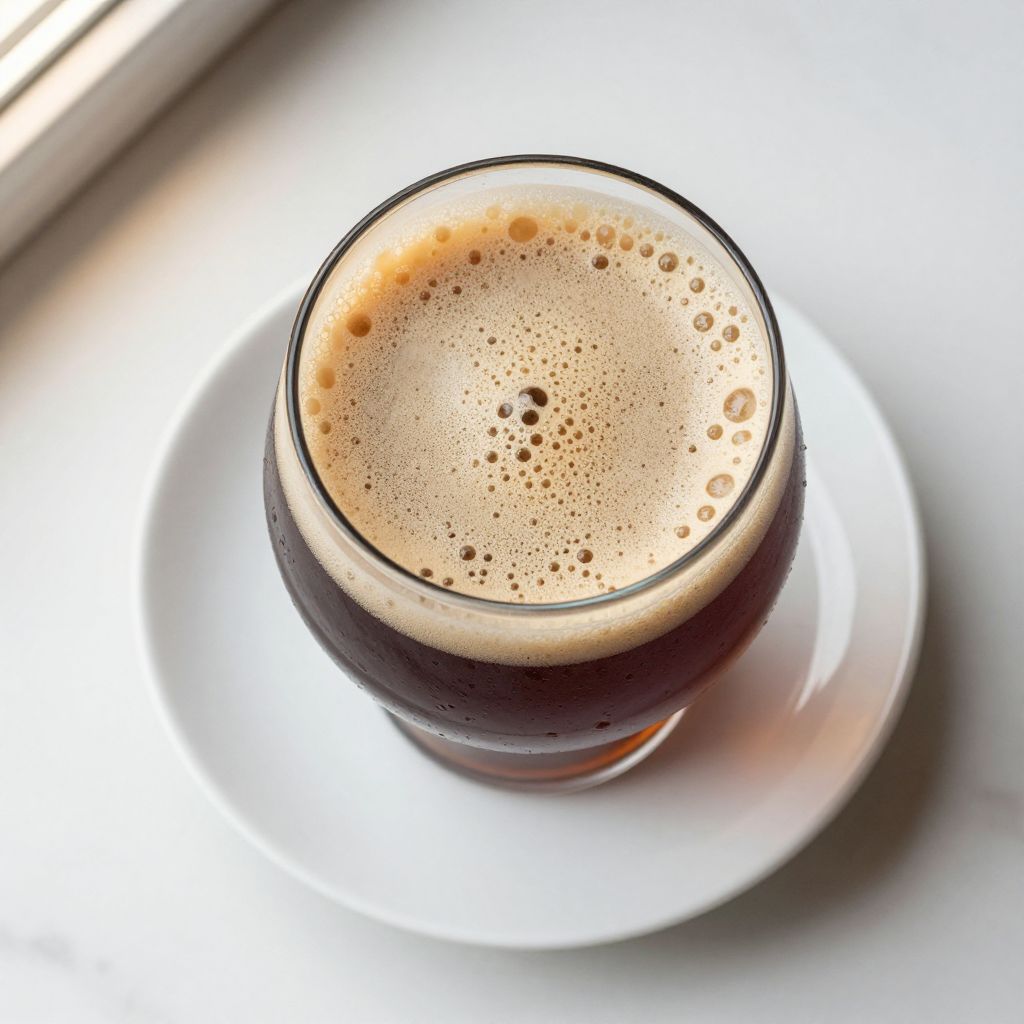
Schwarzbier (German Black Lager)
Ingredients
Equipment
Method
- Mill all grains to a medium-coarse crush using a gap of approximately 0.04 inches to ensure good mash efficiency and prevent stuck sparges.
- Heat 6.5 gallons of water to 165°F, then mash in grains to reach 152°F and stir thoroughly for about 2 minutes.
- Hold the mash at 152°F for 60 minutes, checking every 15 minutes and topping up with hot water if the temperature drops more than 2°F.
- Raise mash temperature to 168°F over 10 minutes to mash out, then vorlauf and sparge with water at 168°F until you collect 6.5 gallons of wort.
- Bring wort to a rolling boil and boil for 5 minutes to drive off DMS, then add 1 ounce Hallertau hops and continue boiling for a total of 60 minutes.
- With 15 minutes remaining, add 0.5 ounce Hallertau hops, then chill the wort rapidly to 50°F using a wort chiller.
- Transfer cooled wort to a sanitized fermenter, aerate vigorously for 5 minutes, pitch the lager yeast starter, and seal with an airlock.
- Ferment at 50–55°F for 10–14 days until the gravity is stable for three consecutive days.
- Perform a diacetyl rest at fermentation temperature for 7–10 days, then lower the temperature to 35–40°F over 2–3 days and lager for 2–3 weeks.