
There’s something magical about the crisp, vanilla-tinged bite of birch beer that transports you back to old-fashioned soda fountains and summer picnics.
This homemade version captures that nostalgic charm without the high fructose corn syrup, letting the natural birch bark and wintergreen flavors shine through with surprising complexity.
Making your own birch beer is easier than you’d think, requiring just a few specialty ingredients and basic carbonation equipment, and the result tastes leagues better than anything you’ll find on a store shelf.
Why You’ll Love This Recipe
Homemade birch beer delivers authentic flavor that commercial brands simply can’t match, and you control every ingredient from start to finish.
- Creates that signature birch bark and wintergreen flavor profile with depth and complexity
- Naturally sweetened without artificial additives or high fructose corn syrup
- Carbonates beautifully in a home carbonation setup, giving you crisp, refreshing results
- Makes an impressive homemade gift that friends and family genuinely appreciate
- Costs a fraction of what specialty craft sodas run at retailers
My Experience Making This Recipe
The first time I brewed a batch of birch beer, I was skeptical that birch bark could deliver anything beyond a vague woodsy taste. The moment that first batch carbonated and I took a sip, I was completely converted by the clean, almost creamy vanilla notes dancing alongside hints of wintergreen.
My family went through that first batch in three days flat, which rarely happens with homemade sodas in my house. The flavor sits in this beautiful middle ground between root beer and ginger ale, approachable enough for kids yet interesting enough to satisfy adult palates seeking something different.
What surprised me most was how forgiving the recipe is when you’re patient with fermentation and carbonation. You don’t need fancy equipment or advanced chemistry knowledge; just attention to timing and temperature makes all the difference between mediocre and genuinely exceptional birch beer.
Recipe Overview
- Recipe Name: Homemade Birch Beer
- Servings: 12 servings (one 12-ounce bottle each)
- Prep Time: 20 minutes
- Cook Time: 45 minutes
- Fermentation Time: 5 to 7 days
- Total Time: approximately 1 week plus carbonation
- Course: Beverage
- Cuisine: American
- Calories per Serving: 140
Equipment You Will Need
- Large stainless steel pot (at least 2 gallons)
- Long-handled wooden spoon for stirring
- Thermometer (preferably one that reads 40 to 110 degrees Fahrenheit)
- Sanitized glass carboy or fermentation vessel (2-gallon capacity)
- Cheesecloth or fine mesh strainer
- Funnel
- Airlock and rubber stopper (for carboy)
- Bottles with caps (glass beer bottles or swing-top bottles recommended)
- Bottle capper (if using crown caps)
- Hydrometer (optional but helpful for monitoring fermentation)
Ingredients for Homemade Birch Beer
- Birch bark pieces, dried: 1 ounce
- Wintergreen leaves, dried: 0.5 ounce
- Sarsaparilla root, dried: 0.5 ounce
- Anise seeds: 1 teaspoon
- Allspice berries: 0.5 teaspoon
- Cloves, whole: 4 pieces
- Cinnamon stick, broken into pieces: one 2-inch piece
- Ginger root, fresh and sliced: 0.25-inch slice
- Cane sugar: 3 pounds
- Water, filtered: 2 gallons
- Champagne yeast or ale yeast: one 5-gram packet
- Priming sugar (for carbonation): 0.5 cup
Ingredient Notes and Substitutions
- Birch bark delivers the core flavor and is what defines birch beer, but you can source it from specialty brewing suppliers or online retailers; birch leaf tea can substitute in a pinch though the flavor will be slightly milder.
- Wintergreen leaves contribute that signature cooling sensation and herbal complexity; dried spearmint or a pinch of wintergreen extract can replace it, though extract requires you to reduce the amount to just one-eighth teaspoon.
- Sarsaparilla root adds vanilla and spice undertones that round out the flavor; you can omit it entirely, though you’ll lose some depth and should increase the cinnamon to compensate.
- Champagne yeast ferments cleaner and faster than many ale yeasts, producing a crisper final product; any neutral brewing yeast works, but fermentation may take slightly longer.
- Cane sugar is traditional and ferments completely, but you can substitute with light brown sugar for subtle molasses notes, swapping equal weights rather than volumes.
- Priming sugar carbonates the finished beer; corn sugar works identically and many brewers prefer it, using the same amount.
How to Make Homemade Birch Beer
Step 1: Sanitize Your Equipment
Before doing anything else, sanitize your carboy, airlock, rubber stopper, and bottles with a no-rinse sanitizer following the product instructions. Residual bacteria or wild yeast will sabotage your batch, turning your carefully crafted beer into something undrinkable.
Step 2: Create the Herbal Base
Pour 2 gallons of filtered water into your large pot and bring it to a rolling boil over high heat. Add the birch bark, wintergreen leaves, sarsaparilla root, anise seeds, allspice berries, cloves, cinnamon stick, and fresh ginger slice all at once.
This infusion step extracts all the botanical flavors that define birch beer, and boiling for a full hour allows the harder woods and roots to release their full character.
Step 3: Simmer the Mixture
Reduce the heat to medium and let the mixture simmer gently for 60 minutes without a lid. The liquid will reduce slightly and darken as the botanicals release their oils and flavors into the water.
Step 4: Add the Sugar
After the full hour of simmering, add all 3 pounds of cane sugar to the pot while still on the heat. Stir continuously with your wooden spoon until every grain dissolves completely, which takes about 3 to 4 minutes.
Dissolving the sugar while hot ensures it fully incorporates and prevents crystallization later, giving you a smooth final product.
Step 5: Cool the Liquid
Remove the pot from heat and let it cool to room temperature, which typically takes about 1 to 2 hours. You can speed this up by placing the covered pot in a cool spot or even an ice bath, but never pitch yeast into hot liquid as it will kill the living cells.
Step 6: Strain Into the Carboy
Once the liquid reaches room temperature, pour it through cheesecloth or a fine mesh strainer into your sanitized carboy, using a funnel to minimize splashing. Leave behind as much of the botanical matter as possible, though a tiny amount of fine sediment is normal.
This straining step gives you a clear, clean liquid that ferments evenly and results in a clearer final product.
Step 7: Pitch the Yeast
Sprinkle the champagne yeast directly over the cooled liquid in the carboy, or hydrate it first in a small amount of lukewarm water for 10 minutes if the packet instructs you to. Within 24 hours, you should see vigorous bubbling activity as the yeast begins fermenting the sugar.
The yeast converts sugar into alcohol and carbon dioxide, creating both the buzz and the natural carbonation that makes birch beer distinctive.
Step 8: Attach the Airlock and Ferment
Insert the rubber stopper with the airlock into the carboy and place it in a cool, dark spot between 60 and 70 degrees Fahrenheit. Fermentation typically progresses rapidly at first, with vigorous bubbling through the airlock for the first 2 to 3 days.
After about 5 to 7 days total, the bubbling slows dramatically and eventually stops entirely, signaling that fermentation is complete and the yeast has fallen dormant.
Step 9: Carbonate Your Birch Beer
Carefully siphon the clear liquid off the yeast sediment at the bottom into your sanitized bottles, leaving behind at least an inch of headspace. Dissolve the 0.5 cup of priming sugar in a small amount of boiling water, cool it, and add equal portions to each bottle before capping.
The residual sugar feeds the surviving yeast cells, which produce just enough carbon dioxide to carbonate the beer without over-pressurizing the bottles. Let the sealed bottles sit at room temperature for 2 to 3 weeks before refrigerating and serving.
Pro Tip: Keep a hydrometer reading from when you first pitch the yeast and take another reading when fermentation appears to stop; when two consecutive readings match 24 hours apart, fermentation is genuinely finished and you’re ready to bottle.
Tips for the Best Homemade Birch Beer
- Use filtered water rather than tap water, which often contains chlorine and chloramine that interfere with yeast health and flavor development.
- Keep detailed notes on temperatures, timings, and observations during fermentation so you can replicate successful batches and troubleshoot any problems.
- Source your botanical ingredients from reputable brewing suppliers rather than generic spice shops; brewing-specific suppliers ensure the plants are pesticide-free and properly dried.
- Taste the cooled herbal liquid before adding sugar and yeast; if the flavor seems weak, you can steep the botanicals longer next time or increase quantities slightly.
- Store finished birch beer in a cool, dark place even after carbonation, as light degrades both flavor and color over time.
- If you prefer a sweeter birch beer, reduce the fermentation time by a day or two to leave residual sugar unconsumed, though this makes the final product less stable.
Common Mistakes to Avoid
- Pitching yeast into warm liquid kills the cells before fermentation can begin, wasting your ingredients and effort. Always cool to room temperature first.
- Fermenting at temperatures above 75 degrees Fahrenheit produces off-flavors and can cause unwanted wild yeast contamination. Find the coolest, darkest corner of your home.
- Opening the carboy or bottles repeatedly during fermentation introduces oxygen and bacteria that spoil the batch. Trust the process and resist the urge to check too often.
- Using tap water instead of filtered water can introduce chlorine compounds that create unpleasant medicinal or plastic-like aftertastes that ruin the delicate birch flavor.
- Skipping the sanitization step leads to bacterial infection that makes the batch undrinkable; it only takes five minutes and completely prevents disaster.
Serving Suggestions
Serve your homemade birch beer well chilled in a clean glass, ideally right from the refrigerator at around 38 to 45 degrees Fahrenheit where the carbonation and flavor shine brightest. The crisp, refreshing nature makes it perfect for warm weather gatherings and pairs beautifully with casual meals.
- Float a scoop of vanilla ice cream in a tall glass of birch beer for a classic soda float experience
- Mix birch beer with bourbon or rye whiskey for a sophisticated soda cocktail with spiced undertones
- Serve alongside barbecue and grilled foods where the crisp, herbal notes cut through rich, smoky flavors
- Pour into punch bowls with fresh citrus slices and mint for a crowd-pleasing non-alcoholic beverage at parties
- Enjoy straight and cold as a nostalgic afternoon pick-me-up that feels indulgent without the artificial sweetness of commercial sodas
Variations to Try
- Add 0.25 ounce of dried sassafras root to the spice blend for a root beer-like complexity that makes the birch beer feel more rounded and less aggressively minty.
- Include a small pinch of juniper berries in the herbal base for a subtle pine-forward character that deepens the forest-floor qualities without overwhelming the signature birch bark notes.
- Increase the fresh ginger to a 0.5-inch slice for a spicier final product with noticeable bite that works well for ginger ale lovers who want something different.
- Replace half the cane sugar with honey to create a more complex sweetness and add subtle floral notes that make the birch beer taste slightly more sophisticated.
- Make a lighter version by reducing all sugar to 2 pounds and increasing the herbal infusion time to 90 minutes for a less sweet, more botanical-forward result.
Dietary Adaptations
- Gluten-free: Birch beer is naturally gluten-free since it contains no grains, though you should verify your yeast packet is certified gluten-free if you’re highly sensitive.
- Dairy-free: The base recipe contains no dairy whatsoever, so it’s naturally dairy-free; avoid adding ice cream floats if dairy is a concern.
- Vegan: All ingredients are plant-based and fully compatible with vegan diets, making this an excellent option for vegan households.
- Low-carb or keto: Standard birch beer contains significant carbohydrates from residual sugar; you can reduce sugar to 1.5 pounds and ferment longer, though the final product will be drier and less naturally carbonated.
- Lower alcohol content: If you prefer a less alcoholic result, reduce sugar to 2 pounds, which produces roughly 2 to 3 percent alcohol instead of the standard 4 to 5 percent.
Storage and Reheating
Refrigerator
Store sealed bottles of finished birch beer in the refrigerator where they’ll stay fresh and properly carbonated for 2 to 3 months. Once opened, consume within 24 to 48 hours before the carbonation degrades.
- Keep bottles standing upright to minimize surface area exposed to oxygen
- Avoid direct light, which breaks down flavor compounds and can cause color fading
- Check seals periodically to ensure caps haven’t loosened over time
Freezer
While you technically can freeze birch beer, carbonated beverages in sealed bottles risk rupturing from expansion, so freezing is not recommended. If you want to chill bottles quickly, place them in an ice bath instead.
- Never freeze sealed bottles of carbonated birch beer
- If you accidentally freeze an open bottle, thaw it slowly in the refrigerator
Reheating
Birch beer is a cold beverage and doesn’t need reheating, but if you prefer it less cold, simply let a chilled bottle sit at room temperature for 10 to 15 minutes. The flavor actually becomes more pronounced as the temperature rises slightly, so experimenting with serving temperature is fun.
- Never heat birch beer directly on a stove or in the microwave, as this destroys carbonation
- Allow chilled bottles to warm naturally for the best flavor experience
Nutrition Information
| Nutrient | Amount |
|---|---|
| Calories | 140 |
| Total Fat | 0 grams |
| Saturated Fat | 0 grams |
| Carbohydrates | 32 grams |
| Fiber | 0 grams |
| Sugar | 30 grams |
| Protein | 0 grams |
| Sodium | 15 milligrams |
| Cholesterol | 0 milligrams |
These values reflect the nutritional content of a single 12-ounce serving of finished birch beer. Values are approximate and may vary slightly based on fermentation specifics and exact ingredient brands used.
Frequently Asked Questions
Can I use fresh birch bark instead of dried?
Fresh birch bark is very wet and contains fewer concentrated compounds than dried bark, so you’d need significantly more fresh material to achieve equivalent flavor. Stick with dried bark specifically processed for brewing, which you can source from online suppliers.
What if my fermentation stalls halfway through?
Stalled fermentation usually results from temperatures dropping below 60 degrees Fahrenheit or the yeast running out of nutrients, both of which are fixable. Move the carboy to a warmer location and consider adding a yeast nutrient product designed for brewing if the temperature is already warm.
How can I tell if my birch beer went bad?
Birch beer that tastes vinegary, develops a foul smell, or grows visible mold has been contaminated and should be discarded without tasting further. Proper sanitization and storage in cool, dark conditions prevents this almost entirely.
Can I bottle my birch beer in plastic bottles?
While possible, plastic bottles allow oxygen to permeate over time, degrading flavor and carbonation much faster than glass. Glass beer bottles or swing-top bottles are worth the investment for longer shelf life and better taste preservation.
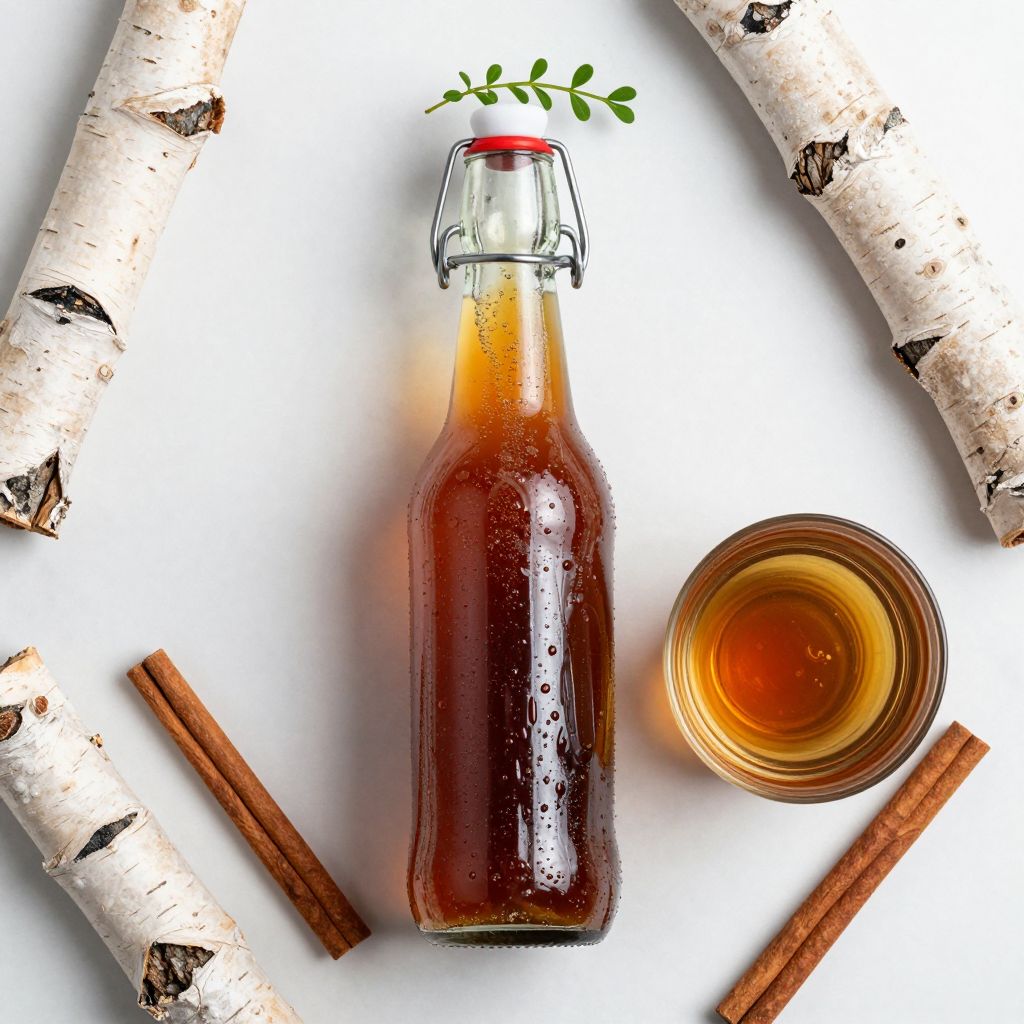
Homemade Birch Beer
Ingredients
Equipment
Method
- Sanitize your carboy, airlock, rubber stopper, and bottles with a no-rinse sanitizer following the product instructions.
- Pour 2 gallons of filtered water into your large pot and bring it to a rolling boil over high heat. Add the birch bark, wintergreen leaves, sarsaparilla root, anise seeds, allspice berries, cloves, cinnamon stick, and fresh ginger slice all at once.
- Reduce the heat to medium and let the mixture simmer gently for 60 minutes without a lid. The liquid will reduce slightly and darken as the botanicals release their oils and flavors.
- After the full hour of simmering, add all 3 pounds of cane sugar to the pot while still on the heat. Stir continuously with your wooden spoon until every grain dissolves completely, about 3 to 4 minutes.
- Remove the pot from heat and let it cool to room temperature, which typically takes about 1 to 2 hours. Never pitch yeast into hot liquid as it will kill the living cells.
- Once the liquid reaches room temperature, pour it through cheesecloth or a fine mesh strainer into your sanitized carboy, using a funnel to minimize splashing. Leave behind as much of the botanical matter as possible.
- Sprinkle the champagne yeast directly over the cooled liquid in the carboy, or hydrate it first in a small amount of lukewarm water for 10 minutes if the packet instructs. Within 24 hours, you should see vigorous bubbling activity.
- Insert the rubber stopper with the airlock into the carboy and place it in a cool, dark spot between 60 and 70 degrees Fahrenheit. Ferment for 5 to 7 days total until bubbling stops completely.
- Carefully siphon the clear liquid off the yeast sediment at the bottom into your sanitized bottles, leaving behind at least an inch of headspace. Dissolve the 0.5 cup of priming sugar in a small amount of boiling water, cool it, and add equal portions to each bottle before capping.
- Let the sealed bottles sit at room temperature for 2 to 3 weeks to carbonate before refrigerating and serving.