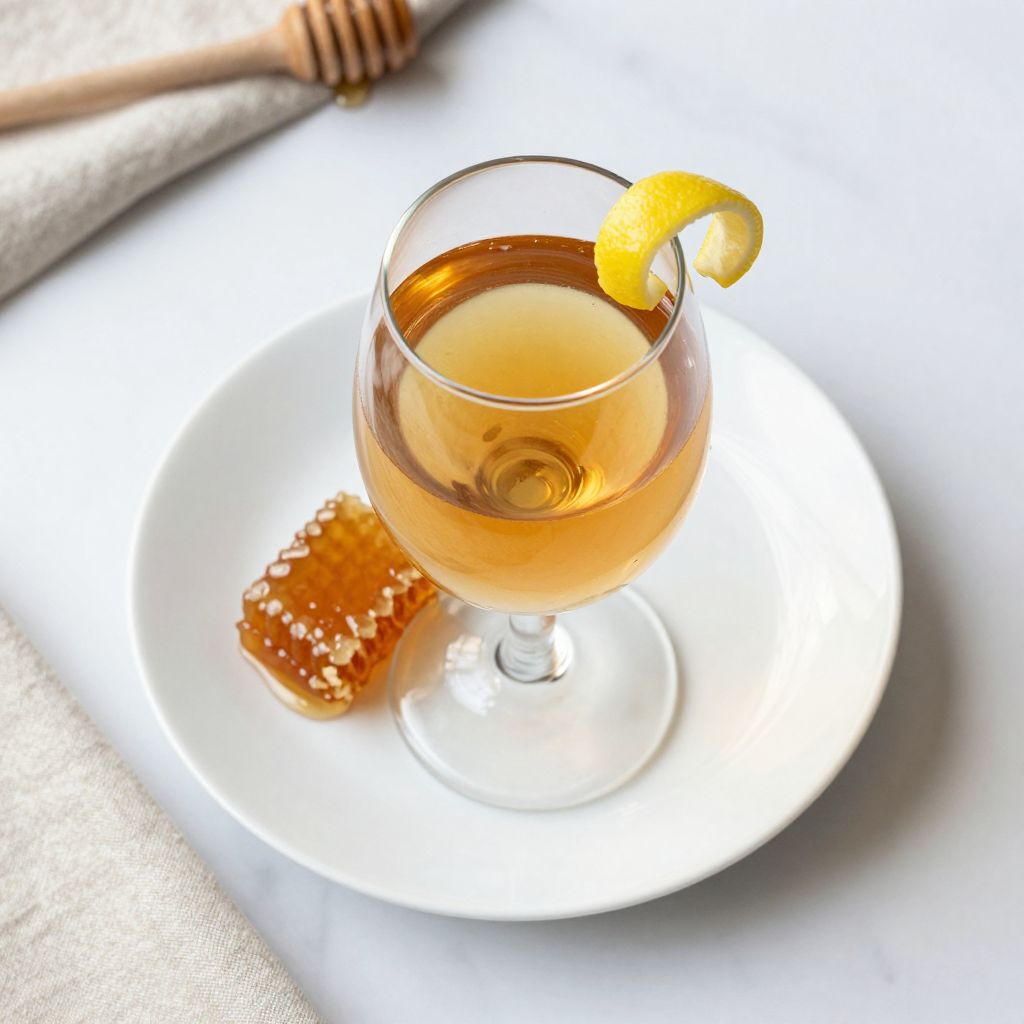
Ingredients
Equipment
Method
- Sanitize all equipment by soaking in sanitizer solution for 1 to 2 minutes and allow to air-dry.
- Heat 4 gallons of filtered water to 130°F (54°C) in a 10-quart pot to preserve honey aromatics.
- Add 15 pounds of honey to the warm water and stir gently until fully dissolved, then cool the must to 68–72°F (20–22°C).
- Draw a sample with a wine thief, measure the original gravity with a hydrometer (target OG 1.100–1.120).
- Rehydrate the wine yeast in 1/4 cup lukewarm water for 15 minutes, then gently stir to activate.
- Transfer the cooled honey must to the sanitized fermenter using a funnel and pitch the rehydrated yeast, stirring for 1 minute to aerate.
- Dissolve 1 teaspoon yeast nutrient and 1/2 teaspoon yeast energizer in a small amount of water and add to the fermenter, stirring gently.
- Insert the stopper and airlock, fill the airlock to the fill line, and place the fermenter in a dark area at 65–72°F (18–22°C).
- Allow primary fermentation for 2 to 4 weeks, monitoring airlock activity and checking gravity until stable at 0.990–1.010 over 3 days.
- Rack the mead off the lees into a secondary fermenter, attach an airlock, and age for 3 to 6 months in cool, dark conditions.
- After aging, rack again if needed, then bottle the clear mead and age bottles for at least 6 months before drinking.
Notes
Mead benefits from patience and proper sanitation; store bottles in a cool, dark place and serve chilled.