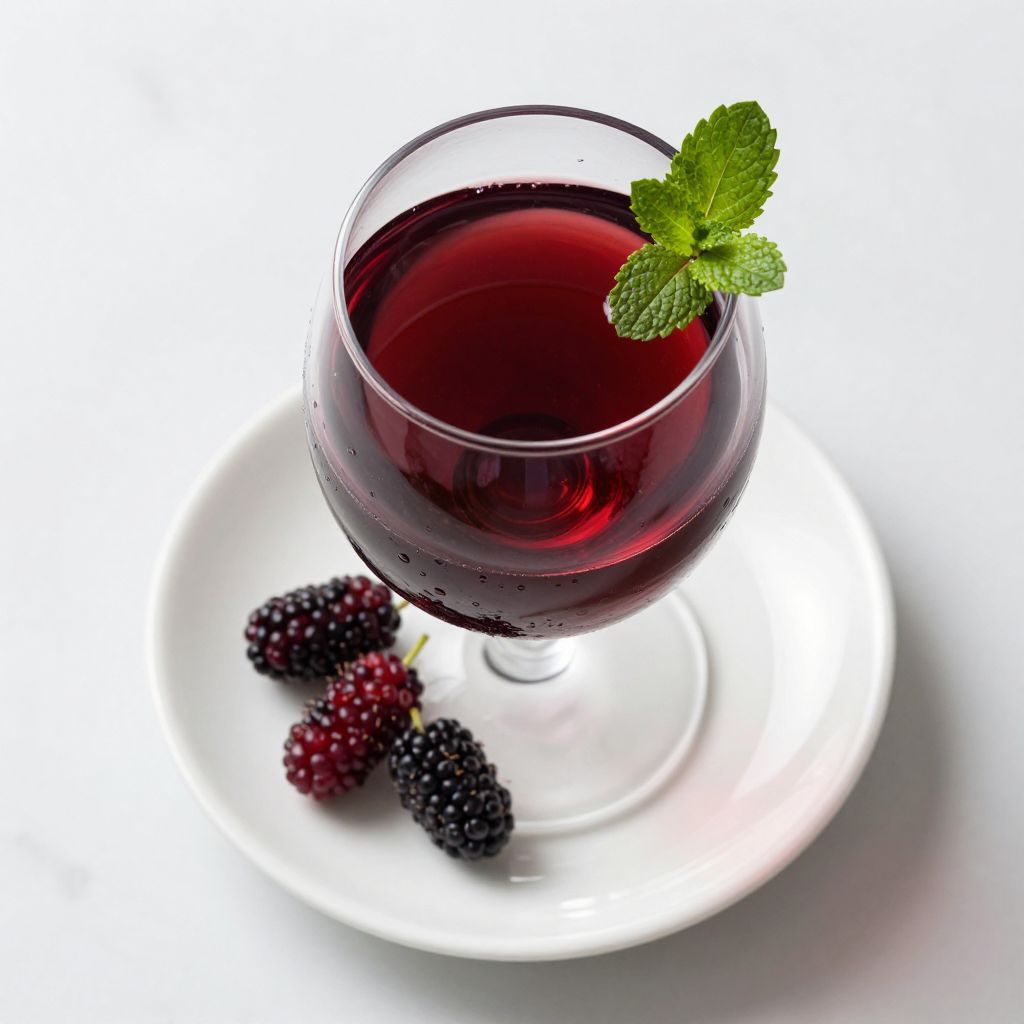
Ingredients
Equipment
Method
- Thoroughly clean and sanitize the carboy, airlock, siphon, and any other equipment using a sanitizer solution, then rinse well with boiled water.
- Place 10 pounds of rinsed mulberries in a large stainless steel pot and crush by hand or with a potato masher until they release their juices.
- Pour the crushed mulberries and their juices into the sanitized carboy, add 1 gallon of cool water and 2 pounds of granulated white sugar, and stir well until the sugar is completely dissolved.
- Stir in 1/2 teaspoon of pectic enzyme, cover the carboy loosely with cheesecloth, and let the mixture rest at room temperature for 24 hours.
- In a small container, rehydrate 1 packet of wine yeast according to packet instructions by mixing with warm water and letting sit for 15 minutes.
- Stir 1 teaspoon of yeast nutrient into the must, then gently pour in the rehydrated yeast and stir well; cover loosely with cheesecloth for the first 24 hours.
- After 24 hours, fit the rubber bung and airlock onto the carboy and ferment at 65 to 72°F; expect vigorous bubbling within a few days.
- When bubbling slows after about one week, siphon the wine off the fruit solids into a clean, sanitized carboy, leaving sediment behind.
- Reinstall the airlock and allow the wine to ferment quietly at cool room temperature (65 to 72°F) for 3 months.
- After fermentation stops and sediment settles (approximately 3 months), rack the wine one more time into a clean carboy, then taste and adjust sweetness if desired.
- Siphon the clear wine into sanitized bottles, optionally dissolve 1/4 teaspoon of potassium metabisulfite in water and stir in for preservation, then seal with corks.
- Store bottles upright in a cool, dark place at 50 to 55°F for at least 2 weeks before drinking; wine will improve up to one year.
Notes
Mulberry wine improves with age; record dates, temperatures, and gravity readings for best results.