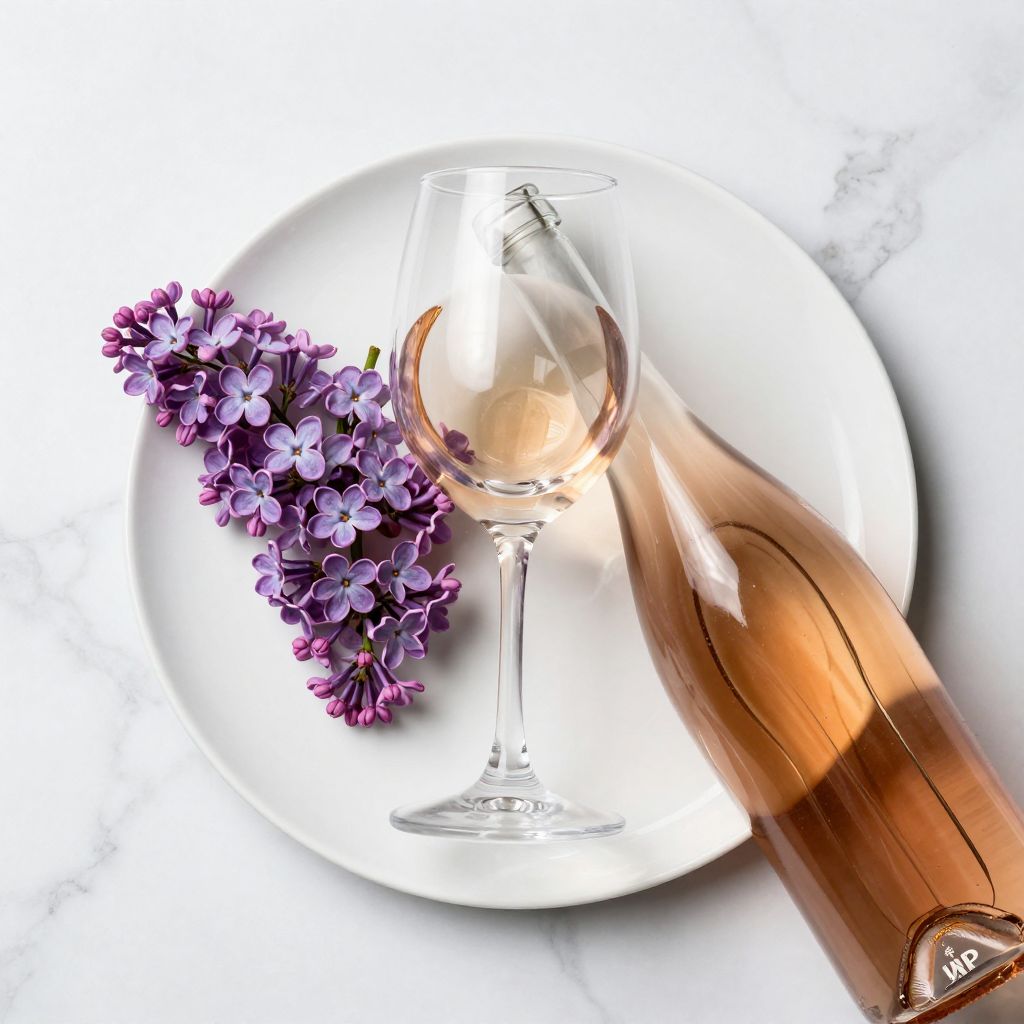
Ingredients
Equipment
Method
- Select 2 quarts of fresh lilac blossoms on a dry day, avoiding wilted flowers and dew.
- Rinse the lilac blossoms under cool running water and let them dry on a clean towel for 15 minutes.
- Clean and sanitize a one-gallon glass carboy with hot water and a bleach solution, then rinse thoroughly with distilled water.
- Heat 1 gallon of water in a large pot to 160°F, then remove from heat and stir in 3 pounds of granulated sugar until fully dissolved.
- Add 1 teaspoon acid blend, 1/4 teaspoon tannin powder, 1/2 teaspoon pectic enzyme, and 1 teaspoon yeast nutrient to the warm sugar water and stir to combine.
- Add the prepared lilac blossoms to the pot, stir gently to submerge them, and cool the mixture to 70–75°F (approximately 3–4 hours at room temperature or by using a cold water bath).
- Rehydrate 1 packet of wine yeast in warm water according to package directions for 10–15 minutes, then add the activated yeast to the cooled must and stir thoroughly.
- Transfer the mixture to the sanitized carboy using a funnel, fit it with an airlock and rubber bung, and ferment at 65–75°F away from direct light for 4 weeks.
- Once fermentation slows and the wine begins to clear, siphon (rack) the wine off the sediment (lees) into a clean, sanitized carboy using the siphon tubing.
- Allow the racked wine to settle for an additional 2–3 weeks, then bottle into 750ml wine bottles, cork securely, and age in a cool, dark place for at least 3 months.
Notes
Serve chilled as a dessert wine or mix with champagne or sparkling water for an elegant aperitif.