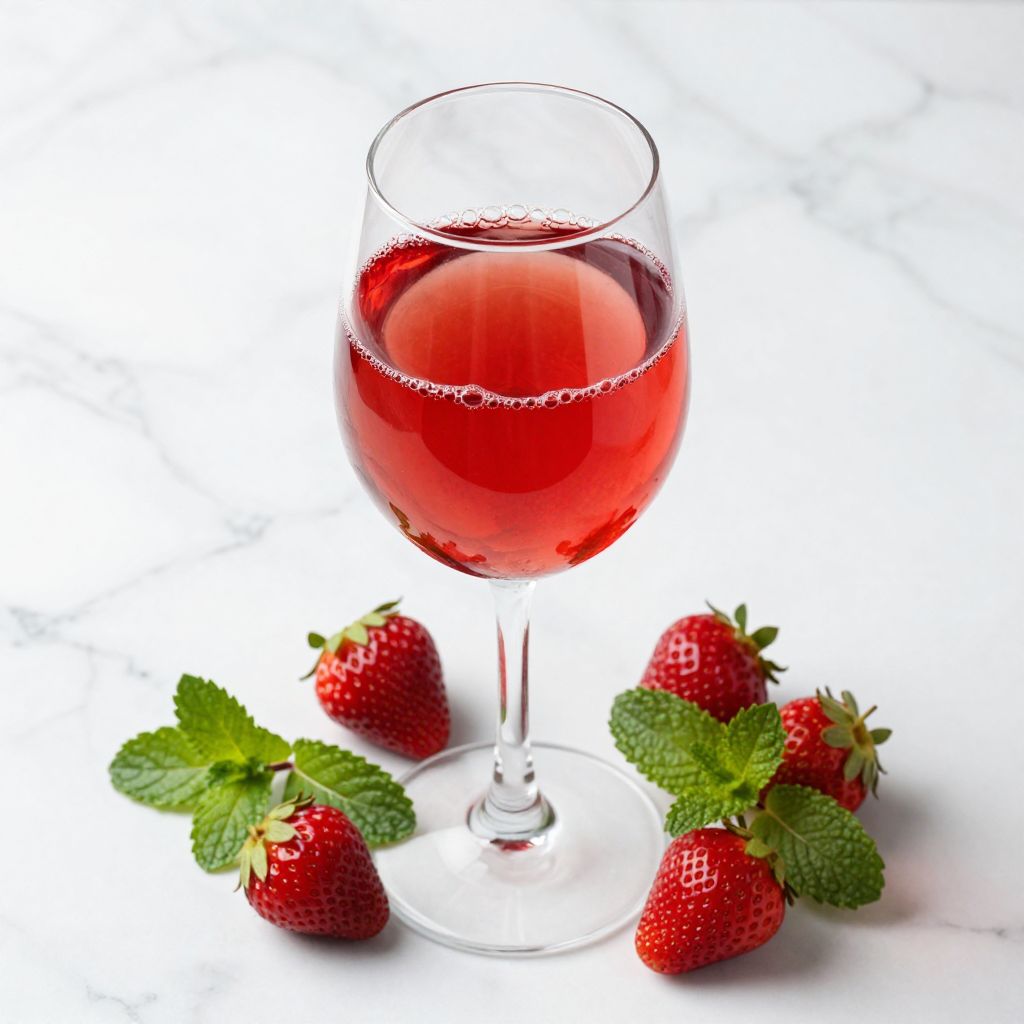
Ingredients
Equipment
Method
- Soak your carboy, stirring spoon, strainer, and all equipment in sanitizing solution for at least 20 minutes, then rinse thoroughly with clean water.
- Hull the strawberries by removing the green leafy tops and roughly chop them into quarters.
- Pour 1 gallon of filtered or boiled and cooled water into a large sanitized pot or food-grade bucket. Stir in 2 pounds of sugar until fully dissolved, then add chopped strawberries and stir well.
- Use a hydrometer to measure the specific gravity of the mixture, aiming for a reading between 1.090 and 1.110.
- Sprinkle the yeast nutrient, acid blend, and tannin powder (if using) into the strawberry mixture. Stir thoroughly for 2 to 3 minutes.
- Sprinkle wine yeast over the surface and let sit for 5 minutes to rehydrate. Stir vigorously for 1 minute to incorporate and oxygenate.
- Cover the bucket loosely with a clean cloth and let ferment at room temperature (65 to 75 degrees Fahrenheit) for 5 to 7 days. Stir daily, pushing floating strawberries down into the liquid.
- After 5 to 7 days, strain the liquid through cheesecloth into a sanitized carboy, pressing gently on solids. Discard the spent strawberry pulp.
- Insert a sanitized rubber stopper with airlock into the carboy. Place in a cool, dark spot at 60 to 75 degrees Fahrenheit for 2 to 3 months.
- After 4 weeks, siphon the wine off the sediment into a clean carboy. Replace the airlock and continue fermenting.
- Repeat racking after another 4 weeks.
- After 3 to 4 months total, take a hydrometer reading to confirm fermentation has stopped (gravity reading around 1.000 or lower, holding steady for several days).
- Siphon finished wine into clean, sanitized wine bottles, filling to about half an inch below the rim. Cork or cap immediately.
- Store bottles upright in a cool, dark place for at least 2 months before opening. Wine improves for up to 1 year after bottling.
Notes
Keep detailed notes on fermentation dates, gravity readings, and temperatures. Use the freshest, ripest strawberries during peak season for best results. Maintain consistent temperatures throughout fermentation. Always verify fermentation is complete with a hydrometer before bottling to prevent bottle bombs. Store finished bottles on their side to keep corks moist.