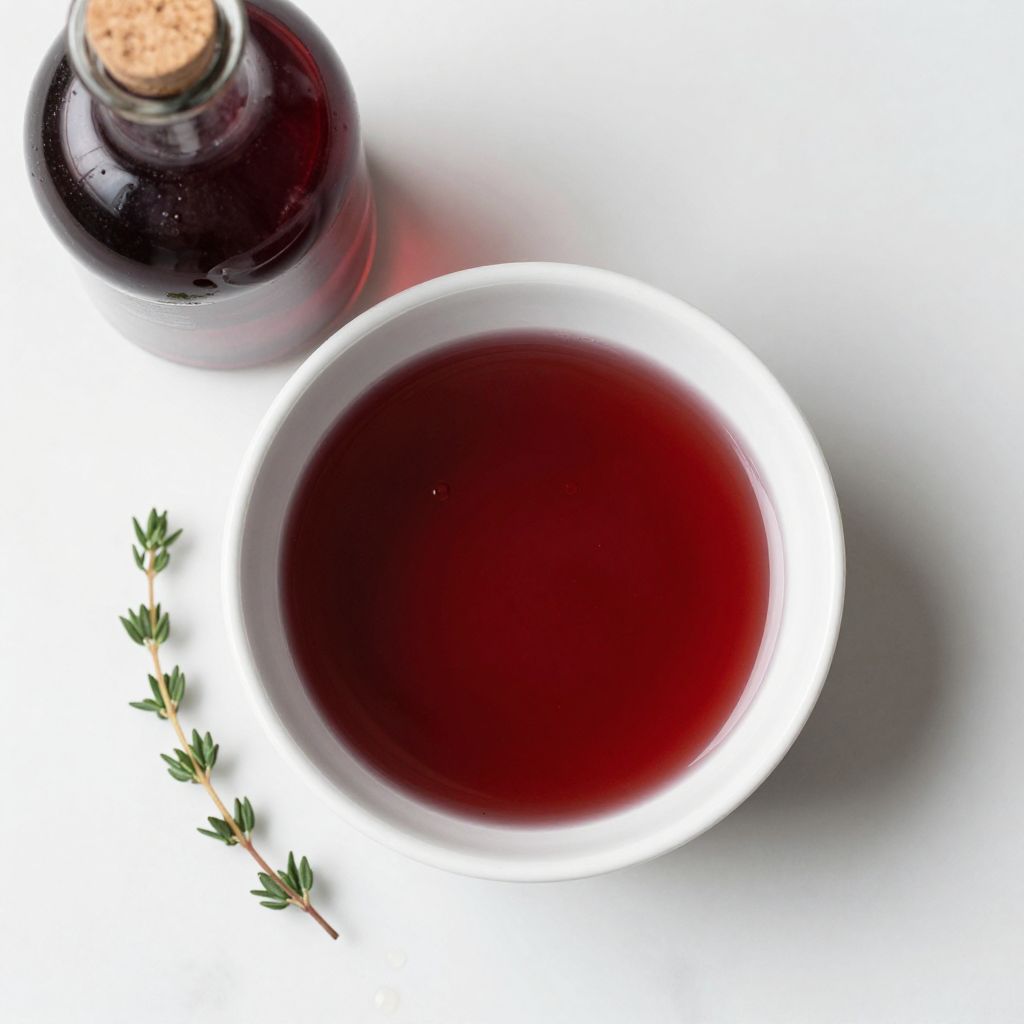
Ingredients
Equipment
Method
- Select a clean glass jar large enough to hold all liquid with several inches of headspace.
- Pour 4 cups red wine into the jar and add 1 cup raw unpasteurized apple cider vinegar, then stir gently with a wooden spoon to distribute the cultures.
- Cover the jar opening with cheesecloth or a coffee filter and secure it with a rubber band or twine to allow airflow while keeping out dust.
- Place the jar in a warm, dark spot maintaining a temperature of 60 to 75°F and let it ferment undisturbed for 8 to 12 weeks.
- From day 3 onward, smell the mixture daily to observe the aroma shift from wine-like to acidic, indicating fermentation has begun.
- Stir the mixture gently every 3 to 5 days for the first month using a wooden spoon to evenly distribute nutrients.
- Around week 3 or 4, watch for a cloudy film (the mother) forming on the surface as a sign of progressing fermentation.
- After at least 8 weeks, taste the vinegar; if it still tastes winey, continue fermenting for up to 12 weeks until it reaches desired sharpness.
- Line a fine mesh strainer with cheesecloth and pour the vinegar through it into a clean bowl to remove sediment and any visible mother.
- Transfer the strained vinegar into clean glass bottles, cap tightly, and store in a cool, dark place; it will improve with age.
Notes
Fermentation time 8 to 12 weeks; save a portion of the mother culture to accelerate future batches.