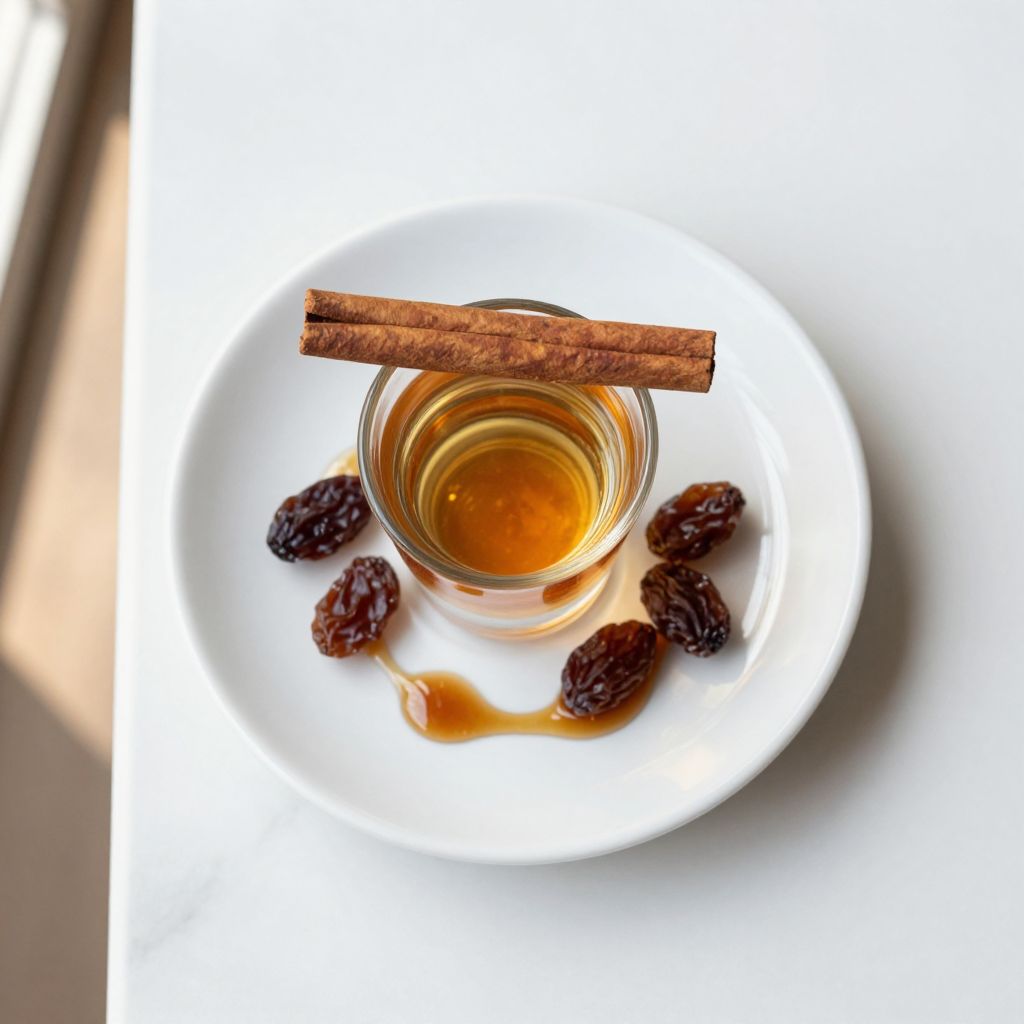
Ingredients
Equipment
Method
- Sanitize the fermentation vessel, airlock, rubber bung, stirring spoon, and other equipment with a sanitizing solution or diluted bleach for 30 minutes, then rinse thoroughly with clean water.
- Heat 3 gallons of water in a large pot to 160°F (71°C), then pour the heated water into the fermentation vessel and add the molasses while stirring continuously to dissolve completely.
- Stir in the brown sugar and honey until fully dissolved, then allow the mixture to cool to below 120°F (49°C) before proceeding.
- Add the raisins and optional spices (cinnamon sticks, cloves, anise seeds) to the cooled liquid and stir to distribute evenly.
- In a separate container, dissolve the yeast in warm water at 100°F (38°C) and let it activate for 10 minutes.
- Pour the activated yeast into the fermentation vessel and stir vigorously for 2 minutes to aerate the mixture.
- Seal the vessel with the rubber bung and airlock, then place it in a dark, cool area maintaining a temperature between 65°F and 75°F (18°C–24°C).
- Allow fermentation to proceed undisturbed for 21 to 28 days, monitoring airlock activity and temperature daily.
- When airlock bubbling has stopped for three consecutive days and the liquid is clear, strain the fermented liquid through cheesecloth into clean glass bottles, leaving sediment behind.
- Seal the bottles and age in a cool, dark place for at least 2 weeks before serving to allow flavors to mellow and integrate.
Notes
Monitor fermentation temperature between 68°F and 72°F for best results, and keep detailed notes on dates and measurements to reproduce successful batches.