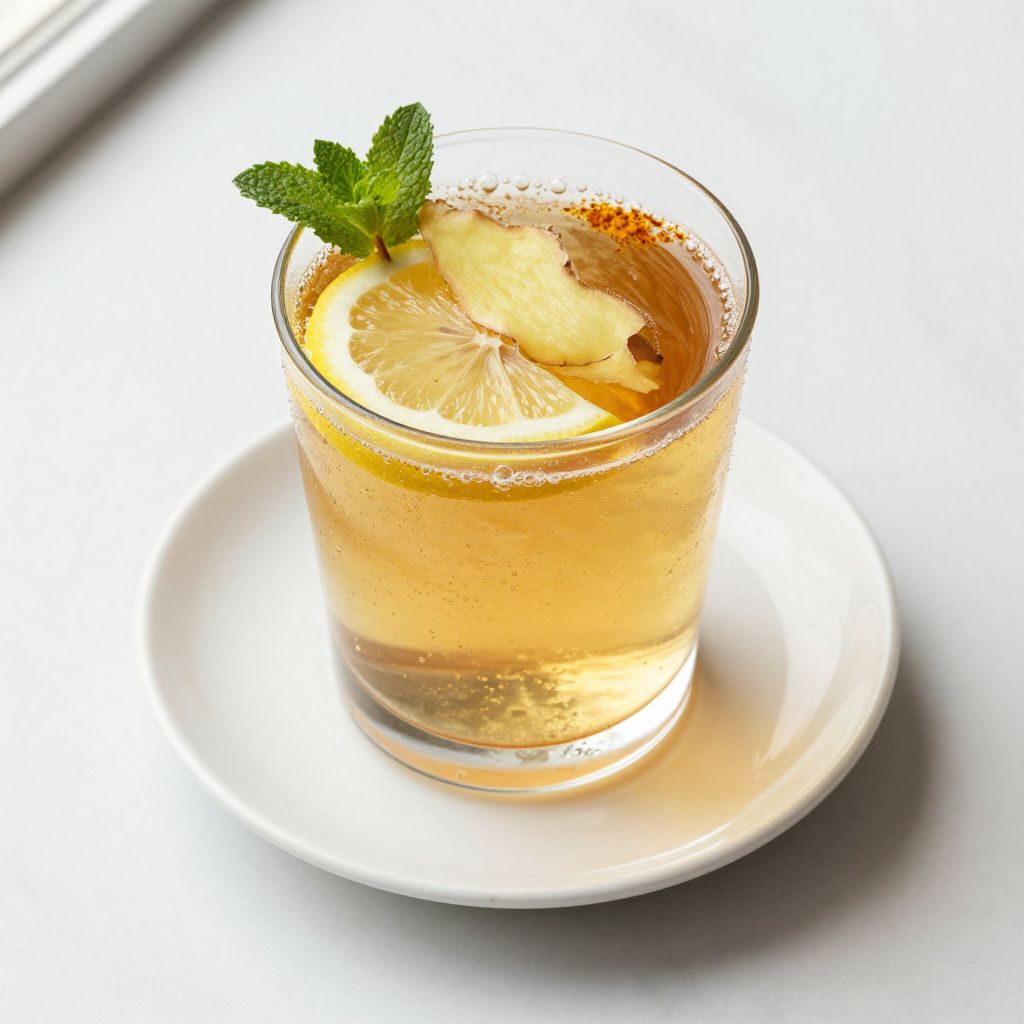
Ingredients
Equipment
Method
- Combine 2 tablespoons minced fresh ginger root, 2 tablespoons organic cane sugar, 1/2 teaspoon lemon juice, and 1 cup filtered water in a clean 1-quart glass jar and stir until sugar dissolves.
- Cover the jar loosely with cheesecloth secured by a rubber band and leave at room temperature.
- For the next five days, each morning stir the mixture and add 1 tablespoon minced ginger, 1 tablespoon sugar, and 1/4 teaspoon lemon juice to feed the ginger bug.
- Allow about five days or longer until the starter is active. Discard a starter showing mold or other signs of spoilage; do not taste a suspect starter. Activity alone is not a safety measurement.
- Bring 1 quart of filtered water to a boil at 212°F in a pot, then add 1/4 cup sliced ginger, 1/2 cup sugar, 2 tablespoons lemon juice, optional turmeric and cloves, and a pinch of salt.
- Reduce heat and simmer the ginger mixture for 10 minutes to extract maximum flavor.
- Remove from heat and cool the mixture to room temperature (around 68°F), about 45 minutes.
- Strain out all solids through a fine mesh strainer into a clean 2-quart jar, pressing gently to extract liquid.
- Add 1 cup of the active ginger bug starter to the cooled ginger liquid and stir thoroughly.
- Cover the jar and allow approximately five to seven days of primary fermentation in the existing method. Fermentation varies with temperature and starter activity; the schedule is not a safety guarantee.
- Use clean bottles specifically rated for carbonation and fermentation pressure, following the manufacturer’s instructions. Strain into the bottles, leaving appropriate headspace; do not use ordinary still-drink glass.
- The existing method allows about three to four days for bottle fermentation, but do not leave an overpressurized bottle warm to complete a timetable. Follow pressure-rated bottle guidance and move carbonated bottles to cold storage.
- Refrigerate bottles for at least two hours before serving and open carefully to release pressure.
Notes
Fermentation produces carbon dioxide and may produce alcohol. Do not call this drink alcohol-free or infer ABV from taste. Use pressure-rated bottles; refrigeration slows fermentation but does not stop it. Open cold bottles slowly away from faces. This recipe does not establish a three-month safe storage life. Follow a qualified fermentation method and bottle-manufacturer guidance. Total time shown is an approximate minimum; starter, fermentation, cooling and chilling may take longer.