
Picture this: a crisp autumn day, the scent of freshly baked pretzels wafting through the air, and a frosty mug of golden lager in hand. That’s the magic of the Weihenstephaner Festbier, a delightful brew that perfectly captures the spirit of Oktoberfest. This recipe is worth making not just for its smooth, malty flavor, but also for the way it brings people together. With its rich amber hue and balanced sweetness, it’s a celebration in a glass that’s surprisingly easy to craft at home. Let’s get brewing!
Why You’ll Love This Recipe
This beer is a crowd-pleaser and a stunning addition to any gathering.
- Rich malt flavor with a hint of caramel.
- Perfectly balanced with a smooth finish.
- Great for sharing at parties or family gatherings.
- Homebrewing lets you customize flavors to your liking.
- Brings the Oktoberfest experience right to your kitchen.
My Experience Making This Recipe
As I embarked on brewing the Weihenstephaner Festbier, the aroma of the malt filled my kitchen, making it feel like a mini-brewery. The whole process felt like a delightful ritual, and I couldn’t wait to share the final product with friends.
When I finally poured the first glass, the golden liquid sparkled under the light. The taste was every bit as good as I hoped, with that rich maltiness making it hard to believe I had made it myself!
Recipe Overview
- Recipe Name: Weihenstephaner Festbier
- Servings: 5 gallons
- Prep Time: 30 minutes
- Cook Time: 1 hour
- Total Time: 4 weeks (fermentation time included)
- Course: Beverage
- Cuisine: German
- Calories per Serving: Approximately 200
Equipment You Will Need
- Brew kettle (at least 5 gallons)
- Fermentation vessel with an airlock
- Sanitizer (like Star San)
- Bottling bucket
- Bottles and caps
- Hydrometer
- Thermometer
- Siphon or racking cane
Ingredients for Weihenstephaner Festbier
- Pale malt: 9 lbs
- Caramel malt: 1 lb
- Munich malt: 1 lb
- Hallertau hops: 1 oz (bittering)
- Saaz hops: 0.5 oz (flavor)
- Yeast (lager strain): 1 packet
- Priming sugar: 3/4 cup (for bottling)
Ingredient Notes and Substitutions
- Pale malt: This provides the base for your brew. You can substitute with Pilsner malt if desired.
- Caramel malt: Adds sweetness and color. Try using Crystal malt as an alternative.
- Munich malt: Gives a rich flavor. Vienna malt can work here too.
- Hallertau hops: These are classic for lagers. If unavailable, consider using Tettnanger hops.
- Saaz hops: For a spicy aroma. You might use Styrian Goldings as a substitute.
How to Make Weihenstephaner Festbier
Step 1: Sanitize Your Equipment
Before you start brewing, sanitize all your equipment. This prevents unwanted bacteria from ruining your beer.
Step 2: Heat the Water
Heat about 3 gallons of water in your brew kettle to around 165°F. This temperature is ideal for mashing the grains.
Step 3: Mash the Grains
Add the crushed grains to the hot water and stir well. Keep the temperature steady around 150°F for 60 minutes to extract the sugars.
Step 4: Sparge the Grains
After mashing, rinse the grains with hot water to collect the sugars. This process is called sparging and helps maximize your yield.
Step 5: Boil the Wort
Bring the collected liquid (wort) to a boil. Add the bittering hops and boil for 60 minutes.
Step 6: Add Flavor Hops
With 15 minutes left in the boil, add the flavor hops. This will enhance the aroma without adding too much bitterness.
Step 7: Cool the Wort
Once the boil is complete, cool the wort quickly using an immersion chiller or an ice bath. This helps prevent contamination.
Step 8: Ferment the Beer
Transfer the cooled wort to your fermentation vessel and pitch the yeast. Seal it with an airlock and let it ferment at 50°F for about 2 weeks.
Pro Tip: Keep the fermentation temperature low to ensure a clean lager taste.
Tips for the Best Weihenstephaner Festbier
- Use fresh ingredients for the best flavor.
- Monitor fermentation temperatures closely.
- Allow sufficient time for fermentation and conditioning.
- Be patient while bottling; carbonation takes time.
- Experiment with hop varieties for unique flavors.
Common Mistakes to Avoid
- Not sanitizing equipment: This can lead to spoilage.
- Boiling for too long: Over-boiling can result in a burnt taste.
- Skipping the cooling step: Hot wort can kill yeast.
- Fermenting at the wrong temperature: This can produce off-flavors.
- Rushing the bottling process: Proper carbonation takes time.
Serving Suggestions
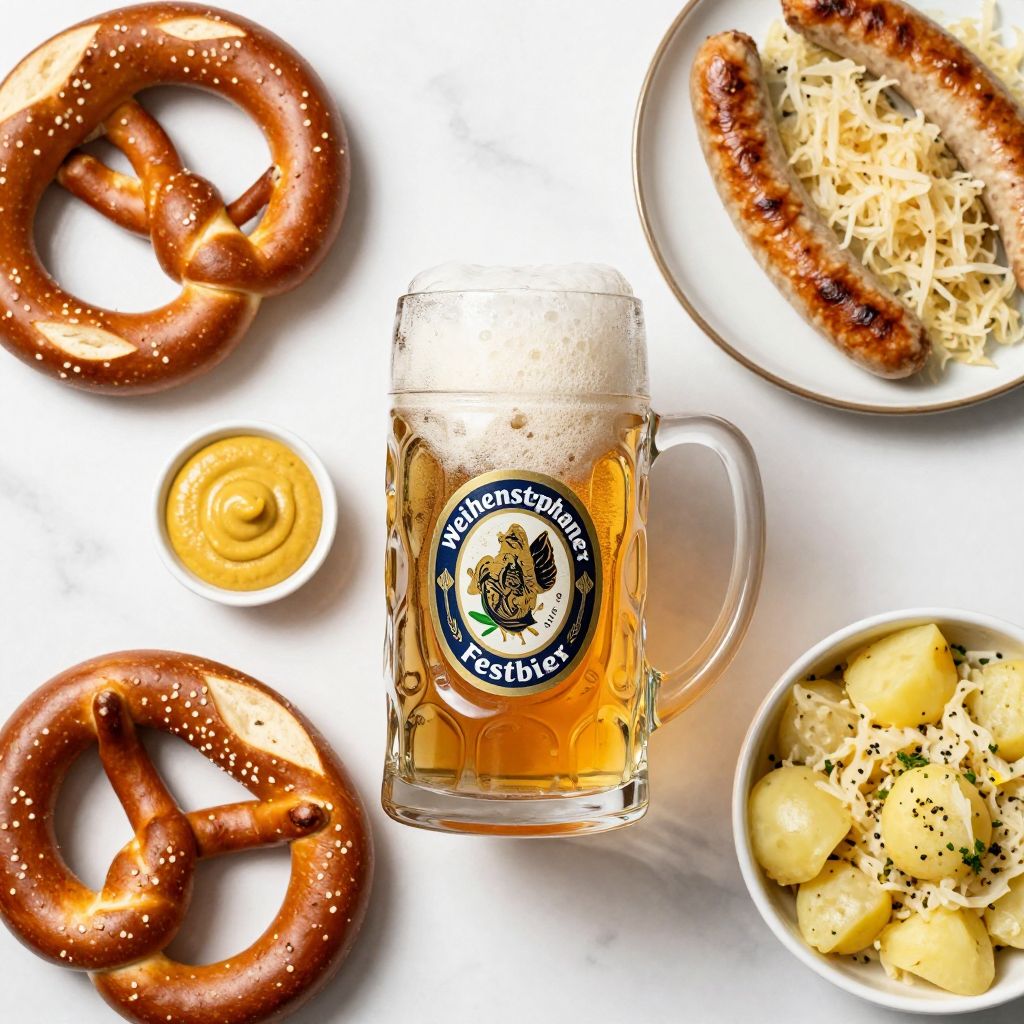
Serve your Weihenstephaner Festbier cold in a traditional stein for the full experience. Pair it with hearty German dishes for the ultimate feast.
- Bratwurst with sauerkraut
- Soft pretzels with mustard
- German potato salad
- Knödel (dumplings)
- Apple strudel for dessert
Variations to Try
- Add a touch of orange peel for a citrus twist.
- Incorporate smoked malt for a unique flavor.
- Try using different hop varieties for distinct aromas.
- Experiment with fruit additions like cherries or raspberries.
- Adjust the caramel malt for a sweeter or drier beer.
Dietary Adaptations
- Gluten-free: Use gluten-free grains like sorghum or rice.
- Dairy-free: This recipe is naturally dairy-free.
- Vegan/Vegetarian: Suitable for all diets.
- Low-carb/Keto: Consider using fewer grains or alternative sugars.
Storage and Reheating
Refrigerator
Store your finished beer in a cool, dark place. Ideally, keep it refrigerated to maintain freshness.
- Consume within 6 months for the best taste.
- Avoid exposure to light to prevent skunking.
Freezer
Freezing beer is not recommended as it can alter the flavor and carbonation. Enjoy it fresh instead.
- Keep in mind that freezing can cause bottles to break.
Reheating
Beer should not be reheated, but you can serve it at room temperature or slightly chilled. This allows the flavors to shine.
- Warm beers can be enjoyed in colder months.
Nutrition Information
| Nutrient | Amount |
|---|---|
| Calories | 200 |
| Total Fat | 0 g |
| Saturated Fat | 0 g |
| Carbohydrates | 15 g |
| Fiber | 0 g |
| Sugar | 0 g |
| Protein | 2 g |
| Sodium | 10 mg |
| Cholesterol | 0 mg |
This information is an estimate and can vary based on brewing methods.
Frequently Asked Questions
Can I substitute the yeast?
Yes, using a different lager yeast can give you unique flavors, but ensure it’s suitable for lager fermentation.
How can I make this beer ahead of time?
Brewing in advance is easy; just ensure proper fermentation and storage. It can last for months when stored correctly.
What should I do if my beer is too bitter?
If your beer is overly bitter, you can balance it with sweetness in future batches or add a touch of sugar before serving.
Why is my beer cloudy?
Cloudiness can arise from yeast or sediment; ensure proper fermentation and bottling techniques to minimize this.
What temperature should I serve the beer at?
Serve your Weihenstephaner Festbier chilled, around 45-50°F, to enhance its flavors.
Final Thoughts
Brewing your own Weihenstephaner Festbier is not just rewarding; it’s a true celebration of flavors. This beer will surely impress your friends and elevate any gathering.
So, roll up your sleeves and start brewing — you won’t regret it! For more delicious drink ideas, check out this universal butterbeer recipe or warm up with a hot butterbeer recipe.
Weihenstephaner Festbier
Ingredients
Equipment
Method
- Sanitize all your equipment.
- Heat about 3 gallons of water in your brew kettle to around 165°F.
- Add the crushed grains to the hot water and keep the temperature steady around 150°F for 60 minutes.
- Rinse the grains with hot water to collect the sugars (sparging).
- Bring the collected liquid (wort) to a boil. Add the bittering hops and boil for 60 minutes.
- With 15 minutes left in the boil, add the flavor hops.
- Cool the wort quickly using an immersion chiller or an ice bath.
- Transfer the cooled wort to your fermentation vessel and pitch the yeast.
- Seal it with an airlock and let it ferment at 50°F for about 2 weeks.