
There’s something almost meditative about standing at the stove, stirring a pot of creamy risotto as the rice gradually transforms from hard grains into silky, tender clouds.
Most risotto recipes call for wine, but this version proves you don’t need a splash of white wine to create restaurant-quality results at home.
What makes this risotto special is its pure, comforting flavor and luxurious texture achieved through patient stirring, quality broth, and butter at the end.
The rice releases its natural starches as you stir, creating that signature creamy sauce without any cream, while herbs and aromatics build deep flavor in every spoonful.
By the end of this article, you’ll have all the techniques, tips, and confidence to master this elegant dish and adapt it to whatever ingredients you have on hand.
Why You’ll Love This Recipe
This risotto delivers the same silky, luxurious texture as traditional versions without the wine, making it accessible to anyone avoiding alcohol or simply wanting a simpler ingredient list.
- Naturally creamy sauce that requires no cream
- Ready in under 30 minutes from start to finish
- Versatile base that pairs with endless topping combinations
- Impressive enough for dinner guests yet simple enough for weeknight cooking
- Budget-friendly when using pantry staples and seasonal vegetables
My Experience Making This Recipe
The first time I made risotto without wine, I was skeptical that it would have enough depth of flavor. But after the first spoonful, those doubts melted away along with the butter and cheese stirred in at the end.
The key moment came when I stopped overthinking it and just trusted the process of patient stirring. The rice began to smell nutty and toasted, and the broth gradually transformed into a creamy, luxurious sauce that tasted like comfort itself.
My family asked for seconds before I’d even finished plating, and now I make this risotto at least twice a month. The beauty of it is that it rewards attention without demanding stress, and even small mistakes get buried under all that creamy goodness.
Recipe Overview
- Recipe Name: Risotto Without Wine
- Servings: 4
- Prep Time: 10 minutes
- Cook Time: 25 minutes
- Total Time: 35 minutes
- Course: Main Dish or Side Dish
- Cuisine: Italian
- Calories per Serving: 385
Equipment You Will Need
- Large heavy-bottomed pot or Dutch oven
- Wooden spoon for stirring
- Measuring cups and spoons
- Separate pot for warming broth
- Chef’s knife for chopping aromatics
- Cutting board
- Grater for Parmesan cheese
- Small ladle for adding broth
Ingredients for Risotto Without Wine
- Arborio rice: 1.5 cups
- Yellow onion: 1 medium, finely diced
- Garlic cloves: 2, minced
- Vegetable or chicken broth: 4 cups, kept warm
- Unsalted butter: 4 tablespoons, divided
- Extra virgin olive oil: 2 tablespoons
- Parmesan cheese: 0.75 cups, freshly grated
- Sea salt: to taste
- Black pepper: to taste
- Fresh parsley: 2 tablespoons, chopped (optional)
Ingredient Notes and Substitutions
- Arborio rice: This short-grain rice has high starch content that breaks down during cooking to create natural creaminess. You can substitute Carnaroli or Vialone Nano rice, though the texture may be slightly different.
- Warm broth: Keeping broth hot prevents the rice from cooling down and disrupting the cooking process. Cold broth slows cooking and can make the risotto gummy.
- Butter: Butter at the end creates richness and helps emulsify the sauce. You can use half butter and half olive oil, though the flavor will be less luxurious.
- Parmesan cheese: Freshly grated Parmigiano-Reggiano adds nutty depth and better texture than pre-grated versions. Grana Padano offers a similar profile with slightly less intensity.
- Vegetable broth: Use vegetable broth for a lighter, vegetarian version or chicken broth for deeper savory notes. Homemade broth always tastes better than store-bought if you have it available.
How to Make Risotto Without Wine
Step 1: Warm Your Broth
Pour your broth into a separate pot and bring it to a gentle simmer over medium heat. Keeping the broth warm ensures that when you add it to the rice, the cooking temperature stays consistent and the risotto cooks evenly.
Step 2: Heat Oil and Butter
Add 2 tablespoons of olive oil and 2 tablespoons of butter to your large pot over medium heat, allowing the butter to melt completely. The combination of oil and butter prevents the butter from burning while adding flavor depth.
Step 3: Saute the Aromatics
Add your diced onion to the pot and cook for 3 to 4 minutes, stirring occasionally, until it becomes translucent and softens. Stir in the minced garlic and cook for another 30 seconds until fragrant, being careful not to let it brown.
Step 4: Toast the Rice
Pour in the Arborio rice and stir constantly for 1 to 2 minutes until the grains become slightly translucent around the edges and the rice smells toasted and nutty. This toasting step adds richness and prevents the rice from becoming mushy.
Step 5: Begin Adding Broth
Add about 1 cup of warm broth to the rice, stirring frequently, and let it simmer until most of the liquid is absorbed, about 3 to 4 minutes. The rice should always look slightly wet, not completely dry, as you add more broth.
Step 6: Continue Stirring and Adding Broth
Add the remaining 3 cups of broth in roughly 1 cup portions, stirring frequently between additions and waiting until most of the liquid is absorbed before adding more. This gradual process, which takes about 18 to 20 minutes total, allows the rice to release its starches and create that creamy sauce.
Step 7: Test for Doneness
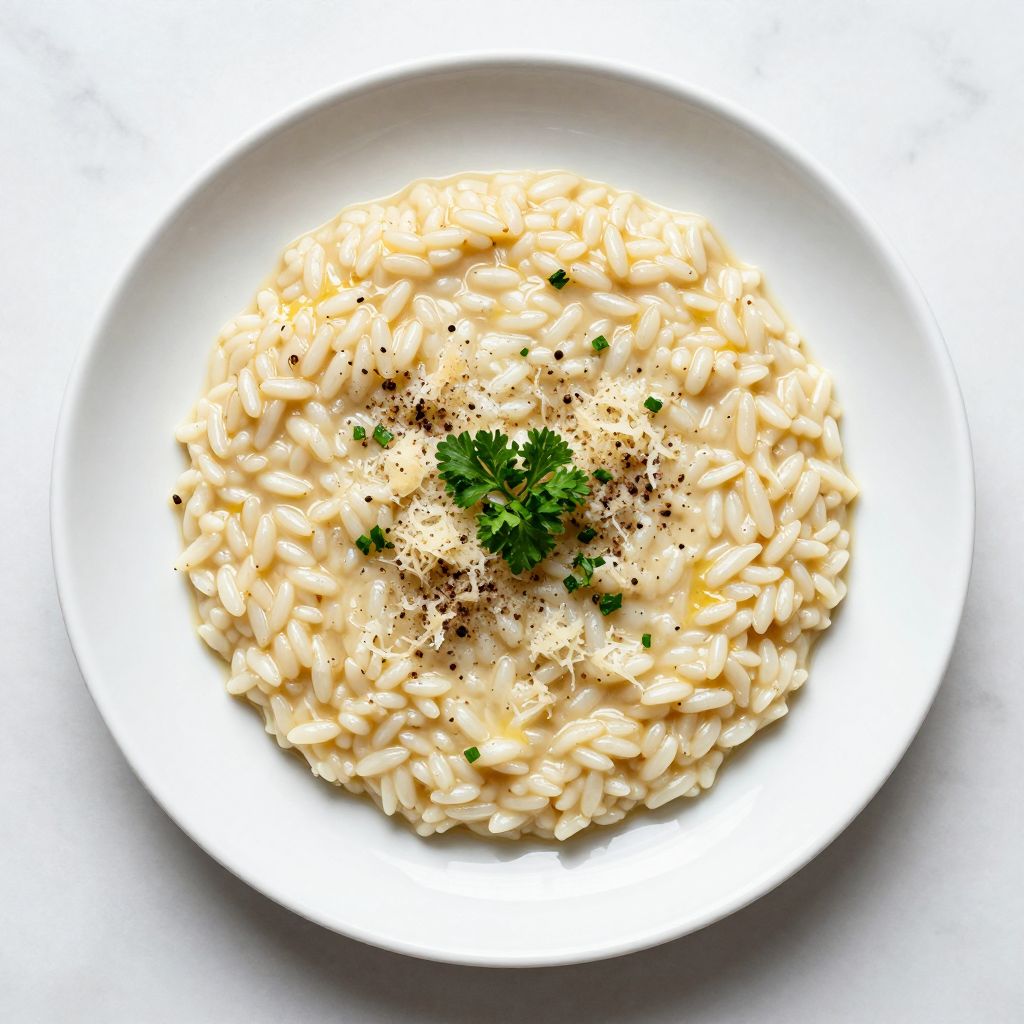
The risotto is ready when the rice grains are tender but still have a slight firmness in the center when you bite them, and the mixture flows like lava on the plate rather than sitting in a stiff mound. Taste a grain to check; it should be creamy, not crunchy or mushy.
Step 8: Finish with Butter and Cheese
Remove the pot from heat and stir in the remaining 2 tablespoons of butter and the freshly grated Parmesan cheese until everything is melted and combined. Season with salt and pepper to taste, stirring gently to incorporate everything without overdoing it.
Pro Tip: Never skip the final butter and cheese addition, called mantecatura in Italian cooking. This is the magic step that transforms risotto from good to luxurious and silky.
Tips for the Best Risotto Without Wine
- Stir frequently but not constantly. You want regular movement to release starches, but vigorous non-stop stirring breaks down the rice too much and creates gumminess.
- Keep your broth warm in a separate pot rather than using cold broth straight from the fridge. Temperature consistency prevents cooking disruption and ensures even texture.
- Use freshly grated Parmesan rather than pre-grated versions, which contain anti-caking agents that prevent proper melting and emulsifying with the rice.
- Taste the rice at the 20-minute mark to gauge doneness. Cooking times vary based on your stove, pot, and rice age, so timing is approximate.
- Serve risotto immediately to plates rather than holding it in the pot. It continues cooking from residual heat and can become thick and sticky if it sits.
- Don’t be afraid to add more broth if the risotto looks too thick. The consistency should be flowing, not stiff, on the plate.
Common Mistakes to Avoid
- Using cold broth instead of warm broth disrupts the cooking temperature and creates uneven texture. Always keep your broth at a gentle simmer in a separate pot.
- Rushing the process by adding all the broth at once creates mushy rice instead of the creamy, tender grains you’re after. Patience and gradual broth additions are non-negotiable.
- Skipping the final butter and cheese creates risotto that tastes flat and lacks that signature silky texture. These ingredients are essential, not optional.
- Using low-quality rice or long-grain varieties instead of Arborio produces a grainy dish instead of a creamy one. The starch content in short-grain rice is crucial to the recipe.
- Overcooking the rice past the al dente stage results in mushiness and loss of the pleasant slight firmness that defines great risotto. Bite test frequently in the final minutes.
Serving Suggestions
Risotto is rich and satisfying on its own but pairs beautifully with simple additions that don’t overpower its delicate, creamy nature.
- Top with fresh arugula and shaved Parmesan for brightness and peppery contrast
- Stir in roasted mushrooms and fresh thyme for earthy depth
- Add crispy pancetta bits and peas for a classic combination with textural contrast
- Serve alongside grilled asparagus or roasted vegetables for a lighter meal
- Top with a fried egg and black truffle for a luxurious restaurant-style finish
Variations to Try
- Mushroom Risotto: Saute 8 ounces of sliced mushrooms in the oil and butter before adding the onion, creating a deep, umami-rich version that tastes like the forest.
- Asparagus and Lemon Risotto: Add 1 cup of chopped asparagus during the final minutes of cooking and finish with the zest and juice of 1 lemon for bright, spring-like flavors.
- Roasted Red Pepper Risotto: Stir in 1 cup of roasted red peppers (jarred works fine) during the last few minutes of cooking for a slightly sweet, colorful variation.
- Seafood Risotto: Add shrimp or scallops during the final 2 to 3 minutes of cooking, just long enough for them to turn opaque and cook through without becoming rubbery.
- Butternut Squash Risotto: Use half vegetable broth and half roasted butternut squash puree for a creamy, slightly sweet autumn version that feels luxurious.
Dietary Adaptations
- Gluten-free: Risotto is naturally gluten-free since it uses rice instead of pasta. Just verify that your broth and any additions are certified gluten-free.
- Dairy-free: Replace the butter with olive oil and the Parmesan with nutritional yeast to create a dairy-free version, though the texture will be slightly less creamy and rich.
- Vegan: Use olive oil instead of butter and nutritional yeast instead of cheese, with vegetable broth instead of chicken broth, for a plant-based version that still tastes satisfying.
- Low-carb or Keto: Risotto is high in carbs due to the rice, but you can substitute cauliflower rice for a lower-carb option, though the texture and creaminess will differ significantly.
Storage and Reheating
Refrigerator
Store leftover risotto in an airtight container for up to 3 days. Risotto thickens as it cools, so it will be quite stiff when cold.
- Let the risotto sit at room temperature for 10 minutes before reheating
- Transfer to a pot and reheat over low heat, stirring frequently
- Add broth or water a little at a time to restore the creamy consistency
Freezer
Risotto freezes reasonably well for up to 2 months in an airtight container, though the texture becomes slightly grainier after thawing.
- Cool the risotto completely before freezing to avoid condensation
- Thaw in the refrigerator overnight before reheating
- Reheat gently and add extra broth to restore creaminess
Reheating
The best way to reheat risotto is slowly and gently on the stovetop rather than in the microwave, which can make it rubbery.
- Heat over low to medium-low heat, stirring frequently
- Add warm broth or water one ladle at a time until you reach the desired consistency
- If it still seems stiff, add a small pat of butter to restore creaminess and richness
Nutrition Information
| Nutrient | Amount |
|---|---|
| Calories | 385 |
| Total Fat | 18g |
| Saturated Fat | 8g |
| Carbohydrates | 48g |
| Fiber | 1g |
| Sugar | 2g |
| Protein | 9g |
| Sodium | 860mg |
| Cholesterol | 28mg |
This nutritional information is an estimate based on standard ingredient measurements. Values may vary depending on specific brands used and portion sizes served.
Risotto Without Wine
Ingredients
Equipment
Method
- Heat 4 cups of broth in a separate pot and maintain a gentle simmer over medium heat.
- In a large heavy-bottomed pot, melt 2 tablespoons of butter with 2 tablespoons of olive oil over medium heat.
- Add the diced onion and cook for 3 to 4 minutes until translucent, then stir in the minced garlic and cook for 30 seconds.
- Add 1.5 cups of Arborio rice and toast, stirring constantly, for 1 to 2 minutes until the edges become translucent and nutty in aroma.
- Pour in 1 cup of warm broth and cook, stirring frequently, until nearly all liquid is absorbed, about 3 to 4 minutes.
- Add the remaining broth in 1 cup increments, stirring frequently and waiting until liquid is mostly absorbed before each addition, for about 18 to 20 minutes total.
- Taste the rice to ensure it is creamy with a slight al dente bite; it should flow like lava on the plate.
- Remove from heat and stir in the remaining 2 tablespoons butter and 0.75 cups grated Parmesan until melted and combined, then season with salt and pepper.
- Garnish with fresh parsley if desired and serve immediately to preserve the creamy texture.
Notes
Frequently Asked Questions
Can I make risotto without Arborio rice?
You can use Carnaroli or Vialone Nano rice as substitutes, though they may cook slightly differently. Regular long-grain rice will not work well since it lacks the starch content needed for creaminess.
Can I make this risotto ahead of time?
You can prepare the aromatics and measure out ingredients several hours ahead, but risotto tastes best made fresh just before serving. If you must make it ahead, reheat gently with added broth to restore the creamy texture.
What should risotto look like when it’s done?
Finished risotto should flow slightly on the plate like lava, not sit in a stiff mound. The rice grains should be tender with a slight firmness in the center, never mushy or crunchy.
Why is my risotto coming out gummy or mushy?
This usually happens from adding too much broth, not stirring enough, or cooking the rice too long. Try reducing the total broth slightly, stir more frequently between broth additions, and taste the rice earlier to catch doneness.
Can I use vegetable broth instead of chicken broth?
Absolutely, vegetable broth creates a lighter risotto that works well for vegetarian meals or when you want the focus on other ingredients. Chicken broth adds more savory depth if you prefer a richer flavor.
Do I really need to use Parmesan cheese?
Parmesan is traditional and adds important nutty flavor and helps create the creamy emulsion, but you can use other hard Italian cheeses like Grana Padano or Pecorino Romano as alternatives. Skipping cheese entirely will noticeably change the flavor and texture.
Final Thoughts
Risotto without wine proves that you don’t need complicated ingredients to create something truly elegant and restaurant-quality. The simple combination of good rice, warm broth, butter, and cheese transforms into pure comfort through patience and attention.
Make this risotto this week, taste how creamy it becomes, and discover why this humble Italian dish has remained popular for centuries. Once you master the basic technique, you’ll find endless variations to explore and favorite toppings to add, making it a recipe that grows with your confidence and creativity.