
Picture a cozy evening with the warm aroma of corn whiskey wafting through your kitchen. Making your own Homemade Corn Whiskey is not just a fun project, but it also allows you to enjoy a rich, smooth drink that celebrates the heart of American tradition.
This recipe stands out because it combines simple ingredients with a straightforward process, making it accessible for anyone. The final product has a distinct sweetness and depth of flavor that store-bought brands just can’t match.
Why You’ll Love This Recipe
This homemade corn whiskey recipe will impress you and your friends. It’s a unique blend of flavors that you can customize to your liking.
- Rich, sweet flavor profile from the corn.
- Customizable to suit your taste preferences.
- Great for sharing or gifting.
- A fun way to explore traditional distilling methods.
- More affordable than many commercial whiskeys.
My Experience Making This Recipe
The first time I made this corn whiskey, I was amazed at how delightful the process was. The bubbling fermentation and the sweet scent of corn added a special touch to my kitchen.
When I finally tasted my creation, I was thrilled. It was smooth and warm, perfect for sipping or mixing into cocktails.
Recipe Overview
- Recipe Name: Homemade Corn Whiskey
- Servings: Varies
- Prep Time: 30 minutes
- Cook Time: 5-7 days (fermentation)
- Total Time: 1-2 weeks (including distillation)
- Course: Beverage
- Cuisine: American
- Calories per Serving: Varies
Equipment You Will Need
- Large pot
- Fermentation vessel with airlock
- Hydrometer
- Distillation apparatus
- Bottles for storage
- Thermometer
Ingredients for Homemade Corn Whiskey
- 6 lbs corn (cracked or whole)
- 1.5 lbs malted barley
- 5 gallons water
- 1 packet distillers yeast
Ingredient Notes and Substitutions
- Corn: This is the main ingredient, providing sweetness. You can use flaked corn if you prefer a quicker mash.
- Malted Barley: Adds enzymes for fermentation. You can substitute with malt extract in a pinch.
- Water: Use filtered water for better taste. Tap water can work, but avoid chlorinated varieties.
- Distillers Yeast: This yeast is specifically for spirits. Baking yeast can work but won’t provide the same flavor.
How to Make Homemade Corn Whiskey
Step 1: Prepare the Mash
Start by heating 5 gallons of water in a large pot to about 165°F. This temperature helps to gelatinize the corn starches, making them easier to ferment.
Step 2: Add the Corn
Add the cracked corn to the hot water and stir well. Let this mixture cool to around 150°F to allow the enzymes to work on the starches.
Step 3: Incorporate the Malted Barley
Once the mash cools, add the malted barley and mix thoroughly. The barley will provide enzymes that convert the starches into sugars, which yeast will ferment.
Step 4: Fermentation
Transfer the mash into your fermentation vessel. Seal it with the airlock and place it in a warm, dark location for about 5-7 days.
Step 5: Check Fermentation
After 5 days, use a hydrometer to check the specific gravity. This will tell you if fermentation is complete; it should read around 1.000.
Step 6: Distillation
Once fermentation is complete, it’s time to distill the mash. Pour the fermented mash into your distillation apparatus and heat slowly.
Step 7: Collect the Distillate
As the mash heats, collect the distillate that comes out. Discard the first few ounces, known as the “heads,” as they contain impurities.
Step 8: Bottle Your Whiskey
After collecting the desired amount, let the whiskey cool before bottling. Consider aging it in a charred oak barrel for added flavor.
Pro Tip: Always use clean equipment to avoid contamination during fermentation and distillation.
Tips for the Best Homemade Corn Whiskey
- Maintain a consistent fermentation temperature for best results.
- Experiment with different grains for unique flavor profiles.
- Always taste your whiskey at different stages to monitor flavor development.
- Consider aging your whiskey for smoother flavors.
- Don’t rush the distillation process; slow and steady wins the race!
Common Mistakes to Avoid
- Using chlorinated water can lead to off-flavors; always use filtered water.
- Rushing the fermentation process can result in a lower quality whiskey.
- Not cleaning equipment thoroughly can introduce unwanted bacteria.
- Overheating the mash during distillation can lead to burnt flavors.
Serving Suggestions
Homemade corn whiskey can be enjoyed in various ways. Here are some excellent pairing ideas.
- Serve neat to appreciate the full flavor.
- Mix into classic cocktails like an Old Fashioned.
- Use in marinades for meats to add depth.
- Pair with smoked meats for a delicious contrast.
- Enjoy alongside aged cheeses for a delightful tasting experience.
Variations to Try
- Try adding spices during fermentation for a spiced whiskey flavor.
- Incorporate fruit during distillation for a fruity twist.
- Use different types of grains, like rye or wheat, for varied sweetness.
- Experiment with barrel aging for different flavor profiles.
Dietary Adaptations
- This recipe is naturally gluten-free if using corn and gluten-free grains.
- Suitable for vegetarians and vegans, as it contains no animal products.
- Low-carb options can be explored by adjusting the sugar content of the mash.
Storage and Reheating
Refrigerator
Store your whiskey in a cool, dark place. It can last for years if sealed properly.
- Use airtight bottles to prevent oxidation.
- Avoid sunlight exposure to maintain quality.
Freezer
Whiskey can be stored in the freezer, but it’s not necessary. The alcohol content prevents it from freezing solid.
- Freezing can give a chilled effect but doesn’t change taste.
Reheating
Reheating whiskey is not recommended, as it alters the flavor. Enjoy it at room temperature or slightly chilled.
- Warm whiskey can be served in hot cocktails.
Nutrition Information
| Nutrient | Amount |
|---|---|
| Calories | 100 |
| Total Fat | 0g |
| Saturated Fat | 0g |
| Carbohydrates | 0g |
| Fiber | 0g |
| Sugar | 0g |
| Protein | 0g |
| Sodium | 0mg |
| Cholesterol | 0mg |
This nutritional information is approximate and can vary based on the ingredients and methods used.
Frequently Asked Questions
Can I use regular corn instead of cracked corn?
Yes, but cracked corn is preferable because it allows for better starch conversion.
How long can I store homemade whiskey?
Homemade whiskey can be stored for years if sealed properly and kept in a cool, dark place.
Can I make this recipe in smaller batches?
Absolutely! Just adjust the ingredient quantities accordingly.
What if my whiskey is too harsh?
Consider aging it longer to mellow the flavors, or try blending it with a smoother whiskey.
Is it legal to make whiskey at home?
Check local laws, as home distillation can be illegal in some areas without a license.
Final Thoughts
Making your own Homemade Corn Whiskey is a rewarding experience that connects you to tradition and creativity. With a little patience and practice, you’ll enjoy a unique spirit that truly reflects your flavor preferences.
So why not give it a try? And if you want to explore more whiskey recipes, check out this corn whiskey recipe or dive into a delightful bourbon mash recipe.
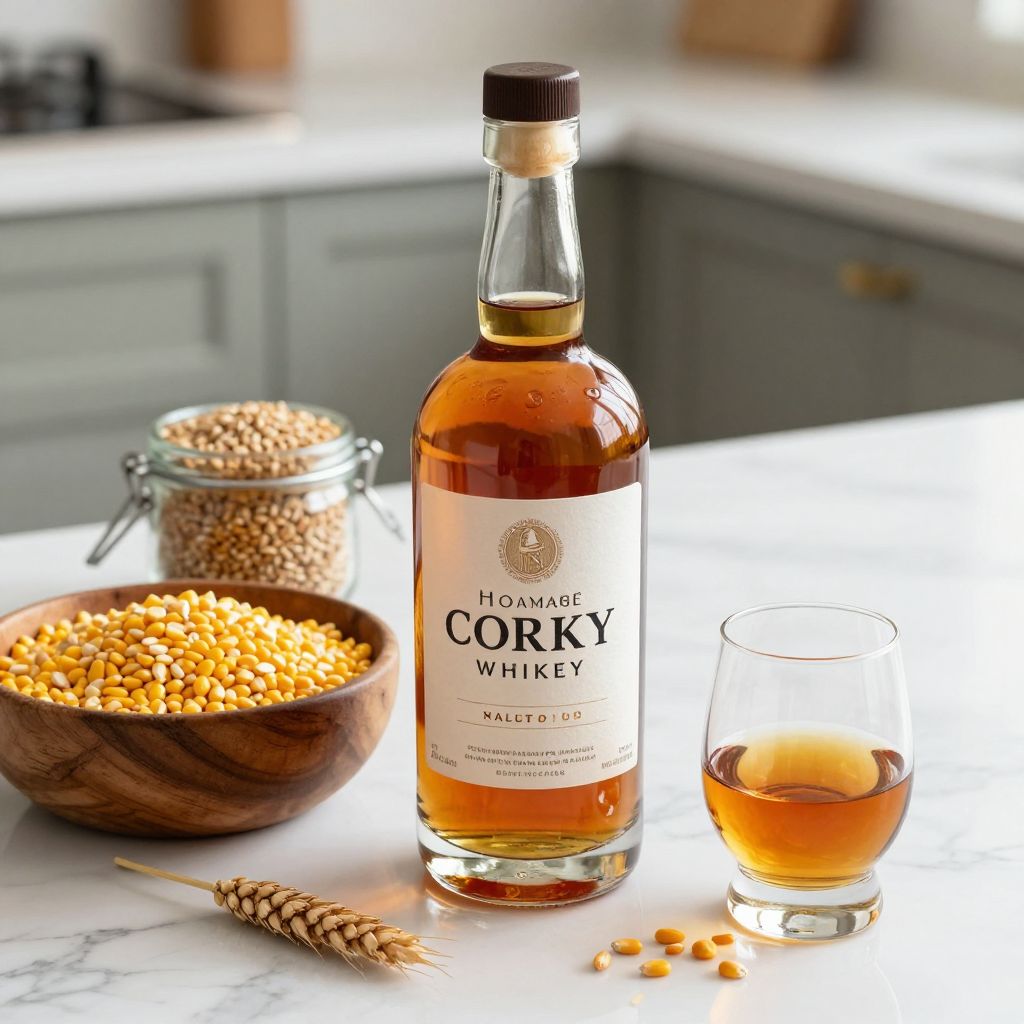
Homemade Corn Whiskey
Ingredients
Equipment
Method
- Start by heating 5 gallons of water in a large pot to about 165°F.
- Add the cracked corn to the hot water and stir well.
- Let the mixture cool to around 150°F.
- Once cool, add the malted barley and mix thoroughly.
- Transfer the mash into your fermentation vessel, seal it with the airlock, and place it in a warm, dark location for about 5-7 days.
- After 5 days, use a hydrometer to check the specific gravity; it should read around 1.000.
- Once fermentation is complete, pour the fermented mash into your distillation apparatus and heat slowly.
- Collect the distillate, discarding the first few ounces, known as the 'heads'.
- Let the whiskey cool before bottling.
- Consider aging it in a charred oak barrel for added flavor.