
The aroma of simmering spices fills your kitchen, and suddenly you’re transported to a bustling tea stall where chai masters brew magic in massive copper pots. Making chai concentrate at home gives you that same intoxicating smell without the crowds, and it’s far cheaper than buying pre-made versions.
This concentrate is a game-changer for busy mornings and impromptu tea gatherings. Mix it with milk and water, and you have café-quality chai in seconds, not the 20 minutes traditional brewing demands.
Why You’ll Love This Recipe
Homemade chai concentrate beats store-bought in flavor, cost, and customization. You control the spice intensity and sweetness, and you’ll actually taste real cardamom instead of generic “chai flavor.”
- Ready in under 30 minutes of active cooking time
- Makes enough for 8 to 10 cups of chai, stored in your fridge for two weeks
- Customizable spice levels to match your preference
- Costs half the price of bottled concentrate
- Works perfectly hot or cold, straight or mixed with milk alternatives
My Experience Making This Recipe
I first made this after visiting a friend’s family in Mumbai who showed me their grandmother’s method. I was skeptical that I could replicate those deep, layered spice notes at home.
The second time I brewed it, I nailed the balance. The kitchen smelled incredible, and my roommates kept asking what I was cooking because the aroma drew them from three rooms away.
Now I make a batch every two weeks. It’s become my secret weapon for hosting friends on Sunday mornings, and people always ask how my chai tastes so good.
Recipe Overview
- Recipe Name: Homemade Chai Concentrate
- Servings: Makes 8 to 10 servings (as concentrate)
- Prep Time: 10 minutes
- Cook Time: 20 minutes
- Total Time: 30 minutes
- Course: Beverages
- Cuisine: Indian
- Calories per Serving: 45 (concentrate only; varies with milk and sweetener added)
Equipment You Will Need
- Medium saucepan with a lid
- Fine mesh strainer or cheesecloth
- Wooden spoon for stirring
- Measuring spoons and cups
- Glass storage bottle or jar
- Mortar and pestle (optional but recommended for crushing spices)
Ingredients for Chai Concentrate
- Water: 2 cups
- Black tea bags: 4 strong-brew bags (or 3 tablespoons loose black tea)
- Cardamom pods: 6 to 8, lightly crushed
- Cinnamon stick: 1 piece, about 2 inches long, broken into pieces
- Cloves: 5 to 6 whole cloves
- Black peppercorns: 6 to 8
- Fresh ginger: 1-inch piece, peeled and lightly crushed
- Sugar: 1/4 cup (or to taste)
- Salt: 1 small pinch
Ingredient Notes and Substitutions
- Black tea: Strong black tea (Assam or Ceylon work best) provides the body and tannins that balance spices. You can swap for strong oolong, but the flavor will be lighter and more floral.
- Cardamom pods: Green cardamom creates the signature warm sweetness of chai. Black cardamom tastes smoky and bitter, so use it only if you prefer a darker flavor profile.
- Cinnamon: Ceylon cinnamon has a delicate sweetness, while cassia cinnamon tastes bolder and slightly spicy. Use what you have, but expect slightly different heat levels.
- Fresh ginger: Fresh ginger adds bright spice and aids digestion. Ground ginger can substitute at half the amount, though the flavor becomes more muted and less aromatic.
- Sugar: White sugar dissolves cleanly, but brown sugar or jaggery adds molasses depth. Reduce to 3 tablespoons if using jaggery, as it’s sweeter.
How to Make Chai Concentrate
Step 1: Crush Your Spices
Lightly crack the cardamom pods by pressing them with the flat side of a knife or your mortar and pestle. You want them split open, not pulverized, so the flavors release gradually during brewing.
Break the cinnamon stick into 2 or 3 pieces and leave the peppercorns and cloves whole. This texture prevents sediment in your final concentrate.
Step 2: Toast the Spices (Optional but Recommended)
Add the crushed cardamom, cinnamon, cloves, and peppercorns to a dry saucepan over medium heat for 1 to 2 minutes, stirring constantly. Toasting releases the oils and deepens the flavors without adding bitterness.
Stop as soon as the spices become fragrant and darken slightly. Overdoing it will burn them and create harshness in your concentrate.
Step 3: Add Water and Ginger
Pour 2 cups of water into the saucepan with the toasted spices. Add the crushed ginger piece and bring everything to a boil over high heat.
The water will take 3 to 4 minutes to reach a rolling boil. Watch it carefully so you can move to the next step quickly once it boils.
Step 4: Simmer the Spice Base
Once boiling, reduce the heat to medium-low and let the spiced water simmer uncovered for 5 minutes. This timing allows the spices to infuse without becoming overly bitter.
You’ll see the water darken slightly and smell the complex spice aroma developing. If you prefer stronger spice notes, simmer for 7 minutes instead.
Step 5: Add the Black Tea
Remove the saucepan from heat and add 4 strong-brew tea bags (or 3 tablespoons of loose black tea). Stir gently to submerge the tea bags, then cover the saucepan with a lid and let it steep for 3 to 4 minutes.
Steeping off heat prevents over-extraction, which would make the tea bitter and astringent. The residual heat is enough to draw out the tea’s body and flavor.
Step 6: Sweeten and Season
Add 1/4 cup sugar and a small pinch of salt to the hot tea mixture. Stir constantly for 30 seconds until the sugar dissolves completely.
The salt enhances the spice complexity and rounds out the sweetness without making the concentrate taste salty. If you prefer less sweetness, add 2 tablespoons initially and taste after straining.
Step 7: Strain the Concentrate
Pour the mixture through a fine mesh strainer lined with cheesecloth into a clean bowl or measuring cup. Press gently on the solids with the back of a spoon to extract any remaining liquid, but don’t squeeze aggressively or you’ll push particles through the strainer.
Discard the spices, ginger, and tea bags. Your concentrate should be a deep amber color and smell richly aromatic.
Step 8: Cool and Store
Let the concentrate cool to room temperature, about 15 minutes, before transferring it to a glass bottle or jar. Cool concentrate prevents condensation inside the jar, which can promote mold growth.
Once cooled, cap the jar tightly and refrigerate immediately. Your chai concentrate is now ready to use whenever you want fresh chai.
Pro Tip: Toast your whole spices in a dry pan before simmering for deeper, more complex flavor that makes store-bought concentrate taste flat by comparison.
Tips for the Best Chai Concentrate
- Use fresh spices less than six months old. Old cardamom loses its aromatic oils and tastes musty, which ruins the concentrate’s brightness.
- Don’t skip crushing the cardamom pods. Whole pods release flavor too slowly, leaving you with weak chai.
- Taste the concentrate before storing it. If it needs more sweetness, stir in an extra tablespoon of sugar while still warm.
- Make multiple batches and freeze half in ice cube trays. Pop out a cube when you want a single serving of chai without opening a jar.
- Adjust the water amount based on how concentrated you want the final drink. Use 1.5 cups for a bolder concentrate, 2.5 cups for a lighter one.
- Store in glass, not plastic. Plastic absorbs spice oils and can leach chemicals when exposed to warm concentrate.
Common Mistakes to Avoid
- Boiling the tea too long: Over-steeping black tea creates tannins that taste astringent and bitter, overpowering the spices. Stick to 3 to 4 minutes off heat.
- Skipping the pinch of salt: It seems random, but salt is essential to enhancing spice depth and balancing sweetness. Without it, chai tastes one-dimensional.
- Using pre-ground spices: Ground cardamom, cinnamon, and cloves lose potency within weeks. Whole spices hold flavor for months and create a noticeably better concentrate.
- Straining too aggressively: Pushing hard on the solids pushes fine particles and debris through the strainer, creating a gritty concentrate that feels chalky in your mouth.
- Adding milk to the concentrate before storing: Milk shortens shelf life significantly and can curdle during storage. Add it only when serving.
Serving Suggestions
Pour 1/4 cup of chai concentrate into a mug, add 1/2 cup hot water and 1/4 cup milk (dairy or non-dairy), and stir well. Adjust the ratio to your preference: more concentrate for stronger chai, more milk for creamier chai.
- Classic hot chai with whole milk and a drizzle of honey
- Iced chai latte with almond milk and vanilla extract
- Chai concentrate mixed with steamed milk for a creamy beverage
- Chai concentrate stirred into Greek yogurt with granola for a spiced breakfast bowl
- Chai concentrate used as a marinade base for roasted chicken or vegetables
Variations to Try
- Ginger-Forward Chai: Increase ginger to a 1.5-inch piece for a spicier, more peppery concentrate that wakes up sleepy mornings. This version pairs beautifully with coconut milk.
- Smoky Chai: Add 2 to 3 black cardamom pods alongside green cardamom for a deeper, almost woody flavor. The smokiness complements dark roast coffee creamer perfectly.
- Vanilla Chai: Add 1/2 teaspoon vanilla extract after steeping but before straining. This creates a sweeter, dessert-like concentrate ideal for serving to guests.
- Fennel-Spiced Chai: Add 1/2 teaspoon fennel seeds to the spice blend for a subtle anise note that pairs well with cardamom. This version tastes more refined and less heavy.
- Low-Sugar Chai: Reduce sugar to 2 tablespoons and use a sugar substitute like monk fruit or stevia if desired. The concentrate will taste more balanced toward spice rather than sweetness.
Dietary Adaptations
- Gluten-Free: This concentrate is naturally gluten-free if you use certified gluten-free black tea and check that spices haven’t been processed on shared equipment. No changes needed to the recipe.
- Dairy-Free: The concentrate itself contains no dairy. Use oat, almond, coconut, or soy milk when serving instead of regular milk. Oat milk creates the creamiest texture.
- Vegan: The concentrate is entirely plant-based. Substitute agave or maple syrup for sugar if desired, using the same amount for similar sweetness.
- Low-Carb/Keto: Use a zero-calorie sweetener like erythritol or stevia instead of sugar. The concentrate will taste slightly different, but mixing it with full-fat cream creates a satisfying, low-carb beverage.
Storage and Reheating
Refrigerator
Store chai concentrate in an airtight glass jar in the coldest part of your fridge, away from the door where temperature fluctuates. Properly stored concentrate lasts two to three weeks.
- Check for off odors or mold before using after 2 weeks
- Stir well before each use, as some settling is normal
Freezer
Freeze concentrate in ice cube trays for convenient single-serving portions. Once frozen solid (about 4 hours), pop the cubes into a freezer bag and store for up to three months.
- Each cube equals approximately one serving of concentrate
- Thaw cubes in the microwave or let them melt into hot water naturally
Reheating
For hot chai, simply pour concentrate into a mug with hot water and milk. No reheating of the concentrate itself is needed.
- Warm the concentrate gently in a saucepan if it’s been refrigerated and you prefer serving it warm
- Never boil the concentrate, as heat can dull the spice aromatics
Nutrition Information
| Nutrient | Amount |
|---|---|
| Calories | 45 |
| Total Fat | 0 g |
| Saturated Fat | 0 g |
| Carbohydrates | 11 g |
| Fiber | 0 g |
| Sugar | 11 g |
| Protein | 0 g |
| Sodium | 10 mg |
| Cholesterol | 0 mg |
This nutrition data reflects the concentrate alone without added milk or water. When you mix 1/4 cup concentrate with 1/2 cup water and 1/4 cup whole milk, the final beverage contains approximately 70 calories and 2 grams of fat.
Frequently Asked Questions
Can I make chai concentrate without sugar?
Yes, you can omit sugar entirely or add it to taste when serving instead of during cooking. The concentrate will taste more herbal and spice-forward without sweetness, which some people prefer.
How far in advance can I make chai concentrate?
Make it up to two days ahead and store it covered in the fridge. The flavors actually develop slightly as it sits, making day-old concentrate taste richer than fresh.
What should I do if my concentrate tastes too strong or too weak?
If too strong, dilute it by stirring in a tablespoon of water at a time. If too weak, you can simmer the concentrate gently in a saucepan for 5 minutes to reduce it and concentrate the flavors.
Can I use this concentrate in baking or cooking?
Absolutely. Chai concentrate works beautifully in chai lattes, oatmeal, yogurt, smoothies, and even as a glaze for roasted vegetables or chicken. Use 1 to 2 tablespoons per serving and adjust sweetness as needed.
Why does my concentrate look cloudy?
Cloudiness usually comes from fine particles that slipped through the strainer. It won’t affect taste, but if you want crystal-clear concentrate, strain it again through a coffee filter or very fine cheesecloth.
Can I use herbal tea instead of black tea?
You can, but the result will taste lighter and less rich. Rooibos or redbush tea creates a naturally sweet chai concentrate, while chamomile makes it more delicate and floral.
Final Thoughts
Making chai concentrate at home feels indulgent but takes less effort than ordering takeout coffee. Once you taste the difference between homemade and store-bought, you’ll never go back to waiting in line for a cup.
Start with this basic recipe and adjust the spice ratios to match your taste. Whether you like yours strong and spicy or creamy and sweet, you now have the tools to make the perfect cup every single time.
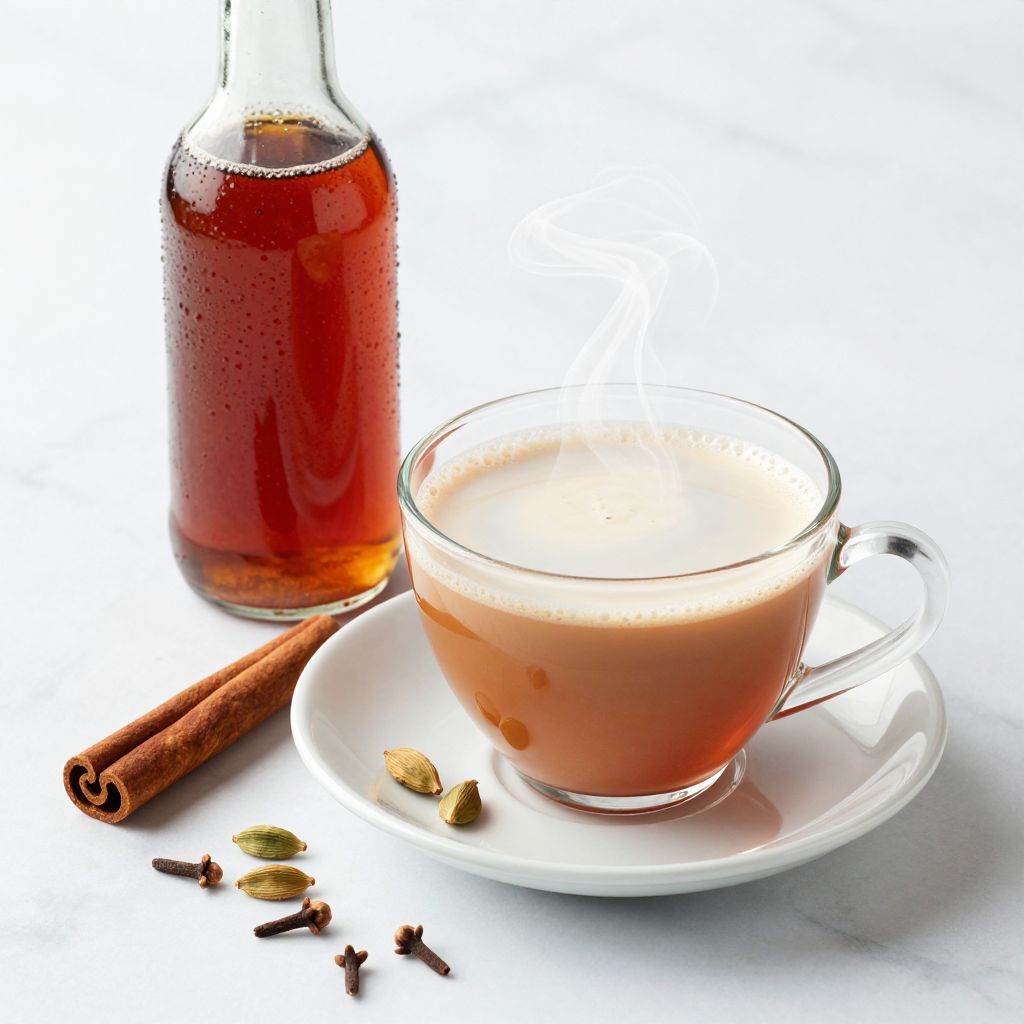
Homemade Chai Concentrate
Ingredients
Equipment
Method
- Lightly crack the cardamom pods by pressing them with the flat side of a knife or your mortar and pestle. Break the cinnamon stick into 2 or 3 pieces and leave the peppercorns and cloves whole.
- Add the crushed cardamom, cinnamon, cloves, and peppercorns to a dry saucepan over medium heat for 1 to 2 minutes, stirring constantly, until fragrant and slightly darkened.
- Pour 2 cups of water into the saucepan with the toasted spices. Add the crushed ginger piece and bring everything to a boil over high heat, about 3 to 4 minutes.
- Once boiling, reduce the heat to medium-low and let the spiced water simmer uncovered for 5 minutes to allow the spices to infuse.
- Remove the saucepan from heat and add 4 strong-brew tea bags (or 3 tablespoons of loose black tea). Stir gently to submerge the tea bags, then cover the saucepan with a lid and let it steep for 3 to 4 minutes.
- Add 1/4 cup sugar and a small pinch of salt to the hot tea mixture. Stir constantly for 30 seconds until the sugar dissolves completely.
- Pour the mixture through a fine mesh strainer lined with cheesecloth into a clean bowl or measuring cup. Press gently on the solids with the back of a spoon to extract any remaining liquid. Discard the spices, ginger, and tea bags.
- Let the concentrate cool to room temperature, about 15 minutes, before transferring it to a glass bottle or jar. Once cooled, cap the jar tightly and refrigerate immediately.
- To serve, pour 1/4 cup of chai concentrate into a mug, add 1/2 cup hot water and 1/4 cup milk (dairy or non-dairy), and stir well.