
There’s something almost magical about the warm almond sweetness of amaretto hitting your palate on a cold evening. Whether you’re sipping it straight, mixing it into coffee, or baking it into something decadent, homemade amaretto tastes like a gift you made yourself.
Making amaretto at home is far simpler than you’d expect, and the payoff is huge: you control the sweetness, the almond intensity, and the smoothness. Store-bought versions often taste thin or overly artificial, but this version builds a rich, authentic flavor that makes cocktails taste like they came from a proper bar.
Why You’ll Love This Recipe
Homemade amaretto beats commercial versions in every meaningful way. You’ll spend less than ten minutes of hands-on time and end up with something genuinely special.
- Rich, authentic almond flavor that actually tastes like almonds, not artificial extract
- Naturally sweetened without the cloying aftertaste of mass-produced liqueurs
- Perfect for sipping, baking, or crafting cocktails at home
- Costs a fraction of premium bottles while tasting significantly better
- Makes an impressive homemade gift for food lovers
My Experience Making This Recipe
I first made amaretto by accident, trying to use up some brandy and almond extract gathering dust in my pantry. The first batch took maybe fifteen minutes total, and I couldn’t believe how smooth and sophisticated it tasted after just one week of sitting in a jar.
My partner tried it blind against a thirty-dollar bottle we’d picked up in Italy, and honestly, mine held its own. The difference is the almond paste and whole almonds, which create a deeper, more complex flavor than extract alone ever could.
Now I make a fresh batch every few months and keep small bottles on hand for gifts. People always ask where I bought it, which never gets old.
Recipe Overview
- Recipe Name: Homemade Amaretto Liqueur
- Servings: Makes about 1 quart (32 ounces)
- Prep Time: 10 minutes
- Infusion Time: 7 to 14 days
- Total Time: 2 weeks
- Course: Beverages
- Cuisine: Italian-Inspired
- Calories per Serving: 85 calories (per 1-ounce shot)
Equipment You Will Need
- One quart-sized glass jar with a tight-fitting lid
- Measuring cups and spoons
- Wooden spoon for stirring
- Fine mesh strainer or cheesecloth
- Coffee filters
- Bottles for storage (optional but nice)
- Funnel (optional but helpful)
Ingredients for Homemade Amaretto
- 2 cups brandy (or cognac for a smoother finish)
- 1 cup whole raw almonds
- 1/2 cup almond paste (unsweetened, from a jar or homemade)
- 3/4 cup sugar
- 1/2 cup water
- 1 teaspoon almond extract
- 1/4 teaspoon vanilla extract
- Pinch of salt
Ingredient Notes and Substitutions
- Brandy provides the alcohol base and warm oak notes that round out the almond flavor; if you prefer something lighter, use vodka (though the result will taste less sophisticated and take longer to mellow).
- Whole raw almonds release oils and flavor during infusion; blanched almonds work too but deliver less depth (roasted almonds add bitterness, so skip them).
- Almond paste is non-negotiable for authentic flavor and body; it cannot be swapped for marzipan, which contains too much sugar and will throw off the recipe’s balance.
- Sugar creates the syrup base and balances the raw almond bite; honey or agave can substitute one-to-one but will shift the flavor profile slightly and extend infusion time.
- Almond extract amplifies the almond character; if you only have pure extract on hand, use just 1/2 teaspoon to avoid an overpowering taste.
How to Make Homemade Amaretto
Step 1: Toast the Almonds
Spread the whole almonds on a dry skillet over medium heat and toast for about 3 to 4 minutes, stirring occasionally, until they smell deeply fragrant and turn light golden. Toasting releases the almonds’ oils and deepens their flavor, making the final liqueur taste roasted and rich rather than flat and raw.
Step 2: Crush the Toasted Almonds
Once the almonds cool slightly, coarsely crush them using a rolling pin or the bottom of a heavy glass. You want chunky pieces, not a fine powder, so the almond pieces can release flavor gradually during infusion without turning the liqueur grainy or bitter.
Step 3: Combine Almonds and Brandy
Pour the brandy into your clean quart jar and add the crushed almonds. Stir well, then cover the jar tightly and place it in a cool, dark cabinet away from direct sunlight.
Step 4: Infuse for One Week
Let the mixture sit undisturbed for 7 days, then shake the jar gently once a day for the next week. The brandy will gradually turn amber and smell intensely of almonds as the oils infuse into the alcohol.
Step 5: Make the Simple Syrup
In a small saucepan, combine the water and sugar over medium heat, stirring until the sugar dissolves completely. Once the mixture clears and reaches a gentle simmer, remove it from heat immediately and let it cool to room temperature (about 20 minutes).
Step 6: Prepare the Almond Paste Mixture
In a small bowl, whisk together the almond paste, almond extract, vanilla extract, and salt until smooth. This prevents clumps from forming when you add it to the liqueur.
Step 7: Strain the Infused Brandy
Pour the brandy through a fine mesh strainer lined with cheesecloth into a clean jar, catching the strained almonds in the cloth. Discard the spent almonds and reserve the infused brandy.
Step 8: Combine All Components
Pour the cooled simple syrup and the almond paste mixture into the strained brandy, stirring well until fully combined. The liqueur will look slightly cloudy at first, which is completely normal.
Step 9: Final Strain and Clarify
Pour the mixture through coffee filters into clean bottles or jars, allowing it to drip slowly (this takes patience but creates a crystal-clear final product). Seal the bottles tightly and store in a cool, dark place for at least one week before drinking, though two weeks yields smoother results.
Pro Tip: If your finished amaretto looks cloudy after a week, strain it again through fresh coffee filters; patience here pays off in clarity and professional appearance.
Tips for the Best Homemade Amaretto
- Use a high-quality brandy or cognac if you plan to sip the amaretto straight; cheaper brandy works fine for baking or cocktails but affects the final smoothness.
- Toast your almonds just until fragrant, not dark brown, to avoid a bitter, burnt taste that will ruin the entire batch.
- Keep the jar in a consistently cool place throughout infusion; temperature fluctuations can cause cloudiness or separation.
- Label your jar with the date so you remember when infusion started and can track readiness accurately.
- Shake or gently stir the jar every few days during the second week to ensure even flavor distribution throughout the liquid.
- Taste a small sample after one week of infusion; if the almond flavor feels weak, leave it another week (batches vary based on almond quality).
Common Mistakes to Avoid
- Over-toasting the almonds creates a burnt, acrid flavor that cannot be fixed; stop toasting the moment they smell toasty and golden, not dark or scorched.
- Skipping the simple syrup step leaves the liqueur too boozy and sharp; the syrup rounds everything out and creates proper balance.
- Using sweetened almond paste instead of unsweetened throws off the sugar ratio and makes the final product cloying; check the label carefully.
- Rushing the infusion by only waiting a few days results in weak, thin flavor; the full two weeks genuinely matters for depth.
- Storing the jar near a window or warm cabinet causes the alcohol to break down prematurely and flavors to degrade; dark and cool is non-negotiable.
Serving Suggestions
Amaretto shines in countless ways, from sipped neat over ice to stirred into coffee or cocktails. Its rich sweetness balances beautifully with citrus, chocolate, and cream.
- Serve neat or over a large ice cube as an after-dinner sipper
- Add a splash to hot coffee with a dollop of whipped cream for an instant dessert
- Mix into classic cocktails like the Amaretto Sour or Italian Margarita
- Drizzle over vanilla ice cream or pound cake for simple elegance
- Stir into almond-flavored cocktails or use as a base for creamy liqueur drinks
Variations to Try
- Chocolate Amaretto: Add 1 ounce of cocoa powder whisked into the almond paste mixture for a sophisticated chocolate-almond blend that tastes like luxury in a glass.
- Spiced Amaretto: Toast 2 to 3 whole cloves and a small cinnamon stick with the almonds for subtle warmth and complexity.
- Coffee Amaretto: Add 1 tablespoon of instant espresso powder to the simple syrup while it’s still hot, then proceed as normal for a rich coffee-almond fusion.
- Vanilla Bean Amaretto: Replace vanilla extract with half of a split vanilla bean steeped in the brandy alongside the almonds for deeper, more authentic vanilla notes.
- Apricot Amaretto: Add 1/4 cup of dried apricots (chopped) during the brandy infusion for subtle stone-fruit sweetness that enhances the almond character.
Dietary Adaptations
- Gluten-free: This recipe is naturally gluten-free, but verify your brandy is certified gluten-free if that matters for your household.
- Dairy-free: The base recipe contains no dairy; simply serve it neat or with non-dairy milk in coffee.
- Vegan: Amaretto is vegan by nature since it’s a plant-based liqueur made from almonds and sugar.
- Low-carb/Keto: Each 1-ounce shot contains about 3 grams of net carbs, making it keto-compatible in moderation; skip the sweetened cocktail variations.
Storage and Reheating
Refrigerator
Store amaretto in a sealed glass bottle in the fridge for up to one year. The cold slows oxidation and keeps the flavor fresh and bright.
- Use dark glass bottles to block light exposure
- Keep away from the refrigerator door where temperature fluctuates
- Shake gently before serving if any separation appears
Freezer
Amaretto can be frozen in airtight bottles for up to two years without affecting quality. The alcohol content prevents actual freezing, so it pours easily from the freezer.
- Leave about an inch of headspace to prevent the bottle from cracking
- Frozen amaretto tastes excellent served straight as a sipping liqueur
Reheating
Amaretto does not require reheating, but you can warm it slightly for hot cocktails or hot chocolate by gently heating it in a small saucepan over low heat. Never boil it, as this burns off the delicate almond notes.
Nutrition Information
| Nutrient | Amount |
|---|---|
| Calories | 85 |
| Total Fat | 0 g |
| Saturated Fat | 0 g |
| Carbohydrates | 9 g |
| Fiber | 0 g |
| Sugar | 8 g |
| Protein | 0 g |
| Sodium | 15 mg |
| Cholesterol | 0 mg |
Nutrition values are approximate and based on a 1-ounce serving of finished liqueur. Actual values vary slightly based on brandy brand and almond paste quality.
Frequently Asked Questions
Can I use almond extract instead of almond paste?
Almond extract alone produces a thin, artificial-tasting liqueur. The paste adds body, texture, and authentic depth that extract cannot achieve; they serve different purposes in the recipe.
How long does homemade amaretto last?
Properly stored in a sealed glass bottle away from light and heat, amaretto lasts at least one year and often much longer. The high alcohol content preserves it naturally.
Can I make this with vodka instead of brandy?
Yes, but the result tastes cleaner and less sophisticated; vodka lacks the warm oak and caramel notes that brandy contributes. If cost matters more than depth, vodka works fine for mixing into cocktails.
Why is my amaretto cloudy after straining?
Cloudiness comes from tiny almond particles or emulsified oils. Strain it again through fresh coffee filters and allow several days for complete clarification in a cool, dark place.
Can I speed up the infusion time?
Infusion time cannot be rushed without sacrificing flavor; the almonds need time to fully release their oils into the alcohol. Two weeks is the minimum for proper taste development.
Is homemade amaretto safe to drink?
Yes, absolutely. The alcohol content prevents bacterial growth, and using clean jars and equipment ensures safety. As long as you follow the recipe, your amaretto is perfectly safe.
Final Thoughts
Making homemade amaretto transforms a simple pantry of ingredients into something genuinely special. The process takes almost no active time, and the results blow commercial liqueurs out of the water in every way that matters.
Try this recipe and taste the difference real almonds and patience make. Once you’ve made it once, you’ll find yourself making it regularly just to keep a bottle on hand for coffee, cocktails, or sharing with people who appreciate the finer things.
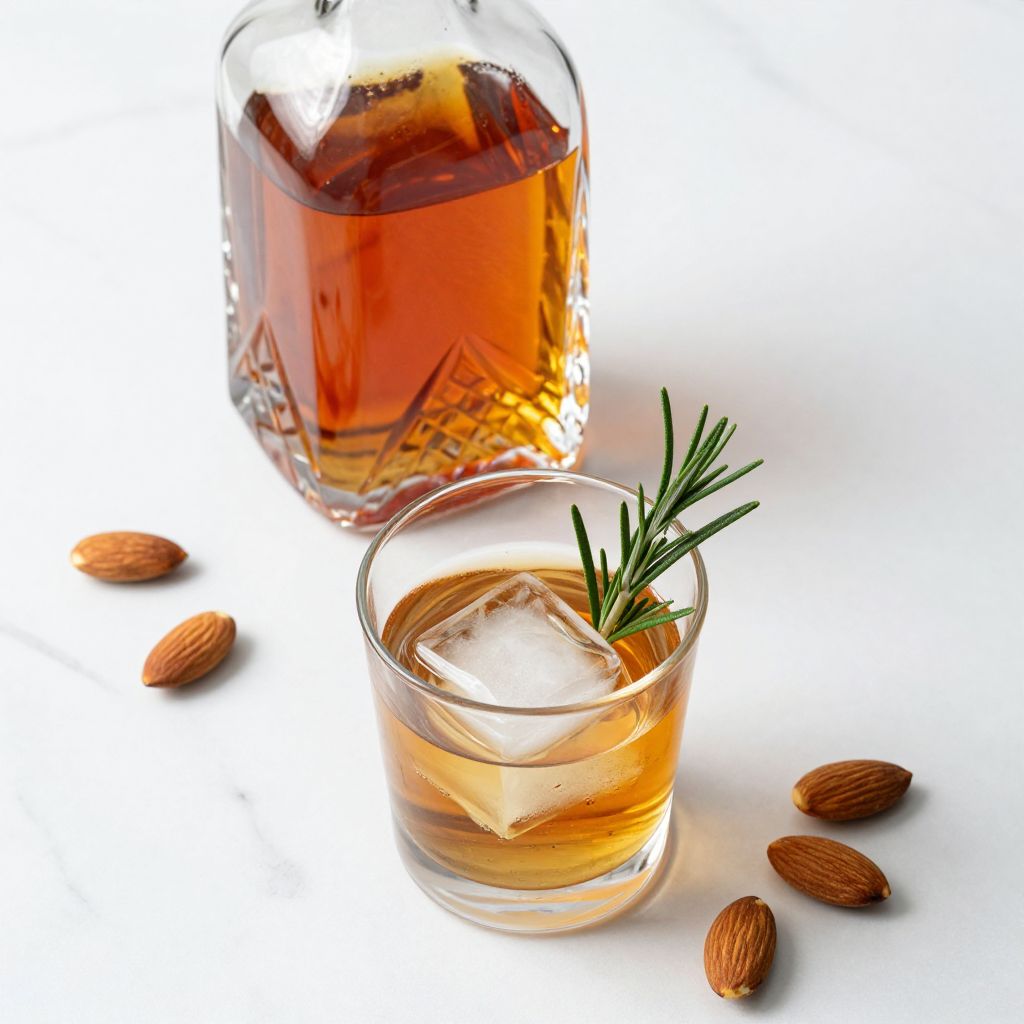
Homemade Amaretto Liqueur
Ingredients
Equipment
Method
- Spread the whole almonds on a dry skillet over medium heat and toast for about 3 to 4 minutes, stirring occasionally, until they smell deeply fragrant and turn light golden.
- Once the almonds cool slightly, coarsely crush them using a rolling pin or the bottom of a heavy glass. You want chunky pieces, not a fine powder.
- Pour the brandy into your clean quart jar and add the crushed almonds. Stir well, then cover the jar tightly and place it in a cool, dark cabinet away from direct sunlight.
- Let the mixture sit undisturbed for 7 days, then shake the jar gently once a day for the next week. The brandy will gradually turn amber and smell intensely of almonds.
- In a small saucepan, combine the water and sugar over medium heat, stirring until the sugar dissolves completely. Once the mixture clears and reaches a gentle simmer, remove it from heat immediately and let it cool to room temperature (about 20 minutes).
- In a small bowl, whisk together the almond paste, almond extract, vanilla extract, and salt until smooth.
- Pour the brandy through a fine mesh strainer lined with cheesecloth into a clean jar, catching the strained almonds in the cloth. Discard the spent almonds and reserve the infused brandy.
- Pour the cooled simple syrup and the almond paste mixture into the strained brandy, stirring well until fully combined.
- Pour the mixture through coffee filters into clean bottles or jars, allowing it to drip slowly. Seal the bottles tightly and store in a cool, dark place for at least one week before drinking, though two weeks yields smoother results.