
The smell of fresh tomatoes simmering on the stove is one of those kitchen moments that makes you feel like you actually know what you’re doing.
Making homemade tomato juice is simpler than you’d think, and the flavor difference between fresh-squeezed and store-bought is honestly night and day. This recipe takes ripe tomatoes and transforms them into a smooth, vibrant juice that tastes clean, bright, and nothing like the tinny canned stuff gathering dust in your pantry.
Whether you’re building a killer Bloody Mary, starting your morning with pure tomato goodness, or using it as a cooking base for soups and sauces, this recipe delivers every single time. Best part: you probably already have most of what you need at home.
Why You’ll Love This Recipe
Homemade tomato juice puts store-bought versions to shame with its fresh flavor and ingredient control. You’ll know exactly what went into your glass, and you can tweak the seasoning to match your mood.
- Ready in under 30 minutes from start to finish
- Works with whatever tomatoes you have on hand: heirloom, Roma, beefsteak, or garden-fresh
- Freezer-friendly for batch cooking and longer storage
- Perfect base for cocktails, cooking, or drinking straight
- Naturally vegan, gluten-free, and packed with lycopene and vitamin C
My Experience Making This Recipe
I first made this juice on a late summer afternoon when I had a ridiculous pile of tomatoes from a friend’s garden and absolutely no idea what to do with them all. The first batch was messy, honestly, but the moment I tasted that fresh juice over ice, I was sold.
Since then, I’ve made it dozens of times with different tomato varieties and seasonings. The red ones always turn out smoother and sweeter, while the green tomatoes bring a tangy bite that feels surprisingly sophisticated. My friends now request bottles of it when they know tomato season is happening.
What really surprised me was how forgiving this recipe is. You don’t need fancy equipment or perfect tomatoes. I’ve used overripe ones, slightly underripe ones, and everything in between. They all made delicious juice.
Recipe Overview
- Recipe Name: Homemade Tomato Juice
- Servings: 4 servings (about 4 cups)
- Prep Time: 10 minutes
- Cook Time: 15 minutes
- Total Time: 25 minutes
- Course: Beverage
- Cuisine: American
- Calories per Serving: 35 calories
Equipment You Will Need
- Large pot (6-quart minimum)
- Cutting board and sharp chef’s knife
- Wooden spoon or silicone spatula
- Fine-mesh strainer or cheesecloth-lined colander
- Blender or food mill (optional but recommended)
- Glass jars or bottles for storage
- Mesh skimmer or slotted spoon
- Measuring spoons and cup
Ingredients for Homemade Tomato Juice
- 3 pounds fresh ripe tomatoes (Roma, heirloom, or beefsteak varieties work best)
- 1 teaspoon sea salt (adjust to taste)
- 1/2 teaspoon black pepper (freshly ground)
- 1/4 teaspoon garlic powder (optional)
- 1/4 teaspoon onion powder (optional)
- 1 tablespoon fresh lemon juice (or lime juice)
- 2 cups water (for simmering)
- Fresh basil leaves or celery leaves (optional garnish)
Ingredient Notes and Substitutions
- Fresh ripe tomatoes: The foundation of this juice, they provide natural sweetness and vibrant color. If fresh tomatoes aren’t available, use 2 cans of high-quality crushed tomatoes as a backup, though fresh always tastes better.
- Sea salt: Brings out the tomato flavor and balances acidity. Kosher salt works just as well at the same measurement.
- Black pepper: Adds subtle heat and depth without overpowering the tomato taste. White pepper gives a milder flavor if you prefer.
- Lemon juice: Brightens the juice and prevents oxidation while adding freshness. Fresh lime juice creates a different but equally delicious flavor profile.
- Garlic powder and onion powder: These add savory depth for a more complex juice. Skip them entirely if you prefer pure tomato flavor, or use fresh minced garlic and onion instead.
How to Make Homemade Tomato Juice
Step 1: Prepare Your Tomatoes
Rinse your tomatoes under cool running water and pat them dry completely. This removes any dirt or residue and helps them break down more evenly during cooking.
Step 2: Core and Quarter the Tomatoes
Using a sharp knife, cut out the core from the top of each tomato, then cut them into quarters. Leaving the skin and seeds in place at this stage helps the tomatoes release their liquid more effectively during cooking.
Step 3: Add Tomatoes to the Pot
Place all the quartered tomatoes into a large pot and add 2 cups of water. The water helps the tomatoes break down without sticking to the bottom of the pot while simmering.
Step 4: Bring to a Simmer
Turn the heat to medium-high and bring the mixture to a gentle boil, then reduce the heat to medium and let it simmer for 12 to 15 minutes. You’ll see the tomatoes soften and collapse into a jammy pulp, which is exactly what you want.
Step 5: Blend the Mixture
Pour the cooked tomatoes and liquid into a blender in batches (don’t fill it more than halfway to avoid splashing), or use an immersion blender directly in the pot if you prefer. Blend until completely smooth, about 45 seconds per batch.
If you don’t have a blender, a food mill works beautifully and naturally separates the skins and seeds as you push the tomatoes through.
Step 6: Strain the Juice
Pour the blended tomato mixture through a fine-mesh strainer lined with cheesecloth into a large bowl, pressing gently with the back of a spoon to extract every drop of juice. This removes any remaining skin fragments and seeds, giving you a silky, smooth juice.
Step 7: Season to Taste
Return the strained juice to the pot and add sea salt, black pepper, lemon juice, and garlic powder and onion powder if using. Stir well and taste, adjusting the seasoning to your preference.
Step 8: Chill Before Serving
Pour the juice into clean glass jars or bottles and refrigerate for at least 1 hour before serving. Cold juice tastes fresher and more refreshing than room temperature juice.
Pro Tip: If your juice tastes too acidic, add a tiny pinch of sugar or baking soda to balance it out, but taste as you go because a little salt often does the trick just as well.
Tips for the Best Homemade Tomato Juice
- Use the ripest tomatoes you can find for maximum sweetness and flavor. Pale or underripe tomatoes will make juice that tastes thin and acidic.
- Don’t skip the straining step even if it feels like extra work. It transforms the texture from grainy to silky smooth.
- Make this juice in batches during tomato season and freeze it in ice cube trays, then pop the cubes into freezer bags for year-round cooking and cocktails.
- If you want a thicker juice with more body, skip the straining step and just blend everything smooth. This creates a tomato nectar consistency instead.
- Add a splash of fresh basil or oregano during the simmering stage for an herbed version that’s fantastic in soups and stews.
- For a spicy version, throw in a diced jalapeño or a pinch of cayenne pepper during cooking. It adds complexity without making the juice aggressively hot.
Common Mistakes to Avoid
- Using unripe or mealy tomatoes: This results in juice that tastes thin, watery, and overly acidic rather than vibrant and sweet. Choose tomatoes that yield slightly to gentle pressure.
- Overcooking the tomatoes: Simmering for too long concentrates the acids and dulls the fresh tomato flavor. Stick to 12 to 15 minutes maximum.
- Skipping the straining step: This leaves you with grainy, pulpy juice instead of smooth juice. If you like pulp, that’s fine, but most juice lovers expect silky texture.
- Adding salt too early: If you salt the raw tomatoes before cooking, they release water and become diluted. Season after cooking when you can taste the final flavor.
- Not removing the skins and seeds: They add bitterness and grit if left in the final juice. Always strain or blend and strain for the cleanest result.
Serving Suggestions
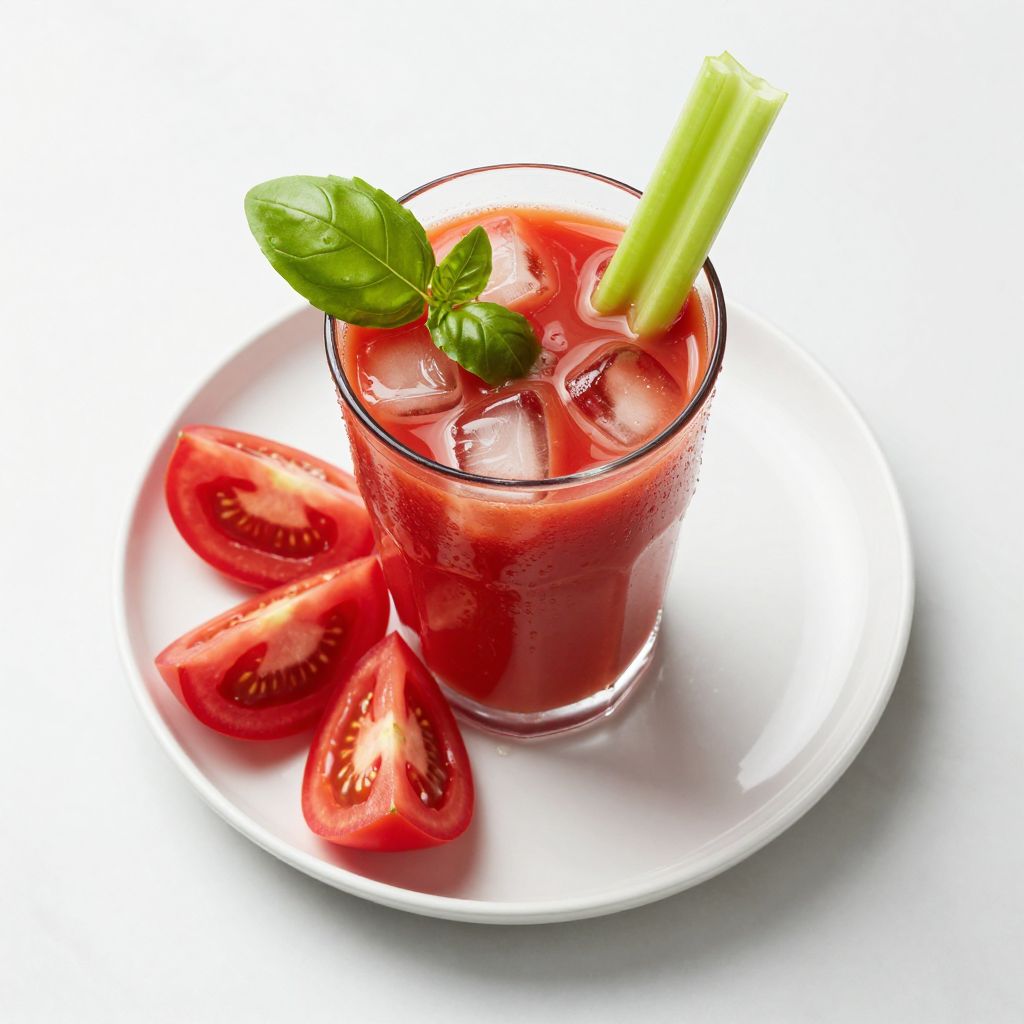
Serve this juice ice-cold in a tall glass over ice cubes, on its own or with a splash of vodka for a simple cocktail. It also shines as a cooking ingredient in so many ways.
- Straight-up as a morning health drink with a squeeze of fresh lime and a dash of hot sauce
- As the base for Bloody Mary cocktails with vodka, hot sauce, horseradish, and celery garnish
- Mixed into gazpacho for a chunky summer soup that’s refreshing and light
- Used as a braising liquid for chicken, beef, or vegetable stews
- Simmered with cream and fresh basil to make a silky tomato soup
Variations to Try
- Spicy Tomato Juice: Add one diced jalapeño or serrano pepper, a pinch of cayenne, and a teaspoon of hot sauce during cooking for a juice with real kick and depth.
- Herbed Garden Juice: Stir in fresh basil, oregano, or thyme during the simmering stage, then strain. This version tastes like summer in a glass.
- Smoky Tomato Juice: Add a quarter teaspoon of smoked paprika and a pinch of cumin for a juice that tastes like it came from a campfire. It’s outstanding in cocktails.
- Carrot and Tomato Juice: Peel and chop 1 pound of carrots and simmer them alongside the tomatoes for a sweeter, more complex juice with added beta-carotene.
- Gazpacho Juice: Blend in a diced cucumber, half a red bell pepper, and a tablespoon of red wine vinegar for a juice that tastes like drinkable gazpacho soup.
Dietary Adaptations
- Gluten-Free: This recipe is naturally gluten-free with all the ingredients listed. Use certified gluten-free ingredients if you have severe celiac disease.
- Dairy-Free: Homemade tomato juice contains no dairy products whatsoever, making it automatically vegan and dairy-free.
- Vegan and Vegetarian: This recipe is completely plant-based and works perfectly for both vegan and vegetarian diets with zero modifications needed.
- Low-Carb and Keto: At 6 grams of carbs per serving, this juice fits into most low-carb plans, though portion control matters since carbs add up quickly.
- Sodium-Reduced: Cut the salt in half or add a tiny pinch at a time, tasting as you go. You might prefer the juice slightly under-salted anyway.
Storage and Reheating
Refrigerator
Store your juice in clean glass jars with tight-fitting lids in the coldest part of your refrigerator. It keeps for 5 to 7 days before the flavor begins to fade and oxidation dulls the brightness.
- Keep jars sealed and away from the door where temperature fluctuates
- Shake or stir before drinking since some pulp settles over time
- Drink within the first 3 days for peak flavor and color
Freezer
Frozen tomato juice keeps for up to 3 months and thaws with minimal flavor loss. Pour it into ice cube trays or freezer bags for flexible storage options.
- Freeze in ice cube trays first, then transfer cubes to freezer bags for space-saving storage
- Leave a quarter-inch of headspace in jars to account for expansion during freezing
- Label jars with the date so you remember when you made it
Reheating
Thaw frozen juice overnight in the refrigerator for best results, or reheat it gently on the stove over low heat. Never boil it, as high heat destroys the fresh tomato flavor you worked to create.
- Thaw in the fridge for at least 8 hours before using
- Warm gently in a saucepan over medium-low heat without boiling
- Use thawed juice within 1 day for the best flavor
Nutrition Information
| Nutrient | Amount |
|---|---|
| Calories | 35 |
| Total Fat | 0.3g |
| Saturated Fat | 0g |
| Carbohydrates | 8g |
| Fiber | 1.5g |
| Sugar | 5.5g |
| Protein | 1.5g |
| Sodium | 480mg |
| Cholesterol | 0mg |
This nutrition information is based on one serving of plain homemade tomato juice without any additional seasonings or ingredients added after preparation. Actual values vary slightly depending on the specific tomatoes used and any personal modifications to the recipe.
Frequently Asked Questions
Can I use canned tomatoes instead of fresh ones?
Yes, use two 28-ounce cans of crushed tomatoes and skip the cooking step entirely. The flavor won’t be quite as bright as fresh, but canned tomatoes work in a pinch when fresh ones aren’t available.
How do I make this juice less acidic?
Add a pinch of baking soda to neutralize the acid, stirring quickly as it will fizz. Alternatively, add a quarter teaspoon of sugar or a tablespoon of heavy cream for a richer juice that masks acidity beautifully.
Can I make this in a juicer instead of blending?
A cold-press juicer will work, though you might get less yield than blending and straining. If you have a centrifugal juicer, feed whole tomatoes through and expect more separation between pulp and liquid.
Why does my juice taste bitter?
Bitter flavor comes from overcooked tomatoes, green unripe tomatoes, or too many seeds and skins in the final juice. Use ripe tomatoes, simmer only 12 to 15 minutes, and strain carefully.
Is this juice safe for canning and long-term storage?
This recipe isn’t formulated for canning since it lacks the proper acid content and processing guidelines for safe shelf storage. Freeze it for long-term storage or drink it fresh within a week of making it.
What’s the difference between tomato juice and tomato puree?
Tomato juice is thin and drinkable with minimal pulp, while tomato puree is thick and concentrated with more solids. Skip the straining step in this recipe and cook longer for puree instead.
Final Thoughts
Making your own tomato juice is genuinely one of those kitchen projects that feels more impressive than it actually is. Your friends will think you’re some sort of beverage wizard when you serve them ice-cold homemade juice.
Try this recipe as soon as you can find quality tomatoes, and you’ll understand why store-bought will never taste the same again. Your taste buds will thank you, and your cocktails will taste infinitely better.
Explore More Homemade Beverage Recipes
Now that you’ve mastered tomato juice, expand your homemade beverage game with other fresh fruit and vegetable juices. You might also enjoy making refreshing drinks like tamarind juice for a tart tropical flavor, or try a guava juice recipe for something sweet and exotic that brings sunshine to any day.
Homemade Tomato Juice
Ingredients
Equipment
Method
- Rinse the tomatoes under cool running water and pat them dry completely.
- Using a sharp chef's knife, cut out the core from each tomato and quarter them.
- Place the quartered tomatoes into a large pot, add 2 cups of water, and stir gently.
- Heat the pot over medium-high heat until it reaches a gentle boil, then reduce to medium and simmer for 12 to 15 minutes until the tomatoes collapse into a pulp.
- Carefully transfer the cooked tomatoes and liquid to a blender in batches and blend until completely smooth, about 45 seconds per batch, or use an immersion blender directly in the pot.
- Strain the blended tomato mixture through a fine-mesh strainer lined with cheesecloth into a large bowl, pressing with the back of a spoon to extract all the juice.
- Return the strained juice to the pot, add sea salt, black pepper, lemon juice, garlic powder, and onion powder; stir well and adjust seasoning to taste.
- Pour the juice into clean glass jars or bottles, refrigerate for at least 1 hour until chilled, then serve over ice or use as desired.