
The first time I fermented kanji, I watched purple liquid transform into something alive, bubbling softly on my kitchen counter like a tiny science experiment I actually wanted to drink.
Kanji is a probiotic-rich Indian drink made by fermenting beetroot, carrots, ginger, and spices with mustard seeds and fenugreek for several days. This tangy, slightly spicy beverage is beloved for its gut-friendly bacteria, bold flavor, and the satisfying ritual of creating something from scratch.
What makes kanji special is how simple it is to create yet how sophisticated the results taste. The fermentation process develops complexity and probiotic benefits without any special equipment, making it perfect for anyone curious about fermented foods.
Why You’ll Love This Recipe
Kanji delivers natural probiotics, vibrant flavor, and genuine satisfaction from fermentation.
- Rich in live cultures that support digestive health
- Requires minimal hands-on time but teaches you the power of fermentation
- Bold, tangy taste that feels restaurant-quality but costs pennies
- Naturally vegan and requires no specialized ingredients
- Beautiful deep purple color that makes it Instagram-worthy
My Experience Making This Recipe
I was skeptical the first time I made kanji. Leaving vegetables to sit in salty water for days felt like asking for trouble rather than a beverage.
By day three, when I opened the jar and saw those tiny bubbles rising through the purple liquid, I became a believer. The aroma hit me first, earthy and gingery with a subtle funkiness that smells exactly like fermentation should.
My partner took one sip and immediately asked when I’d make the next batch. Now I keep a jar going constantly because kanji disappears as fast as I make it.
Recipe Overview
- Recipe Name: Homemade Kanji
- Servings: 8 to 10 servings
- Prep Time: 15 minutes
- Cook Time: 0 minutes
- Total Time: 3 to 5 days
- Course: Beverage
- Cuisine: Indian
- Calories per Serving: 12 calories
Equipment You Will Need
- 1 large glass jar (at least 2 liters or 64 ounces)
- Sharp knife for chopping vegetables
- Cutting board
- Measuring spoons and cups
- Clean cloth or coffee filter for covering the jar
- Rubber band or kitchen string
- Strainer or fine-mesh sieve
- Glass bottles for storage
Ingredients for Kanji
- Beetroot: 2 medium beetroots, peeled and chopped into small pieces
- Carrots: 3 medium carrots, peeled and chopped into small pieces
- Ginger: 3 to 4 tablespoons fresh ginger, peeled and chopped
- Mustard seeds: 2 tablespoons yellow or black mustard seeds
- Fenugreek seeds: 1 tablespoon methi seeds
- Red chili peppers: 2 to 3 dried red chilies or 1 teaspoon red chili powder
- Turmeric powder: 1/2 teaspoon
- Salt: 2 tablespoons fine sea salt
- Water: 2 liters filtered or boiled and cooled water
Ingredient Notes and Substitutions
- Beetroot: Beetroots provide the signature color, earthy sweetness, and natural sugars that feed beneficial bacteria. Substitute with additional carrots if needed, though the color and flavor profile will shift significantly.
- Ginger: Fresh ginger adds warmth, digestive benefits, and spice to kanji. Dried ginger powder works in a pinch, but use only half the amount since it concentrates when dried.
- Mustard seeds: These seeds activate fermentation and add a peppery bite that defines kanji. Black mustard seeds deliver stronger flavor than yellow varieties if you prefer bold taste.
- Fenugreek seeds: Methi seeds contribute a unique bitter-sweet note and support the fermentation process. If unavailable, simply omit them, though the final flavor becomes less complex.
- Red chili: Dried red chilies provide heat and antimicrobial properties that support fermentation. Red chili powder substitutes directly but adds less visible texture.
- Salt: Sea salt feeds the fermentation process and preserves the beverage. Non-iodized salt is critical since iodine inhibits fermentation.
How to Make Kanji
Step 1: Prepare Your Vegetables and Jar
Wash your glass jar thoroughly with hot water and let it air dry completely. Peel and chop the beetroots and carrots into small, roughly half-inch pieces so they release their flavors quickly into the liquid.
Step 2: Combine Vegetables and Spices
Add the chopped beetroots, carrots, and ginger to your clean glass jar. Layer in the mustard seeds, fenugreek seeds, dried red chilies, and turmeric powder so the spices distribute evenly throughout the jar.
Step 3: Dissolve Salt in Water
Measure out your filtered or cooled boiled water into a separate container. Stir in the sea salt completely so every grain dissolves, creating a brine that will preserve and ferment your kanji.
Step 4: Pour Brine Over Vegetables
Pour the salt water carefully over the vegetables and spices in your jar. Make sure all vegetables are submerged under the liquid, as any bits exposed to air can develop mold rather than beneficial bacteria.
Step 5: Cover the Jar Loosely
Place a clean cloth or coffee filter over the jar opening and secure it with a rubber band or kitchen string. Loose covering allows gases to escape during fermentation while keeping dust and insects out.
Step 6: Set Up Fermentation Location
Place your jar in a warm corner of your kitchen away from direct sunlight. Fermentation speeds up in warm temperatures (around 68 to 75 degrees Fahrenheit is ideal), though cooler kitchens simply take longer.
Step 7: Monitor Fermentation Progress
Check your kanji daily starting on day two, looking for small bubbles rising through the liquid and a pleasant tangy smell developing. By day three, you should notice visible fermentation activity and the liquid deepening in color.
Step 8: Taste Test and Decide When Done
On day three or four, use a clean spoon to taste a small sip of the liquid. If you enjoy the tanginess and spice level, strain the kanji into glass bottles and move to the refrigerator where fermentation slows dramatically.
Step 9: Strain and Store
Pour your kanji through a fine-mesh strainer into clean glass bottles, discarding the solids. The kanji is now ready to drink and will continue developing subtle complexity in the refrigerator for several weeks.
Pro Tip: Keep one to two tablespoons of kanji liquid with some vegetable pieces when you finish your batch, then add fresh vegetables and brine for a second fermentation cycle that starts faster than your first batch.
Tips for the Best Kanji
- Use filtered or boiled water rather than tap water, which can contain chlorine that interferes with fermentation. Chlorine kills the beneficial bacteria you are trying to cultivate.
- Never use iodized salt since iodine actively prevents fermentation from progressing properly. Sea salt or kosher salt work beautifully.
- Keep your fermentation location consistently warm between 65 and 75 degrees Fahrenheit for steady, predictable fermentation. Temperatures below 60 degrees slow fermentation dramatically.
- Taste your kanji starting on day three rather than waiting for a preset number of days. Fermentation speed varies based on room temperature, ingredient size, and your personal taste preferences.
- Save your vegetable solids in the refrigerator after straining to start a second batch that ferments more quickly than the first.
- Shake your kanji bottle gently before drinking since some beneficial bacteria settle at the bottom over time.
Common Mistakes to Avoid
- Using iodized table salt stops fermentation completely since iodine kills the cultures you need. Always verify your salt label says non-iodized or sea salt.
- Filling your jar too full leaves no headspace for fermentation gases to build pressure safely. Leave at least two inches of space at the top of your jar.
- Sealing the jar tightly traps gases and can create dangerous pressure buildup. A loose cloth covering is exactly what you need.
- Exposing vegetables to air during fermentation invites mold rather than beneficial bacteria. Keep vegetables fully submerged under the liquid throughout fermentation.
- Using chlorinated tap water directly into your kanji inhibits fermentation before it starts. Boil water first or use filtered water to remove chlorine.
Serving Suggestions
Kanji tastes best served ice cold in small glasses, usually in two to three ounce portions since the taste is bold and concentrated. Sip it slowly before meals to support digestion or enjoy it as a midday digestive aid.
- Drink a small glass before eating heavy meals to stimulate digestive enzymes and prepare your stomach
- Mix kanji with sparkling water to create a lighter, fizzy version perfect for warm weather
- Serve alongside Indian meals like samosas or pakoras for authentic pairing
- Sip kanji as a probiotic shot first thing in the morning to start your digestive system
- Add a splash to plain yogurt or lassi for extra probiotic punch and tangy depth
Variations to Try
- Garlic Kanji: Add four to five minced garlic cloves along with the ginger for extra pungency and immune-boosting properties. Garlic creates a more assertive flavor perfect for those who crave bold fermented tastes.
- Black Salt Kanji: Replace some sea salt with black salt (kala namak) during fermentation for a sulfurous, eggy note that adds complexity. This variation pairs beautifully with light meals.
- Spicy Kanji: Increase red chilies to four to five or add fresh green chilies for heat that builds on your palate. Heat lovers consistently prefer this version.
- Carrot Only Kanji: Use only carrots and omit beetroot for a lighter color and sweeter fermented taste. This version appeals to those who find beetroot overpowering.
- Herb Kanji: Add a handful of fresh cilantro or mint leaves during fermentation for herbal brightness. Herbs add freshness and pair well with spicy foods.
Dietary Adaptations
- Gluten-free: Kanji is naturally gluten-free since no grains are used in fermentation. All ingredients remain naturally free from gluten without any substitutions needed.
- Dairy-free: Kanji contains zero dairy products and works perfectly for anyone avoiding milk. The beverage is completely plant-based throughout fermentation and storage.
- Vegan: Kanji is fully vegan with no animal products in any stage of preparation. All vegetables, spices, and salt come from plant sources exclusively.
- Low-carb and Keto: Kanji contains minimal carbohydrates since fermentation consumes most sugars in vegetables. A typical serving contains only two to three grams of carbohydrates, making it suitable for low-carb diets.
Storage and Reheating
Refrigerator
Strained kanji keeps in glass bottles in the refrigerator for up to three weeks. Fermentation slows dramatically at cold temperatures, so your kanji stays stable and safe to drink for weeks.
- Store in dark glass bottles to protect from light degradation
- Keep bottles tightly sealed to prevent oxidation and contamination
- Check for any visible mold or off smells before drinking, though proper fermentation prevents these issues
Freezer
Kanji can be frozen in glass bottles or ice cube trays for up to six months. Freezing halts fermentation and preserves your batch for longer-term storage, though some live bacteria counts decline slightly.
- Leave headspace in bottles since kanji expands when frozen
- Freeze in ice cube trays to thaw individual portions as needed
- Thaw in the refrigerator overnight rather than at room temperature
Reheating
Do not heat kanji since temperatures above 115 degrees kill the beneficial bacteria cultures. Enjoy kanji cold straight from the refrigerator or at room temperature.
- Remove kanji from the refrigerator five minutes before serving for room temperature sipping
- Serve over ice for maximum refreshment during warm weather
- Never microwave or heat kanji since heat destroys probiotic cultures
Nutrition Information
| Nutrient | Amount |
|---|---|
| Calories | 12 |
| Total Fat | 0.2 grams |
| Saturated Fat | 0 grams |
| Carbohydrates | 2.8 grams |
| Fiber | 0.4 grams |
| Sugar | 1.2 grams |
| Protein | 0.3 grams |
| Sodium | 780 milligrams |
| Cholesterol | 0 milligrams |
These values represent approximate nutrition per two ounce serving of finished kanji. Fermentation reduces sugar content significantly, and most calories come from minerals rather than macronutrients.
Frequently Asked Questions
Can I use tap water for kanji fermentation?
Tap water contains chlorine that kills beneficial bacteria needed for fermentation. Boil tap water first to remove chlorine, or use filtered water for best results.
How do I know if my kanji went bad versus fermented correctly?
Good fermentation smells earthy, tangy, and pleasantly sour, while bad kanji smells rotten or like vinegar gone wrong. Visible white or fuzzy mold indicates spoilage, but tiny bubbles and darkened liquid signal successful fermentation.
Can I make kanji without mustard seeds and fenugreek?
You can make kanji without these seeds, though fermentation happens more slowly and the final taste lacks their distinctive peppery and bitter-sweet notes. The beverage still ferments using the salt and vegetable sugars alone.
Why is my kanji still not bubbly after four days?
Cold kitchen temperatures slow fermentation dramatically, potentially requiring a full week for visible bubbling. Try moving your jar to a warmer spot like near a sunny window or atop a refrigerator where warmth accumulates.
Can I reuse the vegetable solids from my first batch?
Yes, save a tablespoon or two of solids along with some liquid to jumpstart your next batch. This starter culture ferments your new batch in just two to three days instead of four to five.
Is kanji safe to drink every day?
A small two to three ounce glass daily is generally considered safe for most people seeking probiotic benefits. Anyone with digestive sensitivities or existing conditions should consult their healthcare provider before making kanji a daily habit.
Why does my kanji taste too salty?
You may have used too much salt or created a concentrate that was never diluted. Try using the full two liters of water specified in the recipe and taste before deciding to reduce salt in future batches.
Final Thoughts
Making kanji transforms your kitchen into a fermentation laboratory where you witness the magic of beneficial bacteria at work. The entire process requires minimal effort yet delivers maximum satisfaction when you open that first glass bottle and taste your creation.
Give this recipe a try and join countless people who have made kanji a staple in their kitchens. You will quickly discover why this ancient fermented beverage deserves a permanent spot in your refrigerator.
Ready to explore more fermented beverages and traditional recipes? Check out our guide to making amazake, another probiotic-rich drink that transforms simple ingredients through fermentation. You might also enjoy discovering cafe de olla, a beautifully spiced traditional coffee beverage that pairs wonderfully alongside your kanji as part of a whole fermented food journey.
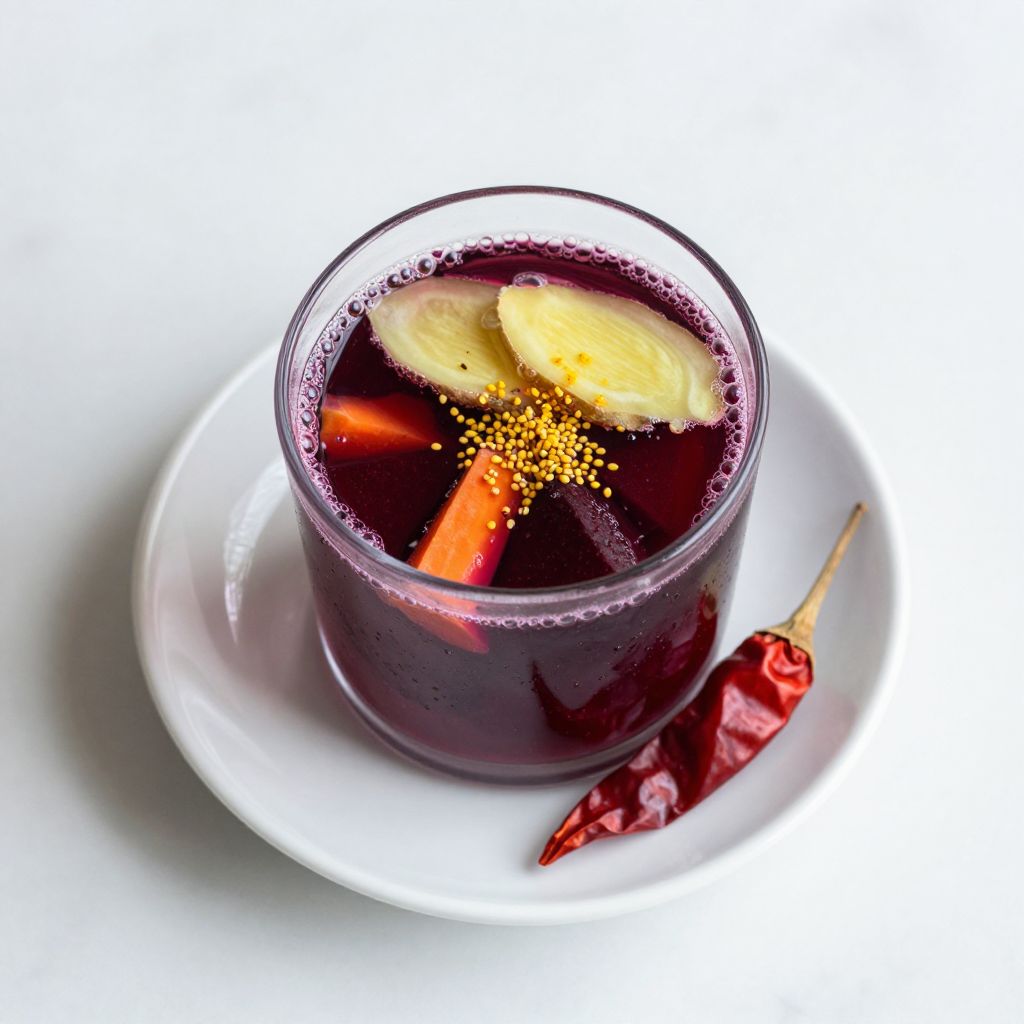
Homemade Kanji
Ingredients
Equipment
Method
- Wash the glass jar thoroughly with hot water and let it air dry completely.
- Peel and chop the beetroots and carrots into small, roughly half-inch pieces.
- Peel and chop the fresh ginger into small pieces.
- Layer the beetroots, carrots, ginger, mustard seeds, fenugreek seeds, dried chilies, and turmeric powder into the jar.
- Dissolve the salt in the filtered or cooled boiled water, stirring until fully dissolved to make the brine.
- Pour the brine over the vegetables and spices, ensuring all solids are fully submerged under the liquid.
- Cover the jar loosely with a clean cloth or coffee filter and secure it with a rubber band or string.
- Place the jar in a warm spot (68–75°F) away from direct sunlight and let it ferment for 3 to 5 days.
- Check daily for small bubbles rising through the liquid and a tangy aroma developing; begin tasting on day 3.
- When the flavor is tangy and spicy to your liking, pour the liquid through a fine-mesh sieve into clean bottles, discarding the solids.
- Seal the bottles and refrigerate; the kanji will continue to develop subtle complexity and stays good for up to three weeks.