
There’s something magical about popping open a bottle of fizzy soda you made with your own hands, knowing exactly what went into it. Natural soda tastes brighter, fresher, and more vibrant than anything from a store shelf, and the best part is you control every single ingredient.
This recipe lets you skip the artificial sweeteners, high-fructose corn syrup, and mysterious additives while creating a drink that’s genuinely refreshing. Homemade soda is surprisingly simple to make, costs far less than premium bottled versions, and impresses anyone who tries it.
Why You’ll Love This Recipe
Homemade natural soda gives you pure flavor without the guilt, and it tastes nothing like the artificial stuff sitting in vending machines.
- Complete control over sweetness and ingredients with no artificial additives
- Costs a fraction of boutique sodas while tasting significantly better
- Customizable flavor combinations that match your personal taste perfectly
- Naturally carbonated without relying on commercial carbonation equipment
- Makes an impressive homemade gift that people actually want to receive
My Experience Making This Recipe
I first made natural soda as a desperate attempt to reduce my family’s sugar intake without sacrificing the fizzy drinks everyone craved. The initial batch turned out cloudy and overly sweet, but by the third attempt, I nailed the balance between natural sweetness and refreshing carbonation.
What shocked me most was how much my kids preferred this version over store-bought soda within just a few tries. They loved being able to pick their own flavors, and honestly, the satisfaction of watching them drink something I actually felt good about serving was worth every minute in the kitchen.
The carbonation develops naturally through fermentation, creating a gentle fizz that feels luxurious without being aggressive. My friends now request bottles of specific flavors, and I’ve started making batches in bulk just to keep up with demand.
Recipe Overview
- Recipe Name: Natural Soda
- Servings: 4 bottles (32 ounces total)
- Prep Time: 15 minutes
- Fermentation Time: 48 to 72 hours
- Total Time: 3 to 4 days
- Course: Beverage
- Cuisine: American
- Calories per Serving: 45
Equipment You Will Need
- Large glass jar (at least 2 quarts)
- Fine mesh strainer or cheesecloth
- Glass bottles with lids (32 ounces each, swing-top bottles work best)
- Measuring cups and spoons
- Wooden spoon or non-metal stirrer
- Thermometer
- Funnel
- Rubber bands or cloth strips
Ingredients for Natural Soda
For the Base
- Filtered water: 2 quarts (room temperature)
- Ginger bug starter culture: 1 cup (active and bubbly)
- Raw cane sugar: 1/4 cup
- Fresh lemon juice: 2 tablespoons
For Flavoring (Choose One)
- Fresh ginger juice: 3 tablespoons, or
- Fresh fruit juice: 1/2 cup (apple, raspberry, or peach work beautifully), or
- Herbal tea infusion: 1/2 cup (brewed and cooled)
Optional Additions
- Sea salt: 1/8 teaspoon (enhances flavor complexity)
- Vanilla extract: 1/2 teaspoon (for vanilla cola style)
- Citric acid: 1/4 teaspoon (adds natural tartness)
Ingredient Notes and Substitutions
- Ginger bug starter culture: This living culture of beneficial bacteria and yeast creates the natural carbonation and tang. If you don’t have an active starter, you’ll need to prepare one for 5 to 7 days before making this recipe by fermenting ginger, sugar, and water together.
- Raw cane sugar: Sugar feeds the fermentation process and provides natural sweetness. You can substitute with organic cane juice crystals or coconut sugar, though coconut sugar ferments slightly slower and may reduce carbonation slightly.
- Fresh lemon juice: Lemon adds brightness and aids preservation naturally. Lime juice or fresh apple cider vinegar work as substitutes and provide similar acidity and flavor depth.
- Filtered water: Chlorinated tap water can inhibit fermentation by killing beneficial bacteria. Use filtered, bottled, or spring water for best results, though boiled and cooled tap water works in a pinch.
- Fresh ginger juice: Raw ginger provides spice and living enzymes that support fermentation. Powdered ginger works but delivers less complex flavor and may create a slightly grittier texture.
How to Make Natural Soda
Step 1: Prepare Your Workspace and Gather Your Starter
Ensure your glass jar, bottles, and all equipment are clean and dry before starting. Your ginger bug starter should be actively bubbly and smell pleasantly fermented, not moldy or off.
Step 2: Combine Water, Sugar, and Lemon Juice
Pour 2 quarts of room-temperature filtered water into your large glass jar, then add 1/4 cup raw cane sugar and 2 tablespoons fresh lemon juice. Stir well with a wooden spoon until the sugar dissolves completely, which takes about 2 minutes.
Step 3: Add Your Flavor Base
Pour 3 tablespoons of fresh ginger juice (or your chosen flavoring) into the sweetened water and stir thoroughly. If using fruit juice, make sure it’s freshly pressed or freshly thawed for maximum live enzymes and flavor.
Step 4: Combine with Ginger Bug Starter
Slowly pour 1 cup of your active ginger bug starter into the flavored base while stirring gently. The starter introduces the beneficial bacteria and yeast needed for natural carbonation and tangy flavor development.
Step 5: Cover and Set for First Fermentation
Cover the jar loosely with a clean cloth or coffee filter secured with a rubber band, allowing air circulation while keeping dust out. Place the jar in a warm spot (65 to 75 degrees Fahrenheit) away from direct sunlight for 24 to 36 hours.
Step 6: Strain and Bottle Your Soda
After the first fermentation, pour the mixture through a fine mesh strainer lined with cheesecloth into a clean container, catching any sediment or ginger particles. Use a funnel to carefully pour the strained liquid into your glass bottles, filling each to about one inch below the rim.
Step 7: Seal and Begin Second Fermentation
Seal each bottle tightly with its lid or swing-top mechanism, then place all bottles in a warm location (65 to 75 degrees Fahrenheit) for 24 to 48 hours. This secondary fermentation builds carbonation as the remaining yeast produces carbon dioxide in the sealed environment.
Step 8: Test Carbonation and Refrigerate
After 24 hours, carefully open one bottle away from your face to check carbonation level and taste. If it’s sufficiently fizzy and flavorful, move all bottles to the refrigerator where the cold stops fermentation and preserves carbonation.
Step 9: Chill and Serve
Let bottles chill for at least 2 hours before serving to experience the full refreshing effect of cold carbonated soda. Pour into glasses over ice and enjoy immediately, savoring the bright natural flavors and satisfying fizz.
Pro Tip: The longer your soda ferments, the more sour and fizzy it becomes, so taste after 24 hours in the bottle and refrigerate immediately when it reaches your preferred carbonation level.
Tips for the Best Natural Soda
- Keep your ginger bug starter fed and active by adding equal parts sugar, ginger, and filtered water every few days so you always have a fresh batch ready for making soda.
- Use room-temperature ingredients because cold ingredients slow fermentation, which means fewer bubbles and longer wait times.
- Taste your soda after 24 hours of secondary fermentation and refrigerate if you prefer milder carbonation, or wait the full 48 hours for maximum fizz.
- Store fermentation jars and bottles away from direct sunlight, which can break down beneficial bacteria and create unpleasant flavors.
- Never use metal utensils or containers for fermentation, as the acidic environment can corrode metal and create off-flavors.
- Be cautious when opening bottles after secondary fermentation because pressure builds inside, and opening too quickly can cause spraying.
Common Mistakes to Avoid
- Using chlorinated tap water or water that’s too cold kills beneficial bacteria and prevents proper fermentation and carbonation development.
- Neglecting your ginger bug starter and letting it go inactive results in weak fermentation and flat, lifeless soda.
- Fermenting in direct sunlight degrades the beneficial cultures and creates off-flavors that taste musty or unpleasant.
- Sealing bottles too tightly before the first fermentation is complete traps excess pressure and can cause bottles to burst or become over-carbonated.
- Adding too much ginger bug starter (more than 1 cup per batch) creates overly sour soda with excessive fizz that becomes difficult to control.
Serving Suggestions
Natural soda shines on its own as a refreshing drink, but it also plays beautifully in cocktails, mocktails, and creative combinations. Serve it ice-cold in chilled glasses to maximize the fizz and flavor impact.
- Pour over vanilla ice cream for a homemade soda float that tastes infinitely better than commercial versions
- Mix with sparkling wine or champagne for an elegant aperitif with complex natural flavors
- Combine with rum, lime, and fresh mint for a sophisticated homemade cola-style drink
- Serve alongside grilled foods and barbecue as a naturally sweet counterpoint to smoky flavors
- Mix half soda and half fresh fruit juice for a naturally less-sweet beverage perfect for afternoon sipping
Variations to Try
- Berry Blast Soda: Replace ginger juice with 1/2 cup fresh or thawed raspberry, blackberry, or blueberry juice for a vibrant purple soda with subtle tartness that balances the natural sweetness beautifully.
- Herbal Mint Soda: Brew 1/2 cup strong peppermint tea, cool it completely, and substitute for the ginger juice to create a cooling, refreshing soda perfect for warm months.
- Spiced Chai Soda: Brew chai tea with cinnamon, cardamom, and cloves, cool it, and use instead of ginger juice for a warm, aromatic soda that feels almost dessert-like.
- Citrus Medley Soda: Combine equal parts fresh lemon, lime, and orange juice in place of the lemon juice and ginger for a bright, complex soda bursting with multiple citrus notes.
- Apple Ginger Soda: Use equal parts fresh ginger juice and fresh apple juice for a subtly sweet soda with warming spice that tastes like autumn in a bottle.
Dietary Adaptations
- Vegan and Vegetarian: This recipe is naturally vegan and vegetarian because it uses only plant-based ingredients and fermentation cultures, making it suitable for all dietary preferences.
- Gluten-Free: Natural soda is inherently gluten-free, though verify that your ginger bug starter was made without any gluten-containing ingredients if you have celiac disease or severe sensitivities.
- Low-Sugar: Reduce the sugar to 2 tablespoons per batch, understanding that less sugar means slower fermentation and potentially less carbonation, but you’ll create a drier, less sweet soda.
- Keto-Friendly: Replace raw cane sugar with erythritol or monk fruit sweetener in equal amounts, though fermentation will be slower because yeast prefers glucose-based sugars over sugar alcohols.
- Dairy-Free: This recipe contains no dairy products, making it suitable for anyone avoiding milk or milk derivatives.
Storage and Reheating
Refrigerator
Sealed bottles of finished soda keep in the refrigerator for 2 to 3 weeks, slowly losing carbonation over time. Transfer any opened bottles to smaller containers with tight-fitting lids to maximize the remaining fizz.
- Store bottles upright to reduce surface area exposure and preserve carbonation longer
- Keep bottles away from light and heat sources that can degrade flavor quality
- Check bottles every week and open carefully to release any excess pressure that builds during storage
Freezer
Freezing soda in glass bottles is not recommended because carbonation and liquid expansion can cause bottles to crack or burst. If you want to extend shelf life, keep sealed bottles refrigerated instead.
- Never freeze glass bottles filled with carbonated liquid
- Plastic bottles can freeze, though carbonation will be lost during thawing
Reheating
Natural soda tastes best served cold and shouldn’t be heated. If you want to use soda in a warm beverage or recipe, allow it to come to room temperature first and understand that heat will eliminate all carbonation.
- Pour flat soda into warm tea or coffee for added natural sweetness and flavor depth
- Use room-temperature soda in cooking or baking recipes as a leavening agent or flavor component
Nutrition Information
| Nutrient | Amount |
|---|---|
| Calories | 45 |
| Total Fat | 0 g |
| Saturated Fat | 0 g |
| Carbohydrates | 11 g |
| Fiber | 0 g |
| Sugar | 9 g |
| Protein | 0 g |
| Sodium | 35 mg |
| Cholesterol | 0 mg |
Nutrition values are approximate and based on using standard fresh ginger juice as the flavoring base. Using fruit juice or herbal infusions will change carbohydrate and sugar content slightly.
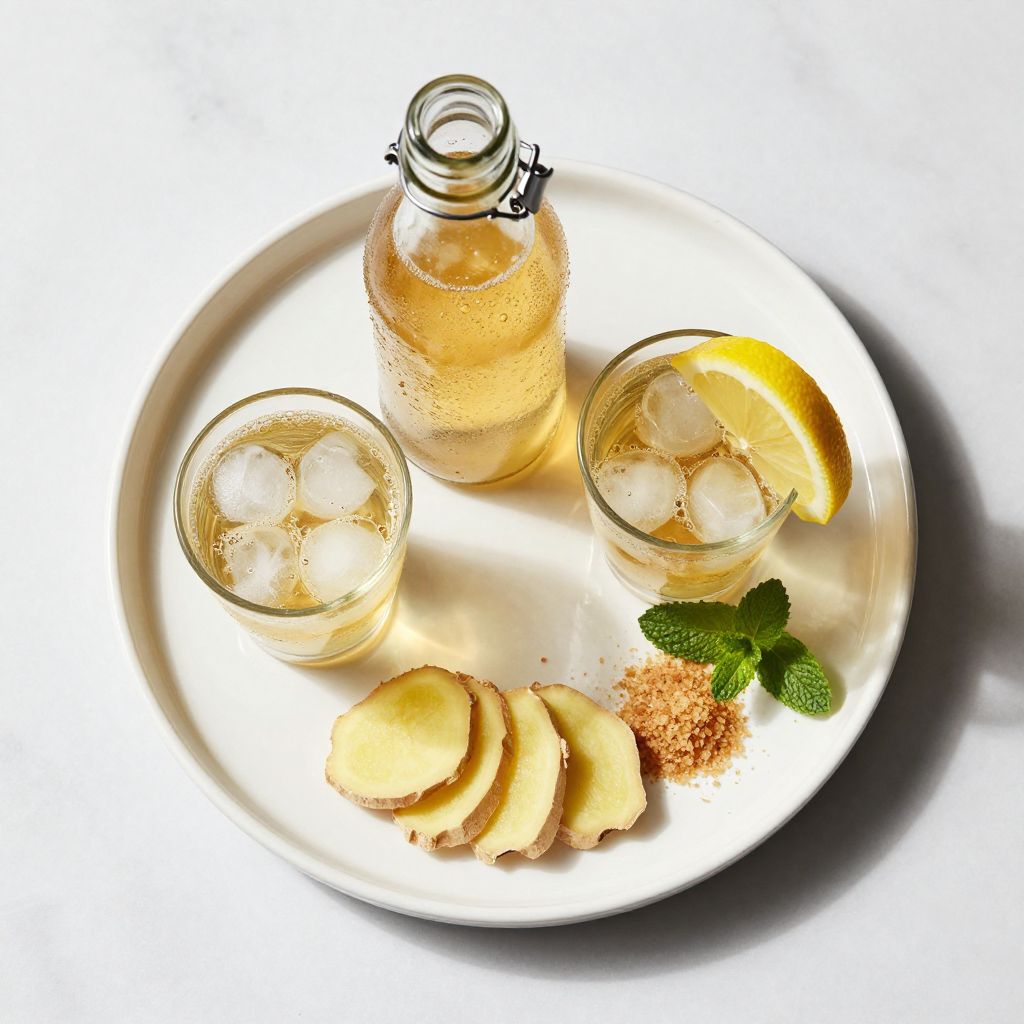
Natural Soda
Ingredients
Equipment
Method
- Clean and dry all equipment thoroughly before use.
- Pour 2 quarts of room-temperature filtered water into the glass jar and stir in 1/4 cup raw cane sugar and 2 tablespoons fresh lemon juice until dissolved, about 2 minutes.
- Add 3 tablespoons fresh ginger juice or your chosen flavoring and stir to combine.
- Gently stir in 1 cup of active ginger bug starter culture.
- Cover the jar with a cloth secured by a rubber band and ferment at 65–75°F for 24 to 36 hours.
- After first fermentation, strain the mixture through a fine mesh strainer or cheesecloth into a clean container.
- Use a funnel to fill glass bottles, leaving 1 inch of headspace, then seal tightly.
- Allow bottles to ferment at 65–75°F for a second fermentation of 24 to 48 hours to build carbonation.
- Test one bottle after 24 hours by opening carefully and, if desired carbonation is reached, refrigerate all bottles and chill for at least 2 hours before serving.
Notes
Frequently Asked Questions
What if my ginger bug starter isn’t bubbly or active?
An inactive starter means fermentation won’t happen properly, so your soda will remain flat. Revive your starter by feeding it daily with 1 tablespoon sugar, 1 tablespoon fresh ginger, and 1/4 cup water for 3 to 5 days until active bubbling returns.
Can I use store-bought juice instead of fresh juice?
Store-bought juice works but pasteurization kills many beneficial live enzymes, which slows fermentation and reduces carbonation. Fresh or freshly thawed juice gives noticeably better carbonation and flavor.
How do I know if my soda has gone bad?
Bad soda smells musty, moldy, or vinegary beyond the pleasant fermented tang, tastes noticeably off or unpleasant, or shows visible mold growth inside the bottle. When in doubt, throw it out because fermented beverages can occasionally develop unwanted organisms.
Why is my soda too sour or vinegary?
Over-fermentation creates excessive acidity and sourness, so your fermentation times were too long or your environment was too warm. Shorten your fermentation to 24 hours total and keep bottles at the cooler end of the temperature range (around 65 degrees Fahrenheit).
Can I bottle my soda in plastic bottles instead of glass?
Plastic bottles work but carbonation will be less vigorous, and over time plastic can absorb flavors and odors. Glass bottles preserve carbonation and flavor far better and feel more premium.
How long does a ginger bug starter last if I maintain it?
A well-maintained ginger bug culture can last indefinitely if you feed it regularly with sugar, ginger, and water. Some home fermenters have kept the same starter alive for years or even decades.
Final Thoughts
Making natural soda transforms your relationship with fizzy drinks forever, turning something you used to buy into something you craft with intention and care. The taste difference is remarkable enough that you’ll never want to go back to artificial alternatives once you’ve experienced the real thing.
Start your first batch this week and prepare to become that person who brings homemade soda to gatherings while everyone else wonders how you created something this delicious. Your taste buds, your budget, and your peace of mind will thank you.
Want to explore more naturally fermented and homemade drink options? Check out our guide to the best homemade root beer recipe for another classic soda you can master, or learn how to make an elegant French soda recipe that impresses guests at every celebration.