
The aroma of adeni chai brewing on the stove fills your kitchen with warmth and spice, transporting you straight to the heart of Indian tea culture. This is the kind of chai that demands to be sipped slowly, savored in cupped hands, and shared with anyone lucky enough to catch that intoxicating smell.
Adeni chai is a regional variation that balances bold spices with creamy milk and just the right amount of sweetness, making it far more complex than your average cup. The magic lies in layering whole spices, quality tea leaves, and the patience to let everything bloom together into something genuinely special.
Whether you’re a chai devotee or someone discovering this drink for the first time, this recipe walks you through each step so you can recreate that authentic taste at home. You’ll learn exactly when to add each ingredient and why timing matters more than you might think.
Why You’ll Love This Recipe
This recipe delivers authentic, restaurant-quality chai without requiring any fancy equipment or hard-to-find ingredients.
- Deeply aromatic spices that bloom as the chai simmers, filling your home with warmth
- Perfectly balanced flavor that isn’t too sweet and doesn’t overpower with spice
- Takes about 20 minutes from start to finish, making it ideal for a quick afternoon ritual
- Works beautifully for entertaining guests or as a cozy personal moment
- Easily customizable based on your spice preferences and milk availability
My Experience Making This Recipe
I first learned to make adeni chai from a neighbor who treated her afternoon cup like a sacred pause in the day. She insisted that the spices needed to toast first, that the milk should never boil violently, and that I should never rush the steeping process.
Watching her work through the steps, I realized why so many chai recipes online miss the mark. They skip the toasting phase or dump everything in at once, which means you lose those deeper, roasted notes that make this drink sing.
Now when I make it, the kitchen fills with that same golden light and quiet contentment I felt watching her work. Friends who stop by always ask what smells so good, and more often than not, they end up staying for a cup.
Recipe Overview
- Recipe Name: Adeni Chai
- Servings: 2 to 3 cups
- Prep Time: 5 minutes
- Cook Time: 15 minutes
- Total Time: 20 minutes
- Course: Beverage
- Cuisine: Indian
- Calories per Serving: 120 calories
Equipment You Will Need
- Small saucepan or chai pot (2 to 3 quart capacity)
- Measuring spoons and cups
- Wooden spoon for stirring
- Strainer or fine mesh sieve
- Teaspoon or small spoon for toasting spices
- Kettle for boiling water (optional but helpful)
- Mugs or chai cups for serving
Ingredients for Adeni Chai
- Whole cloves: 4 to 5 pieces
- Cardamom pods: 3 to 4 green cardamom, lightly crushed
- Cinnamon stick: 1 small piece, about 1 inch
- Black peppercorns: 6 to 8 pieces
- Ginger: 1 tablespoon freshly grated or 3 to 4 thin slices
- Water: 2 cups
- Milk: 1 to 1.5 cups, whole or 2% works best
- Black tea: 2 teaspoons loose leaf Assam or Darjeeling tea
- Sugar or honey: 2 to 3 teaspoons, or to taste
Ingredient Notes and Substitutions
- Cardamom pods: These seeds inside the pod deliver a floral, slightly sweet note that defines chai. If unavailable, use an extra clove or a pinch of nutmeg for warmth, though the flavor will shift slightly.
- Ginger: Fresh ginger provides a sharp, energizing bite that balances the sweetness. Dried ginger powder works in a pinch, but use only half the amount since it’s more concentrated.
- Black tea: Assam tea is traditional and pairs beautifully with the spices. Darjeeling also works and creates a lighter, more delicate cup.
- Milk: Whole milk creates the richest, creamiest chai. Oat milk or coconut milk substitute well for dairy-free versions, though they may separate slightly.
- Sweetener: Honey adds subtle floral notes where sugar is more neutral. Brown sugar gives a deeper molasses note if you prefer.
How to Make Adeni Chai
Step 1: Toast Your Whole Spices
Place your saucepan over medium heat for about 30 seconds until it’s warm, then add the cloves, cardamom pods, cinnamon, and peppercorns. Toast them for 1 to 2 minutes while stirring constantly until they release their oils and become fragrant.
Toasting activates the essential oils in the spices, which makes them taste more intense and complex rather than flat or dusty. You’ll notice the aroma shift from subtle to bold within seconds, and that’s when you know they’re ready.
Step 2: Add Water and Ginger
Pour in the 2 cups of water and add your grated ginger to the saucepan. Stir well to combine and bring the mixture to a gentle boil.
The ginger starts infusing immediately, releasing its bright, warming compounds into the water. This early addition gives the spices and ginger time to fully develop their flavors before the tea leaves join them.
Step 3: Simmer for 5 Minutes
Once boiling, reduce the heat to medium-low and let the spiced water simmer for 5 minutes. Resist the urge to cover the pot, as you want the spices to continue steeping and infusing openly.
This simmering time is crucial because it extracts all the depth from your whole spices and ginger. Skipping this or rushing it gives you weak, underseasoned chai that tastes thin and one-dimensional.
Step 4: Add the Tea Leaves
Add the 2 teaspoons of loose leaf black tea directly to the simmering water and stir. Let it steep for 2 to 3 minutes, watching the color deepen from amber to rich brown.
The tea adds tannins and body that balance the spices and milk beautifully. Too short a steep and your chai tastes watered down; too long and it becomes bitter and astringent.
Step 5: Pour in the Milk
Slowly pour the milk into the saucepan while stirring gently. The mixture will slightly foam and change color as the milk melds with the spiced tea.
Pouring slowly prevents the milk from curdling and helps it incorporate evenly. The milk also mellows the tannins from the tea and adds the creamy richness that makes chai so satisfying.
Step 6: Heat Until Steaming
Continue stirring and heat the mixture over medium heat until it’s steaming hot and just beginning to rise in the pot, which takes about 2 to 3 minutes. Watch for tiny bubbles forming at the edges, which signals it’s ready.
You want steam rising, not a rolling boil, which would cause the milk to boil over and create a mess. Keep your eyes on the pot and your hand near the heat dial so you can adjust if needed.
Step 7: Strain Into Cups
Place your fine mesh strainer over a mug or small pitcher and pour the chai through carefully, holding back the spices and tea leaves with the back of your spoon. Repeat for each cup you’re serving.
Straining removes all the solids, leaving you with a smooth, silky chai that’s pleasant to sip. Some people like tiny bits of ginger in their cup, so feel free to leave a little behind if you prefer.
Step 8: Sweeten and Serve
Stir in 2 to 3 teaspoons of sugar or honey to each cup, adjusting to your taste. Let it cool for just a minute before sipping so you don’t burn your mouth on the hot liquid.
The sweetness should enhance the spices without making the chai taste like dessert. If you prefer less sugar, start with 1.5 teaspoons and adjust from there.
Pro Tip: Toast your spices in a dry pan before adding water to unlock deeper, roasted flavors that elevate the entire chai from good to unforgettable.
Tips for the Best Adeni Chai
- Crush the cardamom pods gently with the side of a knife before using, which releases the seeds inside and lets them infuse faster and more completely.
- Use freshly grated ginger whenever possible, as it tastes brighter and more lively than pre-grated or dried versions.
- Invest in decent loose leaf tea rather than tea bags, which often contain broken pieces and dust that create a cloudy, less flavorful chai.
- Keep your heat moderate throughout, especially after adding milk, so the chai stays creamy and doesn’t develop a scorched taste.
- Make chai in small batches rather than trying to scale up dramatically, since the spice-to-liquid ratio becomes harder to balance in larger quantities.
- Experiment with spice ratios based on your preferences, remembering that you can always add more next time if you want bolder spices.
Common Mistakes to Avoid
- Skipping the toasting step robs your chai of depth and complexity, leaving it tasting flat and one-dimensional instead of rich and layered.
- Boiling the milk vigorously causes it to curdle or separate, creating an unpleasant texture and bitter flavors that ruin the entire pot.
- Using old, stale tea leaves produces a dull, musty taste that no amount of spices can rescue, so always check your tea’s freshness date.
- Adding sweetener before tasting means you might end up with overly sweet chai that’s undrinkable, so taste first and adjust after.
- Overcooking the spices past the steeping phase turns them bitter and acrid, overpowering any other flavors in your cup.
Serving Suggestions
Serve adeni chai hot in your favorite mug with a small spoon for stirring, ideally paired with something warm and slightly sweet to complement the spices. The ritual of sipping chai slowly while sitting quietly makes the experience just as important as the flavor.
- Pair with biscuits, shortbread, or digestive cookies for a light dunking snack
- Serve alongside samosas or pakoras for a traditional Indian snack pairing
- Enjoy with buttered toast or scones for a cozy afternoon moment
- Offer alongside cardamom cake or spice cake for a dessert that echoes the chai’s flavors
- Simply serve with good conversation and a moment to pause from the day
Variations to Try
- Vanilla Chai: Add a small splash of vanilla extract at the end for a smoother, slightly sweet note that rounds out the spices beautifully. This creates a milder, more approachable version for those who find traditional chai too bold.
- Masala-Heavy Chai: Double the cardamom and add a small pinch of nutmeg and clove powder if you want a more assertive spice profile. This version is excellent for cold mornings when you need something bold and grounding.
- Chai with Star Anise: Add one small star anise pod to the spice blend for a subtle licorice note that adds complexity without overwhelming. The fennel-like quality pairs especially well with the ginger and cardamom.
- Lighter, Milkier Chai: Increase the milk to 2 cups and reduce the water to 1 cup for a creamier, less intensely spiced version. This works wonderfully for those who prefer their chai smooth and gentle rather than bold and spicy.
- Cold Brew Chai Concentrate: Make a concentrated version with double the spices and half the liquid, then chill it and pour over ice with milk for an iced chai that tastes just as good as the hot version.
Dietary Adaptations
- Gluten-Free: This recipe is naturally gluten-free as written, containing only spices, tea, water, and milk with no grain products.
- Dairy-Free: Substitute any plant-based milk like oat, almond, or coconut milk for the regular milk, though coconut milk may separate slightly so stir well.
- Vegan: Use vegan milk and swap honey for maple syrup or agave nectar if using honey as your sweetener.
- Low-Carb/Keto: Replace sugar or honey with stevia or monk fruit sweetener, which won’t affect the spice balance and keeps carbs minimal.
Storage and Reheating
Refrigerator
Store leftover chai in an airtight container in the refrigerator for up to 3 days. The spices will continue to infuse slightly, making the flavor deeper the next day.
- Keep spices and tea leaves strained out to prevent over-steeping and bitterness
- Shake or stir well before reheating since the milk and liquid may separate
Freezer
Chai doesn’t freeze beautifully because the milk texture changes when thawed, so freezing is not recommended. However, you can freeze the spiced water base without milk for up to a month and add fresh milk when reheating.
- Freeze only the water, spices, and tea mixture in ice cube trays for portion control
- Thaw and reheat gently with fresh milk added for the best texture
Reheating
Reheat leftover chai gently in a saucepan over medium-low heat, stirring frequently until steaming. Avoid microwaving if possible, as uneven heating can scorch the milk and create off-flavors.
- Add a splash of fresh milk when reheating to restore creaminess
- Taste and re-sweeten if the flavor has faded
Nutrition Information
| Nutrient | Amount |
|---|---|
| Calories | 120 |
| Total Fat | 4.5g |
| Saturated Fat | 2.8g |
| Carbohydrates | 16g |
| Fiber | 0g |
| Sugar | 15g |
| Protein | 4g |
| Sodium | 55mg |
| Cholesterol | 18mg |
These values are approximate and based on using whole milk and 2.5 teaspoons of sugar per serving. Values will shift slightly depending on your milk choice and sweetener.
Frequently Asked Questions
Can I Make Chai Without Fresh Ginger?
Yes, you can substitute 1 teaspoon of ground ginger powder, though reduce it to half a teaspoon first since it’s more concentrated. The flavor will be different, more muted and less bright, so fresh really is preferable if you can find it.
What Type of Tea Works Best for Adeni Chai?
Assam tea is the traditional choice because its bold, malty flavor stands up to the spices without disappearing. Darjeeling also works and creates a lighter, more floral cup if you prefer a softer profile.
Can I Prepare Chai Ahead of Time?
You can brew the spiced water-and-tea base up to 8 hours ahead, then reheat gently and add fresh milk when serving. This method keeps the milk fresher and prevents the chai from developing a stale taste.
Why Does My Chai Taste Watery?
This usually happens when the spices don’t steep long enough, the tea steeps too briefly, or too much water was used. Make sure to simmer the spices for the full 5 minutes and let the tea leaves steep for at least 2 to 3 minutes.
Is Adeni Chai the Same as Regular Masala Chai?
Adeni chai is a regional variation that emphasizes cardamom and ginger with a creamy milk base, while masala chai can vary widely by region. Adeni chai tends to be smoother and less aggressive with the spices than some other masala chai versions.
How Do I Make a Larger Batch for Guests?
Double or triple the spices, water, and tea, but increase the milk by the same proportion to maintain balance. Keep the heat moderate throughout and stir frequently to prevent burning or uneven heating.
Final Thoughts
Making adeni chai from scratch teaches you that the best recipes aren’t complicated, just intentional. Every step has a purpose, and respecting that process is what transforms simple ingredients into something genuinely special.
Next time you crave chai, skip the instant packets and give this recipe a try. You’ll taste the difference immediately, and you’ll understand why people defend their family chai recipes so fiercely and share them only with people they truly care about.
Explore More Chai Recipes
If you loved making adeni chai, you’ll want to explore more chai variations and strengthen your spiced tea skills in the kitchen. Try our vanilla chai tea recipe for a sweeter, smoother take on this beloved drink, or dive deeper into chai preparation with our chai concentrate recipe for make-ahead convenience that keeps for weeks in your fridge.
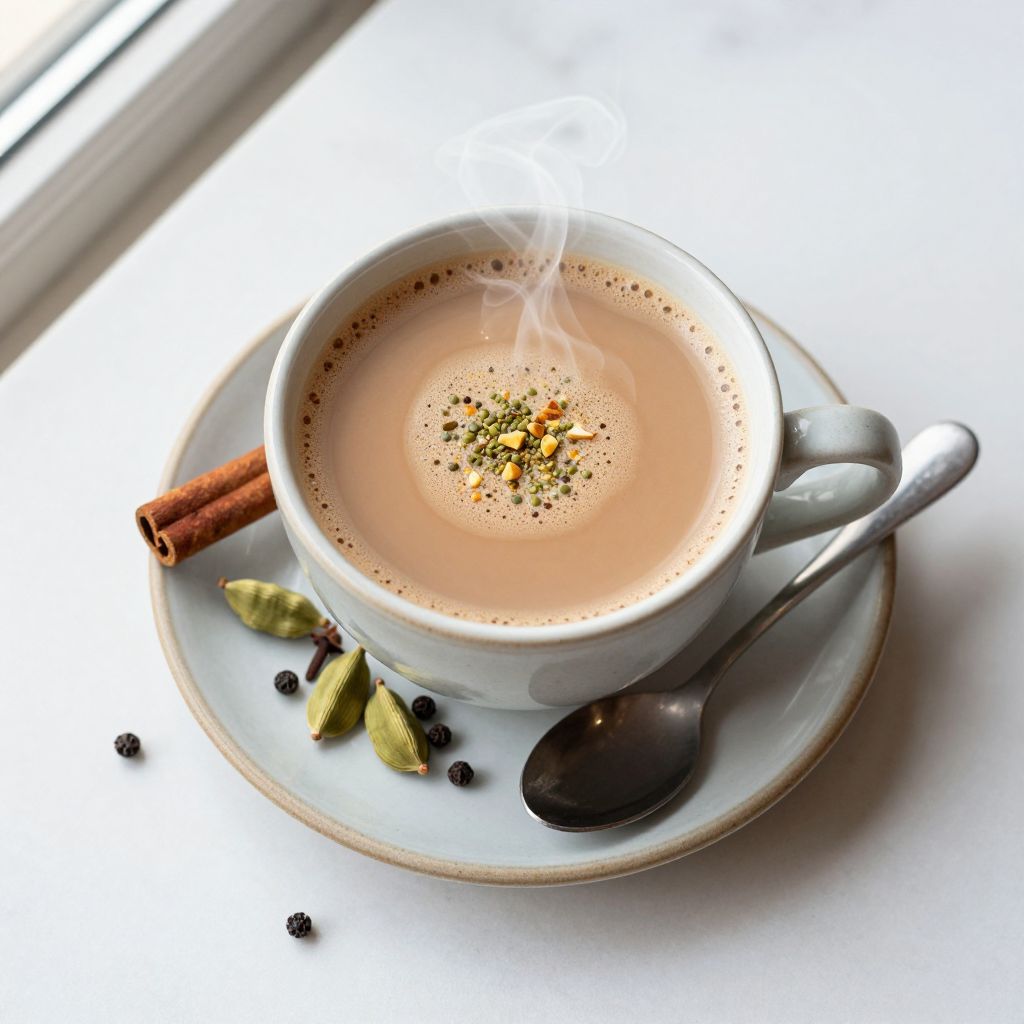
Adeni Chai
Ingredients
Equipment
Method
- Heat a small saucepan over medium heat for 30 seconds, then add the cloves, cardamom pods, cinnamon stick, and peppercorns. Toast, stirring constantly, for 1 to 2 minutes until fragrant.
- Pour in the 2 cups of water and add the grated ginger. Stir to combine and bring to a gentle boil.
- Reduce the heat to medium-low and simmer uncovered for 5 minutes to extract flavor from the spices and ginger.
- Add the loose leaf black tea, stir, and steep for 2 to 3 minutes until the color deepens.
- Slowly pour in the milk while stirring gently to combine.
- Heat the mixture over medium heat until steaming and just beginning to rise, about 2 to 3 minutes, without allowing it to boil over.
- Strain the chai through a fine-mesh sieve into cups, holding back the spices and tea leaves.
- Stir in sugar or honey to taste, let cool slightly, and serve hot.