
Picture this: the rich aroma of malt wafts through your kitchen as you brew your own Dubbel. This traditional Belgian beer style is a true labor of love, with its deep caramel notes and complex flavors. It’s the perfect brew for cozy evenings or gatherings with friends, offering warmth and a touch of sophistication. With a balance of sweetness and a hint of spice, you’ll find this recipe is not just a drink but an experience. Let’s dive into the ingredients and steps to craft this delightful brew!
Why You’ll Love This Recipe
Crafting your own Dubbel at home is rewarding and fun.
- Complex flavor profile that evolves with time.
- Perfect for sharing at gatherings or enjoying solo.
- Allows you to experiment with different ingredients.
- Cost-effective compared to store-bought craft beers.
- Creates a sense of accomplishment with every sip.
My Experience Making This Recipe
When I first brewed Dubbel, the entire house filled with a warm, inviting scent that made everyone curious. Guests were impressed by the depth of flavor and the beautiful amber hue, which made me feel like a real brewmaster.
Each sip revealed layers of caramel, dark fruit, and just a hint of spice. It was a joy to share this brew with friends, and watching them enjoy it made all the effort worthwhile.
Recipe Overview
- Recipe Name: Dubbel
- Servings: 5 gallons
- Prep Time: 30 minutes
- Cook Time: 60 minutes
- Total Time: 3-4 weeks (including fermentation)
- Course: Beverage
- Cuisine: Belgian
- Calories per Serving: Approximately 200
Equipment You Will Need
- Brew kettle (at least 5 gallons)
- Fermentation vessel with airlock
- Sanitizer (like Star San)
- Stirring spoon (long handle)
- Thermometer
- Hydrometer
- Bottling bucket and bottles
Ingredients for Dubbel
- 9 lbs Belgian Pilsner malt
- 1 lb Munich malt
- 1 lb Caramel malt (60L)
- 0.5 lb Special B malt
- 1 oz Hallertau hops (bittering)
- 0.5 oz Saaz hops (flavor)
- 1 packet Belgian yeast (such as Wyeast 1214 or Safbrew T58)
- 3/4 cup corn sugar (for carbonation)
Ingredient Notes and Substitutions
- Belgian Pilsner malt: This provides the base flavor and body. You can substitute with pale malt but the flavor will be lighter.
- Munich malt: Adds a rich, malty backbone. If unavailable, try using Vienna malt for a similar effect.
- Caramel malt (60L): This contributes sweetness and color. You could use a lighter caramel malt, but the flavor will be less pronounced.
- Special B malt: It gives dark fruit notes. If you can’t find it, try using a darker caramel malt for some depth.
- Belgian yeast: This imparts the signature fruity esters. A generic ale yeast can work, but will lack the complexity.
How to Make Dubbel
Step 1: Prepare Your Equipment
Start by sanitizing all your equipment to prevent any unwanted bacteria. Cleanliness is critical in brewing, as it affects the final product.
Step 2: Heat the Water
In your brew kettle, heat about 3 gallons of water to around 160°F (71°C). This temperature will help extract the sugars from the grains effectively.
Step 3: Mash the Grains
Add the crushed grains to the hot water and maintain the temperature around 150-155°F (65-68°C) for about 60 minutes. This process converts starches to sugars, which is essential for fermentation.
Step 4: Sparge the Grains
After mashing, rinse the grains with hot water to extract the sugars. This is called sparging and it maximizes your yield, so don’t skip this step!
Step 5: Boil the Wort
Bring the liquid (now called wort) to a boil. Add the Hallertau hops at the start of the boil for bitterness, and the Saaz hops in the last 15 minutes for flavor.
Step 6: Cool the Wort
After boiling for 60 minutes, cool the wort quickly using an immersion chiller or an ice bath. Rapid cooling prevents any off-flavors from developing.
Step 7: Fermentation
Transfer the cooled wort to the sanitized fermentation vessel and pitch the yeast. Seal with an airlock and let it ferment for about 2 weeks at around 65-70°F (18-21°C).
Step 8: Bottling
Once fermentation is complete, dissolve the corn sugar in a small amount of water, then add it to the bottling bucket. This will carbonate your beer, so don’t forget this crucial step!
Pro Tip: Be patient during fermentation; it’s tempting to rush but allowing it enough time results in better flavor.
Tips for the Best Dubbel
- Use fresh ingredients for the best flavor; old hops lose their potency.
- Maintain a stable fermentation temperature to avoid off-flavors.
- Consider aging your Dubbel for a few months to enhance its complexity.
- Record your process and any adjustments for future batches.
- Share with friends to get feedback and improve your brewing skills.
Common Mistakes to Avoid
- Not sanitizing equipment can lead to contamination and spoilage.
- Skipping the sparging process results in lower sugar extraction.
- Fermenting at extreme temperatures can produce off-flavors.
- Rushing the bottling process can lead to over-carbonation or flat beer.
Serving Suggestions
Pair your Dubbel with hearty dishes or enjoy it on its own. Here are some pairing ideas:
- Beef stew for a comforting meal.
- Rich chocolate desserts to complement the beer’s sweetness.
- Blue cheese for a savory contrast.
- Spicy dishes to balance the maltiness.
Variations to Try
- Add spices like coriander or orange peel for a unique twist.
- Experiment with different yeast strains for varied flavors.
- Consider aging with oak chips to impart a subtle woodiness.
- Incorporate fruit like cherries or figs for added complexity.
Dietary Adaptations
- Gluten-free: Use gluten-free grains like sorghum or rice malt.
- Dairy-free: This recipe is naturally dairy-free.
- Vegan: Ensure the yeast is vegan-friendly, which most are.
- Low-carb/keto: Brewing a low-carb beer is complex but can be done with special malt substitutes.
Storage and Reheating
Refrigerator
Store your bottled Dubbel in a cool, dark place or the refrigerator. This helps preserve the flavors and carbonation.
- Keep bottles upright to prevent sediment disturbance.
- Consume within 6 months for the best flavor.
Freezer
Freezing beer is not recommended as it can alter the flavor and carbonation. However, if necessary, use a deep freezer briefly.
- Only freeze if you want to chill it quickly, but don’t store long-term.
Reheating
Reheating beer is not typical, but if you want a warm drink, gently heat it on the stove. Avoid boiling, as it will alter the flavors.
- Warm it slowly and taste for any flavor changes.
Nutrition Information
| Nutrient | Amount |
|---|---|
| Calories | 200 |
| Total Fat | 0 g |
| Saturated Fat | 0 g |
| Carbohydrates | 15 g |
| Fiber | 0 g |
| Sugar | 0 g |
| Protein | 2 g |
| Sodium | 5 mg |
| Cholesterol | 0 mg |
This nutritional information is approximate and may vary based on specific ingredients and brewing methods.
Frequently Asked Questions
Can I use different hops?
Yes, you can experiment with different hop varieties for unique flavors, but be mindful of their bitterness levels.
How long can I store my Dubbel?
For the best flavor, consume your Dubbel within 6 months. It can age longer, but the flavor profile will change.
What if my beer is too bitter?
If your Dubbel turns out too bitter, try adding a touch of sugar during bottling to balance it out.
Can I make this a gluten-free beer?
Absolutely! Use gluten-free grains like rice malt or sorghum for a gluten-free version.
How do I know when fermentation is complete?
Use a hydrometer to check the specific gravity; it should remain stable over a few days to indicate fermentation is done.
Final Thoughts
Brewing your own Dubbel is a delightful way to explore the art of homebrewing. Each batch offers a chance to refine your skills and share something special.
So gather your ingredients, get brewing, and don’t be afraid to make it your own! For more delicious recipe ideas, check out my Doppelbock recipe and Bourbon Renewal recipe.
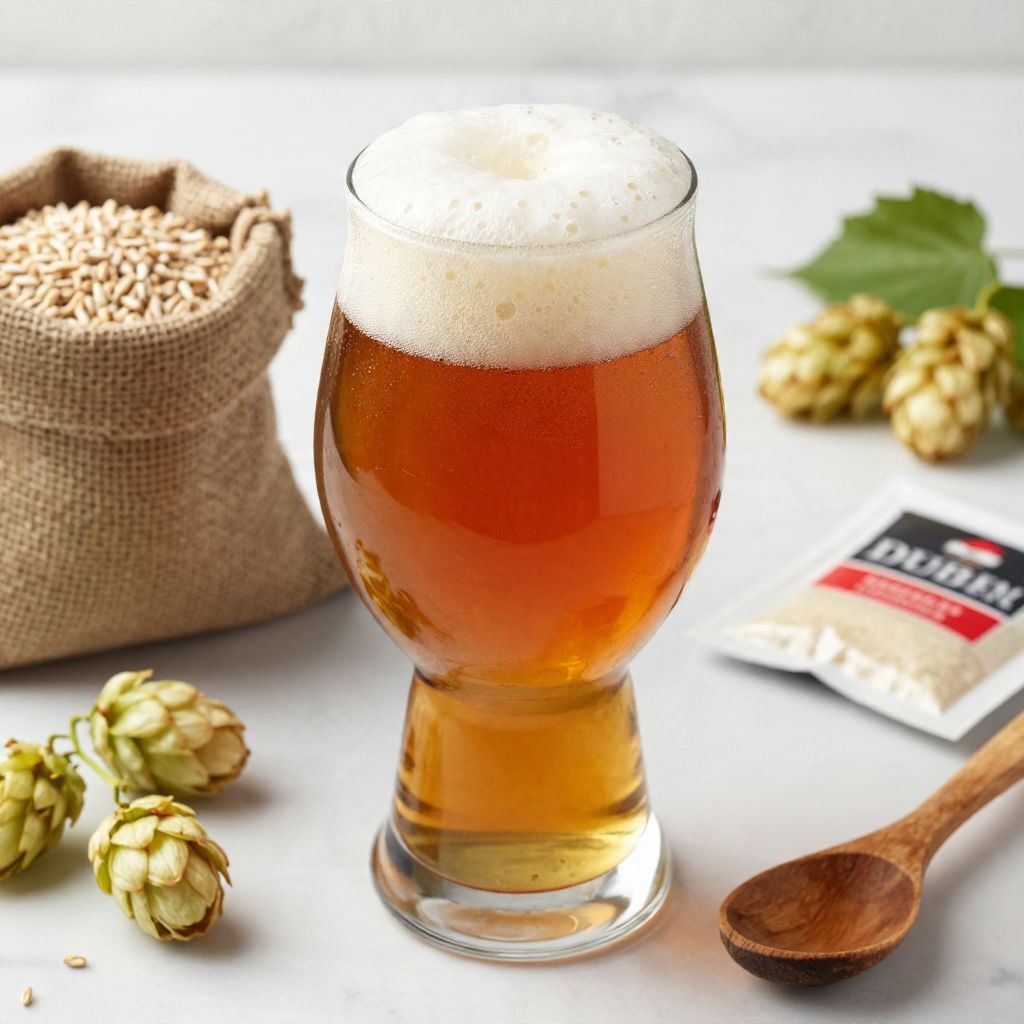
Dubbel
Ingredients
Equipment
Method
- Sanitize all your equipment to prevent bacteria.
- Heat about 3 gallons of water to around 160°F (71°C).
- Add the crushed grains to the hot water and maintain the temperature around 150-155°F (65-68°C) for about 60 minutes.
- After mashing, rinse the grains with hot water to extract the sugars.
- Bring the liquid (wort) to a boil, adding Hallertau hops at the start for bitterness and Saaz hops in the last 15 minutes for flavor.
- Cool the wort quickly using an immersion chiller or an ice bath.
- Transfer the cooled wort to the sanitized fermentation vessel and pitch the yeast.
- Seal with an airlock and let it ferment for about 2 weeks at around 65-70°F (18-21°C).
- Once fermentation is complete, dissolve the corn sugar in a small amount of water and add it to the bottling bucket.