
When you’re feeling under the weather, a warm cup of Throat Coat Tea can be a soothing embrace. This cozy tea blends herbal ingredients that work together to ease discomfort while offering a touch of warmth and comfort. With its delicate flavors and soothing properties, this tea is perfect for chilly evenings or whenever you need a little TLC. Let’s get started on this simple yet effective recipe that will quickly become your go-to remedy.
Why You’ll Love This Recipe
This tea is not just delicious; it’s packed with benefits.
- Soothes sore throats effectively.
- Easy to prepare with minimal ingredients.
- Customizable to suit your taste.
- Perfect for cold evenings or when you’re feeling ill.
- Can be made ahead for quick relief.
My Experience Making This Recipe
As I sipped my first cup of Throat Coat Tea, the warmth spread through me like a hug from the inside. The blend of herbs created a flavor that was uniquely comforting, reminding me of childhood remedies my mother would brew.
My friends who tried it were amazed at how quickly it calmed their throats. It made me feel like a wellness guru, all thanks to a simple cup of tea!
Recipe Overview
- Recipe Name: Throat Coat Tea
- Servings: 2
- Prep Time: 5 minutes
- Cook Time: 10 minutes
- Total Time: 15 minutes
- Course: Beverage
- Cuisine: Herbal
- Calories per Serving: 40
Equipment You Will Need
- Teapot or saucepan
- Measuring spoons
- Strainer or tea infuser
- Cup or mug
Ingredients for Throat Coat Tea
- 2 cups water
- 1 tablespoon dried slippery elm bark
- 1 tablespoon dried marshmallow root
- 1 tablespoon dried licorice root
- 1 tablespoon honey (optional for sweetness)
- 1 tablespoon lemon juice (optional for flavor)
Ingredient Notes and Substitutions
- Slippery elm bark: Known for its soothing properties, this is a must-have. You can substitute with demulcent herbs like comfrey.
- Marshmallow root: Adds a soothing effect and thickness to the tea. If needed, you can use coconut oil for a similar soothing feel.
- Licorice root: Offers natural sweetness and throat relief. If you’re avoiding sugars, anise seeds can provide a similar flavor profile.
- Honey: Adds sweetness and has antibacterial properties. Maple syrup can be a vegan substitute.
- Lemon juice: Brightens the flavor and adds vitamin C. You can skip it if you prefer a milder taste.
How to Make Throat Coat Tea
Step 1: Boil the Water
Start by bringing 2 cups of water to a gentle boil. This is crucial as boiling water helps extract the beneficial compounds from the herbs.
Step 2: Add the Herbs
Once boiling, remove the water from heat and add the slippery elm bark, marshmallow root, and licorice root. This allows the herbs to steep, releasing their soothing properties into the water.
Step 3: Steep
Cover the pot and let the herbs steep for about 10 minutes. Covering the pot retains heat, ensuring a stronger infusion.
Step 4: Strain the Tea
After steeping, strain the tea into a cup using a fine mesh strainer or tea infuser. This removes the solid herbs, leaving you with a smooth tea.
Step 5: Sweeten
If desired, stir in honey for sweetness. Honey not only adds flavor but also enhances the soothing quality of the tea.
Step 6: Add Lemon Juice
For a zesty kick, squeeze some lemon juice into your cup. The acidity balances the sweetness and adds a refreshing element.
Step 7: Taste and Adjust
Take a sip and adjust sweetness or acidity as needed. Personalizing the flavor ensures you enjoy every drop.
Step 8: Enjoy Warm
Drink your Throat Coat Tea while it’s warm. The heat will provide immediate comfort to your throat.
Pro Tip: Always use fresh water for the best flavor and extraction of herbal properties.
Tips for the Best Throat Coat Tea
- Use high-quality herbs for maximum effectiveness and flavor.
- Experiment with steeping times to find your preferred strength.
- Store leftover herbs in a cool, dry place to maintain freshness.
- For added flavor, try infusing with ginger or cinnamon.
- Drink this tea in the evening for a calming bedtime ritual.
Common Mistakes to Avoid
- Not covering the pot while steeping can dilute the flavor. Covering retains heat and strength.
- Using boiling water directly on delicate herbs can burn them. Always allow the water to cool slightly.
- Skipping the straining step leads to gritty tea. Straining ensures a smooth drinking experience.
- Oversteeping can create bitterness. Stick to the recommended time for the best taste.
Serving Suggestions
This tea pairs wonderfully with light snacks or desserts.
- Herbal crackers or toast with butter
- Fresh fruit like apples or pears
- Lightly sweetened oatmeal cookies
- Simple buttered muffins
Variations to Try
- Add fresh ginger slices for a spicy kick.
- Use chamomile flowers for additional calming effects.
- Incorporate peppermint for a refreshing twist.
- Mix in a hint of turmeric for added anti-inflammatory benefits.
Dietary Adaptations
- Gluten-free: All ingredients are naturally gluten-free.
- Dairy-free: This recipe is dairy-free; feel free to add non-dairy milk if desired.
- Vegan: Substitute honey with maple syrup for a vegan option.
- Low-carb/keto: Keep honey to a minimum or eliminate it for a keto-friendly version.
Storage and Reheating
Refrigerator
Store any leftover tea in an airtight container in the fridge for up to 3 days.
- Reheat gently on the stove or in the microwave.
- Be sure to stir before consuming, as flavors may settle.
Freezer
For long-term storage, freeze the tea in ice cube trays.
- Once frozen, transfer cubes to a freezer bag.
- Thaw as needed for quick use in smoothies or to drink.
Reheating
Reheat your tea on the stove over low heat for even warming.
- Avoid boiling again to preserve flavors.
- Adjust sweetness after reheating if needed.
Nutrition Information
| Nutrient | Amount |
|---|---|
| Calories | 40 |
| Total Fat | 0g |
| Saturated Fat | 0g |
| Carbohydrates | 10g |
| Fiber | 0g |
| Sugar | 8g |
| Protein | 0g |
| Sodium | 0mg |
| Cholesterol | 0mg |
This information is approximate and can vary based on ingredients used.
Frequently Asked Questions
Can I substitute slippery elm bark?
Yes, you can use demulcent herbs like comfrey as an alternative.
Can I make this tea ahead of time?
Absolutely! You can prepare it in advance and store it in the refrigerator.
How long can I store the tea?
It can be stored in the fridge for up to 3 days or frozen for longer storage.
Why is my tea too bitter?
This can happen if you oversteep the herbs. Stick to the recommended steeping time for best flavor.
Is this tea safe for children?
Yes, but consult with a pediatrician if your child has any allergies or health concerns.
Final Thoughts
Making your own Throat Coat Tea is a delightful way to care for yourself during those tough times. With just a few simple ingredients, you can create a soothing drink that warms both body and soul.
So gather your herbs, pour a cup, and embrace the gentle comfort this tea offers. For more herbal remedies, check out this lymphatic drainage tea recipe or try this sore throat tea recipe for additional relief.
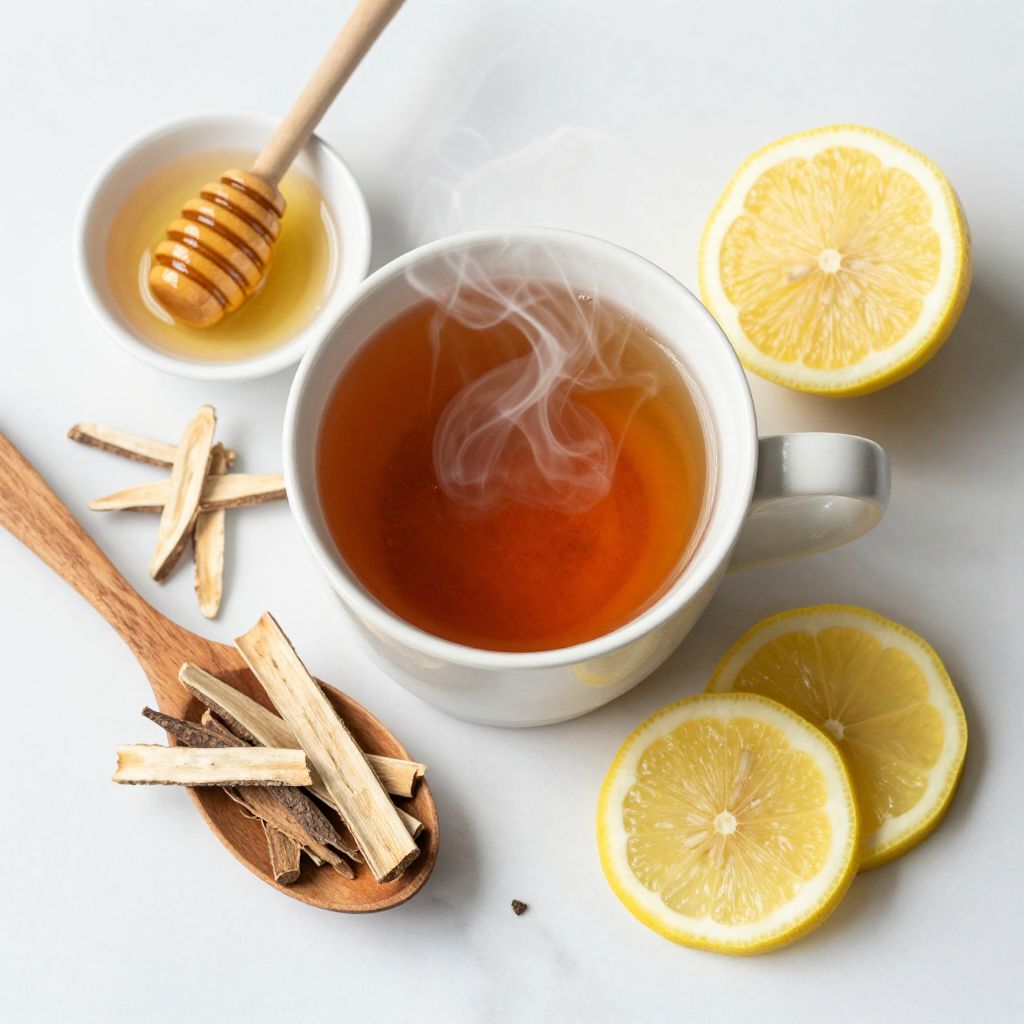
Throat Coat Tea
Ingredients
Equipment
Method
- Start by bringing 2 cups of water to a gentle boil.
- Once boiling, remove the water from heat and add the slippery elm bark, marshmallow root, and licorice root.
- Cover the pot and let the herbs steep for about 10 minutes.
- After steeping, strain the tea into a cup using a fine mesh strainer or tea infuser.
- If desired, stir in honey for sweetness.
- For a zesty kick, squeeze some lemon juice into your cup.
- Take a sip and adjust sweetness or acidity as needed.
- Drink your Throat Coat Tea while it’s warm.