
Imagine a warm evening, the sun setting, and you’re savoring a drink that’s as enigmatic as it is flavorful. Making your own Absinthe at home not only connects you to centuries of tradition but also allows you to craft a unique spirit tailored to your taste. This recipe captures the herbal complexity and aromatic profile that makes Absinthe so special, with notes of anise and wormwood that dance on your palate. Plus, the process is surprisingly simple and satisfying, making it a fun project for any spirit enthusiast. Let’s dive into the ingredients and steps to create your very own homemade Absinthe.
Why You’ll Love This Recipe
This homemade Absinthe is a labor of love that pays off with every sip.
- Rich, herbal flavor profile that you can customize.
- Connects you to a storied tradition of spirit-making.
- Impressive conversation starter at gatherings.
- Can be adjusted for sweetness and strength.
- Perfect for cocktail experimentation.
My Experience Making This Recipe
When I first attempted to make Absinthe, I was both excited and a bit intimidated. The aroma of the herbs simmering combined with the high-proof alcohol was intoxicating and instantly transported me to a quaint Parisian bar.
As I let my concoction steep, I felt a sense of anticipation. Sharing my homemade Absinthe with friends was a delight, as their eyes lit up with curiosity and appreciation for the unique flavors that emerged from my kitchen.
Recipe Overview
- Recipe Name: Absinthe Recipe Homemade
- Servings: 10
- Prep Time: 30 minutes
- Infusion Time: 2 weeks
- Total Time: 2 weeks, 30 minutes
- Course: Beverage
- Cuisine: French
- Calories per Serving: Approximately 110
Equipment You Will Need
- Large glass jar with a tight seal
- Fine mesh strainer
- Cheesecloth
- Measuring cups and spoons
- Funnel
- Dark glass bottles for storage
Ingredients for Absinthe Recipe Homemade
- 750 ml of high-proof alcohol (such as Everclear or similar)
- 1 tablespoon of dried wormwood
- 2 tablespoons of dried anise seeds
- 1 tablespoon of dried fennel seeds
- 1 teaspoon of angelica root
- 1 teaspoon of hyssop
- 1 tablespoon of licorice root
- 1-2 teaspoons of sugar (optional, for sweetness)
- Water (for dilution)
Ingredient Notes and Substitutions
- High-proof alcohol: This is the base of your Absinthe, providing the necessary potency. You can substitute it with a lower-proof spirit, but the final result will be milder.
- Dried wormwood: Essential for that signature bitter note. If unavailable, you can use a smaller amount of gentian root for a similar bitterness.
- Dried anise and fennel: These bring sweetness and aroma. You can swap one for the other, but using both yields a more complex flavor.
- Angelica root: Adds earthiness. You may omit it if you don’t have it, though it enhances the flavor.
- Licorice root: Contributes sweetness and depth. If you prefer a less sweet version, reduce or skip it.
How to Make Absinthe Recipe Homemade
Step 1: Prepare Your Jar
Start by selecting a clean, large glass jar. Ensure it has a tight seal to prevent any evaporation during the infusion process.
Step 2: Combine the Herbs
Add the dried wormwood, anise seeds, fennel seeds, angelica root, hyssop, and licorice root into the jar. This blend creates the herbal backbone of your Absinthe.
Step 3: Add the Alcohol
Pour in the high-proof alcohol until it completely covers the herbs. This extraction process is crucial for developing the unique flavors.
Step 4: Seal and Shake
Seal the jar tightly and give it a gentle shake. This helps to release the essential oils from the herbs into the alcohol.
Step 5: Steep for Two Weeks
Store the jar in a cool, dark place for two weeks. Shake it gently every few days to keep the herbs in motion, ensuring an even extraction.
Step 6: Strain the Mixture
After two weeks, strain the mixture through a fine mesh strainer lined with cheesecloth. This removes the solid herbs, leaving you with a clear liquid.
Step 7: Sweeten Your Absinthe
If you prefer a sweeter Absinthe, dissolve sugar in a small amount of warm water and add it to the strained liquid. Adjust the sweetness according to your taste.
Step 8: Dilute and Bottle
Finally, dilute your Absinthe with water to your preferred strength. Transfer it into dark glass bottles for storage. This helps to preserve the flavor and potency.
Pro Tip: Always taste your Absinthe before adding sugar; you might find the natural bitterness perfect as is!
Tips for the Best Absinthe Recipe Homemade
- Use high-quality herbs for the best flavor—freshness matters.
- Adjust the herb ratios to suit your taste; feel free to experiment.
- Store your Absinthe in a cool, dark place to maintain its quality.
- Let it rest for a few days after bottling for the flavors to meld.
- Serve with ice water to unlock the full aroma and flavor.
Common Mistakes to Avoid
- Skipping the two-week infusion period will result in a weak flavor.
- Using low-quality herbs can lead to an unpleasant taste.
- Not straining thoroughly may leave sediment in your final product.
- Over-sweetening can mask the herbal notes; taste as you go.
- Storing in light-exposed containers can degrade flavor over time.
Serving Suggestions
Homemade Absinthe pairs beautifully with various mixers and garnishes. Here are some ideas to enhance your sipping experience:
- Serve with chilled water to create the classic louche effect.
- Pair with sugar cubes for a traditional French touch.
- Add to cocktails for an herbal twist in drinks like the Sazerac.
- Use it in desserts, such as sorbets or pastries, for a unique flavor.
- Enjoy with dark chocolate for a decadent combination.
Variations to Try
- Experiment with different herbs like mint or basil for a fresh twist.
- Add spices such as cardamom or cloves for warmth and complexity.
- Try using flavored simple syrups to vary the sweetness.
- Infuse with citrus peels for a bright, zesty profile.
- Create a low-alcohol version by mixing with a lighter spirit.
Dietary Adaptations
- Gluten-Free: This recipe is naturally gluten-free; no adjustments needed.
- Dairy-Free: No dairy ingredients are used, so it’s suitable for all.
- Vegan: All ingredients are plant-based, making it vegan-friendly.
- Low-Carb/Keto: Limit or omit sugar for a low-carb option.
Storage and Reheating
Refrigerator
Store your Absinthe in a cool, dark place, preferably in the fridge after opening.
- Keep it in dark glass bottles to protect from light.
- It can last for years if stored properly.
Freezer
Absinthe can be stored in the freezer without concern for texture changes.
- Chilling enhances the unique flavor experience.
- Serve cold for a refreshing taste.
Reheating
Generally, Absinthe is served cold or at room temperature, so no reheating is needed.
- Avoid heating, as it can alter the delicate flavors.
- Mix with cold water or ice for the best experience.
Nutrition Information
| Nutrient | Amount |
|---|---|
| Calories | 110 |
| Total Fat | 0g |
| Saturated Fat | 0g |
| Carbohydrates | 1g |
| Fiber | 0g |
| Sugar | 0g |
| Protein | 0g |
| Sodium | 0mg |
| Cholesterol | 0mg |
Nutrition values are estimates and can vary based on the ingredients used.
Frequently Asked Questions
Can I use fresh herbs instead of dried?
Fresh herbs can be used, but you will need to increase the quantity due to their lower potency.
How long can I store homemade Absinthe?
It can last for years if stored properly in a cool, dark place.
Can I make Absinthe without wormwood?
While wormwood is essential for authentic flavor, you can experiment with gentian root for a different bitter note.
What should I do if my Absinthe is too bitter?
Add a bit of sugar or simple syrup to balance the bitterness to your taste.
Can I make this recipe in smaller batches?
Absolutely! Just adjust the ingredient quantities proportionally for your desired batch size.
Final Thoughts
Crafting your own Absinthe is not just about making a spirit; it’s about creating an experience. Each sip tells a story of tradition and personal flavor, making it a worthy addition to your home bar.
So roll up your sleeves and give this recipe a try. You might just find your new favorite drink waiting for you.
For more delightful recipes, check out this boozy butterbeer recipe or our universal butterbeer recipe for an enchanting treat!
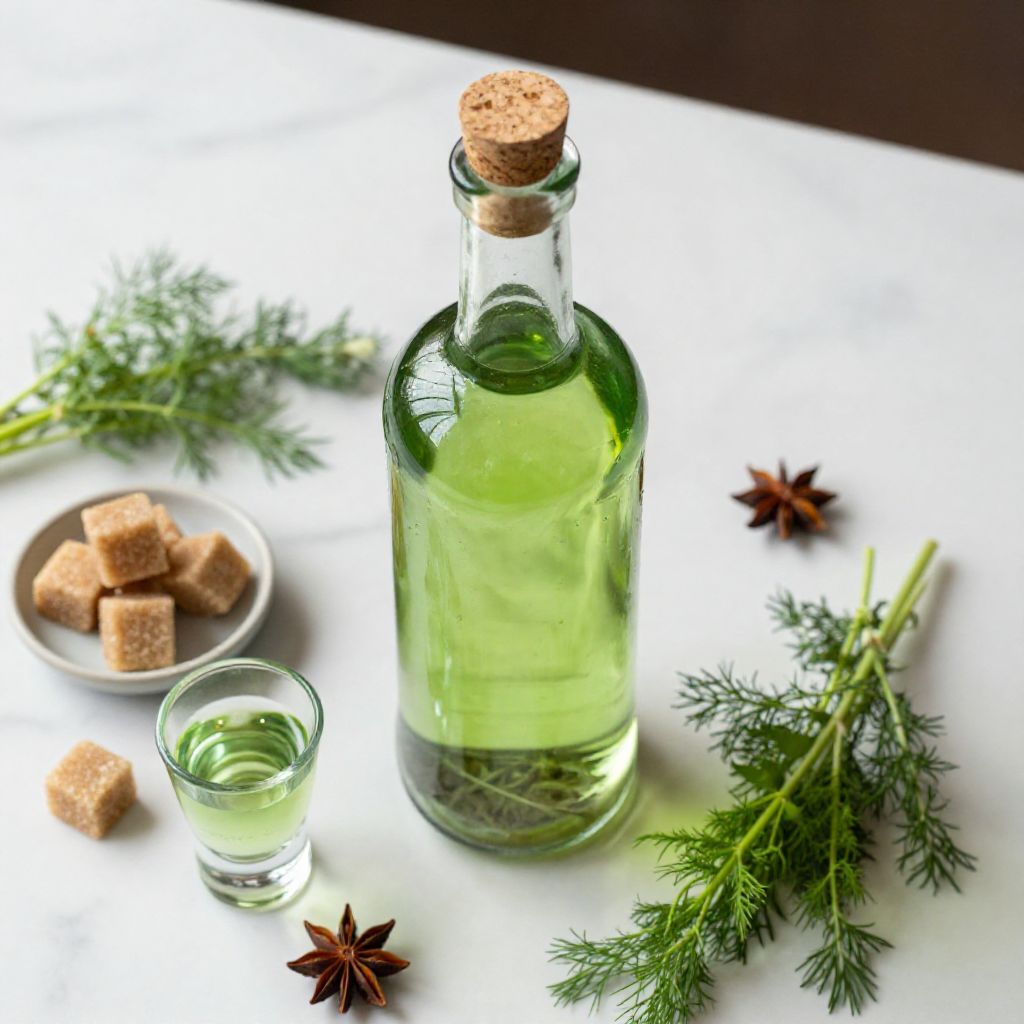
Absinthe Recipe Homemade
Ingredients
Equipment
Method
- Start by selecting a clean, large glass jar with a tight seal.
- Add the dried wormwood, anise seeds, fennel seeds, angelica root, hyssop, and licorice root into the jar.
- Pour in the high-proof alcohol until it completely covers the herbs.
- Seal the jar tightly and give it a gentle shake.
- Store the jar in a cool, dark place for two weeks, shaking gently every few days.
- After two weeks, strain the mixture through a fine mesh strainer lined with cheesecloth.
- If desired, dissolve sugar in a small amount of warm water and add it to the strained liquid.
- Dilute your Absinthe with water to your preferred strength and transfer it into dark glass bottles for storage.