
There’s something deeply comforting about a glass of badam milk on a quiet morning, when the world is still and you need a moment of warmth before the day begins.
This classic Indian almond milk drink has been nourishing families for generations, and it deserves a permanent spot in your kitchen routine. Badam milk combines blanched almonds, milk, and a touch of cardamom or saffron to create a drink that’s naturally sweet, creamy, and packed with protein and healthy fats.
What makes this recipe special is its simplicity paired with genuine nutrition. You’re not buying processed almond milk from a shelf; you’re making something real from whole ingredients that your body actually recognizes.
Whether you’re looking for a post-workout recovery drink, a bedtime ritual, or a way to sneak nutrition into your day, badam milk delivers on flavor and function. Let’s dive into how to make it.
Why You’ll Love This Recipe
This recipe checks every box for a drinkable superfood that tastes indulgent without guilt.
- Naturally creamy and rich without any artificial additives or emulsifiers
- Takes just 10 minutes from start to sip, making it perfect for busy mornings
- Packed with almonds, which provide protein, magnesium, and vitamin E for sustained energy
- Infinitely customizable: serve it hot, iced, or even use it as a base for smoothie bowls
- A nostalgic flavor profile that works for kids and adults alike
My Experience Making This Recipe
I first learned to make badam milk from my neighbor who grew up in Mumbai, and I’ve been slightly obsessed ever since. She taught me that the secret isn’t fancy ingredients; it’s taking the time to blanch the almonds properly and not rushing the blending.
The first time I made it, my kitchen filled with this gentle, nutty aroma that made everyone stop and ask what I was cooking. My 7-year-old actually requested it over chocolate milk, which felt like winning the parenting lottery.
I’ve experimented with adding dates for natural sweetness, a pinch of nutmeg for warmth, and even rose water for special occasions. Every version tastes good, but the classic combination of cardamom and saffron hits differently, hitting that sweet spot between familiar and special.
Recipe Overview
- Recipe Name: Badam Milk
- Servings: 2 glasses
- Prep Time: 10 minutes
- Cook Time: 5 minutes
- Total Time: 15 minutes
- Course: Beverages
- Cuisine: Indian
- Calories per Serving: 180
Equipment You Will Need
- Blender or food processor
- Small saucepan
- Fine mesh strainer or cheesecloth
- Measuring spoons and cups
- Wooden spoon for stirring
- Glasses for serving
- Small bowl for soaking almonds
Ingredients for Badam Milk
- 1 cup blanched almonds (or 1.25 cups raw almonds, for soaking and blanching)
- 2 cups whole milk (dairy or unsweetened plant-based)
- 1 tablespoon sugar or honey (adjust to taste)
- 1/4 teaspoon cardamom powder
- A pinch of saffron strands (optional but recommended)
- 1/4 teaspoon vanilla extract (optional)
- A pinch of salt
Ingredient Notes and Substitutions
- Blanched almonds: Using pre-blanched almonds saves time and effort. If using raw almonds, soak them in hot water for 5 minutes, then slip off the skins before blending. Blanching removes bitter compounds and makes the drink smoother.
- Whole milk: Whole milk creates the richest texture, but you can use 2% milk for a lighter version or unsweetened almond or oat milk for a dairy-free option. The trade-off is slightly less creaminess with plant-based milks.
- Sugar: Honey, dates, or jaggery add deeper sweetness if you prefer avoiding refined sugar. Each sweetener brings its own flavor note, so experiment to find your preference.
- Cardamom powder: Ground cardamom is easier to work with than whole pods, but if using whole pods, crush 2 or 3 pods and add them during cooking, then strain. This spice is non-negotiable; it defines badam milk’s character.
- Saffron strands: These add a luxury touch and beautiful color but aren’t essential. If skipping saffron, the milk will still taste wonderful, just slightly less special.
How to Make Badam Milk
Step 1: Prepare Your Almonds
If using raw almonds, soak them in hot water for 5 minutes, then drain and slip off the brown skins by rubbing them gently between your fingers. If your almonds are already blanched, you can skip this step and move straight to grinding.
Step 2: Grind the Almonds into a Paste
Add your blanched almonds to a blender with 1/2 cup of milk and blend on high speed for 2 to 3 minutes until you get a smooth, creamy almond paste. Grinding almonds with a small amount of liquid first prevents them from turning into almond butter and ensures a silky texture.
Step 3: Strain the Almond Mixture
Pour the almond paste and milk through a fine mesh strainer or cheesecloth into a bowl, pressing gently with the back of a spoon to extract all the liquid. This step removes any gritty texture and gives you that signature smooth badam milk consistency.
Step 4: Combine with Remaining Milk
Pour the strained almond milk into a small saucepan and add the remaining 1.5 cups of milk, stirring well to combine. This dilutes the concentrate to the right consistency while maintaining maximum almond flavor.
Step 5: Add Sweetener and Spices
Stir in your sugar or honey, cardamom powder, saffron strands (if using), and a tiny pinch of salt. The salt amplifies the almond flavor without making the drink taste salty, a trick I learned that makes all the difference.
Step 6: Heat Gently Over Low Heat
Place the saucepan over low to medium heat and warm the milk for 3 to 5 minutes, stirring occasionally, until it’s hot but not boiling. Low heat prevents the milk from breaking down and keeps the delicate flavors from becoming harsh.
Step 7: Add Optional Vanilla Extract
If using vanilla extract, stir it in after removing the pan from heat, as heat can diminish its flavor. This step is optional but adds a subtle sweetness that rounds out the drink beautifully.
Step 8: Taste and Adjust
Sip a small amount and adjust the sweetness, cardamom intensity, or salt to your preference before serving. Every blender and milk brand behaves slightly differently, so this moment of tasting ensures your drink is exactly how you like it.
Pro Tip: Make a batch of almond paste at the start of your week and store it in the fridge, then you can have badam milk ready in 5 minutes any morning by simply reheating it with fresh milk.
Tips for the Best Badam Milk
- Use fresh almonds that smell nutty and pleasant, not rancid or stale. Stale almonds will make your drink taste off no matter what else you do.
- Blend the almonds with milk, not water, for creamier results. Water doesn’t carry fat the way milk does, so the texture suffers.
- Don’t skip the straining step, even if you have a high-powered blender. This removes any grittiness and creates that silky, restaurant-quality texture.
- Toast your almonds lightly in a dry pan for 2 minutes before soaking if you want a deeper, more complex nutty flavor. This small step transforms the drink entirely.
- Make badam milk fresh each time for the best taste, but you can prep the almond paste the night before and store it in the fridge. The drink stays fresh for up to 3 days when refrigerated.
- Serve badam milk within an hour of making it for the best taste and texture. After that, the almonds start to separate slightly and the flavors flatten.
Common Mistakes to Avoid
- Boiling the milk: High heat can cause the milk to scorch at the bottom of the pan and makes cardamom taste bitter. Always keep the heat low and stir regularly.
- Using unblanched almonds: The brown skin creates a slightly bitter, astringent taste that overpowers the delicate sweetness. Blanching takes 5 minutes and changes everything.
- Skipping the straining step: If you don’t strain, you’ll end up with a gritty drink that feels pasty on your tongue instead of smooth and luxurious.
- Adding saffron directly to cold milk: Saffron needs to steep in warm liquid to release its color and flavor. Either add it while the milk heats or bloom it separately in a tablespoon of warm milk first.
- Using too much cardamom: It’s easy to overdo this spice, which then dominates the drink and masks the subtle almond flavor. Start with 1/4 teaspoon and add more if needed.
Serving Suggestions
Badam milk shines on its own, but you can serve it alongside light breakfast pastries, morning biscuits, or even as a post-dinner digestif. The warm spiced milk pairs beautifully with quiet moments, but it also works cold as a refreshing afternoon drink.
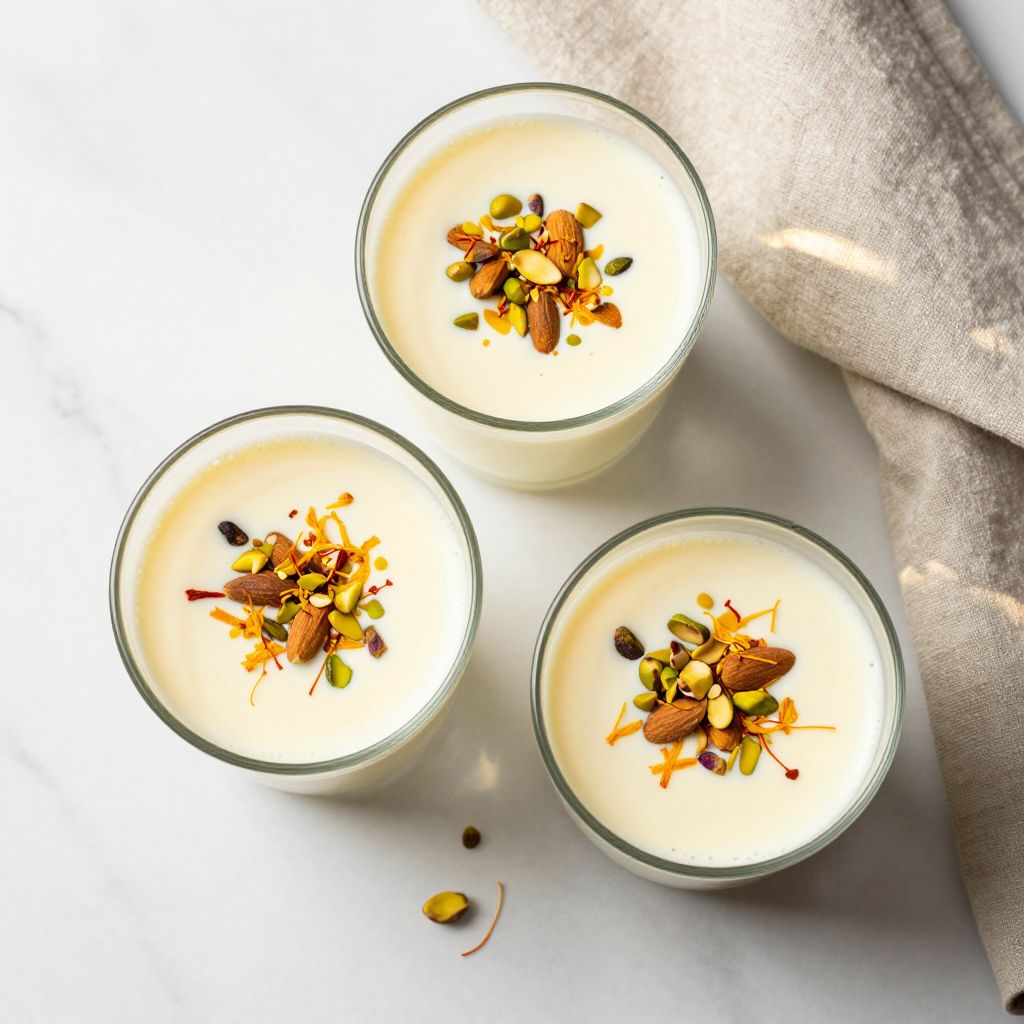
- Serve hot in small glasses with a sprinkle of sliced almonds or pistachios on top for visual appeal
- Pour over ice and add a shot of espresso to create a creamy almond coffee drink
- Chill completely and serve with a handful of fresh berries for a light breakfast smoothie
- Warm and serve alongside cardamom biscuits, rusks, or digestive cookies for dunking
- Blend into oatmeal or granola for a more substantial breakfast bowl with extra creaminess
Variations to Try
- Badam Milk with Dates: Replace sugar with 2 to 3 pitted dates blended in with the almonds for natural sweetness and extra creaminess. Dates add a subtle caramel note that makes the drink feel more indulgent.
- Rose and Badam Milk: Add 1/4 teaspoon of rose water along with the cardamom for a floral, delicate twist. This variation feels more luxurious and pairs well with Indian sweets.
- Iced Badam Latte: Chill the prepared badam milk and pour it over a double shot of espresso with a touch of honey. This creates a smooth, creamy cold coffee that’s less acidic than regular lattes.
- Badam Milk with Nutmeg and Cinnamon: Add a pinch of nutmeg and 1/4 teaspoon of ground cinnamon along with the cardamom for a warmer, more autumnal flavor profile. This version tastes like comfort in a glass.
- Badam Milk Overnight Oats: Use badam milk as the liquid base for overnight oats instead of plain milk for a naturally sweet, creamy breakfast that requires zero cooking. Just mix, chill, and enjoy the next morning.
Dietary Adaptations
- Gluten-free: This recipe is naturally gluten-free, as almonds and milk contain no gluten. No adaptation needed unless you choose gluten-free sweeteners.
- Dairy-free: Replace whole milk with unsweetened oat milk, coconut milk, or almond milk for a fully plant-based version. The drink will be slightly less creamy but still delicious and rich.
- Vegan: Use plant-based milk and replace honey with agave or maple syrup if your original recipe called for honey. The flavor profile remains nearly identical with these swaps.
- Low-carb/Keto: Use unsweetened almond milk and replace sugar with monk fruit sweetener or erythritol to keep carbs under 5 grams per serving. The drink becomes less sweet overall, so taste and adjust as needed.
Storage and Reheating
Refrigerator
Store badam milk in an airtight glass container for up to 3 days in the fridge. The almond solids may separate slightly from the liquid, so shake or stir before reheating.
- Pour into a container while still warm to preserve freshness longer
- Label with the date you made it to avoid guessing later
- Keep away from strong-smelling foods, as milk absorbs odors easily
Freezer
Badam milk doesn’t freeze as well as regular milk due to the almond solids, but you can freeze the almond paste for up to 2 weeks. Thaw in the refrigerator overnight and use within a few days.
- Freeze almond paste in ice cube trays for grab-and-go portions
- Once frozen, pop cubes into a freezer bag for organized storage
- Thaw and reheat with fresh milk rather than refreezing the complete drink
Reheating
Warm badam milk gently in a saucepan over low heat for 2 to 3 minutes, stirring occasionally to prevent scorching. Alternatively, heat it in the microwave in 30-second intervals, stirring between each burst.
- Never let it come to a rolling boil, as this breaks down the milk proteins
- If the drink has separated, blend it quickly to recombine before serving
- Add a splash of fresh milk if the texture seems too thick after storage
Nutrition Information
| Nutrient | Amount |
|---|---|
| Calories | 180 |
| Total Fat | 12 g |
| Saturated Fat | 3 g |
| Carbohydrates | 14 g |
| Fiber | 2 g |
| Sugar | 11 g |
| Protein | 6 g |
| Sodium | 95 mg |
| Cholesterol | 10 mg |
These values are approximate and based on standard whole milk and blanched almonds. Values will shift slightly depending on your specific brand of milk and whether you use sweetener adjustments or plant-based alternatives.
Frequently Asked Questions
Can I use raw almonds instead of blanched almonds?
Yes, but you’ll need to blanch them first by soaking in hot water for 5 minutes and slipping off the skins. Raw almond skin creates a bitter, slightly astringent taste that masks the delicate sweetness of the drink.
How far in advance can I make badam milk?
You can make the almond paste 2 to 3 days ahead and store it in the fridge, then heat it with fresh milk when you’re ready to drink. Making the complete milk fresh each time gives the best flavor, but the paste keeps you from having to blend every morning.
What if my badam milk tastes too thick or too thin?
Add more milk to thin it out or blend more almonds with less liquid to thicken it up next time. You can also adjust this after blending by straining through a finer mesh for a silkier, thinner result.
Is badam milk good for weight loss?
Badam milk is calorie-dense due to the almonds and milk, so it works best as a nutritious drink within a balanced diet rather than a weight loss beverage. However, almonds provide protein and healthy fats that keep you full, making it a smart breakfast choice if calorie-counted properly.
Can I add protein powder to badam milk?
Absolutely, vanilla protein powder blends beautifully into badam milk after it cools slightly. Add 1 scoop per serving and blend for 20 seconds to combine smoothly without creating lumps.
Why is my badam milk separating?
Separation happens naturally as the almond solids settle over time, which is completely normal. Simply shake or stir the milk before serving, or reheat it gently to recombine the components.
Final Thoughts
Badam milk is one of those rare drinks that feels indulgent while actually nourishing your body with real, whole ingredients. Once you master this simple recipe, you’ll find yourself making it again and again, tweaking it slightly each time to match your mood.
Pour yourself a glass this week, sit down for five minutes without your phone, and let the warm spiced milk remind you that good food doesn’t have to be complicated. You’ve got this.
If you enjoyed this recipe, explore more nourishing drink options like our golden milk recipe or try something festive with our egg nog milkshake recipe for a special occasion twist on classic milk-based beverages.
Badam Milk
Ingredients
Equipment
Method
- If using raw almonds, soak them in hot water for 5 minutes, then drain and slip off the skins. If using blanched almonds, skip this step.
- Add the blanched almonds and 1/2 cup of milk to a blender and blend on high speed for 2 to 3 minutes until smooth and creamy.
- Strain the almond mixture through a fine mesh strainer or cheesecloth into a bowl, pressing gently to extract all the liquid.
- Pour the strained almond liquid into a small saucepan and add the remaining 1.5 cups of milk, stirring well to combine.
- Stir in the sugar or honey, cardamom powder, saffron strands if using, and a pinch of salt.
- Heat the mixture over low to medium heat for 3 to 5 minutes, stirring occasionally, until hot but not boiling.
- Remove from heat and stir in vanilla extract if using.
- Taste and adjust sweetness, cardamom, or salt to your preference before serving.