
There’s something almost magical about pulling a golden, tender round rump roast from the oven while your kitchen fills with the aroma of caramelized beef and roasted vegetables. This cut delivers rich, beefy flavor without the premium price tag of a fancy ribeye or tenderloin.
A round rump roast is lean, forgiving, and incredibly versatile. When roasted low and slow, it becomes impossibly juicy with a beautiful crust that your guests will ask about.
Why You’ll Love This Recipe
This roast checks every box for a showstopping dinner that feels fancy but requires minimal fuss. The technique produces consistently tender meat with deep, savory flavor.
- Lean beef that cooks evenly without excessive fat to trim
- Creates a flavorful pan sauce that’s restaurant-quality
- Works for both casual family dinners and special occasions
- Leftovers make incredible sandwiches and salads
- Budget-friendly compared to premium cuts
My Experience Making This Recipe
I first made this roast for a dinner party when I realized I’d waited too long to plan a menu. The round rump was affordable, readily available, and I had faith it would deliver.
The smell alone had my guests hovering near the kitchen before dinner even started. When I sliced into it, the meat was pink and tender throughout, exactly what I’d hoped for.
My brother asked for the recipe the next day, which is saying something coming from him. Now it’s my go-to when I want to impress without spending my entire paycheck.
Recipe Overview
- Recipe Name: Herb-Crusted Round Rump Roast
- Servings: 8 to 10
- Prep Time: 20 minutes
- Cook Time: 1 hour 45 minutes
- Total Time: 2 hours 5 minutes
- Course: Main Course
- Cuisine: American
- Calories per Serving: 285
Equipment You Will Need
- Large cutting board
- Sharp carving knife
- Roasting pan or large baking dish
- Meat thermometer (instant-read preferred)
- Small mixing bowl
- Basting brush or spoon
- Paper towels
- Kitchen twine (optional)
- Measuring spoons and cups
Ingredients for Round Rump Roast
- Round rump roast: 4 to 5 pounds
- Kosher salt: 2 teaspoons
- Black pepper: 1 teaspoon
- Fresh rosemary: 3 sprigs
- Fresh thyme: 4 sprigs
- Garlic cloves: 6, minced
- Olive oil: 3 tablespoons
- Dijon mustard: 2 tablespoons
- Beef broth: 1 cup
- Red wine: 1/2 cup (optional but recommended)
- Shallots: 2, sliced
- Baby carrots: 1 pound
- Fingerling potatoes: 1 pound, halved lengthwise
- Butter: 1 tablespoon
Ingredient Notes and Substitutions
- Round rump roast: This lean cut becomes tender when cooked slowly to medium-rare. You can substitute with a chuck roast if you prefer more marbling and don’t mind slightly longer cooking time.
- Fresh rosemary and thyme: These herbs add woody depth that complements beef beautifully. Dried herbs work in a pinch, but use half the amount as they’re more concentrated.
- Dijon mustard: The tanginess creates a flavorful crust and helps tenderize the meat. Whole grain mustard offers more texture, though regular mustard works fine.
- Red wine: This adds complexity to the pan sauce and balances richness. Substitute with beef broth or skip entirely if you prefer alcohol-free cooking.
- Olive oil: Any high-heat cooking oil works here, including avocado or grapeseed oil if you prefer.
How to Make Round Rump Roast
Step 1: Prepare Your Roast
Remove the roast from the refrigerator 30 minutes before cooking to bring it closer to room temperature. Room temperature meat cooks more evenly and develops a better crust.
Step 2: Create the Herb Crust
Mix minced garlic, Dijon mustard, olive oil, rosemary, and thyme in a small bowl until you have a paste. This mixture will coat the meat and create an incredibly flavorful outer layer.
Step 3: Season and Coat the Roast
Pat the roast dry with paper towels, then season all sides generously with salt and pepper. Rub the herb mixture over the entire surface, working it into crevices and corners for maximum flavor.
Step 4: Sear the Roast
Heat your roasting pan over medium-high heat until it’s smoking hot, then sear the roast on all sides for 2 to 3 minutes per side. This crust locks in juices and develops deep, savory flavor through browning.
Step 5: Arrange Vegetables
Scatter carrots, potatoes, and sliced shallots around the roast in the pan. These vegetables will roast alongside the beef and pick up its flavors while creating a complete one-pan meal.
Step 6: Add Liquid
Pour beef broth and red wine (if using) into the pan around the roast without washing off the herb crust. The liquid creates steam that keeps the meat moist while it cooks.
Step 7: Roast Low and Slow
Transfer to a 325 degree Fahrenheit oven and roast for 1 hour 30 minutes to 1 hour 45 minutes, depending on your oven and desired doneness. Check the internal temperature with a meat thermometer inserted into the thickest part without touching bone.
Step 8: Check for Doneness
Aim for 130 to 135 degrees Fahrenheit for medium-rare, which will be perfectly pink inside but still juicy. Remember that the roast will rise 5 degrees while resting, so pull it out a few degrees early.
Step 9: Rest and Make Sauce
Remove the roast to a cutting board and tent loosely with foil, then let rest for 10 minutes while you finish the sauce. Place the roasting pan on the stovetop over medium heat and whisk in a tablespoon of butter to enrich the pan sauce.
Step 10: Slice and Serve
Slice the roast against the grain into quarter-inch thick slices and arrange on a serving platter. Spoon the vegetables and pan sauce around the meat for a restaurant-style presentation.
Pro Tip: Using a meat thermometer is the only way to guarantee perfectly cooked roast every single time. Guessing by touch or time alone leads to either overdone or undercooked meat.
Tips for the Best Round Rump Roast
- Pat the roast completely dry before seasoning so the crust develops properly and the herbs stick to the meat instead of sliding off.
- Don’t skip the searing step even though it takes extra time. Those browned bits create incredible depth of flavor.
- Slice against the grain once the roast has rested. This shortens the muscle fibers and makes each bite more tender.
- Use a meat thermometer rather than timing alone. Ovens vary, and overdone roast is tough and disappointing.
- Let the roast rest for at least 10 minutes after cooking so the juices redistribute throughout the meat.
- Make extra pan sauce by whisking in a slurry of cornstarch and water if your sauce seems too thin.
Common Mistakes to Avoid
- Cooking from a cold roast: Meat that starts cold cooks unevenly with a gray band between the crust and pink center. Always bring it to room temperature first.
- Skipping the rest: Cutting into the roast immediately releases all the juices onto the cutting board instead of keeping them in the meat where they belong.
- Overcooking: Round rump is lean, so cooking past medium-rare makes it dry and tough. Use a thermometer and don’t guess.
- Crowding the pan: If vegetables are packed too tightly, they steam instead of roast and won’t brown properly.
- Ignoring the sear step: This creates a flavorful crust that boiling or low-temperature cooking alone cannot achieve.
Serving Suggestions
This roast shines alongside classic sides that complement its rich, beefy character without overwhelming the plate. Think about balance and what pairs naturally with beef and pan sauce.
- Creamy horseradish sauce for a sharp, peppery kick
- Roasted Brussels sprouts tossed with crispy bacon
- Garlic mashed potatoes to soak up every drop of sauce
- A fresh green salad with lemon vinaigrette for brightness
- Crusty bread for soaking up pan juices
Variations to Try
- Coffee-Rubbed Rump Roast: Add one tablespoon of finely ground coffee to your herb crust for deep, complex flavor that enhances beef naturally without tasting like coffee.
- Asian-Inspired Version: Replace herbs with ginger, garlic, and soy sauce, then use beef broth with a splash of rice vinegar and sesame oil for a completely different flavor profile.
- Garlic and Peppercorn Crust: Skip herbs entirely and use crushed peppercorns mixed with minced garlic and butter for a simple, elegant coating.
- Mediterranean Roast: Add dried oregano, olives, and sun-dried tomatoes to the pan, then finish with fresh basil for a lighter, brighter take on roasted beef.
- Wine-Braised Version: Increase red wine to one full cup and reduce the broth, then cover and cook at 300 degrees for a more braised, fall-apart-tender roast.
Dietary Adaptations
- Gluten-Free: This recipe is naturally gluten-free as written. Just verify that your Dijon mustard and beef broth contain no hidden gluten.
- Dairy-Free: Omit the butter garnish or use a high-quality olive oil instead for finishing the sauce without sacrificing richness.
- Low-Carb/Keto: Skip the potatoes and use cauliflower steaks or celery root instead. The roast itself is protein-rich and ketogenic-friendly.
- Vegan/Vegetarian: This recipe requires beef, but you could adapt it for a large portobello mushroom or cauliflower steak using the same herb crust and roasting technique.
Storage and Reheating
Refrigerator
Let the roast cool to room temperature, then slice and store with pan sauce in an airtight container for up to 4 days. The meat stays moist when stored in sauce rather than exposed to air.
- Slice thinly before refrigerating for easier reheating and serving
- Keep sauce and meat together in one container
- Label with the date so you know how long it’s been stored
Freezer
Freeze leftover roast in the pan sauce for up to 3 months in an airtight freezer container or heavy-duty freezer bag. The sauce protects the meat from freezer burn.
- Leave space at the top of the container for expansion
- Portion into individual servings for easier thawing
- Thaw overnight in the refrigerator before reheating
Reheating
Reheat gently in a 325 degree oven with a little extra broth to prevent drying out. Low, slow heat preserves moisture and tenderness better than microwave reheating.
- Heat covered for 20 to 30 minutes until warmed through
- Add beef broth to replace any liquid absorbed during storage
- Slice thinly and heat in a pan with sauce for quick reheating
Nutrition Information
| Nutrient | Amount |
|---|---|
| Calories | 285 |
| Total Fat | 12g |
| Saturated Fat | 4.5g |
| Carbohydrates | 8g |
| Fiber | 1.5g |
| Sugar | 1g |
| Protein | 38g |
| Sodium | 520mg |
| Cholesterol | 95mg |
Nutritional values are approximate and based on a 4.5 pound roast divided into 10 servings. Actual values vary based on specific ingredients and cooking method.
Frequently Asked Questions
Can I make this roast ahead of time?
Yes, you can coat the roast with the herb mixture up to 24 hours before cooking and store it covered in the refrigerator. Remove it 30 minutes before cooking so it reaches room temperature for even cooking.
What’s the difference between round rump and chuck roast?
Round rump is much leaner with less marbling, while chuck has more fat which makes it forgiving if slightly overcooked. Round rump requires careful attention to temperature but delivers a cleaner beef flavor.
Can I use a slow cooker instead of the oven?
You can, though it won’t develop the same crust. Sear the roast on the stovetop first, then cook on low for 6 to 8 hours with the vegetables and broth, but expect a different texture and appearance.
How do I know when the roast is done without a thermometer?
A meat thermometer is really the only reliable way to know. If you must guess, a rare roast feels very soft like the flesh between your thumb and forefinger when relaxed, while medium-rare feels slightly firmer.
Why is my roast tough and dry?
This happens when the roast cooks past medium-rare or sits without resting afterward. Always use a thermometer to track doneness and rest for at least 10 minutes before slicing.
Can I cook this on the grill instead?
Yes, use indirect heat and a drip pan with liquid underneath the roast. Grill-roasting at 325 degrees takes similar time and delivers excellent results with a subtle smoky flavor.
What if my roast is much larger than 5 pounds?
Add approximately 15 minutes per pound for each additional pound. Use your thermometer to determine doneness rather than relying on time alone.
Final Thoughts
A round rump roast proves that you don’t need an expensive cut or complicated techniques to create an impressive main course. This recipe delivers restaurant-quality results with straightforward steps and readily available ingredients.
Make this roast for your next dinner party and watch your guests dig in without hesitation. The juicy meat, flavorful crust, and pan sauce speak for themselves, and you’ll love having an elegant main course that doesn’t demand your constant attention.
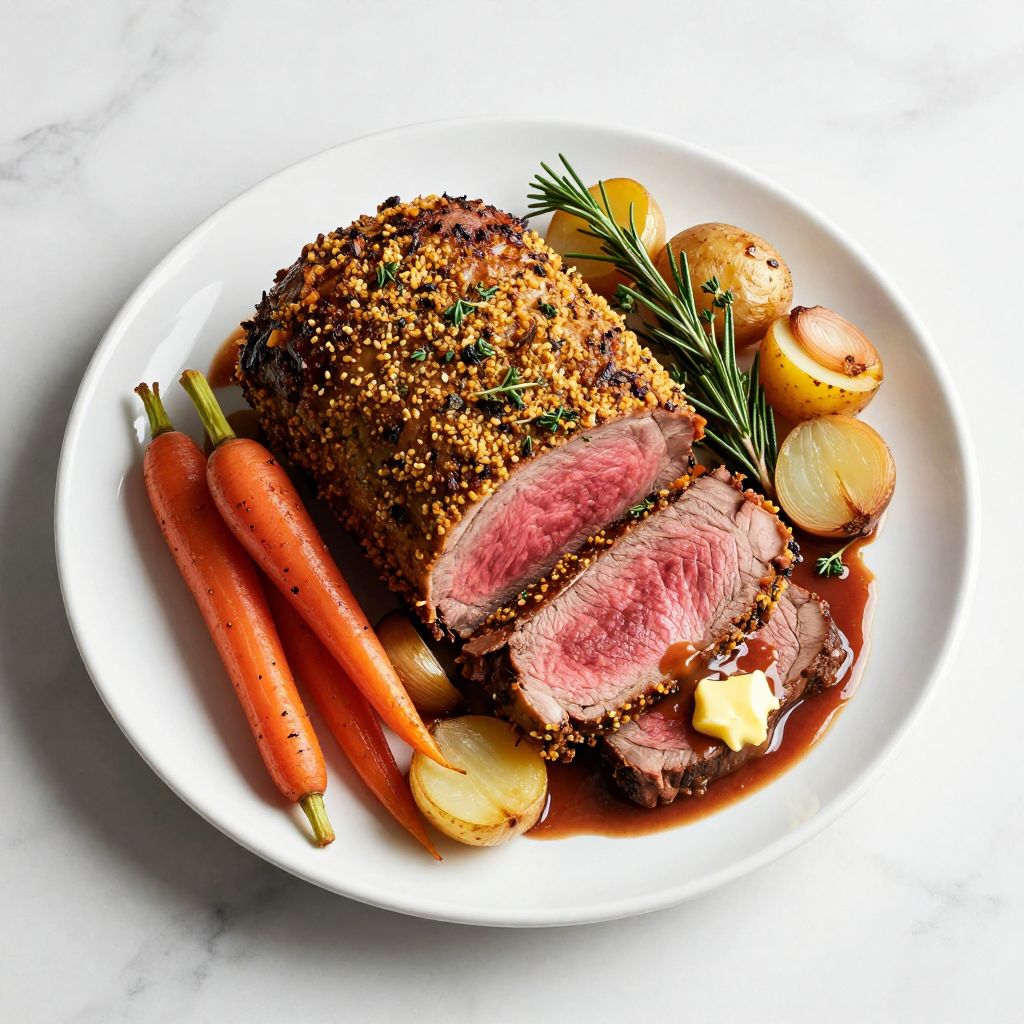
Herb-Crusted Round Rump Roast
Ingredients
Equipment
Method
- Remove the roast from the refrigerator 30 minutes before cooking to bring it closer to room temperature.
- Mix minced garlic, Dijon mustard, olive oil, rosemary, and thyme in a small bowl until you have a paste.
- Pat the roast dry with paper towels, then season all sides generously with salt and pepper, and rub the herb mixture over the entire surface.
- Heat your roasting pan over medium-high heat until it's smoking hot, then sear the roast on all sides for 2 to 3 minutes per side.
- Scatter carrots, potatoes, and sliced shallots around the roast in the pan.
- Pour beef broth and red wine (if using) into the pan around the roast without washing off the herb crust.
- Transfer the roast to a 325°F oven and roast for 1 hour 30 minutes to 1 hour 45 minutes, until the internal temperature reaches 130°F to 135°F.
- Remove the roast when 5 degrees below target temperature, tent loosely with foil, and let rest for 10 minutes.
- Place the roasting pan on the stovetop over medium heat and whisk in a tablespoon of butter to enrich the pan sauce.
- Slice the roast against the grain into quarter-inch thick slices and arrange on a platter, spooning the vegetables and pan sauce around the meat.