
The smell of fermenting corn mash bubbling away in a glass carboy is something that takes you straight to a front porch in bourbon country, even if you’re making it in your kitchen. Corn whiskey is one of the most straightforward spirits you can craft at home, requiring just a few basic ingredients and patience rather than fancy equipment.
This recipe walks you through making a smooth, drinkable corn whiskey that captures the sweet, grainy character of the grain itself. Unlike bourbon, which demands oak aging and strict production rules, corn whiskey is forgiving and quick, letting you enjoy your homemade spirit in weeks rather than years.
You will learn how fermentation transforms simple corn into something with real depth and warmth. The process teaches you the fundamentals of spirit-making while delivering a product you can sip neat, mix into cocktails, or share with friends who appreciate the craft.
Why You’ll Love This Recipe
Making corn whiskey at home is rewarding, affordable, and genuinely impressive when you tell people you crafted it yourself. The process demystifies distillation and fermentation while producing a spirit that rivals many commercial offerings.
- Simple ingredient list: corn, water, yeast, and sugar are all you need
- Fast turnaround: ready to drink in 2-3 weeks instead of years
- Cost effective: a batch yields multiple bottles for a fraction of retail price
- Customizable flavor: adjust sweetness and corn-to-grain ratios to suit your palate
- Educational value: learn how fermentation and distillation actually work
My Experience Making This Recipe
The first time I made a batch, I was surprised by how quickly the fermentation took off. Within hours of pitching the yeast, the airlock was bubbling steadily, and the kitchen smelled like bread rising and cornmeal.
After two weeks of watching the gravity readings drop and tasting small samples, I had a clear, potent spirit with a genuine corn sweetness underneath. Diluting it to drinking strength and letting it rest for a few days smoothed out the rough edges and revealed notes of honey and grain.
I mixed some into a whiskey sour and was genuinely proud to tell my friend I made the base spirit. That feeling of creating something from scratch never gets old, no matter how many batches you make.
Recipe Overview
- Recipe Name: Homemade Corn Whiskey
- Servings: Makes approximately 750ml of drinking-strength spirit
- Prep Time: 30 minutes
- Fermentation Time: 14-21 days
- Total Time: 3-4 weeks plus resting
- Course: Spirits and Liqueurs
- Cuisine: American
- Alcohol Content: Approximately 40% ABV after dilution
Equipment You Will Need
- One 1-gallon glass carboy or fermentation vessel
- Airlock and rubber bung to fit your carboy
- Large stainless steel pot for heating water
- Long-handled wooden spoon for stirring
- Hydrometer for measuring specific gravity
- Thermometer that reads 50-220 degrees Fahrenheit
- Cheesecloth or fine mesh strainer
- Funnel
- Sanitizing solution (Star San or similar)
- Glass bottles for storage
- pH test strips (optional but helpful)
Ingredients for Corn Whiskey
- Flaked corn maize: 2 pounds
- Two-row barley malt: 1 pound
- Water: 1 gallon
- Turbo yeast or distiller’s yeast: 1 packet
- Yeast nutrient: 1 teaspoon
- Granulated sugar: 2 cups (optional, for boosting alcohol)
Ingredient Notes and Substitutions
- Flaked corn maize: The backbone of corn whiskey, providing the characteristic sweetness and grain flavor. You can substitute with cracked corn or corn meal, though flaked corn ferments more efficiently.
- Two-row barley malt: This provides enzymes that convert corn starches into fermentable sugars. Pale ale malt works as a substitute and will add slightly more body and malt character.
- Turbo yeast: Fast-acting and alcohol-tolerant, turbo yeast is ideal for spirits. Standard bread yeast ferments slower and produces fewer high-alcohol yields, making it unsuitable for this recipe.
- Sugar: Boosts alcohol content if your fermentation stalls, helping you reach spirit-level strength. You can omit it for a lighter product, though alcohol content will be lower.
- Water: Chlorine in tap water can inhibit fermentation, so use filtered or boiled water that has cooled.
How to Make Corn Whiskey
Step 1: Sanitize All Equipment
Before you do anything, sanitize every piece of equipment that will contact your mash. Use a sanitizing solution like Star San mixed according to package directions, and soak your carboy, airlock, bung, strainer, and spoon for at least five minutes.
Sanitization prevents wild bacteria and mold from competing with your yeast and ruining your batch. Rinse everything thoroughly with water, as residual sanitizer can interfere with fermentation.
Step 2: Prepare the Mashing Water
Heat one gallon of water in your pot to exactly 155 degrees Fahrenheit. This temperature activates the enzymes in barley malt without killing them.
Use a thermometer to monitor the temperature closely. Water that is too hot destroys the enzymes; too cold and they work inefficiently.
Step 3: Mix the Grain
Add the flaked corn and barley malt to the hot water, stirring slowly and continuously for about 10 minutes. The starches in the corn begin gelatinizing immediately, and the barley’s enzymes start breaking them into simpler sugars that yeast can ferment.
Keep the temperature between 150 and 160 degrees during this time. Lower heat and stir frequently to prevent settling on the bottom of the pot.
Step 4: Rest the Mash
Once mixed, hold the mash at 155 degrees for 45 minutes without stirring. During this rest, the barley enzymes work their magic, converting as many starches as possible into fermentable sugars.
This step is crucial for maximizing your alcohol yield and flavor extraction. If temperature drops below 145 degrees, briefly reheat to the target range.
Step 5: Cool and Strain
After 45 minutes, slowly pour the mash through cheesecloth or a fine mesh strainer into your sanitized carboy, collecting the clear liquid and leaving the grain solids behind. The liquid, called wort, is what will ferment.
Let it cool to room temperature, around 70 degrees, before moving to the next step. Yeast pitched into hot wort dies; pitching into cold wort slows fermentation and risks infection.
Step 6: Take an Initial Gravity Reading
Once the wort is cool, use your hydrometer to measure the specific gravity, which tells you how much sugar is present. Write down this number; you will use it to calculate alcohol content later.
A typical reading for corn whiskey mash should be between 1.050 and 1.070. This range indicates sufficient sugar for fermentation to produce 6-9% alcohol by volume.
Step 7: Pitch the Yeast
Sprinkle the turbo yeast and yeast nutrient over the surface of the cool wort. Do not stir; let the yeast hydrate for a few minutes and then gently mix it in with a sanitized spoon.
Yeast nutrient feeds the yeast and helps it ferment more completely and cleanly. Turbo yeast is hardy and will handle the corn whiskey environment better than wine or beer yeasts.
Step 8: Install Airlock and Ferment
Fit the rubber bung and airlock into your carboy and place it in a dark location at room temperature, ideally between 65 and 75 degrees Fahrenheit. You will see the airlock bubbling within hours as fermentation kicks into gear.
Fermentation typically takes 14 to 21 days. Warmer temperatures speed it up; cooler temperatures slow it down but often produce cleaner flavors.
Step 9: Monitor Fermentation Progress
Check the airlock daily and take a gravity reading every 3 days. When the gravity stops dropping and stabilizes for two consecutive readings, fermentation is complete.
This usually happens when the gravity reaches between 0.990 and 1.000. At this point, the yeast has consumed nearly all available sugars and produced a spirit around 8-12% alcohol by volume.
Step 10: Rack Off the Sediment
Carefully siphon the clear liquid off the layer of dead yeast and grain particles at the bottom, called lees. This process, called racking, improves clarity and flavor by separating the spirit from sediment.
Use a clean siphon and tube to transfer the liquid into a sanitized glass bottle or carboy. Leave the lees behind in the original vessel.
Step 11: Dilute to Drinking Strength
Your fermented liquid is now high-proof raw spirit, likely around 10-12% alcohol. To bring it to typical whiskey strength of 40% ABV, calculate the dilution using the alcohol content you measured.
Add filtered water slowly, testing the taste as you go. Many home makers prefer 80 proof (40% ABV) for smoothness and mixability, though you can go higher or lower based on preference.
Step 12: Age and Rest
Transfer your diluted corn whiskey into glass bottles and seal them tightly. Let them rest for at least one week in a cool, dark place before drinking.
Resting allows harsh alcohol vapors to dissipate and flavors to marry. Many makers find that even three weeks of resting dramatically improves smoothness.
Pro Tip: Always sanitize your equipment before starting; one wild yeast infection ruins an entire batch, so the five minutes of sanitizing saves you weeks of wasted effort and ingredients.
Tips for the Best Corn Whiskey
- Use filtered or boiled water that has cooled to room temperature. Chlorine in tap water inhibits fermentation and creates off-flavors in your finished spirit.
- Keep fermentation temperature stable between 65 and 75 degrees. Temperature swings stress yeast and can halt fermentation mid-process, leaving residual sugar and off-flavors.
- Record gravity readings consistently and keep notes on each batch. Over time, you will dial in your process and consistently produce better results.
- Taste your spirit at different stages to develop your palate and understand how fermentation changes the flavor profile. This hands-on learning accelerates your skill development.
- Invest in a reliable thermometer and hydrometer early on. These inexpensive tools prevent costly mistakes and give you precise control over your process.
- Never skip the resting period after dilution. This single step transforms raw spirit into something genuinely smooth and drinkable.
Common Mistakes to Avoid
- Pitching yeast into hot wort: Temperatures above 80 degrees kill yeast cells before they can start fermenting, leading to stuck fermentation or off-flavors.
- Over-mashing or mashing too hot: Temperatures above 170 degrees denature the barley enzymes, preventing them from converting starches to sugar and lowering alcohol yield.
- Skipping sanitization: One contaminating bacterium multiplies rapidly in your sweet wort, producing vinegar or other unwanted flavors that ruin the entire batch.
- Rushing the fermentation or resting period: Bottling before fermentation completes or before resting is done produces harsh, unpalatable spirit that tastes medicinal and hot.
- Using the wrong yeast: Bread yeast or wine yeast struggle in high-alcohol environments and produce low yields; stick with turbo yeast or distiller’s yeast for corn whiskey.
Serving Suggestions
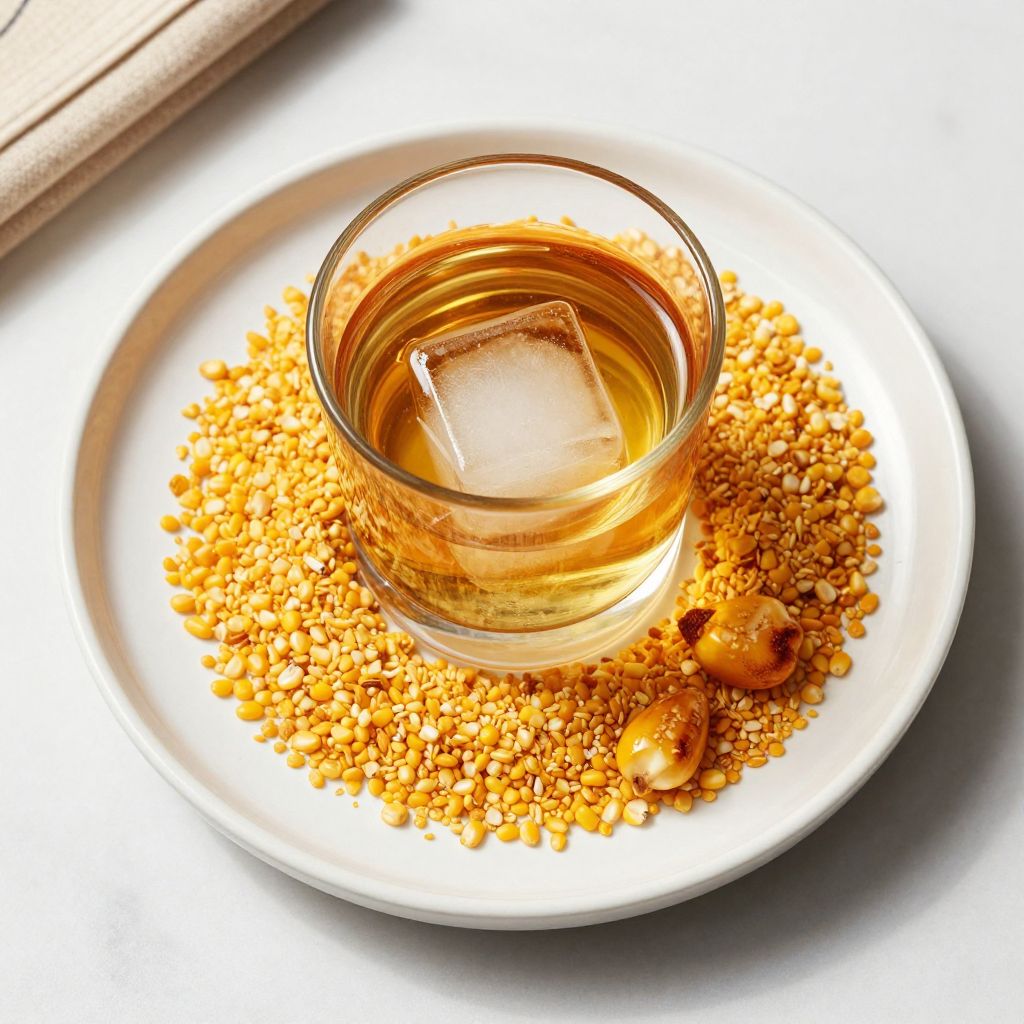
Corn whiskey is versatile and works beautifully in classic whiskey cocktails or sipped neat over ice. The natural corn sweetness pairs well with bitters, citrus, and oak barrel aging if you choose to age a portion.
- Neat or on the rocks in a rocks glass, allowing the grain character to shine
- In a whiskey sour with lemon juice, simple syrup, and egg white
- Mixed into a Manhattan with vermouth and bitters
- As a mixer in a simple highball with ginger beer or cola
- Aged in a small oak barrel or wood chips for a deeper, more complex flavor profile
Variations to Try
- Honey-Corn Whiskey: Replace half the sugar with raw honey for a rounder, slightly floral character that feels more luxurious.
- Rye-Corn Blend: Swap half the corn for flaked rye to add spice and dryness, creating a spirit that bridges corn whiskey and rye whiskey characteristics.
- Smoked Corn Whiskey: Use smoked corn or smoked barley malt to introduce campfire and wood smoke notes that add complexity and depth.
- High-Proof Corn Whiskey: Add the full two cups of sugar to the fermentation for a spirit that reaches 12-14% alcohol before dilution, allowing you to reach higher proof levels.
- Oak-Aged Corn Whiskey: After dilution and resting, transfer your whiskey into a small oak barrel or add toasted oak chips to accelerate aging and add vanilla, caramel, and tannin structure.
Dietary Adaptations
- Gluten-Free: Substitute buckwheat groats or sorghum for the barley malt; they provide fermentable sugars, though enzyme activity is lower and you may need to add a small amount of commercial enzyme powder.
- Dairy-Free: This recipe contains no dairy, making it naturally dairy-free.
- Vegan: Corn whiskey is inherently vegan, using only plant-based ingredients and yeast.
- Low-Carb/Keto: Once fermentation is complete, carbohydrates are minimal since yeast consumes the sugars; however, the spirit itself contains no nutritional value beyond alcohol, so it fits into low-carb plans.
Storage and Reheating
Refrigerator
Store your finished corn whiskey in glass bottles with tight-fitting caps in a cool, dark place. The refrigerator works well but is not necessary for spirits with high alcohol content.
- Corn whiskey keeps indefinitely in sealed bottles
- Keep bottles upright to prevent cork degradation and leakage
- Protect from direct sunlight, which fades color and can accelerate oxidation
Freezer
The high alcohol content prevents corn whiskey from freezing at typical freezer temperatures, so freezer storage is unnecessary and offers no benefit. Room-temperature storage in a dark cabinet is ideal.
- Freezing does not preserve corn whiskey better than cool, dark storage
- Save freezer space for other foods and beverages
Reheating
Corn whiskey does not require reheating. Serve it chilled or at room temperature depending on your preference and the cocktail you are making.
- Chill neat whiskey in the freezer for 30 minutes before serving
- Use ice cubes when serving on the rocks to maintain temperature without over-diluting
- Room-temperature whiskey brings out more complex flavors in tasting scenarios
Nutrition Information
| Nutrient | Amount |
|---|---|
| Calories | 110 |
| Total Fat | 0g |
| Saturated Fat | 0g |
| Carbohydrates | 0g |
| Fiber | 0g |
| Sugar | 0g |
| Protein | 0g |
| Sodium | 0mg |
| Cholesterol | 0mg |
Nutritional values are based on a 1.5-ounce serving of 40% ABV corn whiskey. The spirit itself contains only alcohol and water after fermentation, with all carbohydrates consumed by yeast during the fermentation process.
Frequently Asked Questions
Can I use regular table corn instead of flaked corn maize?
Fresh corn kernels contain less fermentable sugar and more fiber than flaked corn maize. You could technically use them, but your alcohol yield will drop significantly and you will need extra mashing time and enzymes to convert the starches.
What if my fermentation stalls and gravity stops dropping early?
Temperature changes, nutrient deficiency, or excessive alcohol levels can stress yeast and halt fermentation. Warm the batch to 70 degrees, add more yeast nutrient, aerate by stirring gently, or pitch fresh yeast if the original batch appears dead.
How long does corn whiskey actually last once bottled?
Sealed bottles of corn whiskey last indefinitely at room temperature in a dark location. The high alcohol content prevents spoilage, and the flavor actually deepens slightly over months or years of storage.
Can I skip the barley malt and just ferment corn with sugar?
Barley malt provides the enzymes needed to convert corn starches into fermentable sugars; without it, your corn will not break down properly. You could use commercial enzymes instead, but barley malt is simpler and produces better flavor complexity.
Is this recipe legal to make at home?
In the United States, home fermentation of beer and wine is legal without a permit, but home distillation is federally illegal. This recipe produces fermented corn liquid around 8-12% ABV, which is legal fermentation similar to home beer or wine making.
Why does my corn whiskey taste harsh or medicinal?
Raw spirits taste harsh until they rest and mature. Allow your finished whiskey to rest in sealed bottles for at least two weeks before drinking, and consider aging a portion in oak for a smoother, more refined character.
Final Thoughts
Making corn whiskey from scratch connects you to a tradition that stretches back centuries in America. The process is straightforward enough for beginners but rewarding enough that you will keep refining your technique with each batch.
Your first bottle represents more than just a spirit; it represents patience, attention to detail, and the satisfaction of creating something meaningful with your own hands. Grab your ingredients, sanitize your equipment, and start your first batch today.
Explore More Spirits and Cocktails
Once you have mastered corn whiskey, explore other homemade spirits and cocktail recipes to expand your mixology skills and home bar collection. Check out complementary recipes and techniques to deepen your craft knowledge.
Try making a bourbon milk punch recipe to discover how corn whiskey works in creamy, dessert-inspired cocktails.
You can also experiment with classic whiskey cocktails like a whiskey sour recipe to showcase how your homemade spirit shines in timeless drinks.
Homemade Corn Whiskey
Ingredients
Equipment
Method
- Sanitize all equipment by soaking carboy, airlock, bung, strainer, and spoon in sanitizing solution for 5 minutes and rinse thoroughly.
- Heat 1 gallon of water in the stainless steel pot to 155°F using the thermometer, maintaining that temperature.
- Add flaked corn maize and two-row barley malt to the water, stirring continuously for 10 minutes and keeping temperature between 150°F and 160°F.
- Hold the mash at 155°F for 45 minutes without stirring to allow enzymes to convert starches into sugars.
- Strain the mash through cheesecloth or fine mesh strainer into the sanitized carboy, discarding solids, and cool the wort to 70°F.
- Take an initial gravity reading with the hydrometer and record the specific gravity.
- Sprinkle turbo yeast and yeast nutrient over the cool wort surface, let hydrate for 5 minutes, then stir gently with sanitized spoon.
- Install the airlock and bung, then ferment in a dark area at 65°F–75°F for 14 to 21 days until bubbling slows.
- Check gravity every 3 days; fermentation is complete when readings stabilize between 0.990 and 1.000.
- Rack the clear liquid off the sediment (lees) into a sanitized secondary vessel using a clean siphon.
- Dilute the fermented spirit to 40% ABV by slowly adding filtered water and tasting until desired proof is reached.
- Bottle the diluted corn whiskey in glass bottles and rest in a cool, dark place for at least 7 days before drinking.