
The smell of fresh sugarcane and the warmth of tropical sun are what cachaca brings to mind, and making it at home transforms your kitchen into a miniature distillery. Cachaca is a Brazilian spirit that sits at the heart of countless cocktails, most famously the Caipirinha, and it tastes infinitely better when you understand exactly what goes into the bottle.
This recipe walks you through crafting your own cachaca from sugarcane juice, fermentation to distillation, revealing why this spirit deserves a place in every cocktail lover’s cabinet. You will discover that homemade cachaca offers cleaner, fresher notes than many commercial versions, and the process itself is rewarding and surprisingly achievable in a home kitchen.
Why You’ll Love This Recipe
Making cachaca at home gives you complete control over flavor, proof, and the aging process, resulting in a spirit that tastes authentically Brazilian and perfectly suited to your taste preferences.
- Full control over ingredients and fermentation techniques
- Significantly cheaper than buying premium cachaca bottles
- A talking point for dinner parties and cocktail nights
- The satisfaction of sipping a spirit you crafted yourself
- Customizable aging and flavor profiles to match your palate
My Experience Making This Recipe
The first time I attempted homemade cachaca, I was nervous about the fermentation step, unsure whether my kitchen conditions would cooperate. Within three days, the smell of active yeast filled the air, a reassuring sign that magic was happening in my glass carboy.
After two weeks of fermentation and a careful distillation process using a simple copper still, I had a clear, potent spirit that tasted crisp and alive with sugarcane character. The moment I poured my first Caipirinha with my own cachaca, I realized the effort was absolutely worth every minute spent watching, waiting, and tasting along the way.
Friends who tried it were shocked to learn it came from my kitchen, and several asked me to make a batch for them, which tells you everything about how good homemade cachaca can be. That first success hooked me, and now I make a new batch every few months to keep my supply fresh and exciting.
Recipe Overview
- Recipe Name: Homemade Cachaca
- Servings: Approximately 750 ml (one bottle)
- Prep Time: 30 minutes
- Fermentation Time: 10 to 14 days
- Distillation Time: 3 to 4 hours
- Total Time: 10 to 14 days plus distillation
- Course: Spirit/Liqueur
- Cuisine: Brazilian
- Alcohol Content: 40 to 48 percent ABV (depending on distillation)
Equipment You Will Need
- Large glass carboy or fermentation vessel (at least 5 liters)
- Airlock and bung to fit your carboy
- Hydrometer to measure sugar density and fermentation progress
- Thermometer (0 to 110 degrees Celsius)
- Copper still or distillation apparatus
- Cheesecloth or fine mesh strainer
- Large stainless steel pot for heating
- Glass jars for collecting distillate
- Funnel
- Long-handled spoon or paddle for stirring
- pH strips (optional but helpful)
- Bottles for aging and storage
Ingredients for Homemade Cachaca
- Fresh sugarcane juice: 4 liters (freshly pressed, not bottled)
- Champagne yeast (such as Lalvin EC-1118): 5 grams
- Yeast nutrient (optional but recommended): 2.5 grams
- Water (filtered or distilled): 1 liter (if needed to adjust sugar content)
Ingredient Notes and Substitutions
- Fresh sugarcane juice is non-negotiable for authentic cachaca because it delivers the rich, grassy notes that define the spirit, while store-bought juice often lacks the complexity and may contain preservatives that inhibit fermentation. If you cannot find fresh juice, look for a local sugar mill or visit a farmers’ market where vendors often press cane on-site, though shipping fresh juice is rarely practical. Some people use whole sugarcane stalks and press them at home with a hand mill or by wrapping them and squeezing them through cheesecloth, though this is labor-intensive.
- Champagne yeast (EC-1118) is preferred for cachaca because it ferments cleanly, tolerates high alcohol, and produces fewer off-flavors than ale or bread yeasts. If you cannot find Champagne yeast, use another wine yeast such as Prise de Mousse, though results may vary slightly in flavor profile and fermentation speed.
- Yeast nutrient supports fermentation and prevents stuck ferments, reducing the risk of off-flavors and incomplete sugar conversion. Omitting it is possible if your sugarcane juice is mineral-rich, but including it costs very little and provides insurance.
How to Make Homemade Cachaca
Step 1: Prepare Your Equipment and Workspace
Sanitize your carboy, airlock, bung, strainer, and all utensils with a no-rinse sanitizer or by boiling them in water for ten minutes. A clean fermentation vessel prevents unwanted bacteria from competing with your yeast and contaminating the final spirit.
Step 2: Test and Adjust Your Sugarcane Juice
Pour your fresh sugarcane juice into the sanitized carboy and measure the sugar content using your hydrometer, aiming for an original gravity of 1.080 to 1.100. If your juice is below 1.080, add filtered water slowly and retest until you reach the target range, as this gravity will ferment to approximately 10 to 13 percent alcohol.
Step 3: Pitch the Yeast
Sprinkle the Champagne yeast and yeast nutrient directly onto the surface of the sugarcane juice without stirring. Pitching dry yeast (a process called “sprinkling”) allows the yeast cells to hydrate gradually and increases their survival rate compared to rehydrating them separately in water.
Step 4: Monitor Early Fermentation
Install your airlock and bung, then place the carboy in a cool location away from direct sunlight, ideally between 18 and 24 degrees Celsius. Within 24 to 36 hours, you should see vigorous bubbling through the airlock and smell the sweet, yeasty aroma of active fermentation.
Step 5: Check Fermentation Progress
After five days, use your hydrometer to measure the gravity again, recording the reading and comparing it to your original gravity to confirm the yeast is converting sugar steadily. Fermentation typically slows after the first week as yeast activity mellows, but the airlock should still bubble gently, indicating that yeast is working.
Step 6: Complete Fermentation
Allow fermentation to continue for 10 to 14 days total, or until the hydrometer reading stabilizes at the same number for two consecutive days, usually around 0.990 to 1.000. Once fermentation is complete, the yeast will settle to the bottom of the carboy as a sediment called “lees.”
Step 7: Rack and Strain the Liquid
Carefully pour the clear liquid from the carboy into a clean pot, leaving behind the yeast sediment at the bottom. Use your cheesecloth or fine mesh strainer to catch any remaining particles and ensure your distillate base is as clean as possible.
Step 8: Distill Your Cachaca
Transfer the fermented liquid to your copper still and heat it slowly over medium heat, monitoring the temperature as it rises. The alcohol vapors will begin to vaporize around 78 degrees Celsius, and you will see distillate (the “heads”) begin to drip from the condenser.
Discard the first 100 to 150 ml of heads, as this portion contains harsh congeners and acetaldehyde that taste unpleasant. Collect the next 500 to 600 ml of “hearts,” which is the flavorful core of your cachaca, discarding the remaining “tails” that drip out after the flavor drops off.
Step 9: Dilute to Drinking Strength
Measure the alcohol content of your hearts using a spirits hydrometer or ABV calculator, then dilute with distilled water to reach 40 to 48 percent ABV depending on your preference. Add water gradually while stirring and tasting, as diluting too much loses the cachaca’s character.
Step 10: Age or Bottle Your Cachaca
For unaged (white) cachaca, bottle immediately in glass bottles with tight caps and store in a cool, dark place for immediate enjoyment. For aged (gold) cachaca, pour your spirit into oak barrels or glass bottles with oak chips and let it rest for three to six months, tasting periodically until the color and flavor reach your liking.
Pro Tip: Keep detailed notes on your original gravity, fermentation timeline, distillation temperature, and final ABV so you can replicate or adjust your process with each batch, building your technique over time.
Tips for the Best Homemade Cachaca
- Use the freshest sugarcane juice possible, purchased no more than one or two days before fermentation, because older juice ferments less predictably and may harbor wild yeast or bacteria that create off-flavors.
- Keep your fermentation temperature stable between 18 and 24 degrees Celsius by placing your carboy in a basement, cellar, or closet rather than on a warm kitchen counter, as temperature fluctuations stress the yeast and slow fermentation.
- Invest in a quality hydrometer and learn to read it at eye level for accurate gravity measurements, since miscalculating fermentation progress can lead to bottling too early or too late.
- Never skip sanitizing your equipment, because even a single wild yeast cell or bacterium can ruin an entire batch and create off-flavors that cannot be fixed.
- Taste your distillate as it comes off the still and keep separate jars for heads, hearts, and tails so you can blend the best portions and experiment with different flavor combinations in future batches.
- If you are new to distillation, watch several detailed video guides and consider joining a homebrewing community forum where experienced makers share troubleshooting tips and specific techniques.
Common Mistakes to Avoid
- Using non-fresh sugarcane juice or juice with added preservatives prevents proper fermentation and creates harsh, off-putting flavors that distillation cannot fully remove.
- Fermenting at temperatures above 28 degrees Celsius stresses the yeast, causing incomplete fermentation and unpleasant esters that dominate the final spirit.
- Bottling before fermentation is truly complete traps residual CO2 in the bottle, potentially causing pressure buildup or creating flat, unfinished flavors.
- Collecting all the distillate without separating heads and tails results in a harsh, unpalatable spirit because the first and last portions contain undesirable compounds that should be discarded.
- Aging cachaca in wood that has not been properly cleaned or in containers with contamination introduces off-flavors that grow stronger over time, wasting months of aging effort.
Serving Suggestions
Cachaca shines in cocktails but also works beautifully on its own, served neat or over a single large ice cube to appreciate its sugarcane complexity. The spirit pairs exceptionally well with tropical fruits, lime, and fresh herbs, making it the foundation for countless drink possibilities.
- Mixed into a classic Caipirinha with lime, sugar, and ice for the most traditional Brazilian serve
- Combined with sparkling water, fresh mint, and a touch of honey for a refreshing long drink
- Paired with coconut water and fresh passion fruit juice for a tropical twist
- Served neat as a digestif after a heavy meal, appreciated for its grassy, slightly vegetal finish
- Mixed into a Cachaca Batida with condensed milk and fresh fruit puree for a creamy, dessert-like cocktail
Variations to Try
- Infuse your finished cachaca with fresh ginger, habanero peppers, or turmeric for a spiced version that adds complexity to cocktails and brings warmth to straight pours.
- Reduce the initial sugar content of your juice to 1.060 to 1.070 original gravity to create a lighter, drier cachaca that showcases subtle vegetal and floral notes rather than residual sweetness.
- Age your cachaca in different wood types such as Brazilian wood (jequitiba), which imparts tropical spice notes, or used bourbon barrels for vanilla and caramel character.
- Blend your hearts with a small percentage of your tails to adjust the final flavor profile, experimenting with ratios to find the balance between clean, smooth spirit and subtle spice notes.
- Create a lower-alcohol version by diluting more aggressively to 35 to 38 percent ABV, which softens the burn and makes the spirit more accessible for sipping neat.
Dietary Adaptations
- Cachaca is naturally gluten-free, as it is distilled from sugarcane, making it safe for anyone avoiding gluten, though cross-contamination during storage or bottling is theoretically possible if equipment has contacted gluten products.
- The spirit contains no dairy, nuts, or animal products, making it suitable for vegan and vegetarian diets, and the fermentation process does not involve any animal-derived additives.
- Cachaca is keto and low-carb friendly when consumed neat or mixed with zero-carb mixers such as soda water or unsweetened lime juice, though cocktails with added sweeteners will increase carbohydrate content.
- The spirit is paleo-compatible when used in cocktails with whole-food ingredients, though sugary mixers undermine the paleo approach.
Storage and Reheating
Refrigerator
Cachaca does not require refrigeration but can be stored in the refrigerator to chill before serving. Unopened bottles last indefinitely at room temperature in a cool, dark place.
- Store in a glass bottle with a tight cap to prevent evaporation and oxidation
- Keep away from direct sunlight and heat sources
- An opened bottle remains fresh for several years if sealed properly
Freezer
Cachaca will not freeze solid at standard freezer temperatures due to its alcohol content, but chilling it in the freezer for 15 to 30 minutes before serving creates a smooth, pleasant texture. Do not store cachaca long-term in the freezer, as fluctuating temperatures degrade the spirit over time.
- Place the bottle in the freezer 30 minutes before serving for optimal chilling
- Avoid leaving it frozen for weeks or months
Aging
If you choose to age your cachaca in oak, store it in a cool location away from sunlight and temperature fluctuations, checking the color and taste every few weeks. Transfer the spirit to glass bottles once aging is complete to halt the aging process and preserve the flavor.
- Aged cachaca in oak develops character over three to six months
- Taste periodically and bottle when flavor reaches your preference
- Once bottled, aged cachaca remains stable for years if stored properly
Nutrition Information
| Nutrient | Amount |
|---|---|
| Calories | 64 per 1 oz (30 ml) serving |
| Total Fat | 0 g |
| Saturated Fat | 0 g |
| Carbohydrates | 0 g (in finished spirit) |
| Fiber | 0 g |
| Sugar | 0 g (in finished spirit) |
| Protein | 0 g |
| Sodium | 0 mg |
| Cholesterol | 0 mg |
The nutritional values above reflect pure, unaged cachaca with no added sugars or mixers. Cocktails made with cachaca will vary in calories and carbohydrates depending on added ingredients such as sugar, fruit juices, or liqueurs.
Frequently Asked Questions
Is it legal to distill cachaca at home?
In the United States and most countries, home distillation is illegal without a federal distilled spirits permit, which is extraordinarily difficult to obtain for personal use. Check your local and national laws before attempting distillation, as penalties for unlicensed distilling can be severe.
Can I ferment cachaca without a hydrometer?
Technically yes, but a hydrometer is inexpensive and invaluable for confirming fermentation is complete and calculating your final alcohol content. Guessing based on smell or taste alone risks bottling too early and creating carbonation or off-flavors.
What does “heads,” “hearts,” and “tails” mean in distillation?
Heads are the first vapors that condense, containing harsh alcohols and acetaldehyde that taste unpleasant. Hearts are the middle portion with the best flavor and smoothness, while tails are the final vapors with heavier compounds that taste bitter and medicinal.
Can I use store-bought sugarcane juice instead of fresh-pressed?
Store-bought juice often contains preservatives that inhibit yeast fermentation and may taste stale or processed, resulting in inferior cachaca. Fresh-pressed juice ferments more reliably and produces a cleaner, more authentic spirit, so it is worth sourcing locally even if it costs slightly more.
How long does aging cachaca in oak actually take?
Quality improves noticeably between three and six months of aging, though longer aging intensifies oak flavors and smoothness. Many craft distillers age for one to three years, tasting periodically to decide when the spirit reaches its peak.
What is the difference between cachaca and rum?
Cachaca is distilled from fresh sugarcane juice, while rum is typically distilled from molasses or sugarcane byproducts, resulting in different flavor profiles. Cachaca tends to taste grassier and more vegetal, whereas rum often exhibits darker, heavier notes of caramel and spice.
Final Thoughts
Making cachaca at home is an adventure that connects you directly to Brazilian tradition and teaches you the science of fermentation and distillation in a hands-on way. The moment you pour your first cocktail with your own spirit, you will understand why this craft has captivated home distillers for generations.
Start with this recipe, taste along the way, take detailed notes, and refine your technique with each batch until you create a cachaca that tastes exactly how you want it. Your next dinner party deserves a homemade Caipirinha, and your guests will be genuinely impressed when you tell them the story of how you made the spirit yourself.
Explore More Spirit Recipes
If you enjoyed making cachaca, consider exploring other homemade spirits and liqueurs that pair beautifully in cocktails and bring your bar to the next level.
Learn how to craft a traditional ti punch recipe from Martinique, a spirit-forward drink that showcases another Caribbean classic. You might also experiment with making aguardiente recipe, the South American cousin of cachaca with its own distinctive character and cocktail applications.
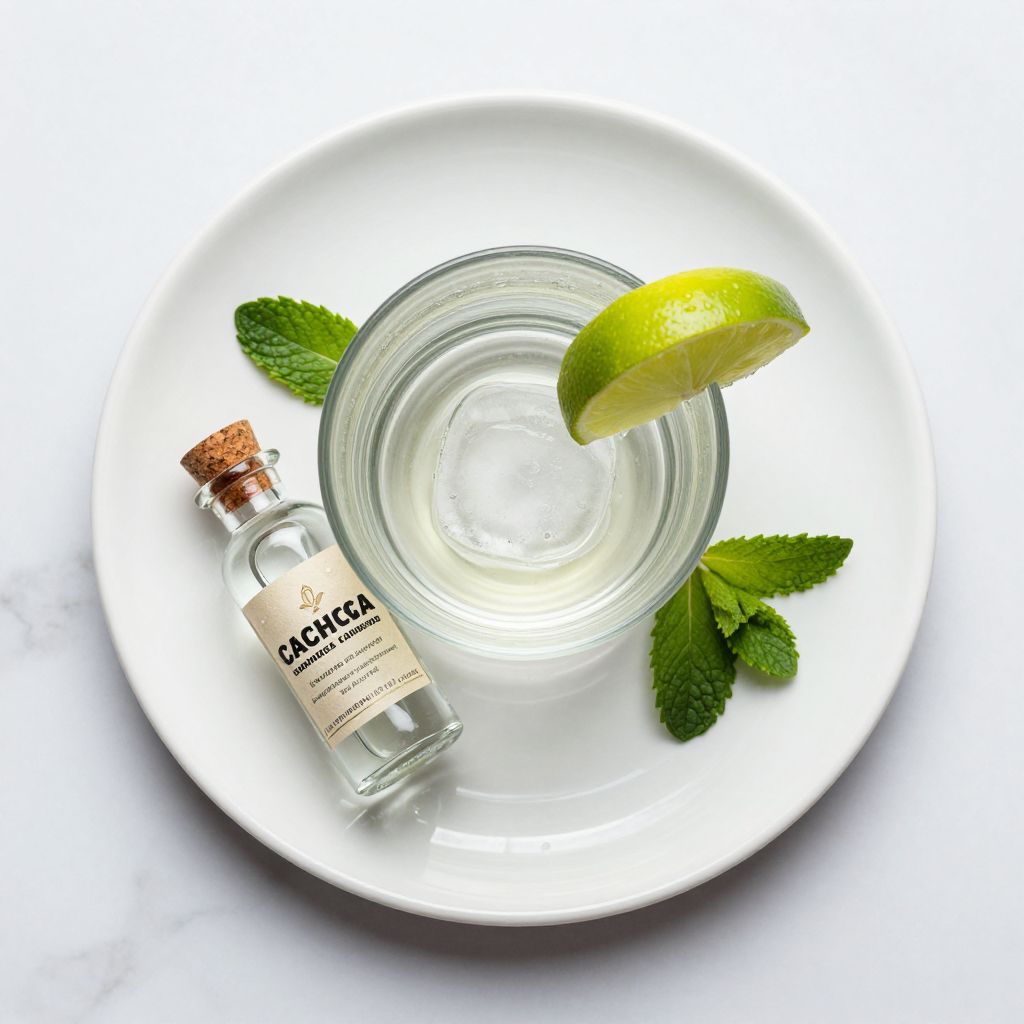
Homemade Cachaca
Ingredients
Equipment
Method
- Sanitize carboy, airlock, bung, strainer, and utensils by boiling for 10 minutes or using a no-rinse sanitizer.
- Pour 4 liters fresh sugarcane juice into the sanitized carboy and measure original gravity, aiming for 1.080 to 1.100.
- If gravity is below 1.080, add filtered water slowly and retest until you reach the target range.
- Sprinkle 5 grams Champagne yeast and 2.5 grams yeast nutrient onto the juice surface without stirring.
- Install the airlock and place the carboy in a cool location at 18–24 °C; ferment for 10–14 days until gravity stabilizes around 0.990–1.000.
- Carefully rack the clear liquid from the lees into a pot and strain through cheesecloth to remove particles.
- Transfer the fermented liquid to the copper still and heat slowly; collect distillate, discarding the first 100–150 ml (heads), collecting the next 500–600 ml (hearts), and discarding the tails.
- Measure the hearts’ ABV with a spirits hydrometer and dilute with distilled water to 40–48 % ABV while stirring and tasting.
- Bottle white cachaca immediately for a clear spirit or age in oak barrels or with oak chips for 3–6 months before bottling.