
There’s something magical about biting into a perfectly ripe mango on a hot afternoon, and agua de mango captures that same refreshing joy in a glass.
This traditional Mexican beverage transforms fresh mangoes into a light, naturally sweet drink that quenches thirst far better than anything bottled.
What makes this recipe special is its simplicity paired with serious flavor: just a handful of ingredients creates a beverage that tastes like summer itself, with a subtle tartness that keeps you reaching for more.
Why You’ll Love This Recipe
Agua de mango delivers refreshment without fuss, and it’s versatile enough for any occasion.
- Takes just 10 minutes of active time from mango to glass
- Uses only five simple ingredients with zero artificial additives
- Naturally sweetened and perfectly balanced with lime juice
- Scales easily for a crowd or a solo refresh
- Budget-friendly, especially when mangoes are in season
My Experience Making This Recipe
I first made agua de mango on a sweltering July afternoon when a neighbor brought over three pounds of fresh Ataulfo mangoes from the farmer’s market. I blended them with lime juice and water, and within minutes, my kitchen smelled like a tropical paradise.
My family drank the entire pitcher before dinner, with my kids asking for seconds and thirds. The flavor was so clean and bright that it spoiled me for powdered drink mixes forever.
Since then, I’ve made this at least twice a month during mango season, and it never disappoints. Friends always ask for the recipe after tasting it, which tells you everything about how good this simple drink truly is.
Recipe Overview
- Recipe Name: Agua de Mango
- Servings: 4 to 6 servings
- Prep Time: 10 minutes
- Cook Time: 0 minutes
- Total Time: 10 minutes
- Course: Beverage
- Cuisine: Mexican
- Calories per Serving: 95 calories
Equipment You Will Need
- Blender or food processor
- Cutting board
- Sharp chef’s knife
- Fine mesh strainer or cheesecloth
- Large pitcher
- Measuring cups and spoons
- Wooden spoon for stirring
- Glasses for serving
Ingredients for Agua de Mango
- 4 ripe mangoes (about 2 pounds total, any variety)
- 4 cups filtered water
- Juice of 2 fresh limes (about 1/4 cup)
- 2 tablespoons sugar or honey, adjusted to taste
- Pinch of sea salt
Ingredient Notes and Substitutions
- Ripe mangoes provide natural sweetness and creamy texture. Unripe mangoes will taste tart and fibrous, so choose ones that yield slightly to gentle pressure. If your mangoes are underripe, you can ripen them on the counter for 2 to 3 days.
- Filtered water keeps the drink pure without chlorine notes. Tap water works fine if that’s what you have, though some find it affects the delicate mango flavor slightly.
- Fresh lime juice adds brightness and balances sweetness. Bottled lime juice contains preservatives and lacks the same vibrant bite, so fresh is worth the extra minute to squeeze.
- Sugar dissolves easily and lets the mango shine, while honey adds a floral depth. Use agave nectar for a milder sweetness that won’t overpower the fruit.
- Sea salt enhances fruity flavors and prevents the drink from tasting flat. Table salt works, though sea salt tastes slightly cleaner.
How to Make Agua de Mango
Step 1: Select and Prepare Your Mangoes
Choose mangoes that are fragrant and yield slightly to pressure when you squeeze them gently. A ripe mango should feel soft but not mushy, with an aroma that smells distinctly fruity.
Wash each mango under cool running water and pat dry with a clean towel. This removes any dirt or residue from transport and storage.
Step 2: Cut the Mangoes in Half
Place the mango on a cutting board and locate the long, flat pit inside by feel. Slice parallel to the pit on one side to create a flat cheek, then repeat on the other side.
This gives you two large, easy-to-handle pieces with minimal waste. The pit piece can be scraped for extra flesh if you want maximum yield.
Step 3: Score and Scoop the Flesh
Take one mango cheek and score the flesh in a crosshatch pattern without cutting through the skin. You’re creating small cubes that are easy to scoop out with a spoon.
Run the spoon between the skin and cubed flesh, letting the chunks fall into your blender. This method saves time and keeps your hands less sticky than trying to peel the skin first.
Step 4: Add All Mango Flesh to the Blender
Continue scoring and scooping until all four mangoes are in the blender. Scrape any remaining flesh from the pits using a knife, and add that as well.
You should have roughly 2 to 2.5 cups of mango puree in the blender. More mango means richer flavor and creamier texture.
Step 5: Add Water and Lime Juice
Pour 4 cups of filtered water into the blender with the mango. Add the fresh lime juice, which prevents browning and adds the essential tartness that makes agua de mango taste alive.
The lime cuts through the natural sweetness of the fruit and creates that perfectly balanced flavor. Without it, the drink tastes one-dimensional and overly sweet.
Step 6: Blend Until Completely Smooth
Blend on high speed for 60 to 90 seconds until the mixture is completely smooth with no visible mango chunks. Listen for a change in the sound of the blender, which signals the mango is fully broken down.
If your blender struggles, you may have added too much fruit. Stop and add another half cup of water, then blend again.
Step 7: Strain the Mixture
Pour the blended mixture through a fine mesh strainer set over a large pitcher. Press gently on the solids with the back of a spoon to extract as much liquid as possible.
Straining removes any remaining fiber, creating a smooth, silky drink rather than a thick smoothie. This step takes an extra minute but makes a noticeable difference in mouthfeel.
Step 8: Taste and Adjust Sweetness
Pour a small glass and taste the agua de mango before serving to the full pitcher. If it tastes tart, stir in the 2 tablespoons of sugar or honey and mix thoroughly until dissolved.
Different mango varieties have different sugar levels, so this step prevents the drink from being too sweet or too sour. Add salt if the flavor seems flat, stirring well and tasting again before adding more.
Step 9: Chill and Serve
Refrigerate the pitcher for at least 30 minutes before serving. Cold agua de mango tastes more refreshing and the flavors meld together beautifully during chilling.
Serve over ice in tall glasses with a lime wheel or fresh mango slice as garnish. This drink is best consumed within 24 hours for maximum flavor, though it keeps for up to 48 hours in the fridge.
Pro Tip: Freeze agua de mango in ice cube trays and blend with yogurt for a quick mango lassi, or add sparkling water and rum for a naturally flavored agua fresca cocktail.
Tips for the Best Agua de Mango
- Use mangoes that smell fragrant at the stem end, which indicates peak ripeness and maximum flavor concentration. Underripe mangoes taste sour and fibrous no matter what else you do.
- Squeeze lime juice fresh right before blending to preserve its bright acidity and prevent oxidation. Bottled lime juice loses flavor compounds and tastes metallic by comparison.
- Strain the mixture even if you enjoy thick drinks, since the fiber creates a grainy texture that most people find less pleasant in a beverage. A smooth drink tastes more refined and refreshing.
- Taste as you go when adding sweetener, since different mango varieties range from naturally tart to very sweet. This prevents over-sweetening, which mutes the fruit flavor.
- Serve within a few hours for the brightest flavor, as mangoes oxidize slightly and the drink tastes less vibrant after 24 hours. However, it remains safe and tasty for up to 48 hours when refrigerated.
- Chill your glasses before serving on hot days to keep the drink cold longer without diluting it with melting ice.
Common Mistakes to Avoid
- Using underripe or overripe mangoes creates either sour or mushy, flavorless results. Always choose mangoes that smell sweet and yield slightly to pressure.
- Skipping the straining step leaves the drink thick and grainy instead of silky smooth. This changes the whole experience from a refreshing beverage to something closer to a smoothie.
- Adding too much sugar masks the delicate mango flavor and makes the drink cloying. Start with 1 tablespoon and taste before adding more, since natural mango sweetness often suffices.
- Forgetting the lime juice results in a flat, one-dimensional drink that tastes purely sweet. The tartness is essential for balance and brings out the fruit’s subtle complexity.
- Making the drink hours in advance causes flavor deterioration and slight browning from oxidation. Prepare agua de mango no more than 4 to 6 hours before serving for optimal freshness.
Serving Suggestions
Agua de mango pairs beautifully with warm weather gatherings and spiced foods, cutting through rich flavors and refreshing the palate. Serve it at breakfast, lunch, dinner, or as an afternoon pick-me-up.
- Alongside grilled fish tacos or ceviche for a cooling contrast to citrus and spice
- At brunch with churros or tres leches cake for a light complement to sweet pastries
- With grilled chicken and street corn, where it balances smoky and savory notes
- As a non-alcoholic option at parties alongside other beverages for inclusive entertaining
- With fresh fruit platters or paletas for a cohesive tropical dessert spread
Variations to Try
- Add 1 tablespoon of fresh ginger juice or 1 teaspoon of ground ginger for warmth and spice that deepens the mango’s complexity. Ginger agua de mango tastes more sophisticated and aids digestion.
- Blend in a handful of fresh mint leaves with the mango for herbal freshness that creates a light, garden-like quality. Mint agua de mango feels more refined and summery.
- Stir in 1/2 teaspoon of chili powder or Tajin seasoning after blending for a subtle heat that makes the sweetness pop. Spicy agua de mango appeals to those who like savory-sweet balance.
- Add sparkling water instead of still water for a fizzy, lighter version that feels more like a true agua fresca. This reduces the intensity and makes the drink more thirst-quenching.
- Freeze the strained mixture in a blender to create agua de mango granita, a frozen slush drink perfect for extremely hot days. This transforms the beverage into a palate-cleansing frozen treat.
Dietary Adaptations
- Gluten-free: Agua de mango is naturally gluten-free with no modifications needed. All ingredients are whole fruits and water with zero grain involvement.
- Dairy-free: This recipe contains no dairy whatsoever and is perfectly suitable for those avoiding milk products. The natural creamy texture comes entirely from the mango.
- Vegan: Agua de mango is fully vegan when made with agave or coconut sugar instead of honey. Plant-based sweeteners deliver the same results with no ethical concerns.
- Low-carb/keto: Use zero-calorie sweeteners like stevia or erythritol instead of sugar, though the drink will taste slightly different with a less rounded mouthfeel. Mangoes contain natural carbohydrates, so keep portions moderate on strict keto diets.
Storage and Reheating
Refrigerator
Store agua de mango in an airtight pitcher or glass jars for up to 48 hours. The drink remains safe and tasty throughout this window, though flavor quality peaks within the first 24 hours.
- Keep the pitcher in the coldest part of your fridge, away from warm spots
- Stir gently before serving, as light separation is normal
- Taste before serving to ensure flavor hasn’t faded
Freezer
Freeze agua de mango in ice cube trays for up to three months. These cubes become a freezer staple for blending into smoothies, making agua fresca cocktails, or adding to other beverages.
- Transfer frozen cubes to freezer bags once solid to save space
- Thaw at room temperature for 30 minutes or add directly to blenders
- Use within three months for best flavor retention
Reheating
Agua de mango is a cold beverage and should never be heated. If you’ve frozen the mixture, simply thaw it in the refrigerator overnight or at room temperature.
- Blending thawed agua de mango with ice creates a slushy consistency
- Adding sparkling water to thawed agua de mango revives the fresh taste
Nutrition Information
| Nutrient | Amount |
|---|---|
| Calories | 95 |
| Total Fat | 0.5g |
| Saturated Fat | 0.1g |
| Carbohydrates | 24g |
| Fiber | 2.5g |
| Sugar | 20g |
| Protein | 1g |
| Sodium | 5mg |
| Cholesterol | 0mg |
These values are approximate and based on standard mango varieties and a serving size of 8 ounces. Nutrition varies slightly depending on mango ripeness and specific variety used.
Frequently Asked Questions
Can I make agua de mango without a blender?
Yes, you can grate fresh mango flesh on a box grater into a bowl, then squeeze the grated mango through cheesecloth over a pitcher to extract the juice. The texture will be slightly chunkier, and the process takes longer, but the drink tastes just as good.
How do I know if my mangoes are ripe enough?
Ripe mangoes smell sweet and fragrant at the stem end and yield slightly when you squeeze them gently without applying pressure. If the mango feels hard as a rock, give it 2 to 3 days at room temperature before using.
Can I make agua de mango ahead for a party?
Make agua de mango no more than 8 hours before your event to preserve freshness and prevent browning. You can prepare the mangoes and juice them earlier in the day, then blend and strain about 2 hours before guests arrive for the best flavor.
What if my agua de mango tastes too tart?
Add 1 tablespoon of sugar or honey at a time, stirring thoroughly and tasting after each addition. If you’ve added too much sweetener, dilute with a bit more water to rebalance the flavors.
Can I use frozen mangoes for this recipe?
Frozen mangoes work well for agua de mango, producing the same flavor as fresh when they were picked ripe and frozen quickly. Thaw them completely before blending, and drain any excess liquid to avoid diluting the drink.
Is agua de mango the same as mango juice?
Agua de mango is a traditional Mexican beverage made with blended fresh mangoes, water, lime, and minimal sugar. Commercial mango juice is processed, pasteurized, and often contains added sugars and preservatives, making them distinctly different products with different flavor profiles.
Final Thoughts
Agua de mango represents everything wonderful about fresh fruit and simple cooking. With just five minutes of blending, you transform ripe mangoes into a beverage that tastes like a better version of summer itself.
The next time mango season arrives at your market, grab a few and make this drink. Your family and friends will thank you with empty glasses and requests for the recipe.
Explore more refreshing Mexican beverages by checking out our agua de melon recipe for another seasonal favorite. If you’re looking for crowd-pleasing options, our Mexican punch recipe offers festive variations perfect for gatherings.
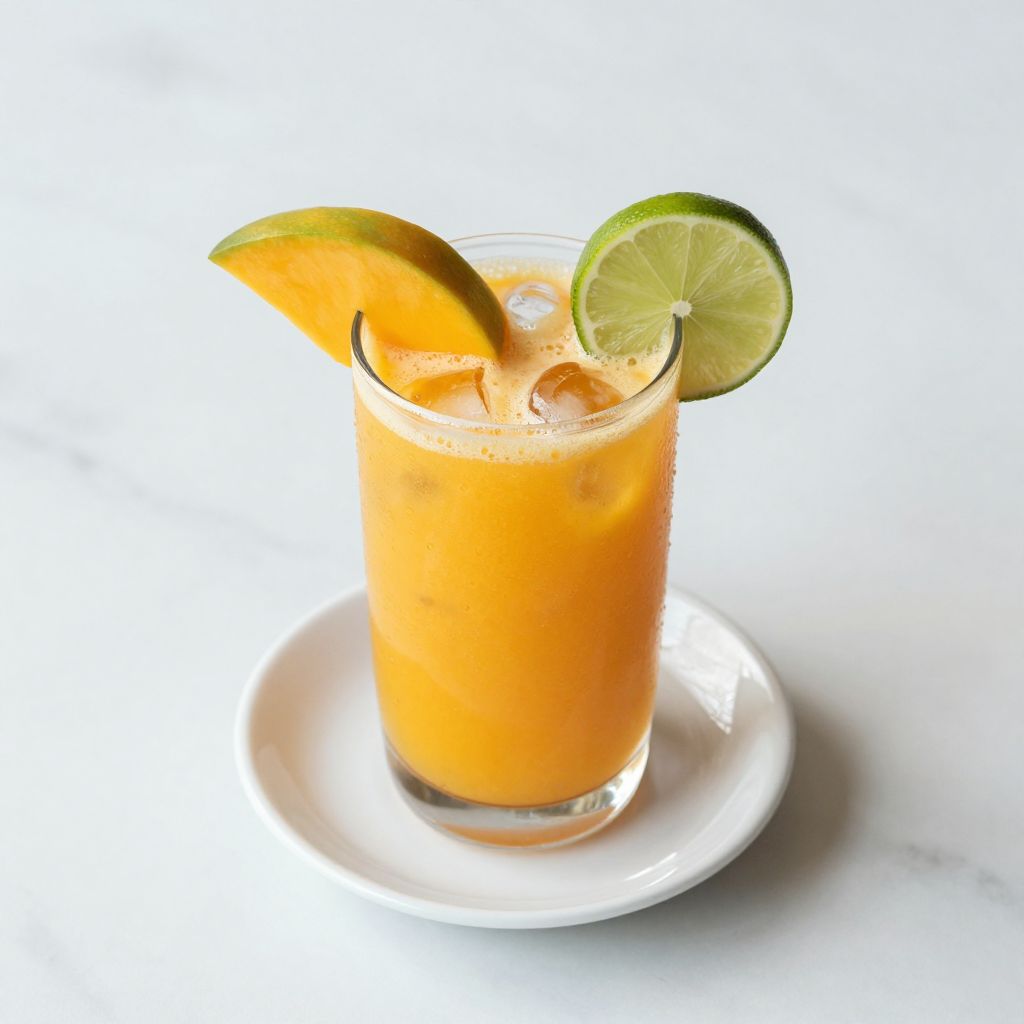
Agua de Mango
Ingredients
Equipment
Method
- Wash and dry the mangoes under cool running water and pat dry.
- Slice each mango cheek away from the pit, then score the flesh in a crosshatch pattern.
- Scoop the scored mango flesh into the blender using a spoon and scrape any remaining flesh from the pits.
- Add 4 cups filtered water and the juice of 2 limes to the blender.
- Blend on high for 60 to 90 seconds until the mixture is completely smooth.
- Pour the puree through a fine mesh strainer into a large pitcher, pressing gently to extract liquid.
- Taste the strained liquid and stir in sugar or honey and a pinch of sea salt until dissolved and balanced.
- Refrigerate the pitcher for at least 30 minutes until well chilled.
- Serve over ice in glasses and garnish with lime wheels or mango slices if desired.