
Picture yourself on a sticky summer afternoon, squeezing fresh lemons while strawberries blush on the counter, and you realize you’re about to make something far better than store-bought lemonade concentrate. Strawberry lemonade concentrate is the shortcut that tastes like you spent hours in the kitchen when you really spent thirty minutes blending fruit and sweetening magic.
This concentrate lets you skip the constant squeezing and measuring every time someone wants a cold glass. Make a batch on Sunday, store it in the fridge, and pour out summer by the glass all week long.
Why You’ll Love This Recipe
You get restaurant-quality flavor from your own kitchen without artificial ingredients or preservatives anywhere in sight. The concentrate is flexible, fast, and honestly tastes better than anything you’ll find in the grocery store.
- Ready in 30 minutes with just five simple ingredients
- Makes enough concentrate to create eight to ten glasses of fresh lemonade
- No cooking required, just blending and straining
- Works perfectly for parties, meal prep, or lazy weekday refreshment
- Keeps in the fridge for up to two weeks
My Experience Making This Recipe
The first time I made this, I was skeptical that fresh strawberries and lemon juice could be that simple and still taste incredible. Within ten minutes of blending, my kitchen smelled like a strawberry farm had relocated to my countertop, and I knew I’d never buy the bottled stuff again.
My kids now request this concentrate by name instead of asking for “lemonade.” I’ve served it at backyard barbecues where guests asked if I’d made it myself, and I got to say yes without fibbing.
The best part happens when you realize you can make a big batch on a lazy weekend afternoon and forget about drink prep for days. That’s when this recipe shifted from “nice to try” to “permanent fixture in my summer rotation.”
Recipe Overview
- Recipe Name: Strawberry Lemonade Concentrate
- Servings: 8 to 10 glasses
- Prep Time: 15 minutes
- Cook Time: 0 minutes
- Total Time: 15 minutes plus straining
- Course: Beverages
- Cuisine: American
- Calories per Serving: 45 calories
Equipment You Will Need
- Blender or food processor
- Fine mesh strainer
- Cheesecloth or nut milk bag optional but helpful
- Large mixing bowl
- Measuring cups and spoons
- Glass storage jar with a lid
- Wooden spoon for pressing fruit through strainer
Ingredients for Strawberry Lemonade Concentrate
- Fresh strawberries: 2 pounds, hulled and halved
- Fresh lemon juice: 1 cup, freshly squeezed preferred
- Granulated sugar: 1 cup
- Water: 1 cup
- Sea salt: 1/4 teaspoon
Ingredient Notes and Substitutions
- Fresh strawberries: Ripe berries deliver maximum flavor and natural sweetness without any funky aftertaste. Frozen strawberries work perfectly fine if fresh ones aren’t in season, though the color may be slightly less vibrant.
- Fresh lemon juice: Bottled juice contains preservatives that dull the bright, clean flavor you’re after. If you absolutely must use bottled, reduce it to three-quarters cup since it tastes more acidic and concentrated.
- Granulated sugar: It dissolves quickly and won’t interfere with the smooth texture. Honey or agave nectar can replace the sugar in equal amounts, though honey will add its own distinct flavor profile.
- Water: Plain filtered water works best and won’t introduce any mineral or chemical flavors. You can swap it for the same amount of sparkling water if you want naturally carbonated lemonade concentrate.
- Sea salt: A tiny pinch brightens the strawberry and lemon flavors without making anything taste salty. Regular table salt works fine, though sea salt has a cleaner mineral taste.
How to Make Strawberry Lemonade Concentrate
Step 1: Prepare Your Strawberries
Hull and halve your strawberries, removing the green leafy tops completely. Fresh, ripe berries will give you the sweetest, most vibrant concentrate, so choose ones that smell fragrant and feel slightly soft when you squeeze them gently.
Step 2: Combine Strawberries and Water
Add your prepared strawberries and one cup of water to your blender. You’re adding water now rather than blending the berries alone so they blend smoothly without turning into a thick paste.
Step 3: Blend Until Completely Smooth
Blend on high speed for 60 to 90 seconds until the mixture looks completely uniform with no strawberry chunks remaining. Smooth blending prevents chunky texture in your final concentrate and ensures even flavor distribution.
Step 4: Strain Through Fine Mesh
Pour the blended strawberry mixture through a fine mesh strainer into a large mixing bowl, pressing gently with the back of a wooden spoon to extract all the liquid. This step removes all the seeds and pulp, leaving you with smooth, drinkable concentrate.
Step 5: Add Fresh Lemon Juice
Stir the freshly squeezed lemon juice into your strained strawberry liquid, mixing thoroughly. Lemon juice brings brightness and natural acidity that balances the strawberries’ sweetness and prevents the concentrate from tasting one-dimensional.
Step 6: Dissolve the Sugar
Add one cup of granulated sugar and stir constantly for about one minute until the sugar dissolves completely. Dissolved sugar creates a smooth, cohesive concentrate that mixes evenly into cold water without graininess.
Step 7: Add Sea Salt
Sprinkle in one-quarter teaspoon of sea salt and stir to combine. A pinch of salt amplifies the strawberry and lemon flavors, making each sip taste more complex and delicious without any saltiness.
Step 8: Taste and Adjust
Take a small spoonful and think about what you taste. If it needs more tartness, add a tablespoon of lemon juice; if it needs more sweetness, stir in a tablespoon of sugar dissolved in a bit of warm water first.
Step 9: Transfer to Storage
Pour your finished concentrate into a clean glass jar with a tight-fitting lid. Proper storage in a sealed container keeps your concentrate fresh and prevents it from absorbing flavors from other foods in your fridge.
Pro Tip: Always chill your concentrate thoroughly before using it, then mix three parts cold water or sparkling water to one part concentrate for perfectly balanced strawberry lemonade every single time.
Tips for the Best Strawberry Lemonade Concentrate
- Choose strawberries that smell sweet and feel slightly soft, as overripe berries break down faster and yield more juice. Avoid rock-hard berries that haven’t reached peak ripeness.
- Squeeze your lemons fresh rather than using bottled juice, since bottled versions contain preservatives that mute the bright, clean lemon flavor you need. A handheld citrus juicer makes this task take just five minutes.
- Strain your blended mixture twice if you want silky-smooth concentrate without any graininess or seed particles. Double straining takes an extra few minutes but makes a noticeably better final product.
- Keep your finished concentrate as cold as possible before serving, since chilled lemonade tastes sweeter and more refreshing than room-temperature versions. Store it on the coldest shelf of your fridge, not on the door.
- Mix concentrate with still water, sparkling water, or even club soda depending on your mood. Different types of water create different flavor experiences, so experiment to find your favorite.
- Add fresh mint leaves or basil to your glass for extra flavor complexity and a fancy presentation that makes ordinary lemonade feel special.
Common Mistakes to Avoid
- Over-sweetening the concentrate by adding too much sugar upfront makes the final lemonade cloyingly sweet and one-dimensional. Start with the suggested amount and add more only if you taste it and decide it needs it.
- Skipping the straining step leaves you with a grainy, seedy drink that feels unpleasant on the tongue. Those few extra minutes of straining make the difference between homemade and sloppy.
- Using bottled lemon juice instead of fresh juice creates a chemical taste that undermines all your hard work with fresh strawberries. Fresh juice is worth the five minutes it takes to squeeze.
- Mixing warm concentrate with cold water causes uneven sweetness distribution and a cloudy appearance. Always chill the concentrate first and mix it into cold water for best results.
- Storing concentrate in containers that aren’t airtight allows it to absorb fridge smells and oxidize faster. Use glass jars with tight seals, not open containers or paper cups.
Serving Suggestions
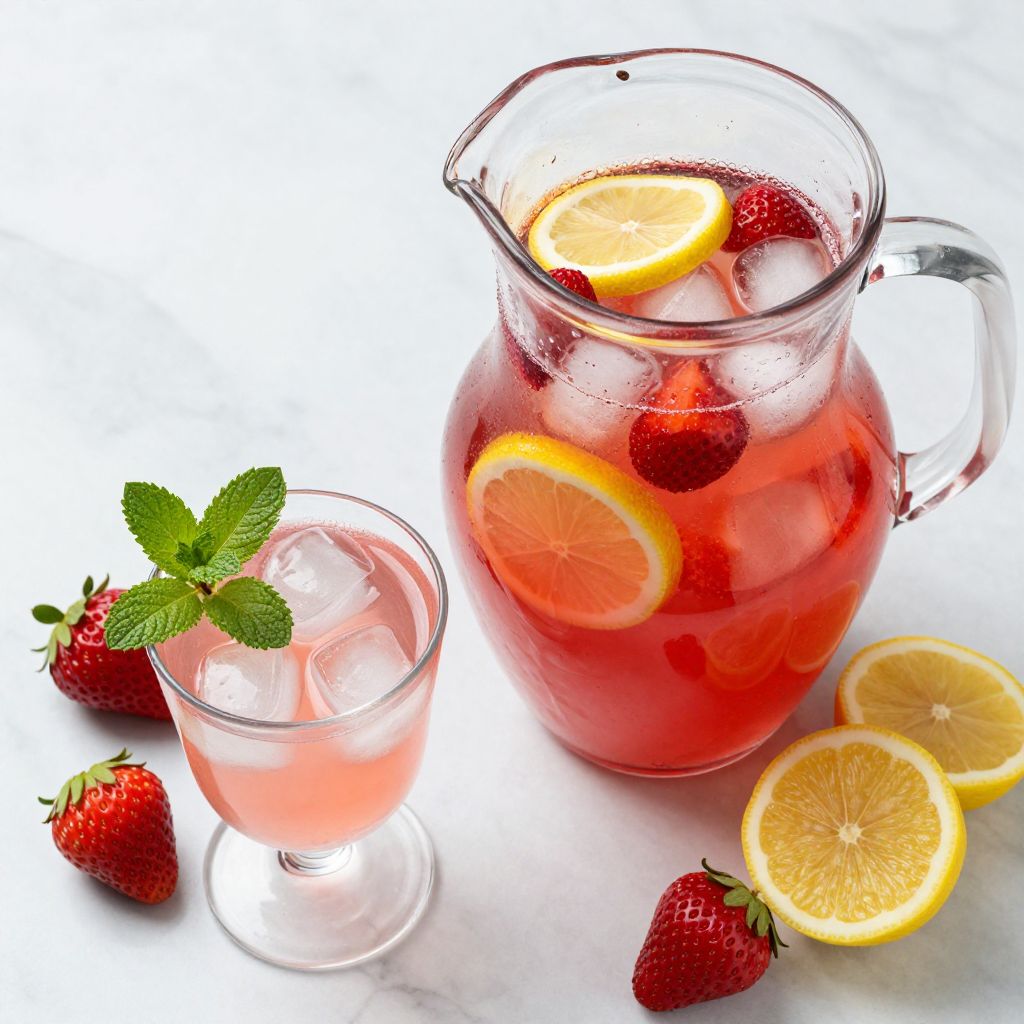
Serve your concentrate mixed with cold water or sparkling water over plenty of ice for maximum refreshment on hot days. The ratio of three parts water to one part concentrate creates perfectly balanced lemonade, though you can adjust this based on how strong you like it.
- Pour over crushed ice with fresh strawberry slices and mint for a fancy pitcher drink at outdoor gatherings
- Mix with sparkling water and a splash of white rum for adults-only strawberry lemonade cocktails
- Freeze concentrate in popsicle molds for homemade strawberry lemonade pops that kids actually want to eat
- Stir into plain yogurt with a tablespoon of concentrate to create strawberry lemonade smoothie bowls
- Top ice cream with a few tablespoons of concentrate as a unique strawberry lemonade sauce
Variations to Try
- Raspberry Lemonade Concentrate: Swap half the strawberries for fresh raspberries to create a deeper berry flavor with more tartness and a gorgeous deep pink color.
- Strawberry Basil Lemonade Concentrate: Blend five to six fresh basil leaves in with the strawberries for an herbaceous twist that feels restaurant-quality and sophisticated.
- Honey Sweetened Concentrate: Replace granulated sugar with one cup of honey for a floral sweetness that feels more natural and less refined. Honey creates a thicker, silkier texture.
- Spiced Strawberry Lemonade Concentrate: Add one-quarter teaspoon each of ginger powder and cayenne pepper while blending for heat and complexity that makes each sip interesting.
- Strawberry Rose Lemonade Concentrate: Add one-quarter teaspoon of rose water while stirring in the sugar for a delicate floral note that transforms the concentrate into something elegant.
Dietary Adaptations
- Gluten-free: This concentrate is naturally gluten-free and contains no grains or problematic ingredients, so no modifications are needed.
- Dairy-free: The recipe contains no dairy products, so it works perfectly for anyone avoiding milk or milk-based products.
- Vegan: This concentrate is fully vegan since it uses no animal products or animal-derived sweeteners, making it suitable for plant-based diets.
- Low-carb or keto: Replace granulated sugar with monk fruit sweetener or erythritol in equal amounts to reduce the carb content and fit keto macros without sacrificing sweetness.
- Sugar-free: Use your preferred sugar alternative like stevia or allulose, though you may need to adjust quantities since different sweeteners have different intensities.
Storage and Reheating
Refrigerator
Store your concentrate in an airtight glass container on the coldest shelf of your refrigerator for up to two weeks. Keep it away from the door where temperature fluctuates, as consistent cold keeps it fresh longer.
- Check the concentrate before each use for any discoloration or off smells
- Stir well before mixing into water, as separation sometimes occurs during storage
- Transfer to a smaller jar as you use it to minimize air exposure
Freezer
Freeze your concentrate in ice cube trays for extended storage up to three months, then pop cubes into bags for grab-and-go portions. Frozen concentrate cubes work perfectly for making single servings of fresh lemonade without thawing.
- Freeze in two-tablespoon portions for easy single-drink measurements
- Transfer frozen cubes to freezer bags after 24 hours to save space
- Label your bags with the date so you know when you made them
Reheating
This concentrate doesn’t require reheating since you always mix it cold with cold water. If you’ve frozen cube portions, simply drop them into cold water and let them melt while stirring, or let them thaw in the fridge overnight for slower mixing.
- Mix frozen cubes directly into cold water and stir well for quick blending
- Hot water will damage the fresh flavor, so avoid warming the concentrate
Nutrition Information
| Nutrient | Amount |
|---|---|
| Calories | 45 |
| Total Fat | 0g |
| Saturated Fat | 0g |
| Carbohydrates | 12g |
| Fiber | 0g |
| Sugar | 10g |
| Protein | 0g |
| Sodium | 65mg |
| Cholesterol | 0mg |
These values are calculated for the concentrate alone and represent the nutritional content of a single tablespoon serving. When you mix three parts water to one part concentrate for a full glass of lemonade, the calories and sugar remain the same since water adds no calories.
Frequently Asked Questions
Can I Make This With Frozen Strawberries?
Absolutely, frozen strawberries work beautifully and often taste even better than fresh if the fresh ones aren’t in season. Thaw them completely and drain any excess liquid before blending to avoid watering down your concentrate.
How Long Does the Concentrate Last?
Refrigerated concentrate stays fresh for up to two weeks in an airtight glass container. Frozen concentrate lasts up to three months when stored in freezer bags or cubes.
Can I Use Bottled Lemon Juice?
Fresh lemon juice tastes noticeably better and brighter, but bottled juice works in a pinch if you reduce it to three-quarters cup since it’s more acidic and concentrated. Your concentrate will taste acceptable but not as vibrant as with fresh juice.
What’s the Best Ratio of Concentrate to Water?
Three parts cold water to one part concentrate creates perfectly balanced strawberry lemonade, though you can adjust based on how strong you like it. Some people prefer two parts water for a more concentrated flavor.
Can I Make This Recipe Without a Blender?
You can mash strawberries with a fork or potato masher to break them down, though the texture won’t be quite as smooth. Straining twice helps compensate for the chunkier puree from hand-mashing.
Does This Concentrate Contain Any Added Preservatives?
No, this homemade concentrate contains only the five simple ingredients listed and nothing else. That’s why it needs refrigeration and has a two-week shelf life instead of lasting months like commercial versions.
Can I Adjust the Sweetness?
Definitely, taste a spoonful of concentrate first before adding it to water and adjust the sugar amount in the concentrate itself. You can also adjust sweetness when serving by using less or more water depending on your preference.
Final Thoughts
Making your own strawberry lemonade concentrate transforms summer afternoons into something genuinely special without any extra effort. Fresh, bright, and endlessly versatile, this concentrate proves that the best drinks come from your kitchen, not a bottle.
Try this recipe this weekend and taste the difference homemade makes, then bookmark it because you’ll be making it all summer long. Your family will notice the upgrade, and you’ll never look at powdered drink mixes the same way again.
Strawberry Lemonade Concentrate
Ingredients
Equipment
Method
- Hull and halve your strawberries, removing the green leafy tops completely. Choose berries that smell fragrant and feel slightly soft when squeezed gently.
- Add your prepared strawberries and one cup of water to your blender.
- Blend on high speed for 60 to 90 seconds until the mixture looks completely uniform with no strawberry chunks remaining.
- Pour the blended strawberry mixture through a fine mesh strainer into a large mixing bowl, pressing gently with the back of a wooden spoon to extract all the liquid. This removes all the seeds and pulp.
- Stir the freshly squeezed lemon juice into your strained strawberry liquid, mixing thoroughly.
- Add one cup of granulated sugar and stir constantly for about one minute until the sugar dissolves completely.
- Sprinkle in one-quarter teaspoon of sea salt and stir to combine.
- Taste and adjust. If it needs more tartness, add a tablespoon of lemon juice; if it needs more sweetness, stir in a tablespoon of sugar dissolved in a bit of warm water first.
- Pour your finished concentrate into a clean glass jar with a tight-fitting lid. Chill thoroughly before using. Mix three parts cold water or sparkling water to one part concentrate for perfectly balanced strawberry lemonade.