
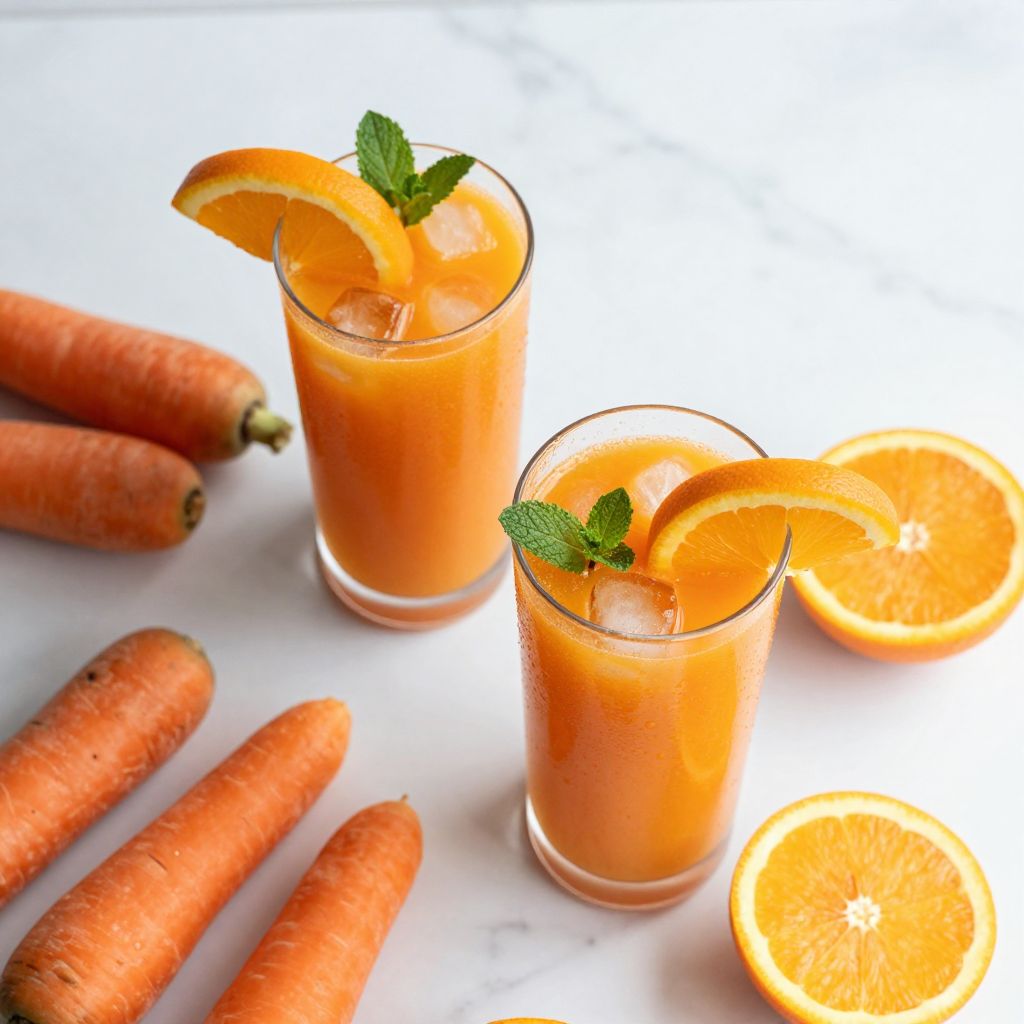
There’s something magical about the moment you press a glass of freshly made carrot orange juice to your lips and taste that vibrant blend of sweet citrus and earthy vegetables. This carrot orange juice recipe combines the natural sweetness of carrots with the bright acidity of fresh oranges, creating a juice that feels like liquid sunshine in a glass.
What makes this juice special is how effortlessly it delivers nutrition without tasting like a chore. The oranges do the heavy lifting on flavor, masking any vegetal notes while the carrots add body, natural sweetness, and a stunning golden-orange hue that’s Instagram-worthy all on its own.
Whether you’re looking to boost your immune system, start your morning with something genuinely delicious, or simply want to use up a pile of produce before it wilts, this recipe works beautifully. Let’s get you juicing.
Why You’ll Love This Recipe
This juice delivers real nutrition without requiring any special equipment or complicated techniques. You get a refreshing drink that tastes indulgent while packing serious vitamins and minerals into every sip.
- Takes just 10 minutes from start to finish, perfect for busy mornings.
- Uses only whole fruits and vegetables with zero added sugar or preservatives.
- Naturally sweet and smooth thanks to the orange juice balancing the carrot.
- Budget-friendly when you buy carrots and oranges in season.
- Keeps in the refrigerator for up to three days, so you can make a batch and sip throughout the week.
My Experience Making This Recipe
I discovered this juice combination during a phase when I had an overflowing farmers market haul and zero ideas for using everything. My kids, who typically turn their noses up at anything remotely vegetable-adjacent, actually asked for seconds.
The sensory experience is genuinely pleasant: watching the juicer transform whole carrots and oranges into this smooth, glowing liquid never gets old. The kitchen smells incredible, and you feel like you’re doing something genuinely healthy rather than choking down something virtuous.
I’ve made it dozens of times now, both as a solo morning drink and served it at small gatherings where it always gets compliments. People are genuinely surprised when I tell them it’s just carrots and oranges with no added honey or sweetener.
Recipe Overview
- Recipe Name: Carrot Orange Juice
- Servings: 2 servings
- Prep Time: 5 minutes
- Cook Time: 5 minutes
- Total Time: 10 minutes
- Course: Beverage
- Cuisine: International
- Calories per Serving: 85 calories
Equipment You Will Need
- Cold-press juicer or centrifugal juicer
- Cutting board
- Sharp knife
- Glasses for serving
- Vegetable brush for washing carrots
- Small mesh strainer (optional, for extra smoothness)
Ingredients for Carrot Orange Juice
- 3 medium carrots, washed and trimmed (about 12 ounces)
- 2 large oranges (navel or blood oranges work great), peeled if your juicer requires it
- Ice cubes (optional, for serving)
Ingredient Notes and Substitutions
- Carrots: They provide natural sweetness, body, and beta-carotene that gives the juice its gorgeous color. If fresh carrots aren’t available, use organic pre-cut carrots from the grocery store, though the flavor will be slightly less vibrant.
- Oranges: They brighten the juice and add vitamin C, plus their acidity prevents the drink from tasting flat. Swap in grapefruits, lemons, or clementines if you want a different citrus profile, but expect the flavor balance to shift slightly.
How to Make Carrot Orange Juice
Step 1: Wash and Prepare Your Produce
Rinse the carrots thoroughly under cool running water using a vegetable brush to remove any dirt clinging to the skin. This step matters because you’ll be juicing the whole carrot, skin and all, so you want them genuinely clean.
Step 2: Trim the Carrot Ends
Cut off the tops and bottom tips of each carrot with a sharp knife. This removes any fibrous or tough spots that could potentially jam your juicer or affect the texture.
Step 3: Cut Carrots to Fit Your Juicer
Slice the carrots into pieces that match your juicer’s feed tube size. If your juicer has a wide chute, you might only need to cut them in half lengthwise, but most juicers work better with smaller pieces.
Step 4: Prepare the Oranges
Wash the oranges and cut them in half. If your juicer is a centrifugal model with a citrus attachment, you can juice them using that method for faster processing.
Step 5: Start Juicing the Carrots
Turn on your juicer and feed the carrot pieces through slowly and steadily. Let the juicer do the work; pushing too hard can generate excessive heat and oxidize the juice, which means you lose some nutrients and brightness.
Step 6: Juice the Oranges
Feed the orange halves or pieces through next. The orange juice will wash through any remaining carrot pulp, making sure you extract every bit of flavor and nutrients.
Step 7: Strain the Juice (Optional)
Pour the fresh juice through a fine mesh strainer if you prefer a silkier texture with less pulp. This step is purely personal preference; the pulp contains fiber, so skipping it is perfectly fine.
Step 8: Serve Immediately
Pour the juice into glasses and serve right away, with or without ice. Fresh juice tastes best consumed immediately, when all the vitamins and bright flavors are at their peak.
Pro Tip: If you must store the juice, pour it into an airtight glass container and refrigerate it immediately, then consume within 24 hours for the best taste and nutrient retention.
Tips for the Best Carrot Orange Juice
- Choose carrots that feel firm and have bright color; they should snap when you bend them, not feel rubbery or limp.
- Use fresh oranges rather than juice from a carton, as fresh-squeezed citrus tastes noticeably brighter and contains more live nutrients.
- Process your carrots first, then oranges, because the citrus helps flush through any remaining carrot fiber and prevents oxidation.
- If the juice tastes too intense or vegetal, add one more orange next time to boost the sweetness and citrus brightness.
- Invest in a cold-press or masticating juicer rather than a centrifugal model if you plan to make juice regularly, as they extract more nutrients and preserve flavor better.
- Make juice right before you drink it; oxidation happens quickly with fresh juice, so don’t prep ahead unless you’re storing it properly in an airtight container.
Common Mistakes to Avoid
- Using old or soft carrots results in weak, watery juice with less natural sweetness; always pick firm, vibrant carrots for the best flavor.
- Peeling the carrots removes much of the beta-carotene and nutrients found in the skin, so juice them unpeeled for maximum nutrition.
- Pushing produce through the juicer too quickly causes friction and heat, which degrades vitamins and can make the juice taste oxidized and bitter.
- Forgetting to wash your juicer immediately after use makes cleanup significantly harder and can damage delicate mesh screens.
- Adding honey or sugar defeats the purpose of the natural sweetness already present in the fruit and vegetables.
Serving Suggestions
This juice works beautifully on its own, but it also plays well with other elements if you want to build something more substantial. Serve it chilled in tall glasses, and consider these simple additions.
- Serve alongside a protein-rich breakfast like eggs, yogurt, or nut butter toast to make it a more complete meal.
- Pour over ice and add a splash of ginger juice for an extra kick and warming spice.
- Mix with plain sparkling water for a lighter, more refreshing version that’s perfect on warm days.
- Combine with fresh turmeric root and black pepper to create an anti-inflammatory wellness shot.
- Freeze the juice in popsicle molds for a fun, healthy frozen treat kids actually enjoy.
Variations to Try
- Apple Carrot Orange: Add one crisp apple to the juicer for extra sweetness and a subtle fruity note that rounds out the flavor beautifully.
- Ginger Boost: Include a one-inch piece of fresh ginger root to add warmth, digestive support, and a subtle spicy background note.
- Beet Version: Swap one carrot for a medium beet to deepen the color and add earthy sweetness plus impressive antioxidants.
- Tropical Twist: Use blood oranges instead of regular oranges and add a small piece of fresh turmeric for a more complex, warming profile.
- Green Carrot Juice: Add a small handful of fresh spinach or kale to the juicer for extra nutrients and a deeper flavor dimension.
Dietary Adaptations
- Gluten-Free: This juice is naturally gluten-free with no modifications needed, making it safe for anyone with celiac disease or gluten sensitivity.
- Dairy-Free: The recipe contains no dairy products, so it works perfectly for anyone following a plant-based or dairy-free diet.
- Vegan and Vegetarian: This juice is 100% plant-based and suitable for all vegetarian and vegan diets without any changes.
- Low-Carb and Keto: While carrots contain natural sugars, you can reduce the carrot portion and increase lemon juice to lower the overall carb content, though this shifts the flavor profile.
Storage and Reheating
Refrigerator
Fresh juice keeps in an airtight glass container in the coldest part of your refrigerator for up to three days. The flavor gradually fades as the juice oxidizes, so consume it within 24 hours for peak taste.
- Pour juice into glass bottles or containers immediately after juicing.
- Store in the back of the refrigerator, not on the door where temperatures fluctuate.
- Shake gently before drinking, as natural separation is normal.
Freezer
You can freeze fresh juice in ice cube trays or freezer-safe containers for up to three months. Thaw in the refrigerator before drinking, though the texture and flavor won’t be quite as vibrant as freshly made juice.
- Leave a little space at the top of containers when freezing, as liquid expands.
- Label containers with the date so you know how old the juice is.
- Frozen juice works better in smoothies or cooked dishes than consumed straight.
Reheating
Fresh juice doesn’t require reheating, but you can warm it gently if you prefer it at room temperature or slightly warm. Never heat juice to a boil, as this destroys the delicate vitamins and enzymes.
- Warm juice gently in a saucepan over low heat or in the microwave for 30 seconds.
- Serve warm juice in a mug rather than a glass for comfort.
Nutrition Information
| Nutrient | Amount |
|---|---|
| Calories | 85 |
| Total Fat | 0.3g |
| Saturated Fat | 0g |
| Carbohydrates | 19g |
| Fiber | 2g |
| Sugar | 14g |
| Protein | 1g |
| Sodium | 45mg |
| Cholesterol | 0mg |
These values are approximate and can vary depending on the size of your produce and your specific juicer model. Fresh juice contains no added sugar, and the natural sugars come entirely from the fruit and vegetables themselves.
Frequently Asked Questions
Can I make this juice without a juicer?
You can blend the carrots and oranges together, then strain through a nut milk bag or fine mesh to extract the liquid, though the texture will be thicker. A juicer removes the fiber, creating a truly smooth juice, so blending produces more of a thick nectar.
How much juice does this recipe make?
Depending on the size of your carrots and oranges, you’ll get roughly 16 to 20 ounces of juice total, or about 8 to 10 ounces per serving. If you prefer a larger portion, simply double the recipe.
Is it okay to drink this juice every day?
Yes, this juice is safe to drink daily as part of a balanced diet. A single serving contains natural sugars, so monitor your overall sugar intake if you’re consuming multiple servings per day.
What’s the difference between cold-press and centrifugal juicers?
Cold-press juicers extract juice slowly using pressure, preserving more nutrients and creating a juice that stays fresh longer. Centrifugal juicers use spinning blades and work faster but generate heat that can degrade some nutrients and make the juice oxidize more quickly.
Can I add other vegetables to this juice?
Absolutely; celery, ginger, beets, and leafy greens all work beautifully with carrot and orange. Start by adding small amounts of new ingredients so you can adjust the flavor balance to your taste.
Final Thoughts
This carrot orange juice recipe proves that healthy eating doesn’t require sacrifice or complicated ingredients. The simple combination of two whole foods creates something genuinely delicious that you’ll actually crave.
Make a batch this week and experience the difference fresh, homemade juice makes compared to anything bottled. Your body will thank you, and your taste buds will be equally impressed.
If you enjoy this recipe, explore more refreshing beverage options on our site. Try our orange juice smoothie recipe for a heartier morning drink, or discover our Orange Julius recipe with orange juice for a creamy, indulgent treat that still delivers real nutrition.
Carrot Orange Juice
Ingredients
Equipment
Method
- Rinse the carrots thoroughly under cool running water using a vegetable brush to remove any dirt. (1 minute)
- Trim the tops and bottom tips of each carrot with a sharp knife to remove fibrous ends. (1 minute)
- Slice the carrots into pieces that fit your juicer's feed tube. (1 minute)
- Wash the oranges, peel them if necessary, and cut in half. (1 minute)
- Turn on your juicer and slowly feed the carrot pieces through until all juice is extracted. (about 3 minutes)
- Feed the orange halves through the juicer to extract the citrus juice. (about 2 minutes)
- (Optional) Pour the juice through a fine mesh strainer for 30 seconds to remove excess pulp for a smoother texture.
- Pour the fresh juice into glasses, add ice cubes if desired, and serve immediately.