
Picture this: a cozy evening spent savoring a glass of homemade Concord grape wine, the aroma wrapping around you like a warm hug. Making your own wine might seem daunting, but this Concord Grape Wine Recipe is straightforward and rewarding, perfect for those who appreciate a rich, fruity flavor profile. You’ll find that the process is surprisingly simple, offering a delightful way to celebrate the fruits of your labor. So roll up your sleeves, and let’s dive into the world of winemaking!
Why You’ll Love This Recipe
This recipe is a favorite for many reasons.
- Rich and fruity flavor that’s hard to resist.
- Cost-effective compared to store-bought wine.
- A fun project to share with friends or family.
- Full of personal touch and creativity.
- Great for special occasions or casual sipping.
My Experience Making This Recipe
When I made this Concord Grape Wine, the entire house filled with the sweet smell of fermentation. Friends gathered, and we shared laughter over the bubbling mixture, eagerly awaiting the final result.
Each taste reminded me of summer days spent picking grapes, making the experience nostalgic and comforting. The joy of pouring a glass of my own creation was truly satisfying, and I can’t wait for you to experience it too.
Recipe Overview
- Recipe Name: Concord Grape Wine
- Servings: Approximately 5 servings
- Prep Time: 30 minutes
- Cook Time: 4-6 weeks (fermentation)
- Total Time: 4-6 weeks plus bottling
- Course: Beverage
- Cuisine: American
- Calories per Serving: 120
Equipment You Will Need
- Fermentation vessel (1-gallon glass carboy)
- Airlock and stopper
- Hydrometer
- Stirring spoon
- Strainer or cheesecloth
- Bottles and corks for storage
Ingredients for Concord Grape Wine
- 3 pounds Concord grapes
- 1 gallon water
- 2 pounds granulated sugar
- 1 teaspoon yeast nutrient
- 1 packet wine yeast (such as Lalvin EC-1118)
Ingredient Notes and Substitutions
- Concord grapes: These provide the distinctive flavor. You could substitute with another grape variety, but the taste will differ.
- Granulated sugar: This helps with fermentation and sweetness. Honey can be used, but it may alter the flavor profile.
- Yeast nutrient: Essential for healthy fermentation. If unavailable, you can skip it, but results may vary.
- Wine yeast: Specific strains give the best results. Bread yeast is a last resort but will lead to a different taste.
How to Make Concord Grape Wine
Step 1: Prepare the Grapes
Wash the Concord grapes thoroughly to remove any dirt or pesticides. This step ensures a clean base for your wine.
Step 2: Crush the Grapes
In a large bowl, crush the grapes with your hands or a potato masher. This releases their juices, which are essential for fermentation.
Step 3: Dissolve the Sugar
In a saucepan, heat about half a gallon of water and dissolve the sugar in it. This creates a syrup that will feed the yeast during fermentation.
Step 4: Combine Ingredients
Pour the crushed grapes and the sugar syrup into the fermentation vessel. Add the remaining water to reach the one-gallon mark.
Step 5: Add Yeast and Nutrients
Sprinkle the wine yeast and yeast nutrient into the mixture. This introduces the fermentation process, so make sure to stir gently.
Step 6: Seal the Fermentation Vessel
Fit the airlock onto the fermentation vessel. This setup allows carbon dioxide to escape while preventing contaminants from entering.
Step 7: Monitor Fermentation
Place the vessel in a dark, cool area for about 4 to 6 weeks. Check the airlock periodically to ensure it’s bubbling, a sign of active fermentation.
Step 8: Bottling the Wine
Once fermentation is complete, strain the liquid into clean bottles using a strainer or cheesecloth. Seal the bottles with corks and store them in a cool, dark place.
Pro Tip: Patience is crucial; let your wine age for at least a few months for the best flavor.
Tips for the Best Concord Grape Wine
- Use ripe grapes for maximum flavor and sweetness.
- Keep everything sanitized to prevent unwanted bacteria from spoiling your wine.
- Experiment with aging; the longer it sits, the more complex the flavors can become.
- Consider adding oak chips during fermentation for added depth.
- Label your bottles with the date to track aging and enjoy it at its best.
Common Mistakes to Avoid
- Skipping sanitation can ruin your batch. Always clean your equipment thoroughly.
- Using unripe grapes leads to sour wine. Ripe grapes are key to a balanced flavor.
- Not checking fermentation progress can result in over or under-fermentation.
- Rushing the bottling process may trap unwanted sediment. Be patient and let it settle.
Serving Suggestions
This wine is perfect for relaxing evenings or gatherings with friends. Pair it with:
- Cheese platters featuring sharp or creamy cheeses.
- Charcuterie boards with cured meats.
- Light desserts like fruit tarts or cheesecake.
- Spicy dishes to balance the wine’s sweetness.
Variations to Try
- Add other fruits like peaches or raspberries for a unique twist.
- Incorporate spices like cinnamon or cloves for a warm flavor profile.
- Experiment with different types of sugar, like brown sugar, for a richer taste.
- Try carbonating your wine for a sparkling version.
Dietary Adaptations
- Gluten-free: This recipe is naturally gluten-free.
- Dairy-free: No dairy ingredients are used.
- Vegan/Vegetarian: Suitable for all diets.
- Low-carb/Keto: This recipe is not low-carb due to sugar content.
Storage and Reheating
Refrigerator
Store the bottles upright in a cool area, away from light.
- Best enjoyed within a year for optimal flavor.
- Refrigerate opened bottles to maintain freshness.
Freezer
It is not recommended to freeze wine as it may alter the texture.
- Wine can expand and break the bottle.
Reheating
Wine is best enjoyed at room temperature or slightly chilled.
- Avoid reheating wine in the microwave; it can alter flavors.
Nutrition Information
| Nutrient | Amount |
|---|---|
| Calories | 120 |
| Total Fat | 0g |
| Saturated Fat | 0g |
| Carbohydrates | 10g |
| Fiber | 0g |
| Sugar | 10g |
| Protein | 0g |
| Sodium | 1mg |
| Cholesterol | 0mg |
This nutritional information is an estimate and may vary based on specific ingredients used.
Frequently Asked Questions
Can I use other grape varieties?
Yes, you can, but the flavor will change. Concord grapes offer a unique sweetness and aroma.
How long can I store the wine?
It’s best to drink within a year for optimal flavor, but it can last longer if stored properly.
Can I make this wine ahead of time?
Absolutely! This wine is a fantastic make-ahead option for gatherings.
What if my wine is too sweet?
If it is too sweet, you can blend it with a drier wine to balance it out.
Why is my wine cloudy?
Cloudiness can be due to leftover sediment or incomplete fermentation. Consider letting it settle longer before bottling.
Final Thoughts
Making Concord Grape Wine is a delightful experience that combines creativity with tradition. Each sip of your homemade wine will remind you of the effort and joy put into its creation.
So gather your supplies and give this recipe a try. You might just discover a new passion for winemaking!
For more delicious beverage ideas, check out my Concord Grape Juice Recipe and learn about making a Homemade Wine Recipe for your next gathering.
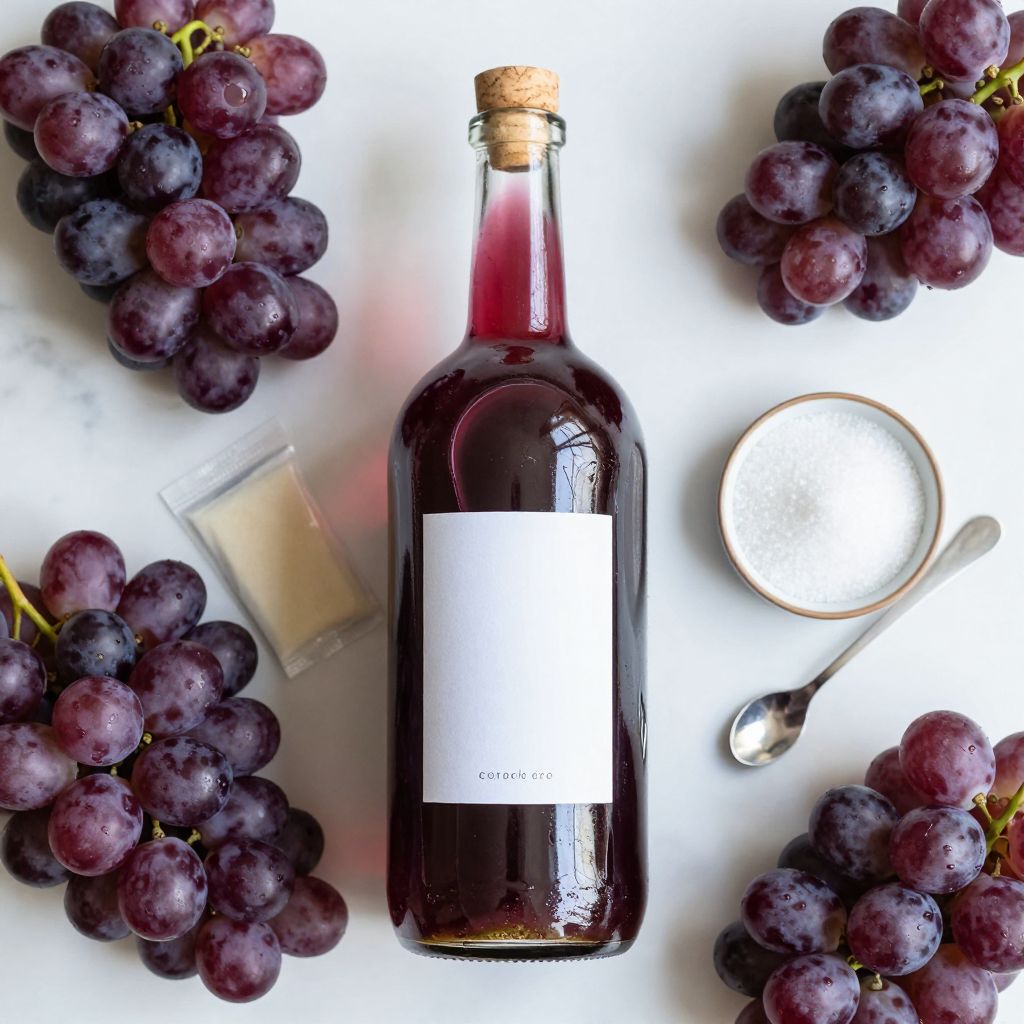
Concord Grape Wine
Ingredients
Equipment
Method
- Wash the Concord grapes thoroughly to remove any dirt or pesticides.
- In a large bowl, crush the grapes with your hands or a potato masher.
- In a saucepan, heat about half a gallon of water and dissolve the sugar in it.
- Pour the crushed grapes and the sugar syrup into the fermentation vessel.
- Add the remaining water to reach the one-gallon mark.
- Sprinkle the wine yeast and yeast nutrient into the mixture and stir gently.
- Fit the airlock onto the fermentation vessel.
- Place the vessel in a dark, cool area for about 4 to 6 weeks.
- Once fermentation is complete, strain the liquid into clean bottles using a strainer or cheesecloth.
- Seal the bottles with corks and store them in a cool, dark place.