
Imagine the first sip of a crisp, citrusy Belgian White beer, refreshing and slightly cloudy, perfect for warm afternoons. This recipe for Belgian White not only captures that delightful flavor but also offers an easy way to brew your own at home, impressing friends and family alike. With its light body and hints of orange and coriander, it’s a fantastic choice for any occasion. Grab your brewing gear, and let’s get started!
Why You’ll Love This Recipe
This Belgian White recipe is a real winner for both novice and seasoned brewers.
- Refreshing and zesty flavor profile.
- Perfect for warm weather or casual gatherings.
- Easy to brew with readily available ingredients.
- Pairs well with a variety of foods.
- Customizable with different spices or fruit additions.
My Experience Making This Recipe
I remember the first time I brewed this Belgian White; the aroma of fresh orange peel and coriander filled my kitchen, making the whole process feel magical. When I finally poured that first glass, I couldn’t believe I had crafted something so delicious and satisfying.
Friends were amazed at how I had captured that classic Belgian flavor, and it quickly became a staple at our summer barbecues. This beer has a way of bringing people together, and I love sharing it with others.
Recipe Overview
- Recipe Name: Belgian White
- Servings: 5 gallons
- Prep Time: 30 minutes
- Cook Time: 60 minutes
- Total Time: 2 weeks (fermentation time included)
- Course: Beverage
- Cuisine: Belgian
- Calories per Serving: Approximately 150
Equipment You Will Need
- Brewing kettle (at least 5 gallons)
- Fermentation vessel
- Airlock
- Hydrometer
- Bottling bucket
- Bottles and caps
- Sanitizer
- Thermometer
- Stirring spoon
Ingredients for Belgian White
- 6 lbs Pale Malt
- 2 lbs Wheat Malt
- 1 lb Flaked Wheat
- 1 oz Hallertau hops (bittering)
- 0.5 oz Coriander seeds
- 1 oz Sweet orange peel
- 1 packet Belgian yeast (Wyeast 1056 or Safbrew T-58)
- 5 oz Corn sugar (for bottling)
Ingredient Notes and Substitutions
- Pale Malt: This is your base malt providing sugars. You can substitute with Pilsner malt for a lighter flavor.
- Wheat Malt: Adds a smooth texture and haziness. Use flaked barley if unavailable, but it will slightly alter the flavor.
- Flaked Wheat: This enhances mouthfeel. You can skip it, but the body will be lighter.
- Hallertau hops: For a mild bitterness. Use any noble hops if you want to experiment.
- Coriander seeds: Essential for that signature spice note. You can try cardamom for a different twist.
- Sweet orange peel: This provides a citrusy aroma. Dried lemon peel can be a good alternative.
How to Make Belgian White
Step 1: Prepare Your Equipment
Start by thoroughly sanitizing all your brewing equipment. This step is crucial to prevent unwanted bacteria from ruining your beer.
Step 2: Heat the Water
Fill your brewing kettle with about 3 gallons of water and heat it to around 165°F. This temperature will help extract the sugars from your malts effectively.
Step 3: Mash the Grains
Add the crushed Pale Malt, Wheat Malt, and Flaked Wheat to the water. Stir well and maintain the temperature at about 150°F for 60 minutes to convert the starches to sugars.
Step 4: Sparge the Grains
After mashing, rinse the grains with hot water to extract as much sugar as possible. This process, known as sparging, maximizes your yield.
Step 5: Bring to a Boil
Bring the liquid, known as wort, to a vigorous boil. This step is essential for sterilizing the wort and extracting flavors from the hops.
Step 6: Add Hops
Once boiling, add the Hallertau hops and boil for 60 minutes. Hops add bitterness and some aroma, balancing the sweetness of the malt.
Step 7: Add Flavoring Ingredients
Five minutes before the boil ends, add the Coriander seeds and sweet orange peel. This timing helps retain their aromatic qualities in the finished beer.
Step 8: Cool the Wort
After boiling, quickly cool the wort to about 70°F using an immersion chiller or an ice bath. Rapid cooling prevents bacterial growth and helps yeast thrive.
Step 9: Ferment
Transfer the cooled wort to your fermentation vessel and pitch the yeast. Seal the vessel with an airlock and store it in a dark, cool place for about two weeks.
Step 10: Bottle Your Beer
After fermentation is complete, dissolve the corn sugar in a small amount of water and add it to the bottling bucket. This will carbonate your beer once bottled.
Step 11: Enjoy Your Brew
After bottling, let your beer carbonate for another two weeks. Then, chill, pour, and enjoy your homemade Belgian White!
Pro Tip: Always sanitize your equipment and work area to avoid contamination.
Tips for the Best Belgian White
- Choose high-quality ingredients for the best flavor.
- Monitor temperatures carefully during mashing for optimal sugar extraction.
- Be patient during fermentation; rushing can lead to off-flavors.
- Consider experimenting with different spices for unique flavor profiles.
- Always taste your beer before bottling to ensure it has the desired flavor.
Common Mistakes to Avoid
- Skipping sanitation can ruin your brew with unwanted bacteria.
- Not maintaining mash temperature leads to poor sugar extraction.
- Bottling too early can result in over-carbonation and potentially exploding bottles.
- Ignoring fermentation time may yield a beer that tastes unfinished.
Serving Suggestions
This Belgian White pairs beautifully with light dishes and outdoor gatherings.
- Salads with citrus vinaigrette
- Grilled chicken or fish
- Spicy dishes to balance the heat
- Creamy cheeses for a delightful contrast
Variations to Try
- Add raspberries during fermentation for a fruity twist.
- Use different hop varieties for a unique aroma.
- Incorporate ginger for a spicy kick.
- Try using wheat malt alternatives for different flavor profiles.
Dietary Adaptations
- Gluten-free: Use gluten-free grains like sorghum or rice malt.
- Dairy-free: This recipe is naturally dairy-free.
- Vegan: Ensure the yeast used is certified vegan.
- Low-carb/keto: Use low-carb malt alternatives and adjust sugar content.
Storage and Reheating
Refrigerator
Store your bottled beer in a cool, dark place for optimal flavor preservation.
- Keep in a consistent temperature, ideally around 40°F.
Freezer
Avoid freezing your beer as it can alter the flavor and texture.
- Store in the refrigerator instead for best results.
Reheating
Beer is typically enjoyed cold, so reheating is not recommended.
- Chill your beer before serving for the best experience.
Nutrition Information
| Nutrient | Amount |
|---|---|
| Calories | 150 |
| Total Fat | 0g |
| Saturated Fat | 0g |
| Carbohydrates | 15g |
| Fiber | 0g |
| Sugar | 0g |
| Protein | 1g |
| Sodium | 10mg |
| Cholesterol | 0mg |
Nutrition values are approximate and can vary based on ingredients used.
Frequently Asked Questions
Can I make this beer ahead of time?
Yes, you can brew this beer a few weeks in advance and store it properly.
What can I substitute for Belgian yeast?
You can use any ale yeast, but it may alter the flavor slightly.
How long does this beer last?
Properly stored, this beer can last up to six months, but it’s best enjoyed fresh.
What if my beer is too cloudy?
Cloudiness is typical for Belgian Whites due to the yeast and grains, but you can filter it if desired.
Can I add fruit to this recipe?
Absolutely! Adding fruit during fermentation can enhance the flavor profile significantly.
Final Thoughts
This recipe for Belgian White is not just about brewing; it’s about creating memories and sharing good times. I encourage you to try it out and savor the unique flavors you craft in your own kitchen.
For more exciting recipes, check out my Universal Butterbeer Recipe and Homemade Chai Tea Recipe for delightful beverages to enjoy with friends!
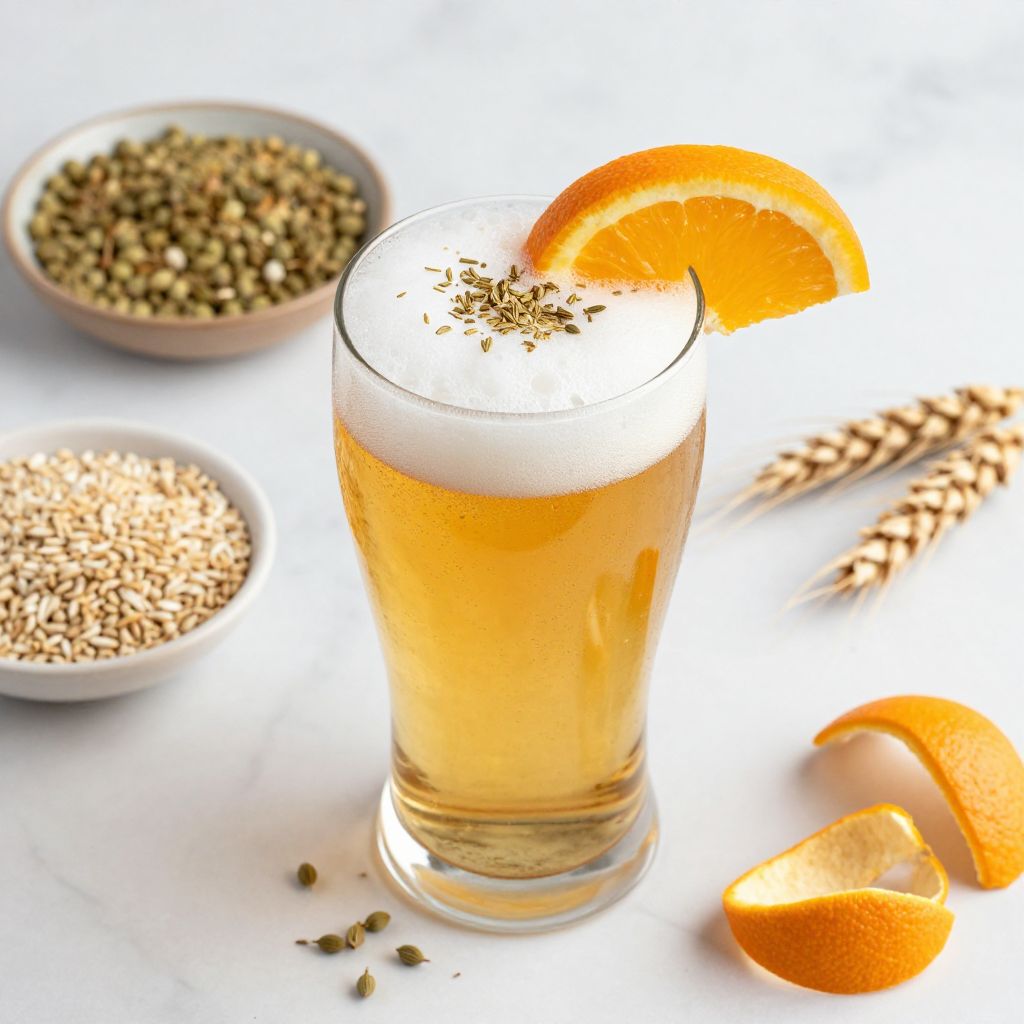
Belgian White
Ingredients
Equipment
Method
- Start by thoroughly sanitizing all your brewing equipment.
- Fill your brewing kettle with about 3 gallons of water and heat it to around 165°F.
- Add the crushed Pale Malt, Wheat Malt, and Flaked Wheat to the hot water. Stir well and maintain the temperature at about 150°F for 60 minutes.
- After mashing, rinse the grains with hot water.
- Bring the liquid, known as wort, to a vigorous boil.
- Once boiling, add the Hallertau hops and boil for 60 minutes.
- Five minutes before the boil ends, add the Coriander seeds and sweet orange peel.
- After boiling, quickly cool the wort to about 70°F.
- Transfer the cooled wort to your fermentation vessel and pitch the yeast.
- Seal the vessel with an airlock and store it in a dark, cool place for about two weeks.
- After fermentation is complete, dissolve the corn sugar in a small amount of water and add it to the bottling bucket.
- Bottle your beer and let it carbonate for another two weeks.