
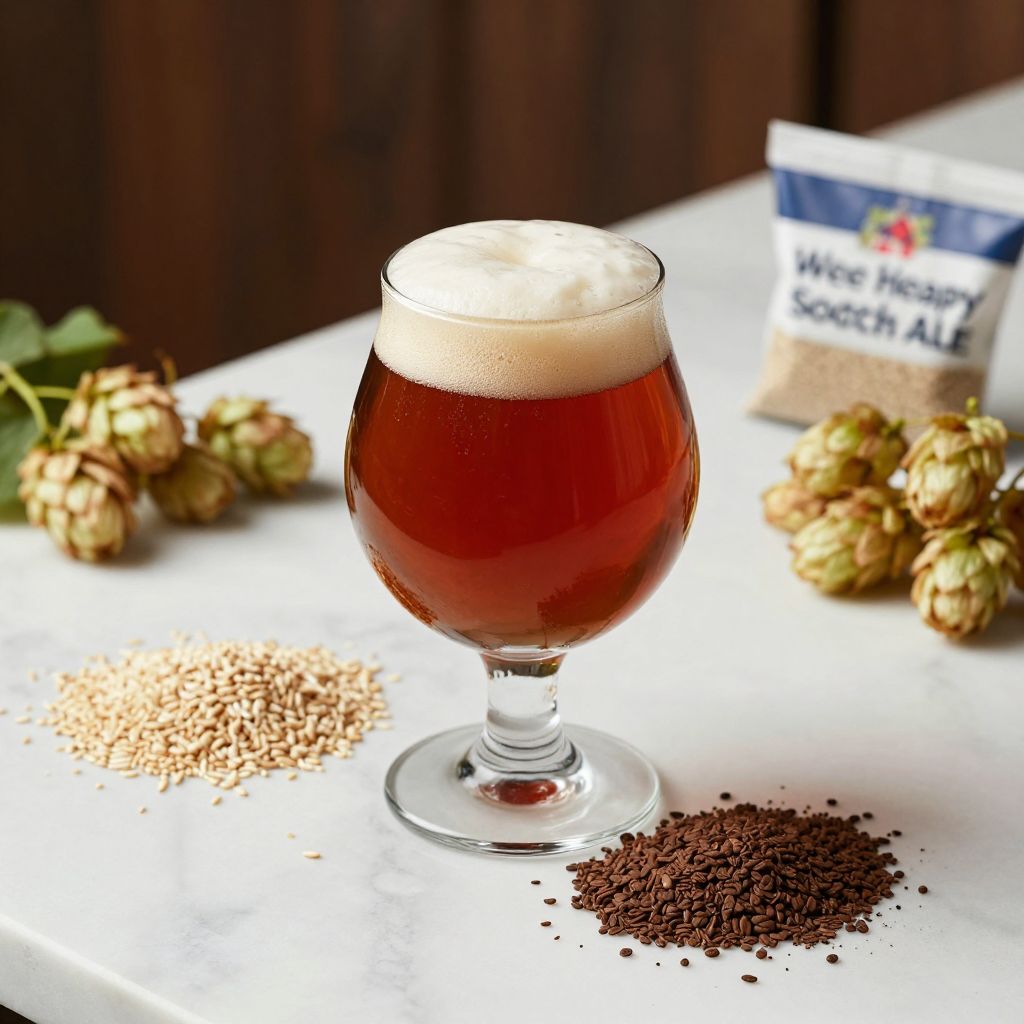
Picture yourself on a chilly evening, savoring a rich, malty brew that warms you from the inside out. The Wee Heavy Scotch Ale is not just a drink; it’s a cozy embrace in a glass, known for its deep flavors and smooth finish. Brewed with care, this ale boasts a delightful complexity, making it perfect for sipping by the fireplace or sharing with friends. The best part? It’s surprisingly straightforward to make at home, elevating your brewing game without overwhelming you. Let’s gather our ingredients and dive into this rewarding brewing experience!
Why You’ll Love This Recipe
This recipe combines simplicity and rich flavor, making it a must-try for any homebrewer.
- Rich, malty sweetness with notes of caramel and toffee.
- Balanced flavor profile that appeals to both newcomers and seasoned brewers.
- Perfect for cool evenings or special occasions.
- Offers a great opportunity to experiment with brewing techniques.
My Experience Making This Recipe
When I first attempted this Wee Heavy Scotch Ale, I was pleasantly surprised by how manageable the process was. The aroma of the malt during the mash filled my kitchen with a warm, inviting scent that had my friends eagerly anticipating the first sip.
As the brewing progressed, the deep amber color started to emerge, hinting at the rich flavors to come. When it was finally ready to drink, the balance of sweetness and slight warmth was a hit among my friends, making it a repeat brew in my home.
Recipe Overview
- Recipe Name: Wee Heavy Scotch Ale
- Servings: About 5 gallons
- Prep Time: 30 minutes
- Cook Time: 1 hour 15 minutes
- Total Time: 2 hours
- Course: Beverage
- Cuisine: Scottish
- Calories per Serving: Approximately 250
Equipment You Will Need
- Brewing kettle (at least 5 gallons)
- Mash tun
- Fermentation vessel with airlock
- Thermometer
- Hydrometer
- Bottling equipment (bottles, caps, and capper)
- Siphon or racking cane
Ingredients for Wee Heavy Scotch Ale
- 10 lbs Pale Malt
- 1 lb Crystal Malt (60L)
- 0.5 lb Chocolate Malt
- 1 lb Munich Malt
- 1 oz East Kent Goldings hops (bittering)
- 0.5 oz Fuggle hops (flavor)
- 1 packet Scotch Ale yeast (e.g., Wyeast 1728)
- 1 cup priming sugar (for bottling)
Ingredient Notes and Substitutions
- Pale Malt: This is the base malt that provides the primary fermentable sugars. You can use a combination of pale and amber malts for a different flavor.
- Crystal Malt (60L): Adds sweetness and color. If unavailable, use a lighter crystal malt but adjust the quantity.
- Chocolate Malt: This contributes to the rich color and flavor. Substitute with dark roasted barley for a more intense flavor.
- Munich Malt: Enhances the malt profile. You can replace it with Vienna malt, but the flavor will change slightly.
- Scotch Ale yeast: This yeast strain is crucial for achieving the desired flavor. Any suitable ale yeast can work, but it may alter the final profile.
How to Make Wee Heavy Scotch Ale
Step 1: Prepare Your Equipment
Sanitize all brewing equipment before starting. This prevents unwanted bacteria from ruining your brew.
Step 2: Heat Water for Mashing
Heat about 3 gallons of water to 165°F (74°C). This temperature will help extract sugars from the grains effectively.
Step 3: Mash the Grains
Add the grains to the hot water and maintain the mash temperature around 150°F (65°C) for 60 minutes. This process converts starches into fermentable sugars.
Step 4: Sparge the Grains
After mashing, rinse the grains with about 170°F (77°C) water to extract more sugars. This step maximizes your yield and improves efficiency.
Step 5: Boil the Wort
Bring the collected wort to a boil and add the bittering hops. Boiling sterilizes the wort and develops flavor.
Step 6: Add Flavor Hops
After 45 minutes of boiling, add the flavor hops. This adds aroma without overwhelming bitterness.
Step 7: Cool the Wort
Use a wort chiller or an ice bath to cool the wort quickly to about 70°F (21°C). This is crucial for pitching the yeast at the right temperature.
Step 8: Ferment the Ale
Transfer the cooled wort to the fermentation vessel and pitch the yeast. Seal with an airlock and let it ferment for 1-2 weeks until bubbling stops.
Pro Tip: Keep an eye on the fermentation temperature; too high can lead to off-flavors.
Tips for the Best Wee Heavy Scotch Ale
- Use fresh ingredients for the best flavor; stale hops can impact aroma.
- Keep your fermentation temperature stable to avoid unwanted esters.
- Consider aging your ale for a few months for improved flavor development.
- Experiment with different hop varieties to customize the profile.
- Be patient during fermentation and bottling for the best results.
Common Mistakes to Avoid
- Not sanitizing equipment can lead to contamination and spoilage.
- Boiling for too long can cause excessive bitterness in the final product.
- Skipping the cooling step can stress the yeast and affect fermentation.
- Using old or stale ingredients can result in a flat or bland flavor.
Serving Suggestions
This ale shines with hearty dishes and rich desserts.
- Pair with roasted meats or stews for a comforting meal.
- Enjoy alongside aged cheeses for a delightful contrast.
- Serve with dark chocolate desserts to complement the maltiness.
- Consider a side of spiced nuts for a savory snack.
Variations to Try
- Add additional specialty malts like roasted barley for a deeper flavor.
- Try a different yeast strain for unique flavor profiles.
- Add spices like cinnamon or vanilla during fermentation for a twist.
- Experiment with different hop varieties for varying bitterness and aroma.
Dietary Adaptations
- Gluten-free: Use gluten-free grains like sorghum or millet.
- Dairy-free: This recipe is naturally dairy-free.
- Vegan/vegetarian: All ingredients are plant-based.
- Low-carb/keto: Reduce the malt amount and add low-carb adjuncts.
Storage and Reheating
Refrigerator
Store bottles upright in a cool, dark place. This helps prevent oxidation.
- Consume within six months for best flavor.
- Keep away from light to avoid skunky flavors.
Freezer
Freezing beer is not recommended as it can alter flavor and texture. If necessary, freeze for a short time.
- Thaw slowly in the refrigerator if frozen.
Reheating
Reheating beer is generally not advised, but if you must, do so gently. Avoid boiling, as it can change the flavor significantly.
- Warm gently on the stove or in a microwave.
Nutrition Information
| Nutrient | Amount |
|---|---|
| Calories | 250 |
| Total Fat | 0.5g |
| Saturated Fat | 0g |
| Carbohydrates | 22g |
| Fiber | 0g |
| Sugar | 1g |
| Protein | 2g |
| Sodium | 10mg |
| Cholesterol | 0mg |
This information is approximate and will vary based on specific ingredients and methods used.
Frequently Asked Questions
Can I substitute the yeast with another strain?
Yes, but it may change the flavor profile. Choose a yeast that works well with ales.
How long can I store this ale?
You can store it for up to six months for the best flavor. After that, it may start to lose its quality.
Can I make this ale ahead of time?
Absolutely! Brewing in advance allows the flavors to develop and improve over time.
What if my beer is too thick?
If the body is too heavy, consider reducing the amount of malt next time. Watering down the brew is not recommended.
Is it necessary to use a hydrometer?
While not required, a hydrometer helps you measure the specific gravity and estimate alcohol content.
Final Thoughts
Brew your own Wee Heavy Scotch Ale for a delightful experience that will have you savoring every drop. With its rich sweetness and comforting warmth, this ale is sure to become a favorite in your home.
As you explore the world of brewing, don’t miss out on other exciting recipes like this stout recipe or discover a refreshing Schwarzbier recipe to expand your brewing repertoire!
Wee Heavy Scotch Ale
Ingredients
Equipment
Method
- Sanitize all brewing equipment before starting.
- Heat about 3 gallons of water to 165°F (74°C).
- Add the grains to the hot water and maintain the mash temperature around 150°F (65°C) for 60 minutes.
- After mashing, rinse the grains with about 170°F (77°C) water.
- Bring the collected wort to a boil and add the bittering hops.
- After 45 minutes of boiling, add the flavor hops.
- Use a wort chiller or an ice bath to cool the wort quickly to about 70°F (21°C).
- Transfer the cooled wort to the fermentation vessel and pitch the yeast.
- Seal with an airlock and let it ferment for 1-2 weeks until bubbling stops.